

-
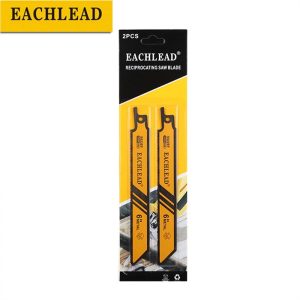
Which Blade Factors Control a Stainless Steel Cut?
Reciprocating Saw Blades for Stainless Steel: Selection Factors starts from one metallurgical fact: stainless work-hardens the moment teeth rub instead of bite. Pitch, construction, and feed discipline decide the cut. Blades whose own body is stainless...Read more -
How Do You Select a Hacksaw Blade for Thin Sheet Metal?
A useful hacksaw blade for thin sheet metal decision begins with the workpiece rather than a universal material label. Use the EACHLEAD hacksaw blade category as a commercial starting point, then document the material, section, tool...Read more -
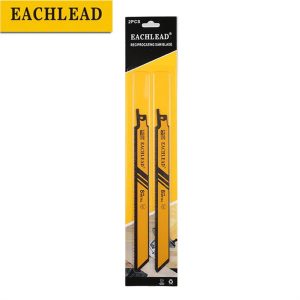
When Does a Flexible Reciprocating Blade Make Sense?
When to Use Flexible Reciprocating Saw Blades comes down to one question: does the cut need the blade to bend, or to refuse to bend? Flush cuts and blind access reward flex; deep straight cuts reward...Read more -
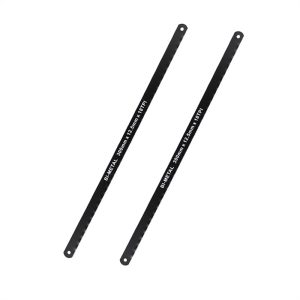
Should You Choose 18 TPI or 24 TPI for This Cut?
A useful 18 TPI vs 24 TPI hacksaw blades decision begins with the workpiece rather than a universal material label. Use the EACHLEAD hacksaw blade category as a commercial starting point, then document the material, section,...Read more -
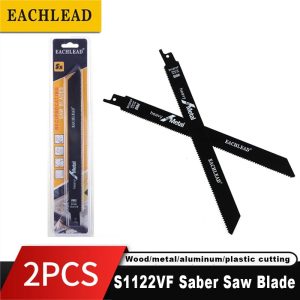
What Belongs in a Demolition Blade RFQ Checklist?
Demolition Reciprocating Saw Blade Spec Checklist for RFQs turns a shopping wish into a specification a factory can quote without guessing. Six field groups carry the load: application, dimensions, tooth spec, material, packaging, and acceptance. For...Read more -
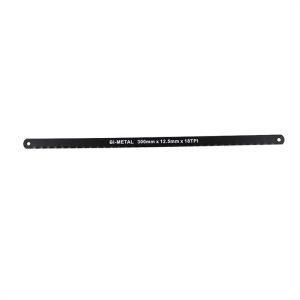
Which Hacksaw Blade Construction Fits Your Metal Cut?
A useful bi-metal vs HSS hacksaw blades decision begins with the workpiece rather than a universal material label. Use the EACHLEAD hacksaw blade category as a commercial starting point, then document the material, section, tool frame,...Read more -
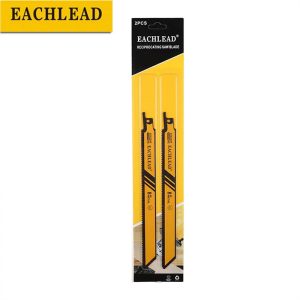
What Makes a Reciprocating Blade Bend Mid-Cut?
Why Reciprocating Saw Blades Bend During Cutting is a load-path question: side force found unsupported steel, and the blade gave way before the operator noticed. Reconstruct the cut before blaming the product. For the commercial path,...Read more -
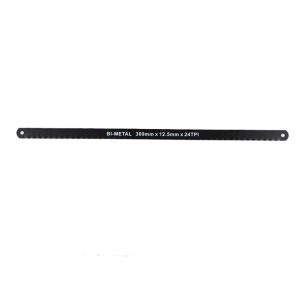
Which Way Should Hacksaw Teeth Face Before You Start Cutting?
Hacksaw blade tooth direction tells you where the teeth are meant to bite: on a conventional setup, they normally face forward for a push-stroke cut. Check the frame instructions and the tooth points before starting. The...Read more -
Which Reciprocating Blade Handles Tree Root Cutting?
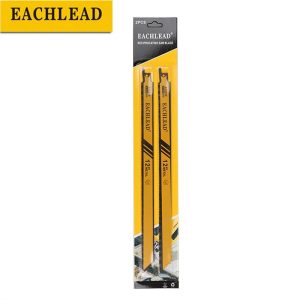
How to Choose a Reciprocating Saw Blade for Tree Roots depends less on the wood and more on the dirt around it. Record the root diameter, soil exposure, trench access, and how many cuts the job...Read more -
Should Your Next Blade Order Be a Set or a Single SKU?
The set-versus-single decision is a demand-shape question: mixed work favors documented coverage, while repeat work favors a defined replenishment SKU. Neither format automatically carries a commercial advantage. Start with the application record, then use the reciprocating...Read more
