

-

Which Blade Survives Abrasive Composite Cutting?
How to Choose a Reciprocating Saw Blade for Abrasive Composites is a wear problem before it is a cutting problem: mineral fillers grind teeth down stroke by stroke. Tooth material and honest substrate listings decide the...Read more -
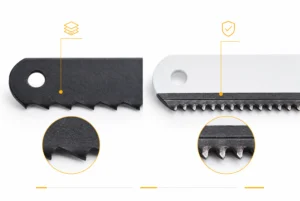
How Do You Measure a Hacksaw Blade for an Order?
To measure a hacksaw blade for an order, record its physical end-to-end length first, then its end feature, width, thickness, pitch, and holder. A number such as 12 inches is only the start of a procurement...Read more -
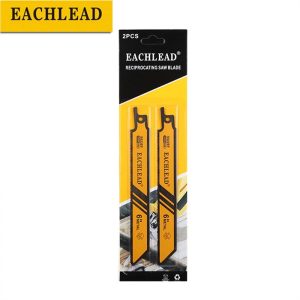
Which Blade Factors Control a Stainless Steel Cut?
Reciprocating Saw Blades for Stainless Steel: Selection Factors starts from one metallurgical fact: stainless work-hardens the moment teeth rub instead of bite. Pitch, construction, and feed discipline decide the cut. Blades whose own body is stainless...Read more -
How Do You Select a Hacksaw Blade for Thin Sheet Metal?
A useful hacksaw blade for thin sheet metal decision begins with the workpiece rather than a universal material label. Use the EACHLEAD hacksaw blade category as a commercial starting point, then document the material, section, tool...Read more -
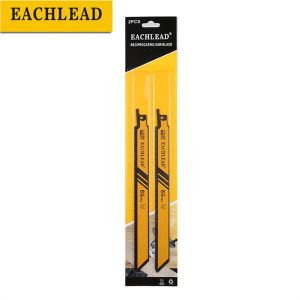
When Does a Flexible Reciprocating Blade Make Sense?
When to Use Flexible Reciprocating Saw Blades comes down to one question: does the cut need the blade to bend, or to refuse to bend? Flush cuts and blind access reward flex; deep straight cuts reward...Read more -
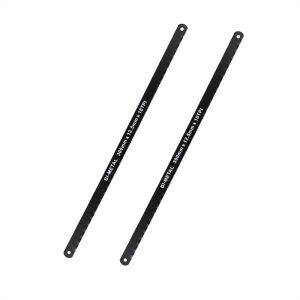
Should You Choose 18 TPI or 24 TPI for This Cut?
A useful 18 TPI vs 24 TPI hacksaw blades decision begins with the workpiece rather than a universal material label. Use the EACHLEAD hacksaw blade category as a commercial starting point, then document the material, section,...Read more -
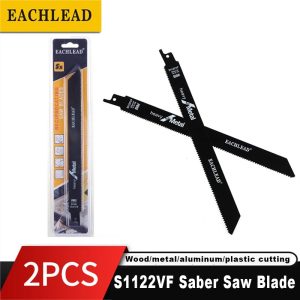
What Belongs in a Demolition Blade RFQ Checklist?
Demolition Reciprocating Saw Blade Spec Checklist for RFQs turns a shopping wish into a specification a factory can quote without guessing. Six field groups carry the load: application, dimensions, tooth spec, material, packaging, and acceptance. For...Read more -
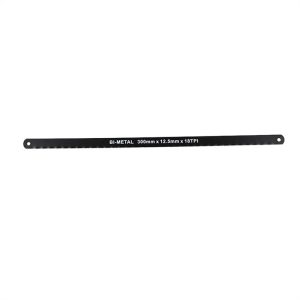
Which Hacksaw Blade Construction Fits Your Metal Cut?
A useful bi-metal vs HSS hacksaw blades decision begins with the workpiece rather than a universal material label. Use the EACHLEAD hacksaw blade category as a commercial starting point, then document the material, section, tool frame,...Read more -
What Makes a Reciprocating Blade Bend Mid-Cut?
Why Reciprocating Saw Blades Bend During Cutting is a load-path question: side force found unsupported steel, and the blade gave way before the operator noticed. Reconstruct the cut before blaming the product. For the commercial path,...Read more -
Which Way Should Hacksaw Teeth Face Before You Start Cutting?
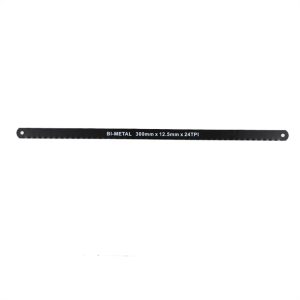
Hacksaw blade tooth direction tells you where the teeth are meant to bite: on a conventional setup, they normally face forward for a push-stroke cut. Check the frame instructions and the tooth points before starting. The...Read more
