


What Are Hacksaw Blades Made Of? HCS, HSS, and Bi-Metal
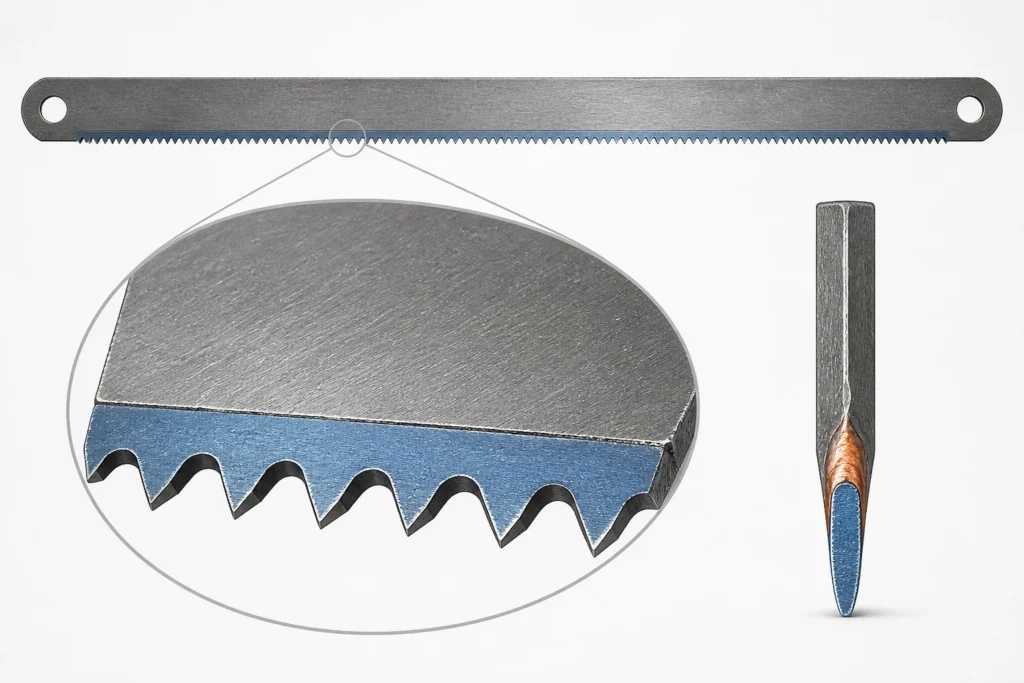
What are hacksaw blades made of? Hand hacksaw blades commonly use high-carbon steel (HCS), high-speed steel (HSS), or a bi-metal construction. These names describe the blade material or how its cutting edge and backing are combined. They do not describe tooth pitch, blade length, or the workpiece on their own.
This distinction matters when a buyer reads a product label. A bi-metal marking answers a different question from 18, 24, or 32 TPI. One identifies construction. The other states how many teeth sit within one inch of the blade.
What are hacksaw blades made of?
HCS, HSS, and bi-metal identify different material systems. A correct product description starts with the blade body and cutting edge, not with a general claim that one material is always better.
| Blade construction | How the blade is built | What the marking tells you |
|---|---|---|
| High-carbon steel (HCS) | The blade uses high-carbon steel as its stated construction. | The blade belongs to the carbon-steel family. TPI and dimensions still need separate checks. |
| High-speed steel (HSS) | The blade uses high-speed steel as its cutting material. | The label identifies HSS construction. It does not define the workpiece thickness or frame size. |
| Bi-metal | A narrow HSS tooth strip is joined to a tougher, more flexible steel back. | The tooth edge and backing use different materials. The exact grades remain product-specific. |
Current Stanley listings show separate HCS, HSS, and bi-metal hand hacksaw blades. Bahco also lists bi-metal hand blades with a spring-steel back and an HSS tooth line. Those manufacturer descriptions support the construction distinction, but each model keeps its own dimensions and application range.
Catalog wording can vary, so read the model record before reducing a blade to one label. A complete record keeps the material name beside the model, dimensions, pitch, and stated application. This prevents a purchasing list from treating different constructions as the same item.
A bi-metal hacksaw blade has two working material zones
The teeth do the cutting, while the wider back carries tension across the frame. A bi-metal blade assigns those jobs to two material zones. The HSS strip forms the tooth line. The spring-steel or carbon-steel back provides the flexible blade body.
The word bi-metal does not describe a coating or a color. It describes a joined construction. The featured cutaway shows that general relationship. It does not represent an exact EACHLEAD cross-section or manufacturing process.
A one-piece HSS blade and a bi-metal blade may both use HSS at the cutting edge. Their overall construction is still different. Buyers should record the full material description instead of shortening both products to “HSS blade.”
Blade material and TPI answer different questions
The material label explains how the blade is built. TPI describes tooth spacing. A complete selection also needs the blade length, width, thickness, frame, workpiece material, and section being cut.
A high TPI value is not a higher material grade. It places more teeth in each inch. A lower TPI value places fewer, larger tooth spaces in the same distance. The workpiece section controls how many teeth can engage during the stroke, so pitch cannot be chosen from the material name alone.
Eachlead’s separate guide to 18 TPI and 24 TPI hacksaw blades covers that pitch decision. The existing bi-metal and HSS comparison covers the next material-choice step. Neither page replaces the construction definition here.
Read a hacksaw blade marking from left to right
A useful product marking lets a buyer separate model, construction, size, and pitch. The public EACHLEAD bi-metal hacksaw blade category provides a clear example.
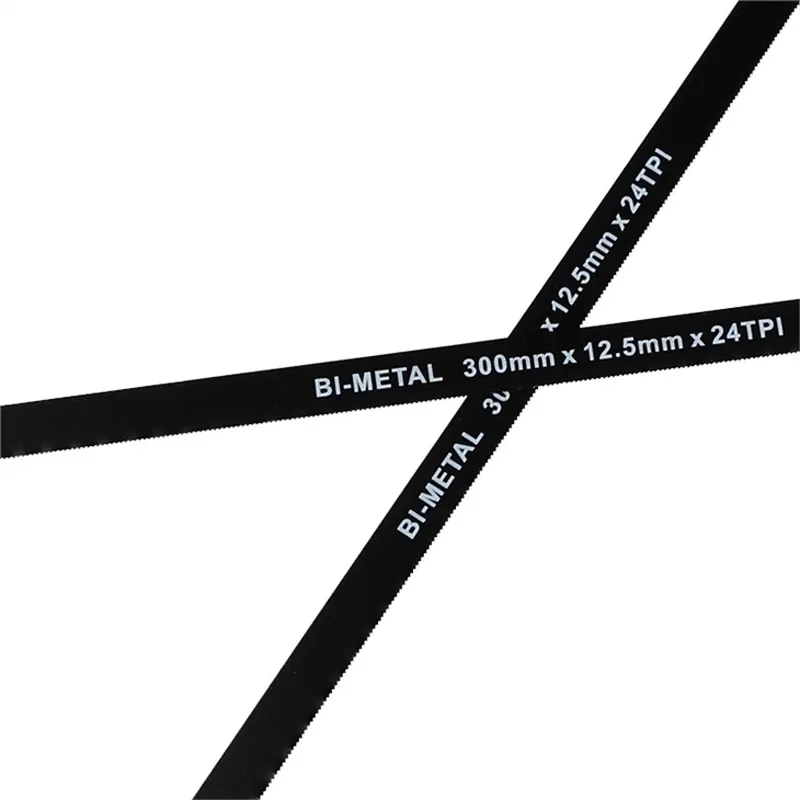
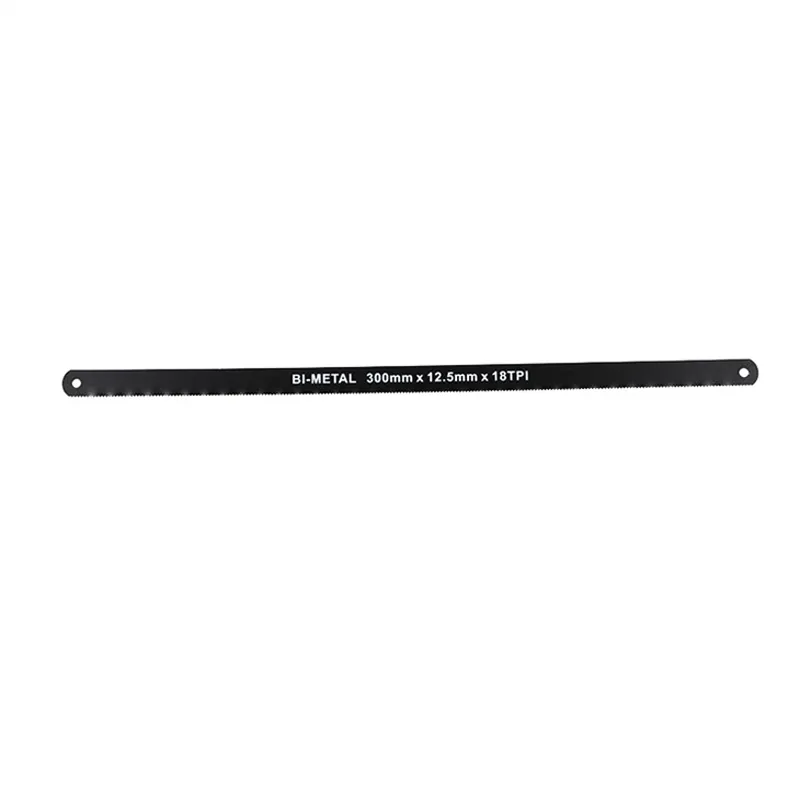
The EC18T, EC24T, and EC32T listings identify bi-metal construction and a 12-inch or 300 mm nominal length. Their names separate the 18, 24, and 32 TPI variants. The product text also shows the material notation 6150+M2.
That notation should remain attached to the listed product. It does not publish a hardness value, chemical certificate, weld method, or service-life result. A buyer who needs those details should request the relevant technical record for the exact SKU.
Build the specification before choosing a blade family
A reliable blade record uses material construction as one field, not the whole specification. For a repeat order or distributor SKU, capture these details:
- Construction: HCS, HSS, bi-metal, or another stated material system.
- Blade size: nominal length, width, and thickness.
- Tooth pitch: TPI or a variable-pitch marking.
- Tool interface: frame length and mounting details.
- Workpiece: material, shape, wall or section thickness, and required cut.
The EACHLEAD hacksaw blade range can serve as a product-family starting point. The category does not prove that every listed blade fits every frame or workpiece. Match the recorded fields to the selected model before a sample or production order.