


Which Blade Factors Control a Stainless Steel Cut?
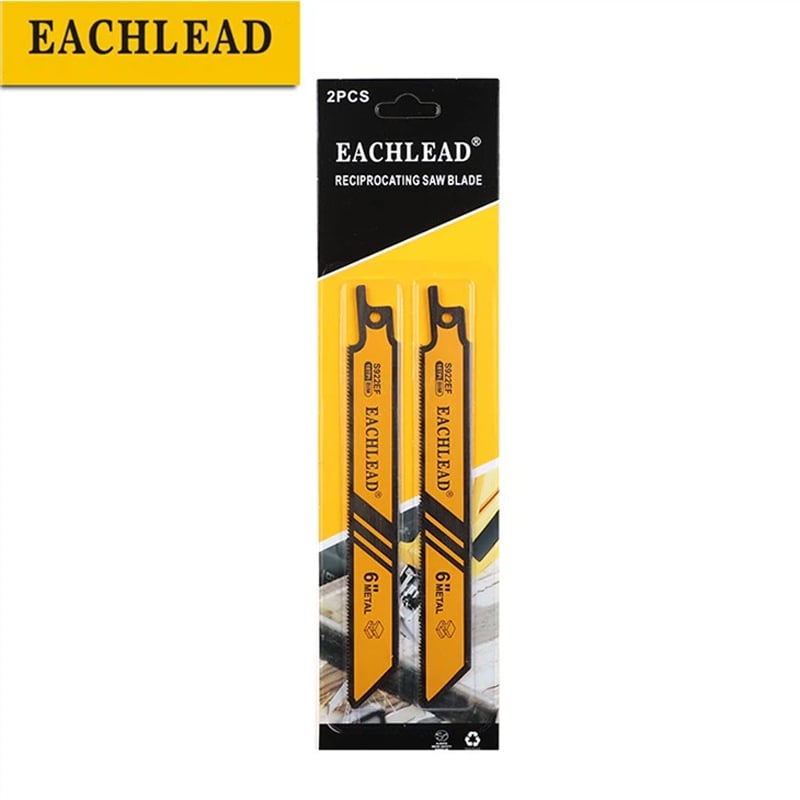
Reciprocating Saw Blades for Stainless Steel: Selection Factors starts from one metallurgical fact: stainless work-hardens the moment teeth rub instead of bite. Pitch, construction, and feed discipline decide the cut. Blades whose own body is stainless are a separate product family; see the stainless steel reciprocating saw blade category for that listing boundary.
Part 1. What makes stainless steel a demanding workpiece?
Stainless alloys harden under deformation. A tooth that slides without cutting cold-works the surface into a glassy, harder layer, and every following tooth meets worse material than the last one did.
Heat compounds the problem. Stainless conducts heat poorly, so energy stays in the cut zone, softening tooth edges while the workpiece hardens, which is the exact opposite of what the blade needs.
| Stainless decision input | Why it matters | What to record |
|---|---|---|
| Alloy family | Austenitic grades work-harden fastest | Grade or family if known |
| Measured thickness | Sets minimum engaged teeth | Wall or sheet measurement |
| Section type | Pipe, sheet, and profile cut differently | Shape and dimensions |
| Edge requirement | Rework cost drives pitch choice | Rough cut or finished edge |
Important: Use the proper blade for the material and follow the tool instructions; see OSHA handheld saw guidance.
Part 2. Why must blade-body material and workpiece material be kept separate?
Two different questions hide inside the word stainless. One asks which blade cuts a stainless workpiece; the other asks for a blade whose own back is stainless steel, a construction this site lists in its stainless-bodied category for corrosion-conscious applications.
Buying the wrong answer wastes money in both directions. A stainless-bodied blade is not automatically suited to cutting stainless sheet, and the stainless-bodied blade article covers that separate product family; this article makes no claims about those applications.
For cutting stainless workpieces, the working families are the hardened-tooth metal-cutting constructions. The metal types selection guide maps them across workpiece categories.
Part 3. Which TPI and construction factors matter for stainless cuts?
Thickness sets the pitch. Thin stainless sheet needs fine pitch so several teeth share the wall, while thicker sections need enough gullet volume to carry hard, stringy chips; the TPI decision guide for metal gives the engagement arithmetic.
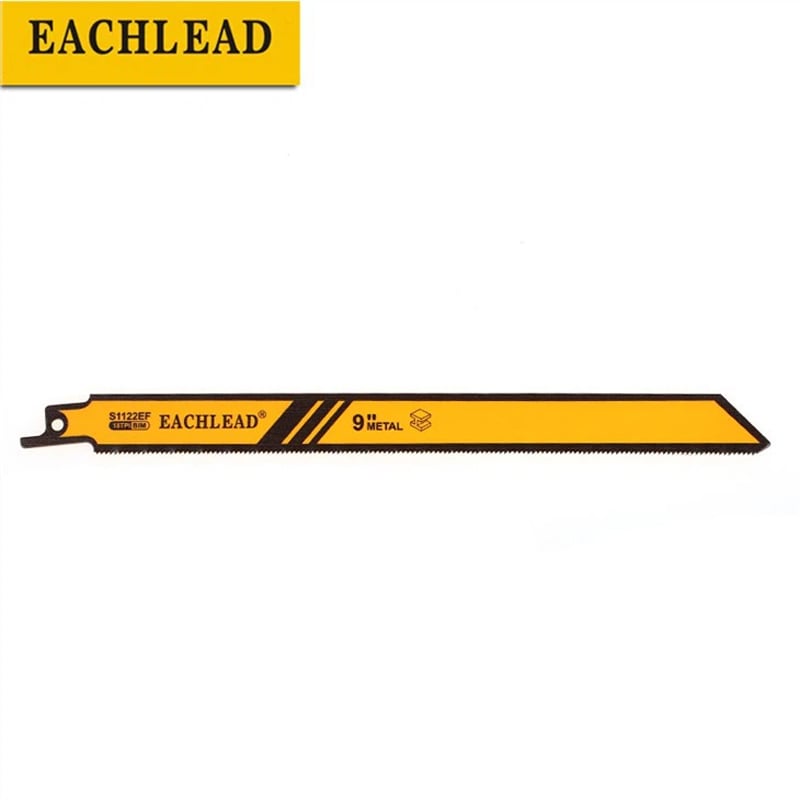
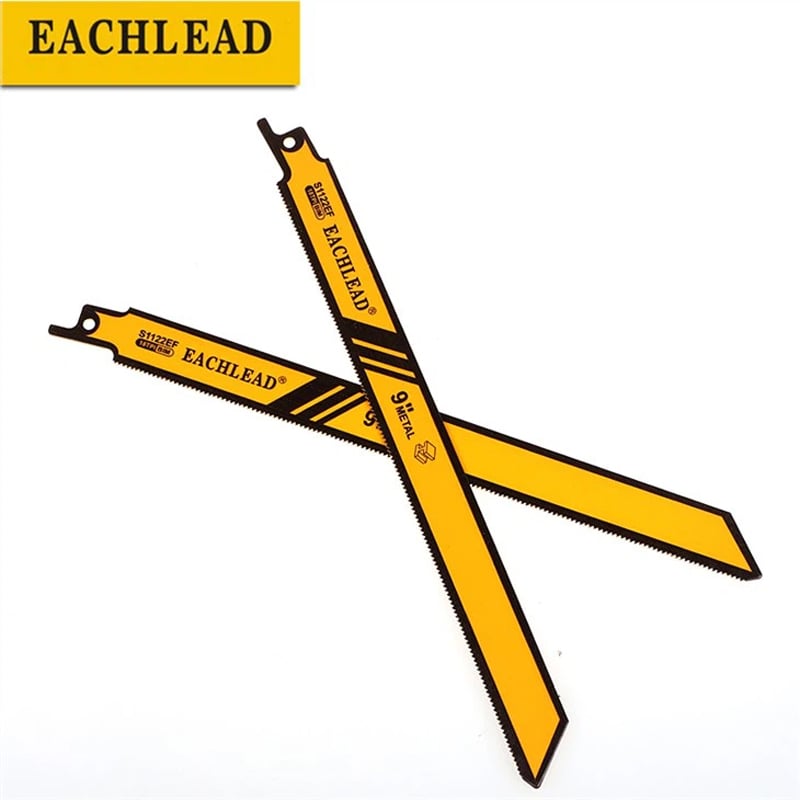
Site listings provide general sheet ranges to start from. The S1122EF page lists 18 TPI for thin sheet metal around 1.5-4 mm and the S1122AF page lists 24 TPI for roughly 0.7-3 mm; neither names stainless, so treat them as sheet-thickness references that a stainless sample test must confirm.
| Field symptom | Likely category | First correction |
|---|---|---|
| Glazed, shiny kerf | Work-hardened surface from rubbing | Increase feed so teeth bite |
| Blue chips and smoking | Heat overload | Slower speed, steadier feed |
| Teeth strip on entry | Pitch too coarse for wall | Finer pitch, angle the entry |
| Cut stalls mid-sheet | Chip packing | More gullet volume, clear often |
Part 4. How do feed and heat control decide the outcome?
Keep the teeth biting. Steady, positive feed produces a visible chip on every stroke, and a visible chip is the proof that the blade is cutting under the hardened layer instead of polishing it.
Speed works against you here. Lower stroke rates with firm feed manage heat better than high speed with light pressure, because light pressure is precisely how the surface work-hardens.
Interruptions matter too. Every restart on a hardened kerf is a fresh chance to rub, so plan cuts to finish in one pass where the section allows.
Part 5. What setup supports stainless pipe and sheet cutting?
Clamp close and support both sides. Stainless sheet vibrates like any thin metal, and vibration alternates rubbing with impact, the two things this workpiece punishes most.
For pipe, rotate the work if it is loose rather than steering the blade around the wall. A fixed cut line with the shoe planted beats a moving one, and finishing a wall in one motion limits restarts on hardened metal.
Run one controlled trial per variable. Hold the tool, clamping, and operator constant, change only pitch or only speed, and log the chip form, edge condition, and any glazing after each cut.
Part 6. What belongs in a stainless cutting RFQ?
Because no reviewed listing names stainless workpieces explicitly, the RFQ carries the evidence. State the alloy family, the measured thickness, the section type, the edge requirement, and the heat constraints, then ask for candidate pitches from the listed sheet ranges.
Require a stainless sample test before labeling anything. Acceptance should name the test stock grade, the number of cuts, and the pass criteria: chip form, edge condition, and absence of glazing.
| RFQ field | Buyer supplies | Supplier confirms |
|---|---|---|
| Workpiece | Alloy family and measured thickness | Listed sheet range fit |
| Cut conditions | Section, geometry, edge target | Pitch and construction candidates |
| Heat constraints | Speed limits, finish sensitivity | Recommended test settings |
| Validation | Stainless sample stock and criteria | Candidate SKU and sample plan |
Product recommendation: review the bi-metal reciprocating saw blade category once those fields are documented. Why it fits: fine-pitch bi-metal blades are the usual starting family for stainless sheet and pipe. Why not recommend as a default: no reviewed listing names stainless workpieces explicitly, so selection must close with an RFQ and a stainless sample test rather than a model claim.
Fit Boundary
Buyers who can state the alloy family, measure the thickness, and run a stainless sample cut will get a defensible selection from this workflow. It makes no food-related claims, covers no stainless-bodied blade applications, and offers no performance guarantee without testing.
Part 7. How should distributors label stainless-related SKUs honestly?
Separate the two stainless meanings on every card. A metal-cutting blade validated on stainless sheet should say “tested on stainless sheet, thickness range X-Y” while stainless-bodied blades keep their own listing language, and neither should borrow the other’s claim.
Returns tell you when labels lie. Track which stainless jobs generated complaints, match them against the tested thickness range, and tighten the wording rather than widening the promise.
To request a configuration review, send the application details to EACHLEAD: tool, holder, alloy family, measured thickness, section type, current blade, observed failure, and target pack quantity.
FAQs
Can a reciprocating saw cut stainless steel?
Yes, with a fine-pitch hardened-tooth blade, firm feed, and heat discipline. The workpiece punishes rubbing, so technique matters as much as the SKU.
Why does stainless steel work-harden during cutting?
Deformation hardens the alloy. Teeth that slide without biting cold-work the surface into a harder layer that resists every following stroke.
What TPI should be tested for stainless sheet and pipe?
Start fine enough that several teeth share the measured wall, using listed sheet ranges as references, and confirm on stainless offcuts.
Does a stainless-steel-bodied blade mean it cuts stainless steel?
No. Body material and workpiece capability are separate questions; stainless-bodied blades are their own category with their own listed applications.
Which EACHLEAD listings apply to sheet metal thickness ranges?
The S1122EF lists 18 TPI for thin sheet around 1.5-4 mm and the S1122AF lists 24 TPI for roughly 0.7-3 mm. Neither names stainless, so sample-test before relying on them.
How is heat controlled when cutting stainless?
Moderate stroke speed, steady feed that keeps chips forming, minimal restarts, and pauses before the kerf discolors. Heat stays local in stainless, so prevention beats cooling.
What should a stainless cutting RFQ include?
Alloy family, measured thickness, section type, edge requirement, heat constraints, pitch candidates, and a stainless sample test with written pass criteria.