


How to Choose Jigsaw Blades for MDF and Particleboard
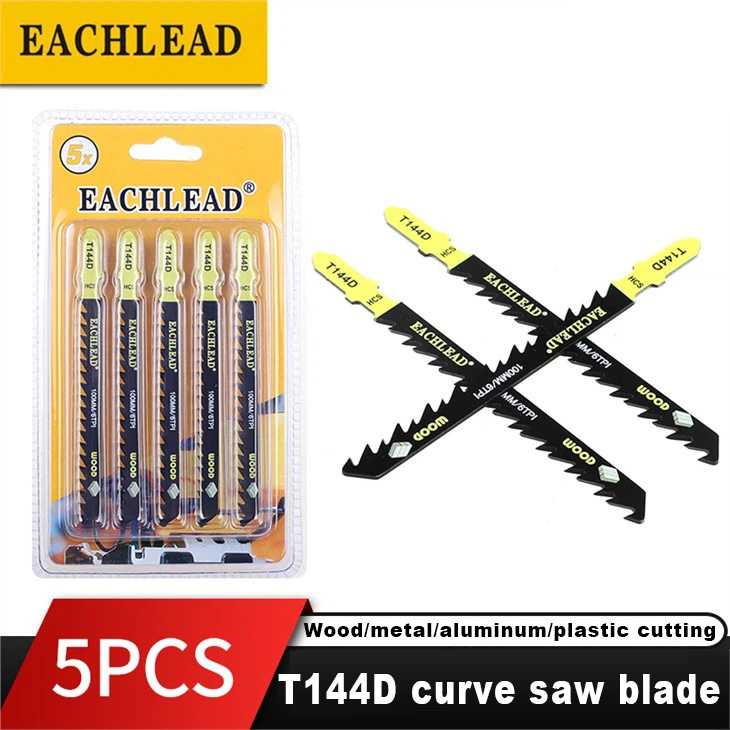
A jigsaw blade request that says only “for MDF” or “for particleboard” is not specific enough to buy from safely. MDF, particleboard, and faced boards can require different edge expectations; the saw may accept a particular shank only; and a straight cut, a tight curve, and a visible laminated face are not the same job.
Start with a job record. Then compare a candidate blade against that record and the saw manufacturer’s instructions. That approach is more useful than treating a generic wood blade as an automatic fit.

Build the job record before choosing the blade
The material name is one input, not the entire selection. Record whether the board is MDF or particleboard, then note the face that matters. A raw panel, a melamine-faced panel, and a laminated panel may all demand a different approach to the exposed edge.
| Record this | Why it changes the discussion | What a supplier or operator needs to know |
|---|---|---|
| Panel construction | MDF and particleboard are different engineered panels. | MDF or particleboard; raw, coated, laminated, or melamine-faced. |
| Required edge | A hidden cut and a visible face have different acceptance criteria. | Which face must remain presentable; whether light sanding is acceptable. |
| Cut type | Blade geometry must suit the path, not just the board. | Straight cut, cut-out, broad curve, or tight curve. |
| Cut length and repetition | A one-off access opening is different from repeated production work. | Trial quantity, repeated quantity, and whether a spare blade is needed. |
| Saw interface | A blade can be unsuitable even when its teeth look appropriate. | Saw make/model, shank system, clamp condition, and instructions. |
| Candidate evidence | A label or listing must describe the actual candidate. | Published application, usable length, tooth direction, and any stated limitations. |
For general blade selection, ToolsToday’s jigsaw blade guide distinguishes shank types and explains how teeth, blade width, material and cut direction enter the decision. That is a starting point, not a substitute for the saw manual or the candidate blade’s own application statement.
Translate the record into blade attributes
Use the table as a review tool. It does not assign a universal blade model or an exact tooth count.
| Job requirement | Attribute to compare | Practical decision boundary |
|---|---|---|
| Saw must hold the blade correctly | Shank and the manufacturer’s stated fit | Confirm the saw’s accepted shank before ordering. Do not infer fit from a photo. |
| Visible face needs protection | Tooth direction and the face orientation | For a coated or laminated face, assess which face needs the cleaner result. A down-cut candidate may be relevant only when its listing and safe handling are confirmed. |
| Edge quality matters more than speed | Tooth pattern and cut-control plan | Compare a finer-cut candidate with the required finish, but trial it on off-cut material rather than promising a finish from TPI alone. |
| Long or repeated cuts create dust and heat concerns | Tooth clearance, blade condition, operating method | Stop if the cut stops clearing well or the blade is no longer tracking; do not force the saw. |
| Curves or cut-outs are needed | Blade width/geometry and usable length | Match the geometry to the radius and confirm the blade stays safely engaged through the material. |

A useful distinction is between material suitability and job suitability. A blade may be marketed for a wood-type material, yet still be the wrong choice for the required shank, curve, exposed face, panel thickness, or finish expectation. The best request is therefore: “Here is the board, the saw interface, the cut, the face to protect, and the result we need—what published blade option should we trial?”
For the underlying tooth-quality trade-off, see what jigsaw blade teeth control in a clean wood cut. For a faced board, reverse-tooth versus standard jigsaw blades for laminates is the more relevant internal pathway; it does not turn every laminate rule into an MDF rule.
Run a controlled scrap trial
A trial is especially valuable when the face is visible, the panel has an unknown coating, or the cut must be repeated. Keep the test small, documented, and comparable.
- Use an off-cut from the same board and face construction where possible.
- Install only a blade that the saw manufacturer says the tool can accept.
- Mark which face is the acceptance face and use the intended cut path or radius.
- Check the kerf, visible-face chipping, tracking, dust clearance, and any change in blade condition after the test.
- Record the candidate blade listing, saw setting used under the saw instructions, panel description, result, and any needed finishing step.
- If results are unacceptable, change one documented variable at a time instead of assuming the next blade is automatically better.
Trade guidance notes that finer tooth patterns can improve surface quality but can also require attention to clearance and heat; it also distinguishes down-cut blades for reducing splintering on the upper laminated face. Read Protrade’s jigsaw blade selection article as a conditional comparison, and follow the instructions for the actual saw and blade.
Keep blade choice separate from safe machine use
Blade selection does not replace safe workholding, guarding, dust control, or the jigsaw manufacturer’s operating instructions. Engineered boards can create substantial dust during cutting. Follow the tool instructions and applicable requirements; OSHA’s woodworking overview is a useful high-level reminder that machine safety remains a separate control from accessory selection.
Compare a published EACHLEAD jigsaw-blade family with your job record
EACHLEAD’s jigsaw blade category is the verified starting point for comparing the site’s published jigsaw-blade families, including T-shank, Makita type, and half-bore categories. Its live listings include wood-cutting blade descriptions, but the category does not establish a dedicated MDF or particleboard SKU for every board, saw, or finish requirement.

Send the job record—not just the phrase “MDF blade”—when requesting a candidate comparison. Include the saw interface, board construction, face/coating, panel thickness, cut type, visible-edge requirement, and intended trial quantity. Ask EACHLEAD to confirm which currently published blade listing is relevant and which details still need a trial. This recommendation is a route to specification confirmation, not a claim that the pictured or any generic wood blade is already proven for your application.
References
- ToolsToday: Jigsaw Blades – Not So Scary — general shank, tooth-pattern, blade-width, and cut-direction distinctions.
- Protrade: Which Jigsaw Blade To Use For The Job — material, finish, tooth-direction, and operating-condition considerations.
- OSHA: Woodworking overview — high-level machine-safety context that remains separate from blade selection.