


Which Jigsaw Tooth Style Fits Laminate Chip Control?
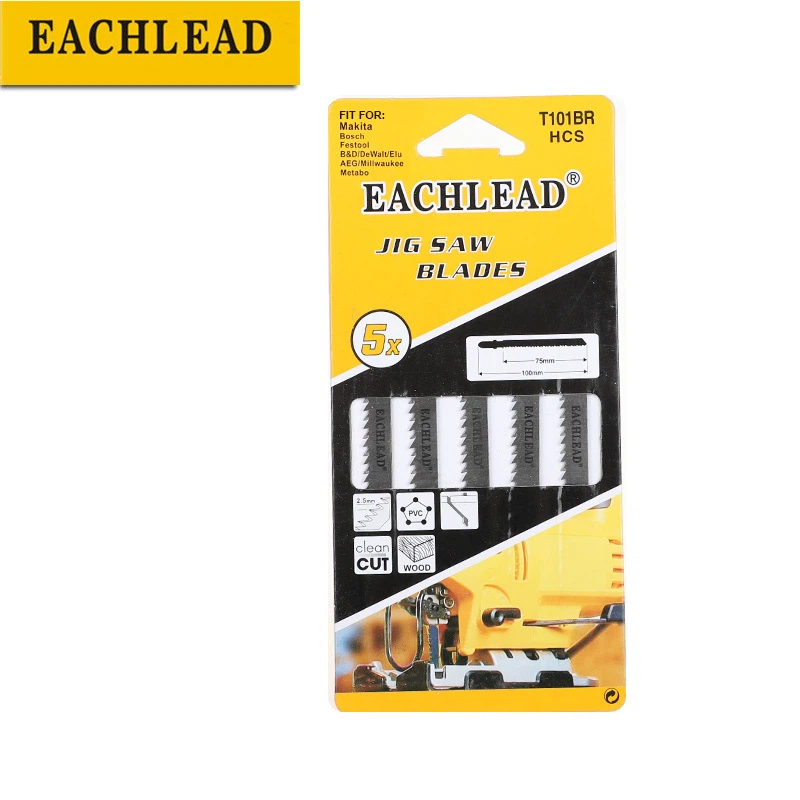
Reverse-tooth vs standard jigsaw blades for laminates is mainly a chip-control decision on the show face. Reverse-tooth styles point cutting action toward the supported surface, while standard teeth cut on the upstroke. Match the tooth direction to the visible face and support method. See the Jigsaw Blade category overview.
Part 1. What does the reverse-tooth vs standard choice control?
The choice controls which laminate face is most likely to chip during the cut.
Important: Laminate chip control depends on setup and accessory choice per the CPSC power-tool safety guidance.
Part 2. How do standard upward-cutting teeth behave on laminate?
Standard teeth often leave the bottom face cleaner when the show face is down and supported.
| Tooth style | Typical show-face case | Setup note |
|---|---|---|
| Standard upward | Show face down with backer | Support exit side |
| Reverse-tooth | Show face up | Mask line and clamp |
| Either | Unknown face priority | Test on scrap first |
Part 3. When does a reverse-tooth blade help on laminate?
Reverse-tooth blades are often selected when the show face is on top or chip-sensitive surfaces need extra control.
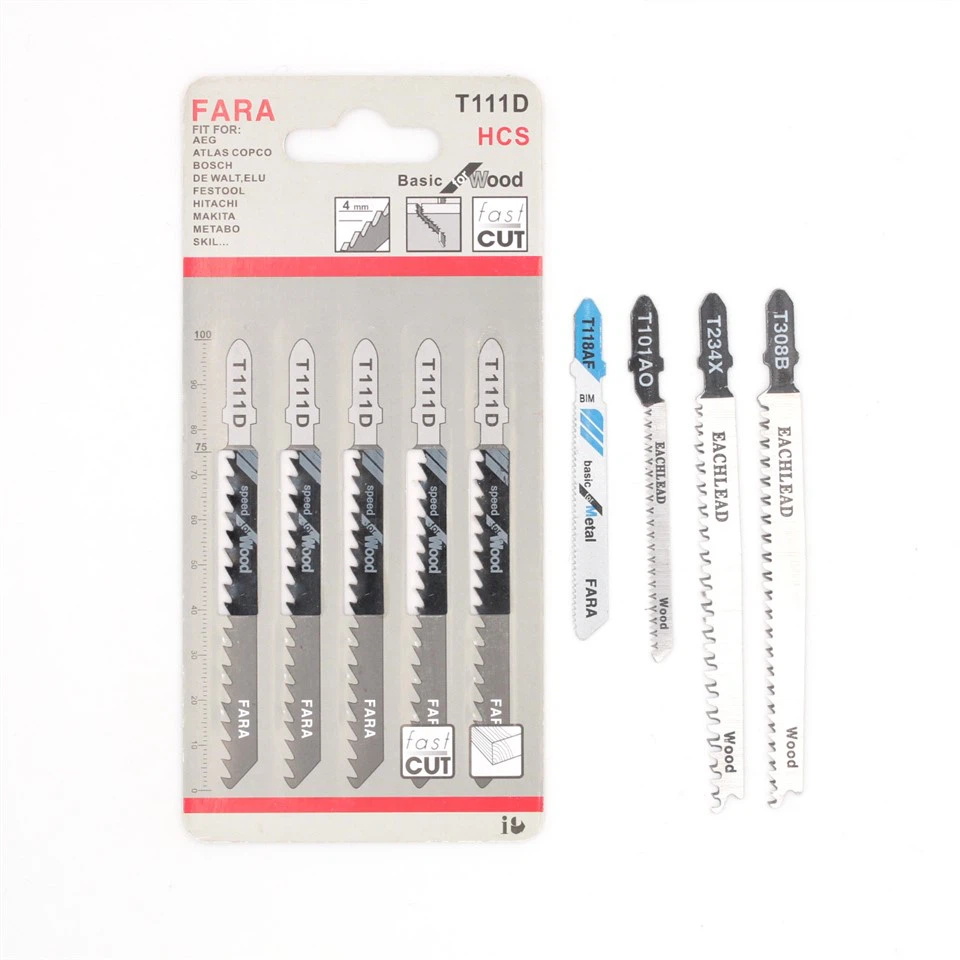
Cross-check the jigsaw blades for laminate and countertops guide before standardizing a tooth family.
| Laminate job | Reverse-tooth fit | Standard-tooth fit |
|---|---|---|
| Countertop cutout | Often considered for top-face chip control | Possible with backer if face is down |
| Flooring plank | Depends on show face | Common with support |
| Veneer panel | High finish sensitivity | Test both on scrap |
Part 4. How do TPI and blade stiffness still matter?
Tooth count and body stiffness change finish even when the tooth direction is correct.
| Factor | Effect on laminate finish | RFQ note |
|---|---|---|
| TPI band | Edge quality | State thickness |
| Blade stiffness | Wander and chip | Note cut length |
| Shank fit | Tracking | Verify tool clamp |
Part 5. What setup steps belong with either tooth style?
Masking, backer boards, and feed control are still required for repeatable results.
| Setup step | Why it matters | Common skip |
|---|---|---|
| Mask cut line | Reduces surface chip | Assuming blade alone is enough |
| Backer board | Supports exit fibers | Cutting without support |
| Steady feed | Prevents snag | Forcing the cut |
Part 6. Which blade specs belong in a laminate RFQ?
Document show face, material build, thickness, and shank type before comparing tooth families.
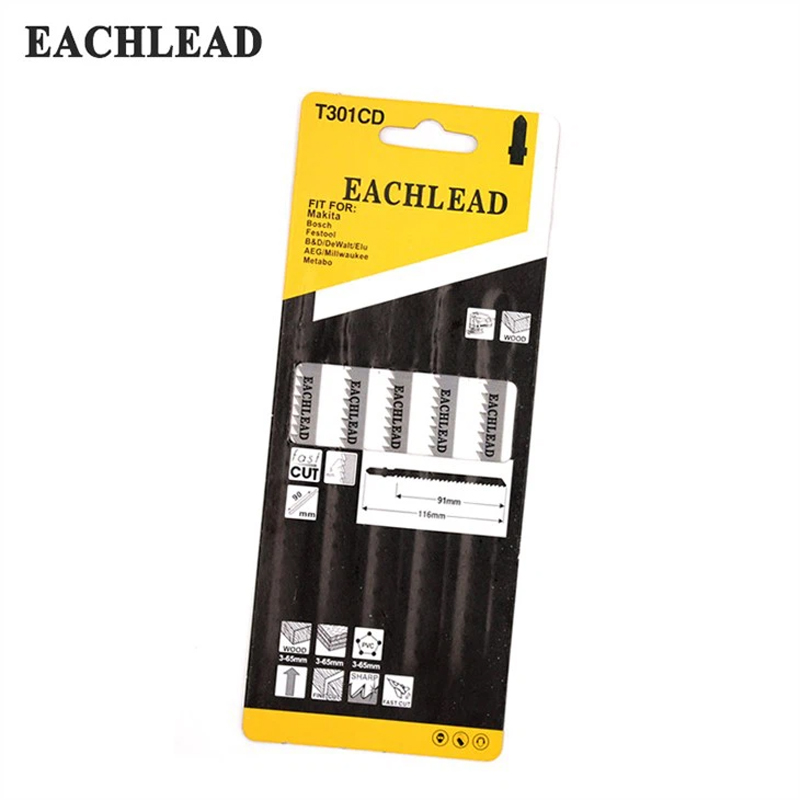
Product recommendation: review the T101BR Jigsaw Blade for Cutting Countertop only after show face and support method are documented. Target URL: /product/t101br-jigsaw-blade-for-cutting-countertop/; natural anchor: T101BR Jigsaw Blade for Cutting Countertop.
Fit Boundary
Fits teams that can test on scrap laminate before production cuts. Not sufficient when zero-chip output is required without verification.
Why not recommend as a default: do not recommend this SKU for rough demolition cuts, thick hardwood sizing, or metal work without verifying a separate blade family.
Part 7. What mistakes look like the wrong tooth direction?
Chip-out on the wrong face often traces to tooth direction or support—not only to TPI.
To compare EACHLEAD laminate blades for a program or OEM pack, send the material list and finish requirement. Review jigsaw blade products after inputs are defined.
FAQs
What is a reverse-tooth jigsaw blade?
It is a blade whose teeth are oriented to cut primarily on the downstroke, which can reduce chip-out on the top face in some laminate setups.
Should I use reverse-tooth blades on every laminate job?
No. The correct choice depends on which face is show-quality and how the panel is supported.
Can standard teeth cut laminate cleanly?
They can when the show face is oriented correctly and the panel is supported with a backer board.
Do reverse-tooth blades cut slower?
They may feel slower in some materials because tooth direction changes chip formation and feed response.
Are reverse-tooth blades the same as down-cut blades?
Trade language overlaps, but buyers should confirm the exact tooth style on the SKU label rather than assuming identical behavior.
What TPI works with reverse-tooth laminate blades?
Higher TPI bands are common for finish-sensitive laminate, but support and feed still decide the result.
What should distributors label on reverse-tooth SKUs?
Label tooth direction, material intent, TPI band, shank type, and whether the SKU targets countertop or panel work.