


Which Reciprocating Blade Set Fits a Distributor Line?
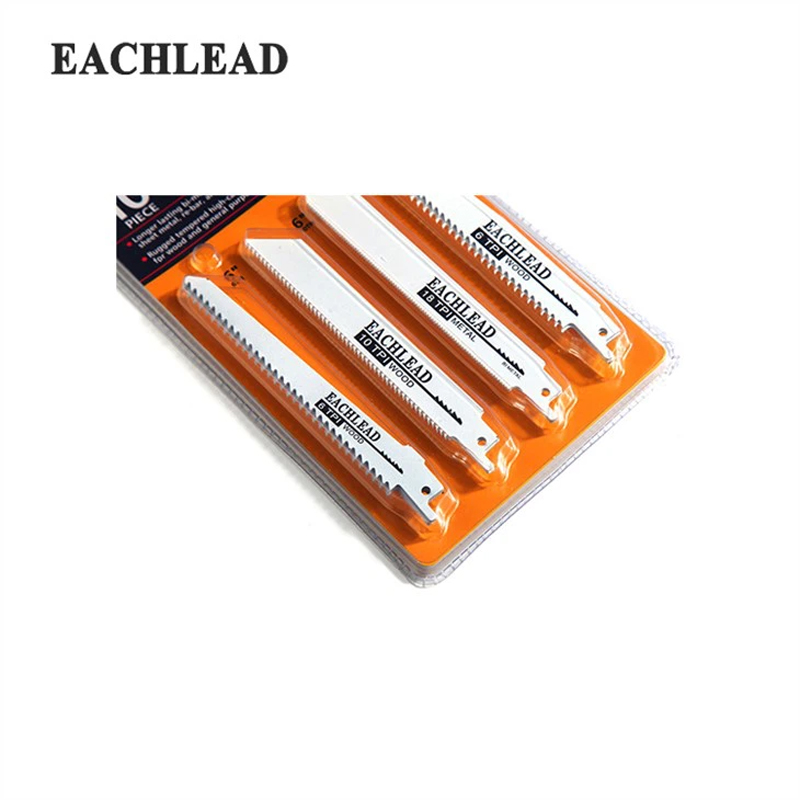
How to Choose a Reciprocating Saw Blade Set for Distributors is a slot-planning exercise: every blade in the pack must answer a job your customers actually run. Demand data first, slot definitions second, catalog listings third. For the commercial path, review the reciprocating saw blade product category.
Part 1. What job does a blade set do for a distributor?
A set converts a shelf decision into a single purchase. The end customer buys coverage for a weekend of mixed work; the distributor sells one barcode instead of persuading anyone through six single-SKU choices.
The economics only work when every slot earns its place. A blade that never matches local jobs is dead weight duplicated in every set sold, and it is the first thing customers mention in reviews.
| Set planning input | Why it matters | What to record |
|---|---|---|
| Local demand mix | Slots must mirror real jobs | Sales data by application |
| Channel | Retail card versus contractor pack | Display and count needs |
| Material coverage | Wood, nail-wood, thin and thick metal | Slot definitions with ranges |
| Label space | Honest wording must fit the card | Wording plan per slot |
Important: Use the proper blade for the material and follow the tool instructions; see OSHA handheld saw guidance.
Part 2. Which slots belong in a general-purpose set?
Four slots cover most general-purpose demand: a coarse wood blade for framing, a nail-embedded demolition blade, a fine-pitch thin-metal blade, and a medium-pitch blade for thicker sections. Counts then weight the slots toward local demand rather than splitting evenly.
Slot definitions come before model names. Write each slot as a material plus a size range, the way the reciprocating saw blade buying guide frames single-blade decisions, and let the supplier propose models into those definitions.
Holder compatibility stays a set-level requirement. Every blade in the pack should share the universal shank standard, a point the blade fit and compatibility overview covers for mixed tool fleets.
Part 3. What does a live mix-set listing actually specify?
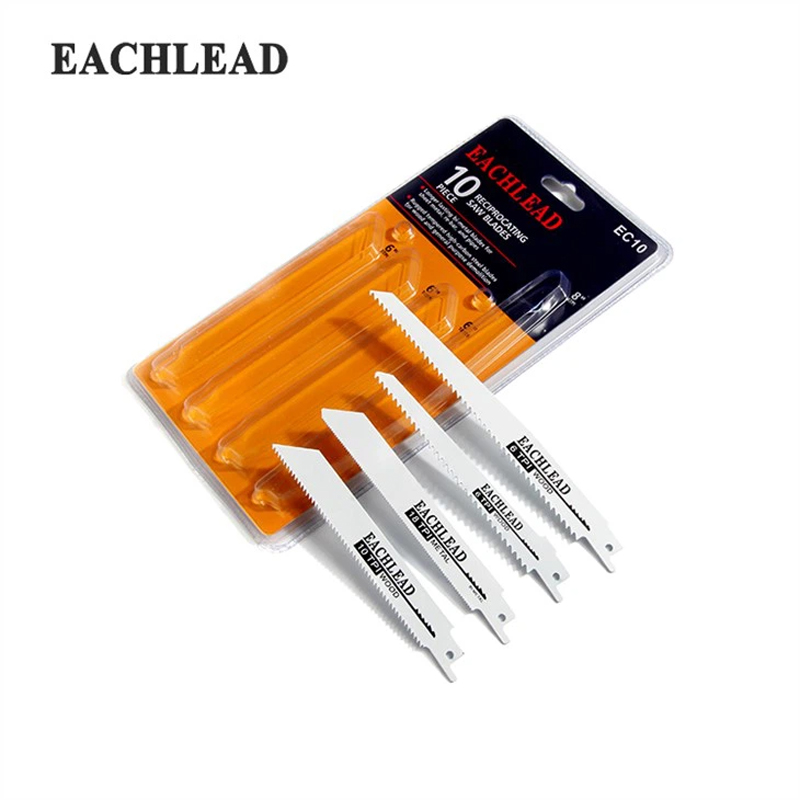
Read a real set listing before writing the RFQ. The EC10 page on this site lists a 10-piece double blister package and prints its material options – HCS in 65Mn and SK5, bi-metal in 6150+M2, 6150+M42, D6A+M2, and D6A+M42 – with a construction-timber application range of roughly 6-100 mm at set level.
Notice what the listing does and does not say. It specifies package count, material families, and a set-level application range; it does not certify each included blade for every material a buyer might imagine, which is exactly the gap a slot plan and sample test must close.
| Listing element | EC10 example | RFQ follow-up |
|---|---|---|
| Package format | 10-piece double blister | Confirm counts per slot |
| Material options | HCS 65Mn/SK5; four bi-metal pairings | Fix the pairing on the PO |
| Application range | Construction timber approx. 6-100 mm | Map each slot to its own range |
| Customization | Print and packaging options stated | Agree label wording per slot |
Part 4. How should set labels describe each blade honestly?
Each blade on the card needs three facts: material family, pitch, and intended application range. A card that says “wood 6 TPI, nail-embedded wood 10 TPI, metal 18 TPI” sells the set and pre-answers the support call.
Resist the panoramic claim. Printing “cuts everything” on a mixed set invites the exact returns the slot plan was built to avoid, and it wastes the honest listing language the supplier already provides.
Part 5. When do sets beat single-SKU stocking, and when not?
Sets win at the entry point: gift buyers, new tool owners, and general maintenance crews who want coverage without study. They also simplify promotions, since one barcode discounts cleanly.
Single SKUs win with professionals who burn through one blade type. A framing crew wants sleeves of the same wood blade, not nine companions they will not use, which is where the bulk wholesale buying guide takes over from set logic.
Most distributor lines need both layers. The set covers the walk-in generalist; the single-SKU sleeves cover the repeat professional, and the sales data tells you the ratio.
Part 6. What belongs in a blade-set RFQ?
Send the slot plan, not a vague set request. State each slot’s material and size range, the count per slot, the total set count, the material family preferences, and the label wording per blade, then ask the supplier to propose models against each slot.
Packaging finishes the specification. Blister format, card artwork, barcode placement, and private-label needs are all stated options on this site’s listings, so put them in writing rather than assuming defaults.
| RFQ field | Buyer supplies | Supplier confirms |
|---|---|---|
| Slot plan | Materials, ranges, counts per slot | Proposed model per slot |
| Materials | Family preferences per slot | Grade pairing on quotation |
| Packaging | Format, artwork, barcode, label wording | Print and carton plan |
| Validation | Sample plan and acceptance criteria | Sample set commitment |
Product recommendation: review the EC10 reciprocating saw blade mix set as the live starting point. Why it fits: it is the site’s listed mixed set, with printed package format and material options ready to map against a slot plan. Why not recommend as a default: its set-level listing names a construction-timber range, and no set purchase certifies every blade for every job, so composition must match your slot plan and pass a sample test.
Fit Boundary
Distributors and importers who know their demand mix and will test sample sets get a defensible assortment from this workflow. It excludes commercial terms deliberately, and it cannot substitute for local sales data or for acceptance testing before a listing goes live.
Part 7. How should a new set be validated before listing?
Order sample sets and run each slot on its declared job. One afternoon with framing lumber, nail-embedded offcuts, and sheet stock answers whether the composition matches the card, and photographs of each test cut become the acceptance record.
Pilot before the full rollout. A limited release through a few counters shows which slots deplete and which survive untouched, and that consumption pattern is the evidence for adjusting the next composition round.
To move an assortment forward, send the assortment details to EACHLEAD: slot plan, counts, material preferences, label wording, packaging needs, sample plan, and target quantity context.
FAQs
What should a reciprocating saw blade set include?
Slots that mirror local demand: typically coarse wood, nail-embedded demolition, fine-pitch thin metal, and a medium-pitch thicker-section blade, weighted by sales data.
How many blades belong in a distributor set?
Common retail formats run five to ten pieces; the EC10 listing on this site shows a 10-piece double blister example. Let channel and price point set the count.
What does the EC10 mix set list as its composition?
A 10-piece double blister package with HCS (65Mn, SK5) and bi-metal (6150+M2, 6150+M42, D6A+M2, D6A+M42) material options and a construction-timber range of roughly 6-100 mm at set level.
Should sets mix wood and metal blades?
General-purpose retail sets usually should, because buyers want coverage. Contractor-channel packs often narrow to one application family instead.
How should set labels describe each blade?
Material family, pitch, and intended application range per blade, printed on the card. Avoid panoramic claims that outrun the listings.
Do sets replace single-SKU stocking?
No. Sets serve entry-point coverage; professionals rebuy single SKUs in volume. Most lines need both layers in a data-driven ratio.
What should a blade-set RFQ include?
Slot plan with ranges and counts, material family preferences, packaging and label wording, private-label needs, sample plan, and written acceptance criteria.