


Which Reciprocating Blade Fits PVC Pipe Cutting?
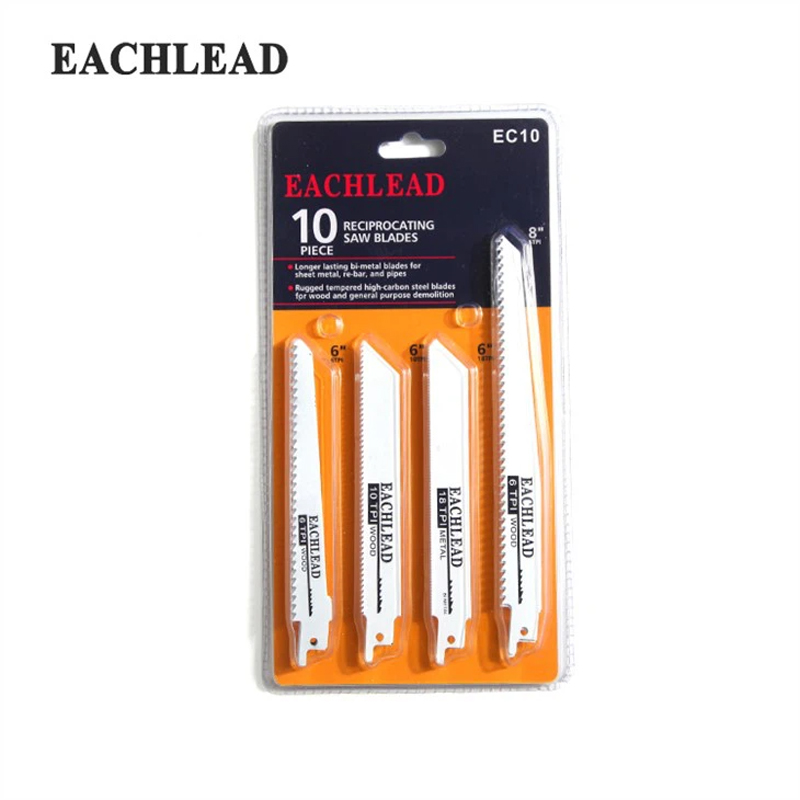
How to Choose a Reciprocating Saw Blade for PVC Pipe begins with the workpiece and cut conditions, not with a marketing hierarchy. Record the holder, material, dimensions, access, and required edge before comparing blade families. For the commercial path, review the reciprocating saw blade product category.
Part 1. What makes PVC pipe different from wood or metal?
PVC pipe is relatively soft, but its round wall can vibrate, pinch the blade, or melt at the edge if heat builds. The selection problem is therefore not simply “use a plastic blade.” Buyers must match tooth density, length, body stiffness, and speed control to the pipe diameter and wall.
The cut also has a downstream requirement. A rough demolition cut may only need safe separation, while a plumbing joint may need a square, deburred end. That acceptance condition should be written before a blade is selected.
| PVC decision input | Why it matters | What to record |
|---|---|---|
| Pipe diameter | Sets reach and workholding | Nominal and outside diameter |
| Wall thickness / schedule | Changes tooth engagement | Actual wall or schedule |
| Edge requirement | Sets process and finish target | Rough removal or joint-ready |
| Access | Limits blade and tool movement | Bench, trench, wall cavity |
Important: Use the proper blade for the material and follow the tool instructions; see OSHA handheld saw guidance.
Part 2. Which tooth count should buyers evaluate for PVC?
Industry guides commonly place PVC in a moderate tooth-count range rather than the very coarse teeth used for fast wood cutting. More engaged teeth can reduce grabbing at a thin pipe wall, while overly fine teeth can generate heat if the operator forces the saw.
Treat published TPI suggestions as test ranges, not EACHLEAD model specifications. The current reviewed product pages do not explicitly verify a PVC-pipe SKU, so the buyer should ask for a plastic-compatible recommendation and test it on the actual pipe schedule and diameter.
For the broader selection sequence, use the reciprocating saw blade buying guide to verify holder, length, and blade-family inputs before requesting a PVC-specific candidate.
Part 3. How should blade length match pipe diameter and access?
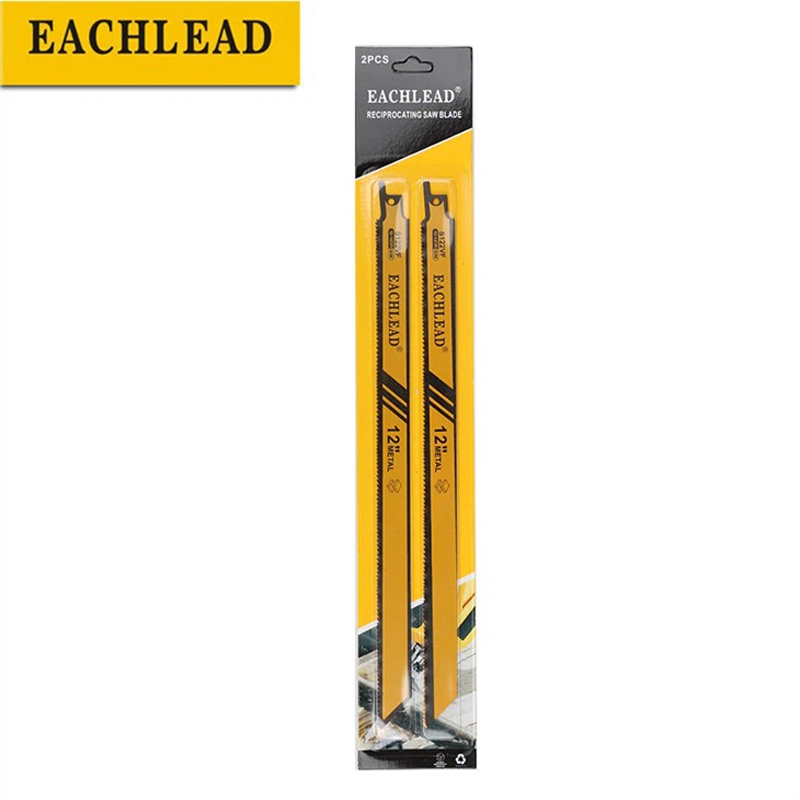
Length should provide enough reach through the pipe while limiting unnecessary overhang. A blade that is too short can strike the far wall or leave the cut incomplete. A blade that is much longer than needed flexes more and may produce an angled face.
Access around installed plumbing changes the choice. In a confined cavity, a compact blade can improve control, but the operator must also verify what lies behind the pipe. For open bench work, the pipe can be rotated or supported to keep the cut line square.
| Field symptom | Likely category | First correction |
|---|---|---|
| Melted edge | Heat and forced feed | Reduce speed/feed; verify tooth range |
| Chatter | Weak support or coarse engagement | Clamp and test more teeth |
| Crooked face | Overhang or moving pipe | Shorten blade; improve support |
| Breakout at end | Pinching offcut | Support both sides |
Part 4. What setup controls melting, chatter, and a crooked cut?
Clamp the pipe so it cannot roll, but do not deform the wall. Mark a square cut line, place the shoe firmly against the work where the tool instructions permit, and start at a controlled speed. Forcing the stroke raises heat and can leave a melted burr.
Support both sides of the cut when practical. Near the end of the stroke, the offcut can move and pinch the blade. A controlled finish reduces breakout and makes post-cut deburring easier.
A controlled trial should hold the tool, workpiece, and setup constant while changing one blade variable. Record the edge, heat, tooth condition, vibration, and operator feed. This produces evidence a distributor can use instead of relying on a broad product label.
Part 5. When should a pipe cutter or hacksaw be used instead?
A reciprocating saw is useful for fast removal and restricted access, but it is not automatically the best tool for every PVC joint. A dedicated pipe cutter can provide a more controlled square end on compatible pipe sizes. A hand hacksaw may offer better control where power-tool clearance is limited.
The selection brief should name the required edge, available space, and whether the pipe is installed or loose. If a square sealing surface is critical, the team should choose the process that can be verified rather than defaulting to the fastest tool.
Do not treat a faster first cut as proof of a better production choice. The acceptance test should include repeatability, edge condition, safe control, and whether the selected blade stays within its listed material boundary.
Part 6. What belongs in a PVC-pipe blade RFQ?
Because no reviewed EACHLEAD product listing explicitly claims PVC-pipe suitability, the RFQ must carry the application evidence. Provide PVC type, nominal diameter, wall thickness or schedule, installed versus bench cutting, access limits, and the desired edge condition.
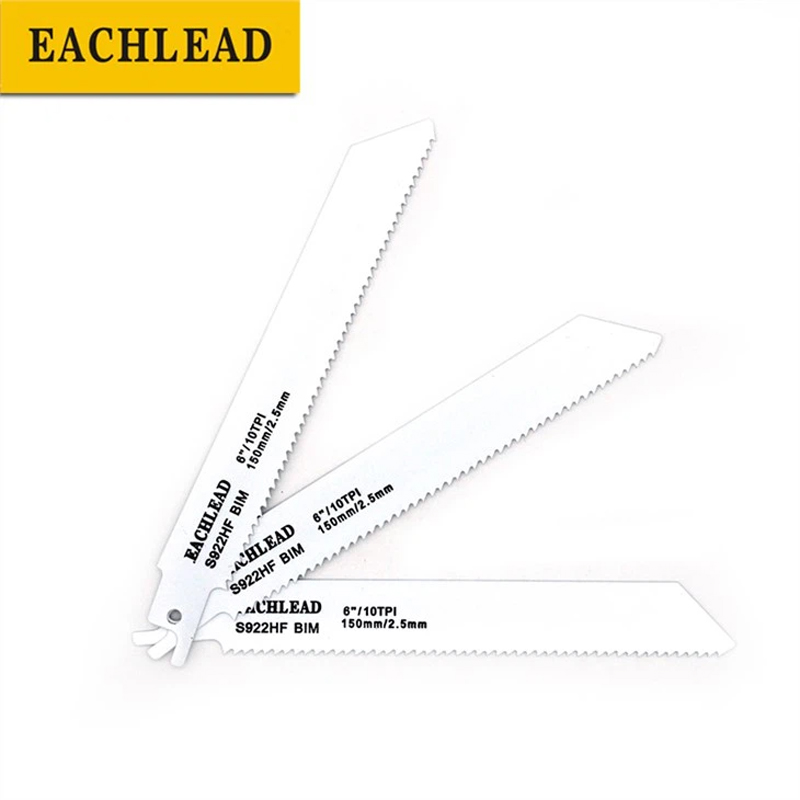
Ask the supplier to identify the candidate blade material, TPI, length, body dimensions, and listed application. Require a sample cut before a distributor labels the SKU for PVC. The recommendation should remain conditional until the cut is checked for squareness, chatter, melting, and burr.
| RFQ field | Buyer supplies | Supplier confirms |
|---|---|---|
| Pipe | PVC type, diameter, wall | Listed material fit |
| Cut | Installed/bench and edge target | TPI and tooth style |
| Access | Clearance behind and around pipe | Blade length and body |
| Validation | Sample pipe and acceptance criteria | Candidate SKU and label wording |
Product recommendation: review the Reciprocating Saw Blades Category only after the RFQ fields are documented. No reviewed EACHLEAD product page explicitly verifies a specific reciprocating blade for PVC pipe, so this article recommends an RFQ and sample test rather than a model claim.
Fit Boundary
This workflow fits buyers who can run a controlled sample and verify the product listing. It is not sufficient where the tool is damaged, the holder is unknown, or the project requires an unsupported performance guarantee.
Part 7. How should distributors prevent wrong-PVC-blade returns?
Do not label a general-purpose blade as a PVC blade without product evidence. Separate the application claim from the assortment description. A mixed set can help a workshop compare lengths and tooth densities, but the set itself is not proof that every included blade fits PVC.
Return records should capture pipe size, wall, blade model, TPI, length, speed setting, support method, and the observed defect. Those details help the supplier distinguish melting from chatter, overhang, a dull blade, or an unsuitable tooth pitch.
To request a configuration review, send the application details to EACHLEAD: tool, holder, workpiece, dimensions, cut geometry, current blade, observed failure, and target pack quantity.
FAQs
Can a reciprocating saw cut PVC pipe?
Yes, when the pipe is secured and the blade, length, and speed are suitable. A pipe cutter or hacksaw may be better when a controlled square end is required.
What TPI should be tested for PVC pipe?
Moderate tooth-count ranges are commonly suggested, but the correct range depends on wall thickness. Ask for a plastic-compatible SKU and test the actual pipe.
Should the blade be longer than the pipe diameter?
It must safely clear the section throughout the stroke, but excessive overhang increases flex. Check the tool stroke and blade length together.
Why does PVC melt during a reciprocating cut?
Excess speed, forced feed, a dull blade, or unsuitable tooth density can raise heat. Slow the process and test a suitable blade.
How do I keep PVC pipe from rolling?
Use appropriate clamps or a pipe vise without crushing the wall. Keep hands away from the cutting path.
Does EACHLEAD list a dedicated PVC reciprocating blade?
No reviewed public product page explicitly verifies that application. Use the category and contact path for an RFQ rather than assuming a model.
What should distributors put on a PVC blade label?
Only claims supported by the product specification and sample test: material fit, TPI, length, holder, and tested pipe range.