


Demolition Reciprocating Saw Blades: A Buying Guide
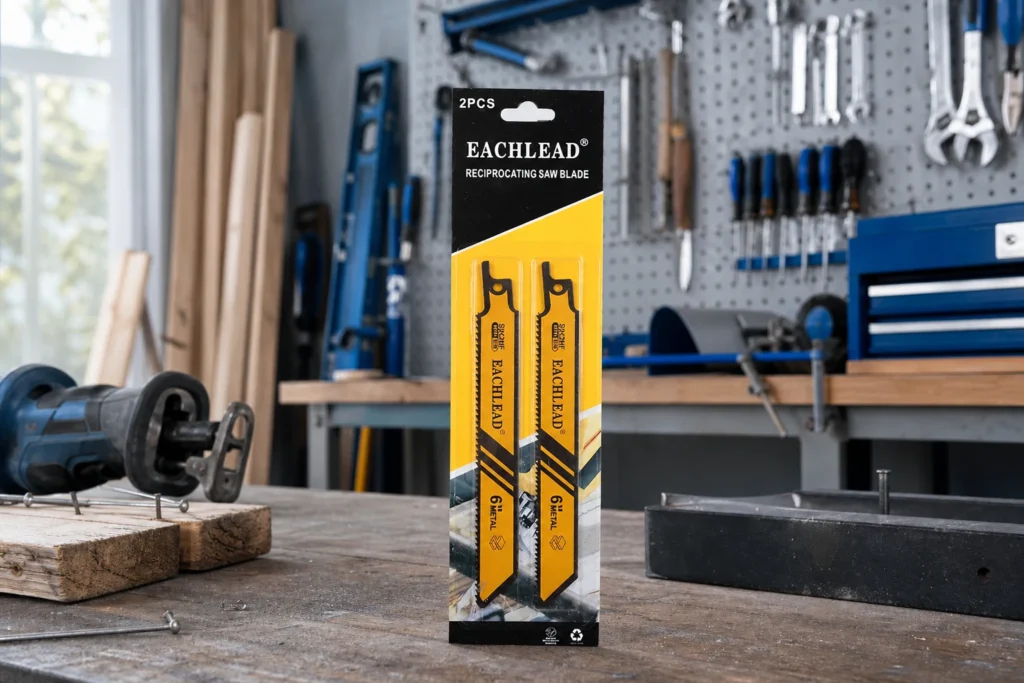
Demolition reciprocating saw blades are built for nail strikes, side loading, and fast material removal in framing, strip-out, and pallet work—not the same as fine metal or pruning lines. Distributors should stock thicker bi-metal bodies with aggressive TPI (often roughly 5–10) and label them separately from standard remodel SKUs so crews do not grab a thin wood blade for a gut-rehab wall.
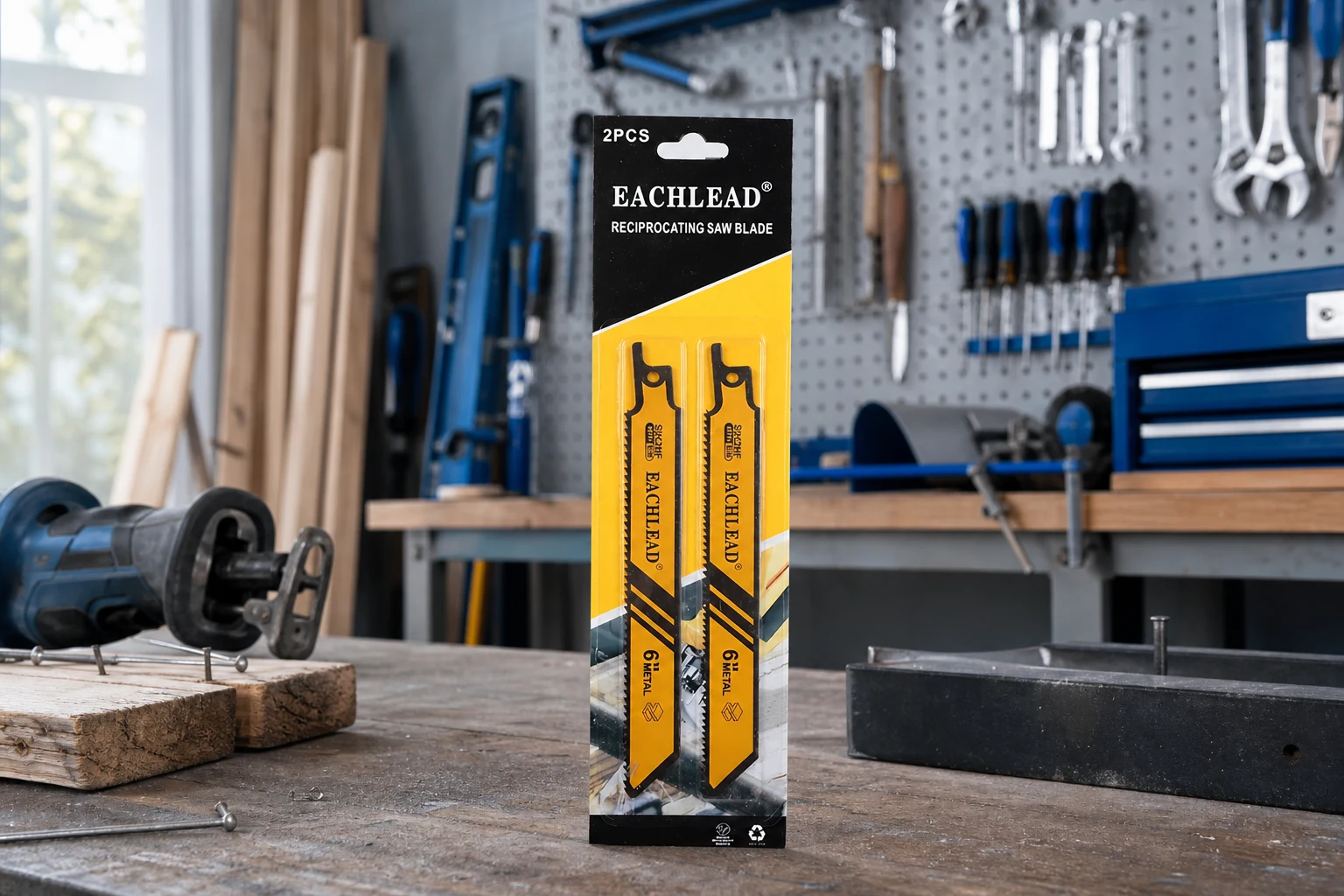
Part 1. Why Demolition Work Needs Thicker Bi-Metal Blades
Demolition cuts punish blades with embedded nails, prying loads, and debris-filled kerfs. Industry buying guides describe demolition blades as bi-metal constructions with thicker bodies (often roughly 0.050–0.062 in vs thinner general-purpose stock) and wider tooth set.
High-carbon steel (HCS) wood blades flex well in green timber but typically round over quickly when teeth hit shank nails or light gauge fasteners in old framing.
Wholesale buyers should merchandise demolition SKUs in their own planogram bay—mixing them with pruning or fine metal cards drives returns when a 14 TPI metal blade gets used on a nail board.
Field reps can shorten reorder cycles by logging which TPI and length combinations survive a standard nail-board demo—minutes-per-blade beats adjectives on the blister card.
> **From the field:** “I burn through a fistful of bimetal blades on a remodel gut—nails, shingles, and subfloor layers.” — Fine Homebuilding field review
Distributors exporting mixed demolition cartons should keep thicker-body SKUs in their own HS description line so customs brokers do not classify them as generic wood-cutting blades.
Part 2. How TPI and Blade Length Affect Demolition Cuts
Teeth per inch (TPI) controls chip size and aggression. Coarser pitches (roughly 5–8 TPI) remove material faster in softwood demolition; variable-pitch blades (e.g., 8/14 or 10/14) help when one cut crosses wood, nails, and light metal.
Blade length trades reach for control. Nine inches is the common remodel default; twelve inches helps deep joists but may whip in plunge cuts unless the shoe stays planted.
Match length to access: short blades feel steadier in tight electrical chases; long blades help roof strip-out when the user can support the workpiece.
Hypercut or deep-gullet tooth forms appear in some demolition lines to clear chips through insulation and plaster dust—confirm tooth geometry on samples before approving artwork.
When stocking 12 in demolition blades, add a counter card note about whip control—unsupported long blades are a common cause of user complaints that look like quality defects.
| Demolition task | Typical TPI | Length note | Blade type |
|---|---|---|---|
| Framing studs with nails | 6–10 | 9 in common | Bi-metal demolition |
| Roof / pallet strip-out | 5–8 | 9–12 in | Bi-metal, aggressive set |
| Mixed wood + light metal | 8/14 variable | 9 in | Bi-metal variable pitch |
| Thin conduit in walls | 10–14 | 6–9 in | Bi-metal (not pruning) |
Part 3. Bi-Metal vs Carbide for Demolition Assortments
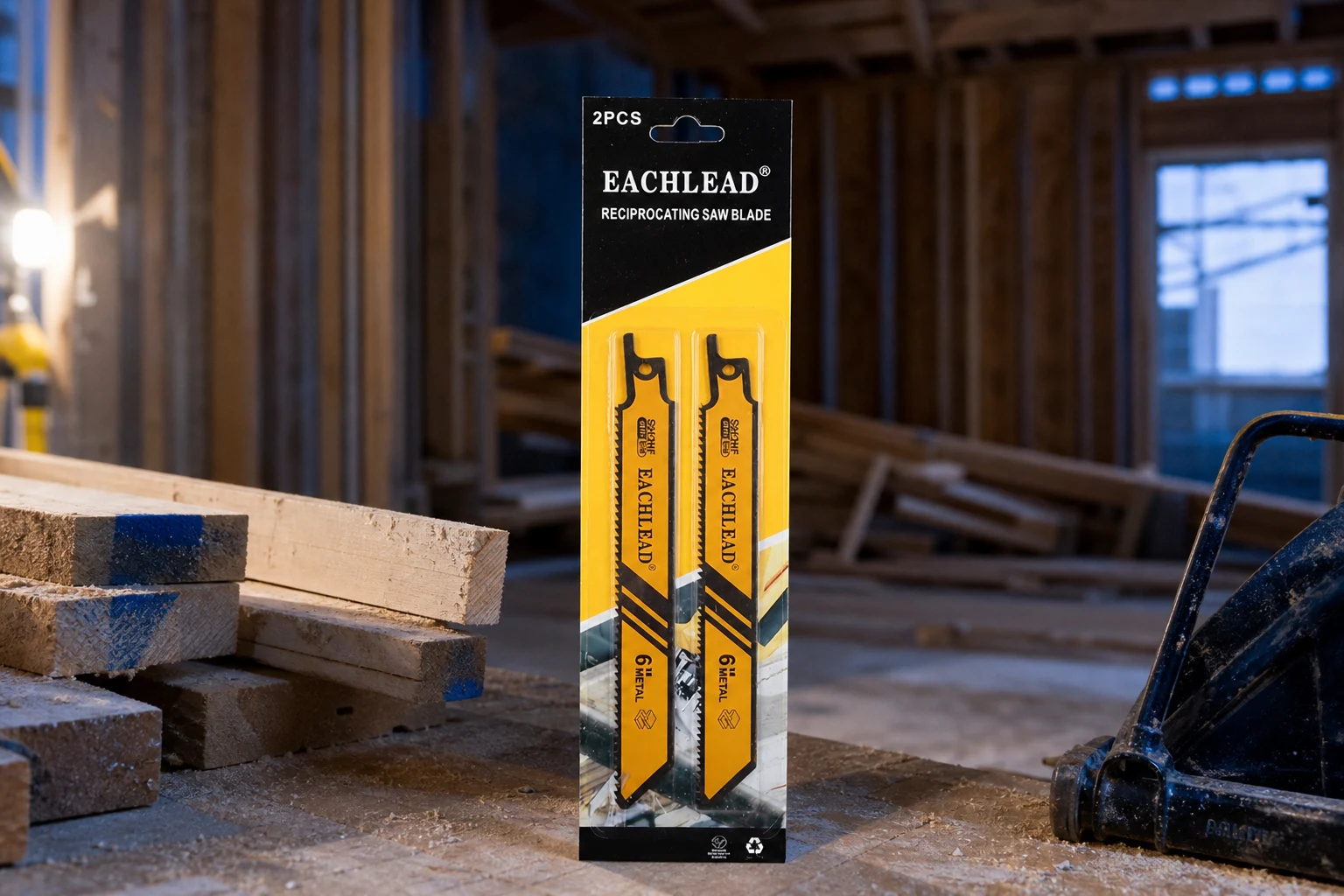
Bi-metal remains the default demolition line for nail-embedded lumber: flexible back, HSS teeth, and mid-range cost. EACHLEAD wood-with-nails bi-metal SKUs such as S1122VF for remodel framing fit hardware and rental channels that need a clear nail-board story.
Carbide-tipped demolition blades can last longer in abrasive stacks—think asphalt shingle, fiber-cement, plaster, and thinset-heavy subfloor—but field reviews note bi-metal may cut faster in clean nail-embedded wood at lower unit cost.
Stock carbide as a premium lane for abrasive demo, not as a drop-in replacement for every bi-metal remodel SKU in the same endcap.
| Blade type | Best demolition use | Trade-off | Typical channel |
|---|---|---|---|
| Bi-metal demolition | Nail-embedded framing, pallets | Mid price / life | Hardware, rental |
| Bi-metal variable pitch | Mixed wood + light metal | Slightly higher cost | Multi-trade |
| Carbide-tipped demo | Abrasive shingle, fiber-cement | Premium price | Specialty pro |
| HCS pruning | Green wood, not primary demo | Low cost, dulls on nails | Garden / seasonal |
Part 4. Matching Blades to Strip-Out and Framing Jobs
Internal strip-out favors shorter, aggressive blades in tight stud bays; structural demolition may need longer bi-metal bodies to reach deep beams while surviving nail clusters.
Cross-link education: wood-with-nails guide, metal selection guide, and general recip buying guide cover adjacent intents—demolition buyers still need a dedicated thicker-body lane.
OEM assortments should include at least one clearly labeled demolition SKU per length family (6 / 9 / 12 in) so export cartons do not default every slot to pruning geometry.
Part 5. Safety, Sourcing, and OEM Checklist for Buyers
Demolition throws chips, nails, and dust. Eye protection, gloves, and stable workholding are baseline; cordless users should watch for stall-induced heat at the teeth.
Wholesale buyers should request: TPI and length matrix, bi-metal grade, body thickness notes, packaging format, and nail-board cut tests. Contact EACHLEAD for OEM specs. Factory background supports export packaging.
Keep MOQ, freight, and sample policy in the quote thread—not as unverified promises on the product page.
Request factory photos of tooth set and color banding so retail cards match the steel inside the pack.
Recommended EACHLEAD Products
For project support, explore our related product line, solution options, and OEM/ODM capabilities on eachlead.com.
FAQ
What TPI for demolition reciprocating saw blades?
Roughly 5–10 TPI is common for aggressive wood demolition; variable-pitch 8/14 or 10/14 handles mixed wood and light metal in one cut.
What is the difference between demolition and standard reciprocating blades?
Demolition blades typically use a thicker bi-metal body and wider tooth set to survive nail strikes, prying, and side loading.
Can demolition blades cut through nails?
Bi-metal demolition blades are designed for nail-embedded framing; HCS wood-only blades dull quickly on fasteners.
Bi-metal vs carbide for demolition work?
Bi-metal is usually faster in clean nail-embedded lumber; carbide may last longer in abrasive shingle, plaster, and fiber-cement layers.
What blade length for framing demolition?
9 in is the common remodel default; 12 in helps deep beams but may whip unless the shoe stays planted.
How do OEM buyers spec demolition reciprocating blades?
Confirm TPI, length, bi-metal grade, body thickness, shank type, and blister labeling before MOQ orders.
References
- AIMS Industrial — Reciprocating Saw Blade Guide
- Discount Saw Blade — Reciprocating Buying Guide
- Fine Homebuilding — Demo Demon carbide review
- EACHLEAD S1122VF product page
Ready to discuss your project? Contact EACHLEAD engineering support with your project parameters and technical requirements.