


What Belongs in a Demolition Blade RFQ Checklist?
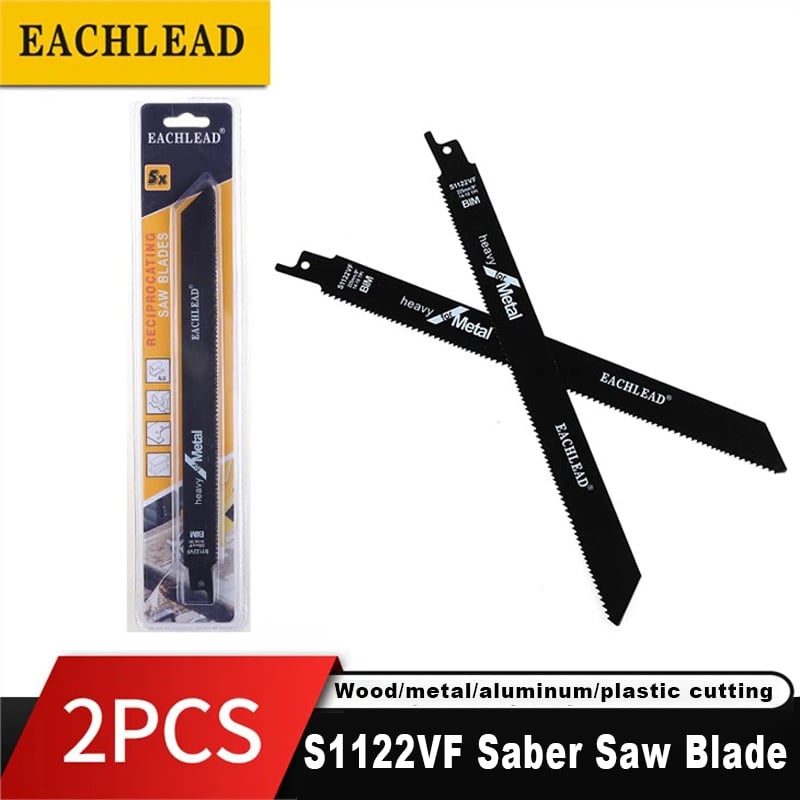
Demolition Reciprocating Saw Blade Spec Checklist for RFQs turns a shopping wish into a specification a factory can quote without guessing. Six field groups carry the load: application, dimensions, tooth spec, material, packaging, and acceptance. For the commercial path, review the bi-metal reciprocating saw blade category.
Part 1. Why does a demolition blade RFQ need its own checklist?
Demolition is a mixed-material duty, and “demolition blade” means different pitches, lengths, and bodies to different factories. An RFQ that only says the phrase invites the supplier to guess, and wrong guesses arrive in sea containers.
Buyers still comparing blade types should read the demolition blade buying guide first. This checklist assumes the type decision is made and the task is writing it down unambiguously.
| Field group | What it locks down | Typical dispute it prevents |
|---|---|---|
| Application descriptor | Workpiece mix and ranges | “It was never meant for that” |
| Dimensions | Length, width, thickness | Wrong stiffness or reach |
| Tooth specification | TPI or pitch, tooth form | Stripped teeth on nails |
| Packaging and labeling | Card, carton, wording | Retail rejection at receiving |
Important: Use the proper blade for the material and follow the tool instructions; see OSHA handheld saw guidance.
Part 2. How should the application be described in the RFQ?
Describe the workpiece mix the way catalog pages do: material plus size range. A useful demolition descriptor reads like “wood with embedded nails, sections roughly 5-175 mm, occasional light metal profiles,” which mirrors how live listings on this site state their ranges.
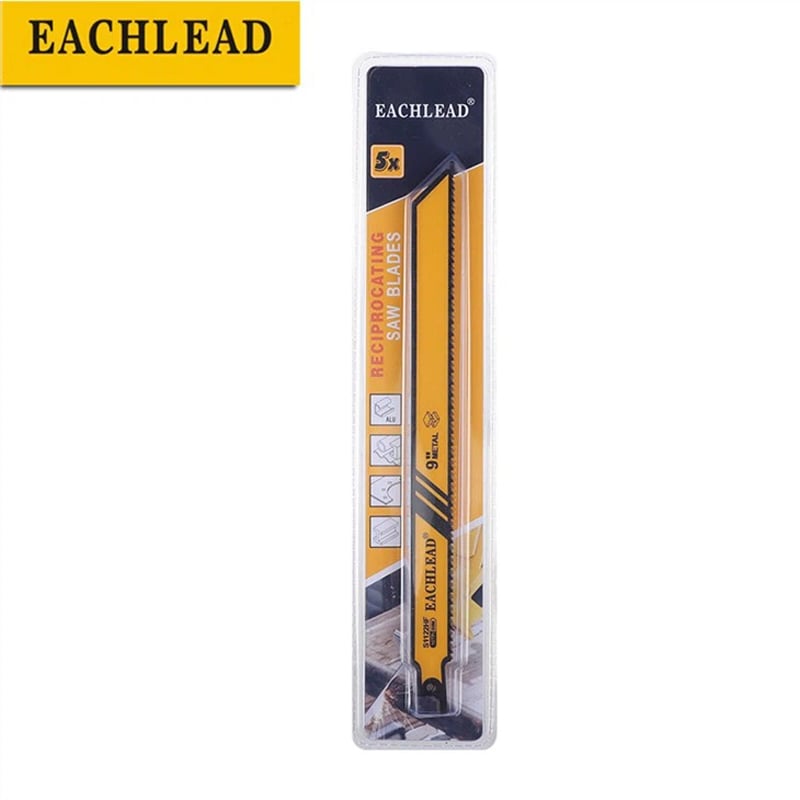
Steal the phrasing from a real listing. The S1122HF page, for example, states a pallet-repair application with wood-with-nails and metal in an approximate 5-175 mm range, and that sentence shape is exactly what an RFQ needs.
Name what the blade will not meet. Excluding masonry, thick plate, and flush-cut duty in the RFQ keeps the quoted SKU honest and keeps the wood-with-nails blade guide scenarios separate from heavier work.
Part 3. Which dimension and tooth fields prevent wrong deliveries?
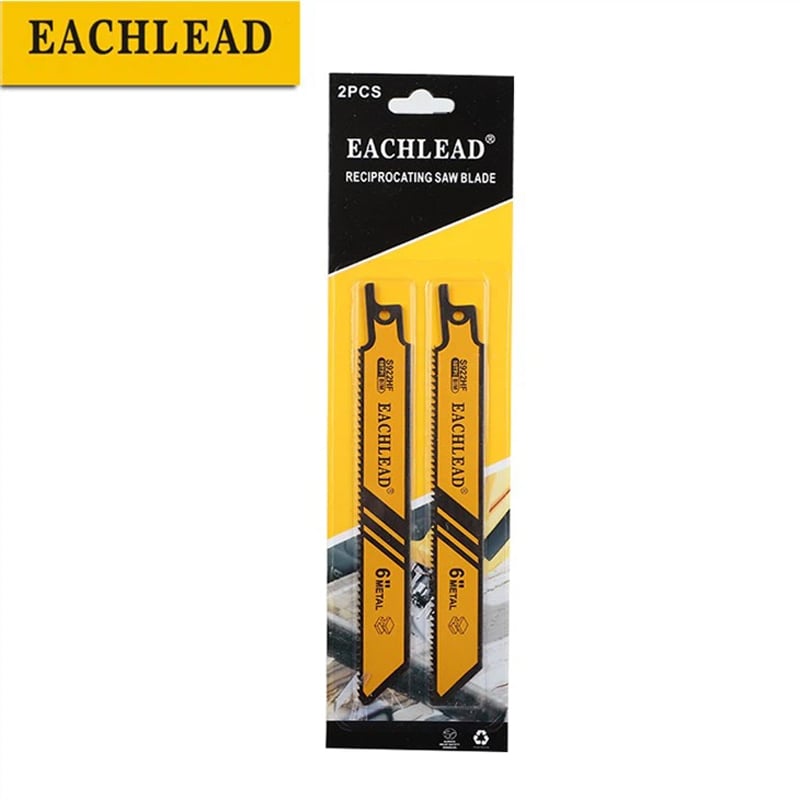
Write dimensions as a full string: length, width, thickness, and pitch together. Live catalog pages print this as one line, for example 9 inch / 225 mm x 19 mm x 0.95 mm at 10 TPI on the S1122HF listing, and an RFQ should copy that format field by field.
Pitch deserves two entries: the target and the tolerance. If variable pitch is acceptable, say so explicitly; the S1122VF listing shows a variable 14-10 TPI example, and “14-10 TPI variable accepted” is one line that prevents a container-level dispute.
| Spec line | RFQ entry format | Worked example from a live listing |
|---|---|---|
| Length | inches and millimeters | 9 inch / 225 mm |
| Width x thickness | millimeters | 19 mm x 0.95 mm |
| Tooth pitch | TPI target and tolerance | 10 TPI fixed, or 14-10 TPI variable |
| Shank | holder standard | Universal reciprocating shank |
Part 4. What material and construction fields belong in the RFQ?
State the construction family and ask the factory to confirm the grade pairing. Site material notes describe bi-metal as a flexible back joined to harder high-speed-steel teeth, with several grade pairings supplied per order specification, so the RFQ should require the exact pairing on the quotation and the purchase order.
Ask for the tooth process too. Milled and ground teeth behave differently on nail contact, and the listing pages state the manufacturing process per model, which makes it a checkable field rather than a preference.
Part 5. Which packaging and labeling fields close the spec?
Packaging is a specification, not an afterthought. State the unit pack (blister card or bag), the inner count, the carton quantity, and the label wording, because listings on this site show these options vary per model and per order.
Label wording deserves its own line. Print the application descriptor and the spec string on the card exactly as agreed, so floor staff and end users read the same boundary the RFQ set; the bulk wholesale buying guide covers the assortment side of this decision.
Part 6. What does a complete demolition blade RFQ look like?
A complete RFQ fits on one page and answers every field a factory would otherwise guess. The table below is the checklist in order; a supplier reading it can quote a specific SKU or a specific deviation, nothing vaguer.
| RFQ field | Buyer supplies | Supplier confirms |
|---|---|---|
| Application | Workpiece mix with size ranges, exclusions | Listed application match |
| Dimensions and tooth | Full spec string with tolerance | SKU or deviation note |
| Material | Construction family, grade pairing question | Grade pairing on quotation |
| Packaging | Unit pack, counts, label wording | Artwork and carton plan |
| Acceptance | Sample plan and pass criteria | Sample commitment |
Product recommendation: study the S1122HF reciprocating saw blade listing as a worked example while drafting. Why it fits: its page carries a complete spec string, an application range, and packaging options in exactly the checklist order. Why not recommend as a default: one fixed-pitch model cannot cover every demolition mix, and heavier metal contact or longer spans point to other listed pitches and lengths.
Fit Boundary
Distributors, importers, and OEM buyers who can state their application mix and run acceptance tests will get quotable RFQs from this checklist. It deliberately excludes commercial terms; quantity economics and schedules belong in the negotiation, not in the technical spec.
Part 7. How should samples and acceptance testing be written?
Write the sample plan into the RFQ: how many blades, cut on what representative material, judged by what pass criteria. A workable clause names the test stock, the number of cuts, and the defect definitions – stripped teeth, bent body, cracked shank – before any bulk order is placed.
Keep acceptance evidence with the order file. Photographs of the sample cuts and the signed criteria sheet resolve most delivery disputes without argument, because both sides agreed on the same physical standard.
To move a drafted checklist forward, send the RFQ details to EACHLEAD: application descriptor, spec string, material question, packaging plan, sample plan, and target pack quantity.
FAQs
What specifications define a demolition reciprocating saw blade?
Application descriptor with size ranges, full dimension string, tooth pitch with tolerance, construction family and grade pairing, packaging, and acceptance terms.
What TPI is listed for nail-embedded wood blades?
Live listings on this site show both fixed 10 TPI and variable 14-10 TPI examples for wood-with-nails duty. Quote the target and the acceptable tolerance in the RFQ.
How should an RFQ describe blade dimensions?
As one string: length in inches and millimeters, width, thickness, and pitch, mirroring the format printed on catalog pages.
What packaging details belong in a blade RFQ?
Unit pack type, inner count, carton quantity, and exact label wording, including the application descriptor printed on the card.
Which EACHLEAD models list demolition-related applications?
The S1122HF lists pallet repair and wood with nails with metal in an approximate 5-175 mm range; the S1122VF lists wood with nails plus light profile ranges. Quote listings as printed and verify by sample.
How should samples be tested before a bulk order?
On representative demolition stock, with a stated number of cuts and written defect definitions, photographed and signed before the purchase order.
What causes spec disputes after delivery?
Vague application wording, missing pitch tolerance, and unstated packaging expectations. Each has a one-line RFQ field that prevents it.