


Track Saw vs Table Saw: Sheet Cuts, Repeatability and Workshop Space
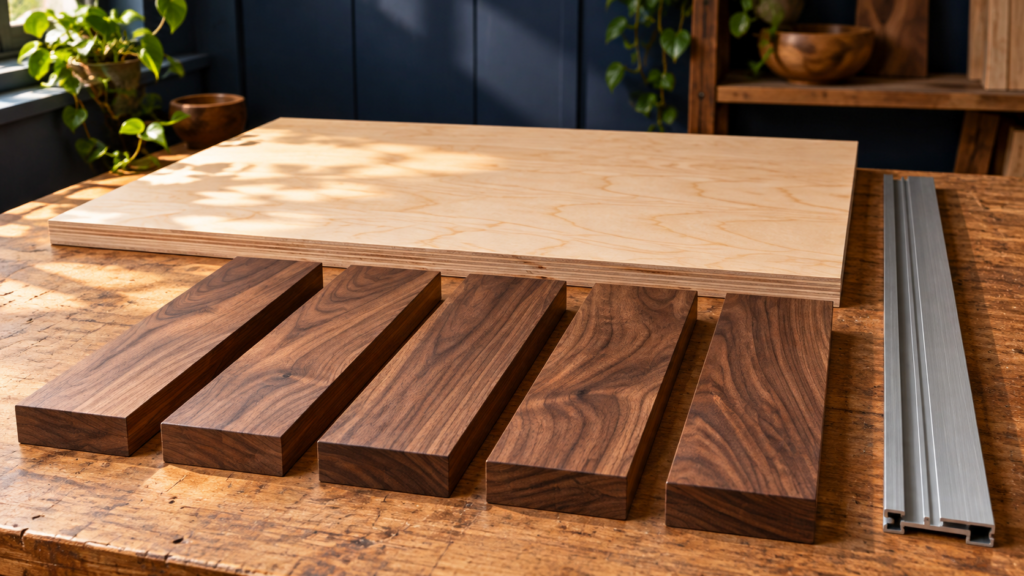
A track saw takes the cutting tool to a rail positioned on the work; a table saw brings the work through a fixed cutting station. For a track saw vs table saw decision, compare sheet handling and repeated-width work before comparing motor or blade specifications.
A rail-guided system is a useful starting point for breaking down large sheet material where it can be supported. A table-saw rip fence provides a fixed width reference for a series of parts within the machine’s capacity. These workflows can complement each other in the same project.
Track saw vs table saw: compare the work that moves
Makita’s guide-rail information describes bringing a compatible tool to sheet work as a portable alternative to a table saw. The important difference is the relationship between the cutting tool and the material. The rail establishes the guided path on the work.
SawStop’s fence manual describes the other arrangement: a rip fence guides material parallel to the blade and sets rip width. Repeated strips can share that reference while the fence setting is retained. The workpiece still has to fit the machine and the surrounding handling space.
A cabinet project can contain both decisions
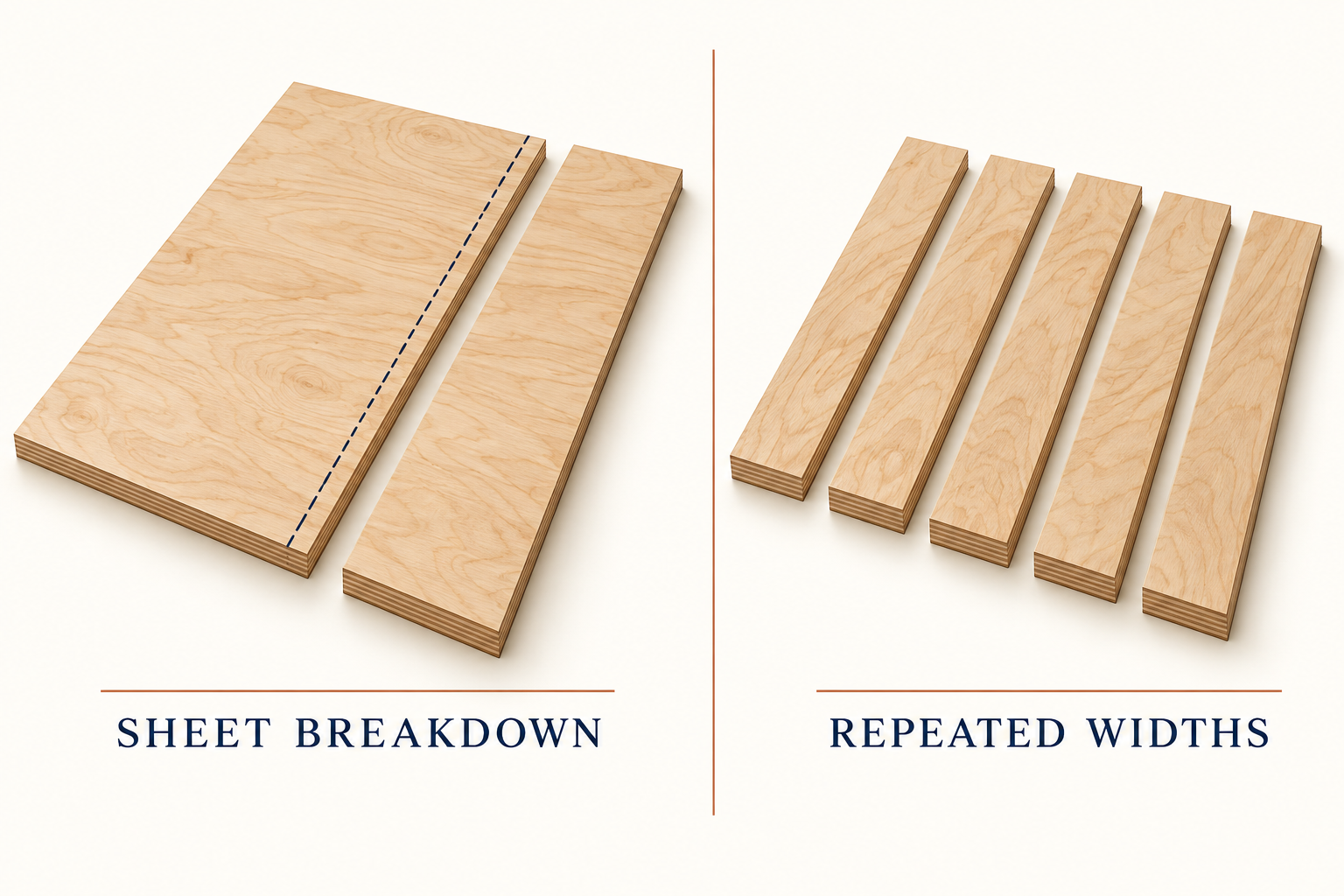
Consider a hypothetical cabinet project that begins with large plywood sheets and ends with several parts of the same width. The first question is how to handle the original sheet. The second is how to establish a consistent reference for the repeated parts.
A track system may suit the initial sheet-breakdown stage because the tool moves along the work. That does not automatically settle every later cut. The project still needs a method for locating each required line and keeping track of which edge or face defines the next part.
For repeated rip widths, the table-saw arrangement makes the fence reference central. This can suit a batch of matching parts, provided the parts and operation fall within the actual machine’s capacity and instructions. The reason is the retained reference, rather than a universal claim that table saws are more accurate.
The choice may therefore be staged: break down the sheet, then review how the smaller parts will be finished. A workshop that has room and suitable equipment for both stages does not need to force one tool to own the whole job.
Straightness and repeatability ask different questions
A straight cut follows a straight path. Repeated width requires each relevant cut to refer to a consistent position. These are related but different requirements. A straight rail does not, by itself, locate every subsequent cut at the correct distance.
For a repeated batch, identify the reference edge and the finished width that the operation must preserve. Then compare how the proposed system establishes that relationship. Depending on the equipment, this may involve a fence or a manufacturer-approved rail accessory arrangement.
Do not infer accessory compatibility from appearance. Festool’s rail information describes matching tool and adapter arrangements. A saw that resembles another model does not establish that its base fits a particular rail or that the proposed adapter is approved.
Equally, a portable table saw still needs working space around it. Compare the material’s path into and away from the cutting station, along with the equipment footprint. For a track system, consider the supported work area and rail arrangement. Storage size alone does not describe either workflow.
Check the actual system before choosing
A useful equipment comparison names the stock, the cut and the complete proposed system. Record whether the job starts with a large sheet or smaller prepared pieces, whether widths repeat, and which model and accessories are being considered.
Then check the manufacturer’s relevant capacity, blade, rail and accessory requirements. Neither category name proves a particular cutting depth, material capability or surface finish. This article provides no setup sequence or blade-height instruction; those belong to the exact equipment documentation.
If the required shape includes curves, that is a different cutting task from the straight paths compared here. The jigsaw-blade family is a separate starting point for that discussion, with blade and tool suitability checked for the actual material and shape.
Choose the workflow that resolves your main handling and reference problem. A broad-sheet job and a batch of repeated-width parts may lead to different answers, even when both begin with the same plywood. Describing those tasks precisely makes the tool comparison useful.