


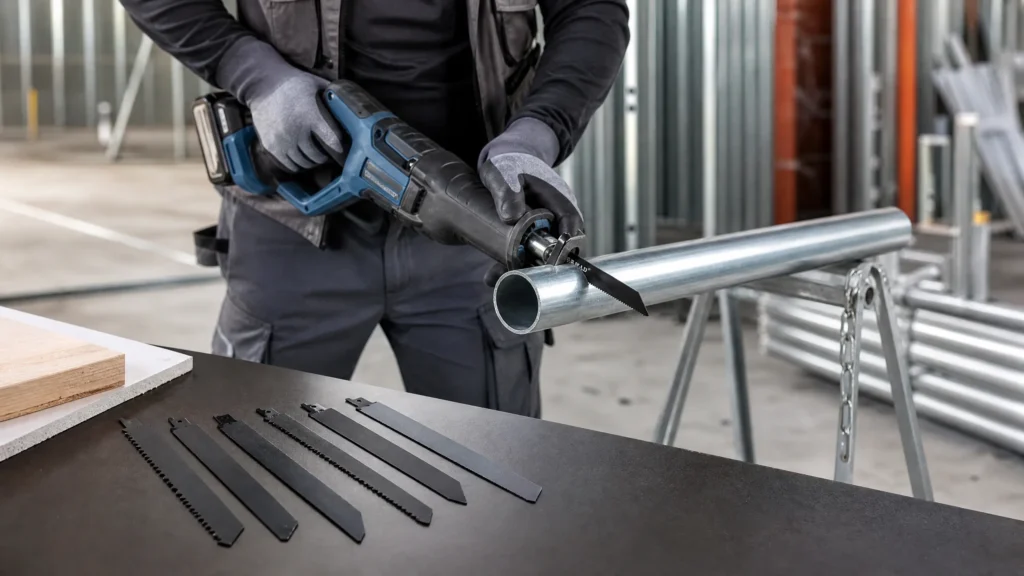
Reciprocating saws are essential to the power tool accessories market and are appreciated for their compact size and the ability to cut in small or crowded places. All the same, the saw is only one component amongst the cutting system. For example, the cutting performance is strongly influenced by the type of blade used.
For buyers from B2B companies, selecting an appropriate type of reciprocating saw blade ensures less down time for using machinery and higher levels of customer satisfaction, leading to better chances for making repeated orders. Manufacturers such as WENZHOU YICHUAN TOOLS CO., LTD, which belongs to Wenzhou, China, manufacture electric tool accessories like jigsaw blades, reciprocating saw blades, hacksaw blades, and planer blades.
Note 1: The term “contractors” in this article refers to regular users in the fields of construction, renovation, plumbing, electrical installation, building demolition, landscaping and industrial maintenance.
As per the guidelines issued by OSHA with regard to hand and power tools, the condition and safety of the tools play a critical role in construction and industrial work settings. Although OSHA does not specify different saw blade brands, it clearly points out the importance of the appropriate choice of accessories for professional users of portable power tools.
Industry Insight: Why Demand for Reciprocating Saw Blades Is Growing
The demand for reciprocating saw blades is based on the continuous activities related to construction maintenance and infrastructure repair, home renovations, mechanical installations, and industrial services. Thus, the applications indicate the need for cutting tools compatible with different materials such as wood, metals, plastics, drywalls, pipes, branches, and mixed demolition materials.
Buyers’ expectations have been affected by cordless reciprocating saws. As the tools’ usage of batteries increases now, lumberjacks want blades that cut well without resistance. When the blade is not suitable for the saw, vibration levels increase while more heat and less speed of cutting may occur.
For distributors and wholesalers alike, this means that product planning is becoming increasingly application-specific. The fact is that a single general-purpose range of blades is no longer sufficient for professionals. They frequently require various specific SKUs for each task, such as metal cutting, pruners, scrapers, and demolition.
| Market Application | Typical End Users | Common Blade Demand |
|---|---|---|
| Metal pipe and conduit cutting | Plumbers, electricians, installers | Bi-metal or fine-tooth metal cutting blades |
| Demolition and remodeling | Contractors, renovation teams | Heavy-duty blades for wood with nails |
| Tree pruning and landscaping | Landscapers, arborists, garden contractors | Aggressive pruning blades |
| Surface removal | Flooring installers, remodelers | Scraper blades or removal accessories |
| Industrial maintenance | Factory repair teams, service providers | Durable blades for mixed materials |
This application chart shows the reason why wholesale reciprocating saw blades are sold as families and not as individual products. A buyer buying for plumbing applications may be interested in cutting blades while a buyer dealing with garden tool distributors may require a reliable range of blades for pruning.
Key market changes buyers should notice
- Application-specific demand is increasing. Professional purchasers do not limited themselves just to basic all-purpose blades. There is a need nowadays for blades for metal cutting, wood with nails, pruning, demolition works and abrasive materials.
- Cordless tools influence blade selection. Well-made tooth shape plays a significant role in reducing cutting force and enhancing the efficiency of the tool during the operation.
- Total cost matters more than unit price. A cheap blade seems high-priced after it immediately gets damaged, deformed, or returns from the customer. For wholesalers, reliable performance can be worth much more than a low initial price.
Product Overview: Main Types of Reciprocating Saw Blades
A saw blade is an interchangeable cutting tool designed such that it can also move back and forth rapidly in a jig. Many blades look alike but their functioning depends on TPI value, manufacture’s design, body thickness, width, heat treatment, shape of teeth, etc.
HCS, HSS, bi-metal, carbide tipped, and carbide grit are two of the common blade types and they differ on the type of cutting they best do.
| Blade Type | Typical Material | Common Application | Buyer Consideration |
|---|---|---|---|
| HCS blade | High carbon steel | Wood, plastic, soft materials | Flexible and economical |
| HSS blade | High speed steel | Light metal cutting | Hard teeth, less flexible |
| Bi-metal blade | HSS teeth + flexible steel back | Metal, pipe, demolition | Balanced durability and flexibility |
| Carbide tipped blade | Carbide teeth | Stainless steel, cast iron, abrasive materials | Longer life in tough materials |
| Carbide grit blade | Carbide abrasive edge | Masonry board, tile, fiberglass | Useful for abrasive non-toothed cutting |
Bi-metal reciprocating saw blades are often the preferred option for many professional users due to their excellent cutting performance and flexibility. The steel cutting teeth edge is wear resistant, while the blade body is capable of bending stress.
Interesting Fact 2: TPI stands for “teeth per inch”. TPI on a lower side allows for faster cutting of wood, trimming and destruction things while higher number of TPI would give a better finish making it suitable for metal cutting and thin materials.
The most significant factors considered by buyers when choosing reciprocating saw blades for metal include tooth hardness, number of teeth per inch (TPI), weld quality, and heat resistance as the things which play important roles in metal cutting. But for wood applications, factors like chip removal, and aggressiveness in tooth space order are in the forefront.
Manufacturing Process: From Steel Strip to Finished Blade
A dependable reciprocating saw blade starts with organized production. In B2B procurement, constant production is important because clients may buy in mass quantity from different products.
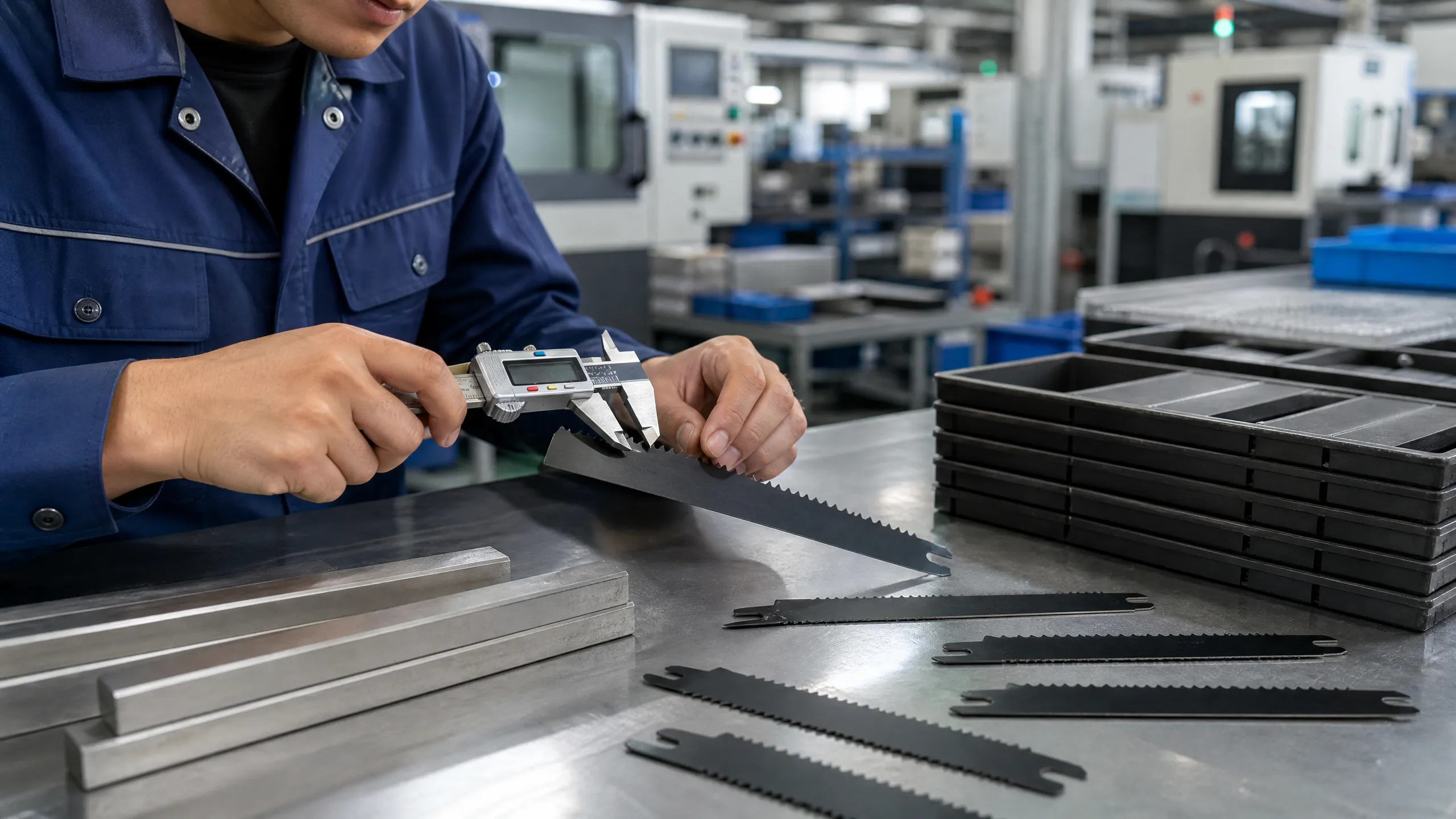
To produce a typical blade, various operations are involved which include raw material inspection, cutting or stamping of steel strips, tooth formation, welding of the bi-metal, heat treatment, straightening, finishing of surfaces, logo marking, packaging as well as the final inspection. Each of the processes involved in the production of a blade influences its durability, cutting stability and appearance.
Manufacturers from established tool accessory production places such as Wenzhou and Zhejiang offer standard and customized blade specifications to clients across the globe. Established in 2003 and currently operating as WENZHOU YICHUAN TOOLS CO., LTD., the company has over 15 years of experience in manufacturing of power tool accessories. The factory spans across an area of about 3,500 square meters and the workforce consisted of around 80 employees.
According to the ISO’s definition, the ISO 9001 is concerned about the quality management system and this is based on three major principles which are concerned with the process control, document procedures, and the continuous improvement. It is necessary to note that these principles are effective for the blade manufacturing where the maximal effectiveness of the blade will depend on the different factors of material control, geometry of teeth, heat-treatment, inspection procedure, etc.
The production process where there is stability helps in making sure that certain problems are resolved such as unbalanced production and efficiency across batches, blade damage at an early stage, bad quality prints and coating, and errors in packaging. There are potential issues that come up as a result of inconsistent performance within the production line where the OEMs and wholesale purchasers are likely to experience negative feedback from their clients, thus affecting their reputation in the market.
Based on Manufacturing Experience
According to the knowledge gained from production of power tool accessories, it has come out that some customers in business-to-business sector do not judge reciprocating saw blades solely by how they look. They carry out tests to assess parameters such as productivity, wearing resistance, straightness, surface treatment, and accuracy of packaging among other things before they can agree to the production of larger quantities.
As an instance, a distributor of metal cutting reciprocating saw blades might concentrate on the wear of the blade’s teeth after several uses on pipes, while someone who buys tools for gardens may check if the blade of a reciprocating saw is good at clearing chips during gardening tasks. OEM buyers also check for color coating, logo printing, labels, and marks on the cartons produced during manufacture.
The application of practical evaluation in this manner is vital for buyers dealing with professional clients. For instance, contractors usually do not pay attention to the appearance of the blade in isolation; instead, they place importance on cutting ability, bending resistance, and performance under normal site working conditions.
Material Selection and Tooth Geometry: What Affects Cutting Performance
Tooth geometry as well as the material selection are significant elements concerning blade performance. There is a specific blade type which could be useful for quick wood sawing but which could be useless for stainless steel tubing. The example of a fine tooth blade for metal could be taken here as it could be practically advantageously used in a different field like composition materials.
HCS blades tend to be used for working with materials such as wood, plastics, and softer materials since they are more flexible and inexpensive. HSS blades are known to have harder teeth and can be used for light metal cutting. Usually, full HSS blades can have less flexibility than bi-metal blades. On the other hand, bi-metal construction makes use of a hard cutting edge and flexible back which enables it to be used for cutting oil pipe, conduit, profiles, wood having nails among other things.
Tipped carbide blades are frequently utilized in order to cut tough or abrasive materials, especially, materials like cast iron, stainless steel, etc. Diamond blades can be used when there is the need to cut certain abrasive materials which require the use of non-toothed blades.
The TPI must be in accordance with the kind of material and its thickness. Low TPI means quick chip removal, but its high value ensures better control.
| TPI Range | Typical Use | Cutting Characteristic |
|---|---|---|
| 3–6 TPI | Wood, pruning, fast demolition | Aggressive cutting and fast chip removal |
| 6–10 TPI | Wood with nails, plastic, general cutting | Balanced speed and control |
| 10–14 TPI | Medium metal, pipe, profiles | Controlled metal cutting |
| 14–18 TPI | Thin metal, conduit, sheet metal | Smoother finish and reduced snagging |
| 18–24 TPI | Thin sheet, fine metal cutting | Fine cutting with less vibration |
Key technical factors that affect blade performance
- Blade material determines durability and flexibility. HCS blades are cost effective for delicate materials, whereas bi-metal blades are typically chosen by contractors requiring the combination of tooth hardness and flexibility of the body of the saw blade.
- Tooth geometry affects speed and finish. The chip removal process, cutting speed, surface finish, vibration, and other processes are influenced by the set of teeth, rake angle, depth of the gullet, and grinding precision.
- Heat treatment affects long-term consistency. Good heat treatment increases tooth wear resistance but maintains flexibility in order to avoid breakage in adverse working conditions.
Purchasing decisions for B2B can be heavily affected by blade specifications as the same blade length may yield dissimilar results depending on features of the tooth and type of material incorporated into the device.
Key Specifications Buyers Should Confirm Before Ordering
Before making large purchases, buyers need to make sure blade specifications are confirmed. By confirming specifications ahead of time, misunderstandings between procurement teams, suppliers, designers, and the actual end users can be minimized.
| Specification | Common Options | Why It Matters |
|---|---|---|
| Blade length | 4″, 6″, 9″, 12″ | Determines cutting depth and application |
| TPI | 3, 5, 6, 8, 10, 14, 18, 24 TPI | Matches material thickness and finish |
| Material | HCS, HSS, bi-metal, carbide | Affects durability and cost |
| Thickness | Thin, standard, heavy duty | Influences vibration and bending resistance |
| Tooth type | Milled, ground, side set, wavy set | Affects speed, chip removal, and smoothness |
| Surface finish | Painted, polished, coated | Supports corrosion resistance and branding |
| Packaging | Bulk, blister card, box, set pack | Important for retail and distribution |
While purchasing reciprocating saw blades for metal, customers must note several important features, such as TPI, hardness of the tooth, weld line quality, and cutting samples. When dealing with blades for pruning, customers should observe the tooth spacing, chip removal, overall length of the blade, and bendability.
Note 3: A lesser price per unit does not always indicate a lesser total cost because if the tool wears down quickly, and breaks easily or causes returns from customers, the real cost of procurement will go up.
B2B buyers can now ask for product samples before placing bulk orders. Before moving ahead, it is good practice to test the product. By testing the product, the buyer can check if his products meet the expectations of its target consumers.
OEM and Private Label Options for B2B Buyers
The importance of OEM and private label service to distributors, online retailers, industrial suppliers, and tool accessory companies should not be underestimated. These customers may not require blades as such but look for uniform package design, standard practice, and the ability to place regular orders.
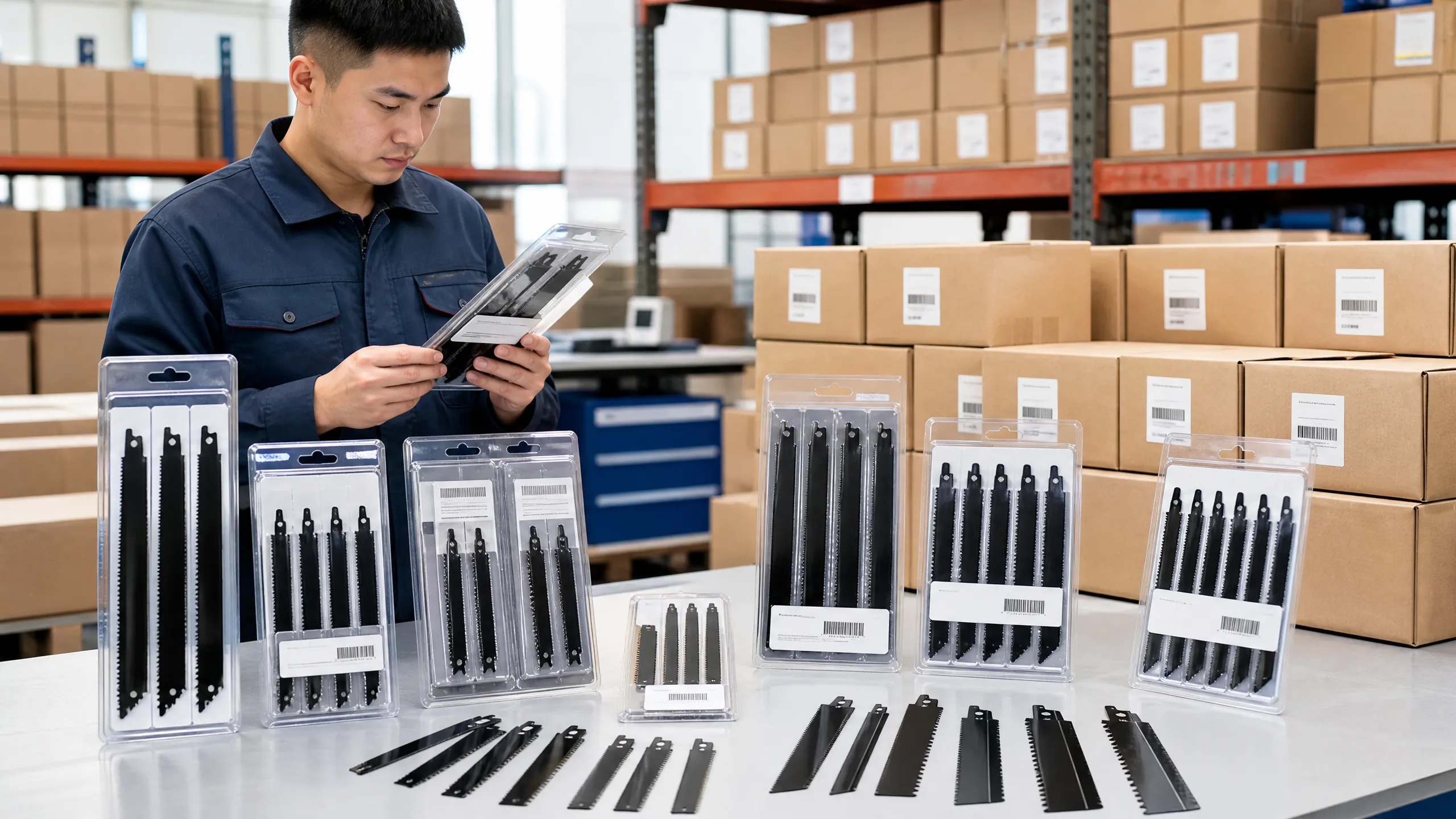
Common OEM options include:
- Custom blade length and TPI combinations
- Logo printing on blade body
- Custom color coating
- Blister card packaging
- Barcode and SKU labels
- Assorted blade sets
- Bulk packing for industrial users
For instance, a distributor may require one type of professional-grade reciprocating saw blades for plumbing and electrical work, while having another general purpose saw blade line for hardware retailers. These two lines may require different types of materials and quality standards.
Importing and exporting companies can assist buyers in achieving convergence between the specifications of products and the respective characteristics of the target markets. For instance, WENZHOU YICHUAN TOOLS CO., LTD. produces tool parts for markets from Western Europe, to Eastern Europe, Southeast Asia, Eastern Asia, along with the Middle East, Oceania, and Africa so that buyers can point toward practical experience in assessing supplier acquaintance with specific channels.
The European Power Tool Association provides contextual information on the meaning of power tools derived from both usage and accessories within its scope of influence. In this way, industry information on power tools explains how accessories fit into the context of working with tools as accessories as well as other uses. [Data Citation 3]
Quality Assurance: How Consistency Is Checked Before Shipment
Quality control is very important in B2B manufacturing since customers expect consistent performance from the manufacturers. If a product sample performs well, then the customer is bound to expect the same type of performance from the mass-produced version.
In implementation, quality assurance applies to different phases in the process of production and shipment. The quality of raw material, the thickness of the blade, the hardness, the distance of the teeth, the welding line quality, the heat treatment done, the straightness, surface finish, and printing and labeling, and also the packing should all comply with the respective specifications. In case of bi-metal reciprocating saw blades the quality of the weld and the hardness of the teeth plays a huge role as they directly impact the life of the cutting device.
Conducting a quality inspection of packaging is also essential in the case of OEM reciprocating saw blades. Incorrect labeling, inaccurate barcodes, poor color printing, and flimsy blister packing can have a negative impact on the salesman presentation and warehouse efficiency.
The use of a well documented QA practice makes it easy for a customer to make a comparison between the supplier regarding their products. This will also help an organization that receives orders on a repeated basis to keep track of which type of blade is ordered.
Buyer Guidance: How to Evaluate a Reciprocating Saw Blade Manufacturer
In making a decision on reciprocating saw blade providers, clients must be careful not to direct their assessment only on the cost of the product since it is also crucial that the right party knows the real application of the tool. Any credible supplier must be able to elaborate on the technology behind the HCS, HSS, bi-metal, and carbide technology and give recommendations on the most effective TPI choice in case the buyer intends to cut wood, metal, do pruning works, do demolition tasks, or cut a mix of materials.
Sample testing is very crucial in case of bulk orders, giving the ability to consumers to inspect and check the cutting speed, the wear of the blade, the level of straightness of the blade, and the quality of packages among other specifications. Apart from that, consumers can also check the printing consistency, the color coating, and the barcode labeling among other points, when it comes to the packaging process.
Commercial reliability should be reviewed together with technical capability. Stable lead times, clear inspection records, export packaging experience, and support for distributors, wholesalers, and OEM brands are all useful indicators of whether the manufacturer is suitable for long-term cooperation.
During supplier evaluation, buyers may compare technical specifications, sample cutting results, OEM packaging options, inspection procedures, and export experience. This approach helps reduce sourcing uncertainty before placing large-volume orders.
For buyers reviewing wholesale reciprocating saw blades, the best result usually comes from matching product design to real application needs. A metal cutting blade, pruning blade, and demolition blade should not be treated as interchangeable products. Each requires a different balance of material, TPI, tooth geometry, blade thickness, and quality control.
FAQ: Common Questions About Reciprocating Saw Blades
1. What are reciprocating saw blades used for?
Reciprocating saw blades are used for cutting wood, metal, plastic, pipe, drywall, branches, and demolition materials. The correct blade depends on the material, thickness, cutting speed, and working condition.
2. Which reciprocating saw blade is best for metal cutting?
For metal cutting, bi-metal reciprocating saw blades are commonly selected because they combine hard teeth with a flexible blade back. Higher TPI options, such as 14, 18, or 24 TPI, are often used for thin metal, conduit, and pipe cutting.
3. What is the difference between HCS, HSS, and bi-metal blades?
HCS blades are usually used for wood, plastic, and soft materials. HSS blades have harder teeth for some metal cutting applications. Bi-metal blades combine a hard cutting edge with a flexible backing material, making them suitable for many professional applications.
4. How do buyers choose the right TPI?
Lower TPI blades are better for fast cutting in wood, pruning, and demolition. Higher TPI blades provide smoother control for metal and thinner materials. Buyers should match TPI with material type and thickness.
5. Can reciprocating saw blades be customized for OEM orders?
Yes. OEM options may include blade length, TPI, logo printing, color coating, packaging design, barcode labels, assorted sets, and carton marks. Specifications should be confirmed before mass production.
6. What should distributors check before placing bulk orders?
Distributors should check material, tooth design, sample performance, packaging quality, MOQ, lead time, quality inspection process, and batch consistency.
7. Are pruning blades different from standard wood blades?
Yes. A reciprocating saw pruning blade usually has larger and more aggressive teeth for cutting branches, green wood, and fibrous material. Standard wood blades may not remove chips as efficiently in pruning applications.
8. Why is quality assurance important for B2B buyers?
Quality assurance helps control tooth durability, blade straightness, welding strength, cutting stability, surface finish, and packaging accuracy. This can reduce customer complaints and support more stable repeat orders.
Conclusion: Choosing the Right Reciprocating Saw Blades for B2B Supply
For contractors and professional users, reciprocating saw blades directly affect cutting speed, tool efficiency, blade life, and jobsite productivity. For distributors, wholesalers, and OEM brands, the right blade range can support customer satisfaction and reduce sourcing risk.
A practical buying decision should consider blade material, TPI, tooth geometry, heat treatment, packaging, OEM options, and manufacturer quality control. Bi-metal blades are often preferred for professional metal and demolition applications, while HCS, carbide tipped, pruning, and scraper blades serve more specific cutting needs.
B2B buyers can improve procurement results by working with manufacturers that understand application requirements, provide clear specifications, support sample testing, and maintain consistent inspection procedures. In a competitive power tool accessories market, reliable blade performance is not only a product feature. It is part of long-term supply value.
Disclaimer
This article is intended for general B2B product selection and procurement information. Buyers and end users should also follow local safety regulations, tool manuals, workplace requirements, and applicable operating instructions when using reciprocating saws and cutting accessories.
References
- Occupational Safety and Health Administration, OSHA. “Construction Industry Safety and Health” and “Hand and Power Tools.”
Official pages:
OSHA Construction Industry
OSHA Hand and Power Tools
Used to support discussion of portable powered tools, jobsite safety practices, and the role of proper tool accessory selection in professional work environments. - International Organization for Standardization, ISO. “ISO 9001 Quality Management Systems.”
Official pages:
ISO 9001 Quality Management
ISO Standards Search
Used to support discussion of process control, documented inspection procedures, quality management, and consistency in manufacturing. - European Power Tool Association, EPTA. “Industry Publications and Information on Power Tools.”
Official pages:
European Power Tool Association
EPTA Publications
Used to support discussion of professional power tool use, industry context, and accessory relevance in construction and industrial applications.