


How to Choose a Jigsaw Blade for Plastic
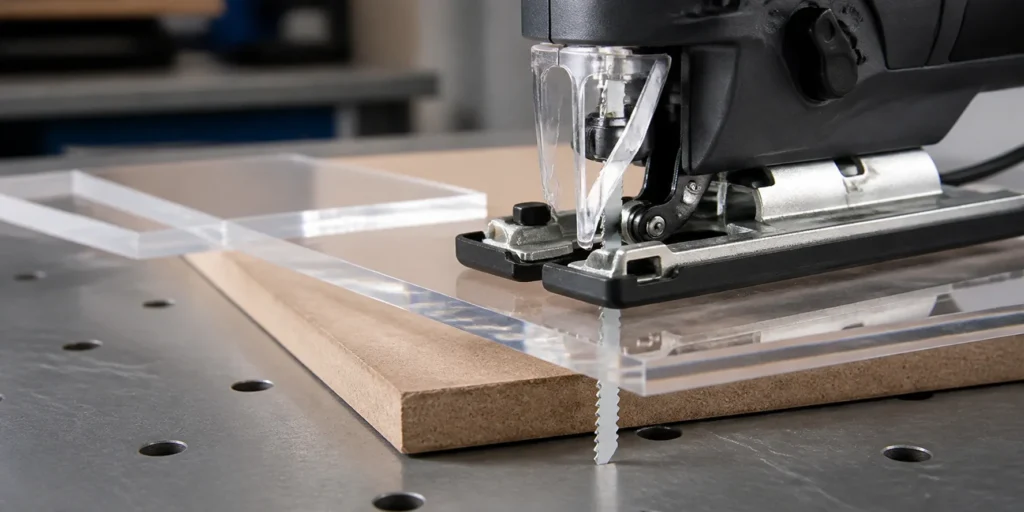
The right jigsaw blade for plastic matches the polymer, section thickness, blade holder, tooth spacing, cut shape, and required edge. A blade intended for a thick polypropylene profile may not suit a thin acrylic panel. The model code alone does not settle the choice.
Plastic cutting creates two common approval risks: edge damage and heat buildup. Tooth geometry, blade construction, work support, and machine settings all affect those results. Buyers should therefore compare blades against a defined sample rather than rely on a broad “plastic” label.
Match the jigsaw blade for plastic to the polymer
PVC, PMMA acrylic, polypropylene, and polyethylene do not call for one automatic tooth pattern. Current manufacturer pages show the difference. Bosch lists a T102D for PP and PE with an HCS body, ground teeth, a taper-ground body, and 4.0 mm tooth spacing. Its published material range is 5–30 mm.
The same manufacturer lists a T102H for PVC and PMMA with HCS construction, ground teeth, a taper-ground body, 2.3 mm spacing, and 11 TPI. Its published range is 3–30 mm. A separate PMMA example, the T102BF, uses bi-metal construction. The selected 92 mm variant lists 1.8 mm spacing and 14 TPI.
| Material and named example | Published blade detail | What the example tells a buyer |
|---|---|---|
| PP / PE — Bosch T102D | HCS, 4.0 mm spacing, ground teeth, 5–30 mm published range | Thermoplastic selection can use a larger tooth space when the named blade and section fall within the maker’s range. |
| PVC / PMMA — Bosch T102H | HCS, 2.3 mm spacing, 11 TPI, 3–30 mm published range | A different polymer group and edge target can lead to a finer published design. |
| PMMA — Bosch T102BF | BIM, HSS tooth strip with HCS body, 1.8 mm spacing, 14 TPI on the selected 92 mm variant | Blade construction can change even when two products both target acrylic. |
These figures describe the named Bosch variants. They are not universal plastic rules and they are not Eachlead specifications. A jigsaw blade for acrylic still needs the PMMA grade, thickness, protected face, and edge target. The useful pattern is the selection method: identify the polymer, measure the section, define the edge, and verify that the chosen model’s published scope covers the sample.
Match tooth spacing to thickness and edge needs
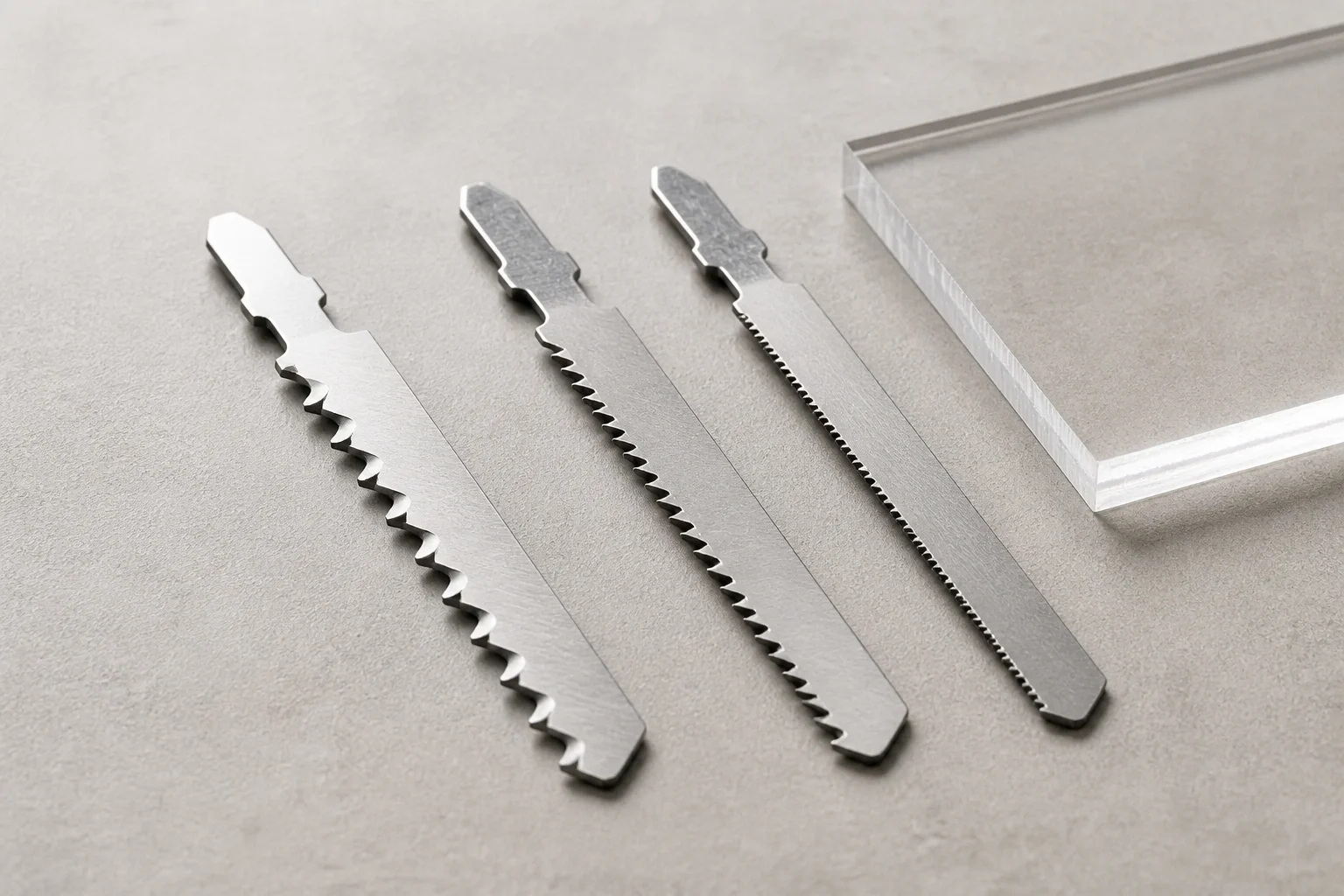
Tooth spacing controls how the blade enters the material and clears the cut. TPI expresses the number of teeth per inch, while tooth pitch records the distance between adjacent teeth. A higher TPI usually corresponds to a smaller pitch, but the model’s tooth form and blade body still matter.
Thin or brittle plastic can catch on a pitch that is too coarse for the section. A very fine blade can also rub or stop clearing material in a thicker thermoplastic part. Either mismatch can raise heat or damage the edge. The manufacturer’s material and thickness range gives the starting boundary; the sample cut provides the approval evidence.
The edge requirement should name the face that matters. Upward-pointing teeth commonly leave their cleaner face on the underside of the workpiece. Reverse-tooth designs can shift that priority to the top face. The saw manual must support the selected tooth direction and operating mode.
Confirm the shank, blade body, and working length
The holder is a pass-or-fail check. A T-shank blade and a U-shank blade may share similar teeth but use different interfaces. The buyer should record the saw model and the holder named in its manual before comparing tooth data. The EACHLEAD jigsaw blade category separates product families by shank, material, tooth form, and application. Its T-shank jigsaw blade category provides a narrower browsing path.
Working length must cover the section through the full blade stroke without creating an interference risk. Curved work adds another geometry check. Bosch’s operating instructions recommend a narrow or scroll blade for tight curves. A wider blade body can favor straight-line control, but the selected model and saw manual define the final limit.
Control heat before judging the edge
A plastic sample can fail even when the blade label appears suitable. Movement, forced feed, poor chip clearance, or an unsupported section can change the result. The workpiece needs stable support near the cut, and the blade needs room to follow the line without side loading.
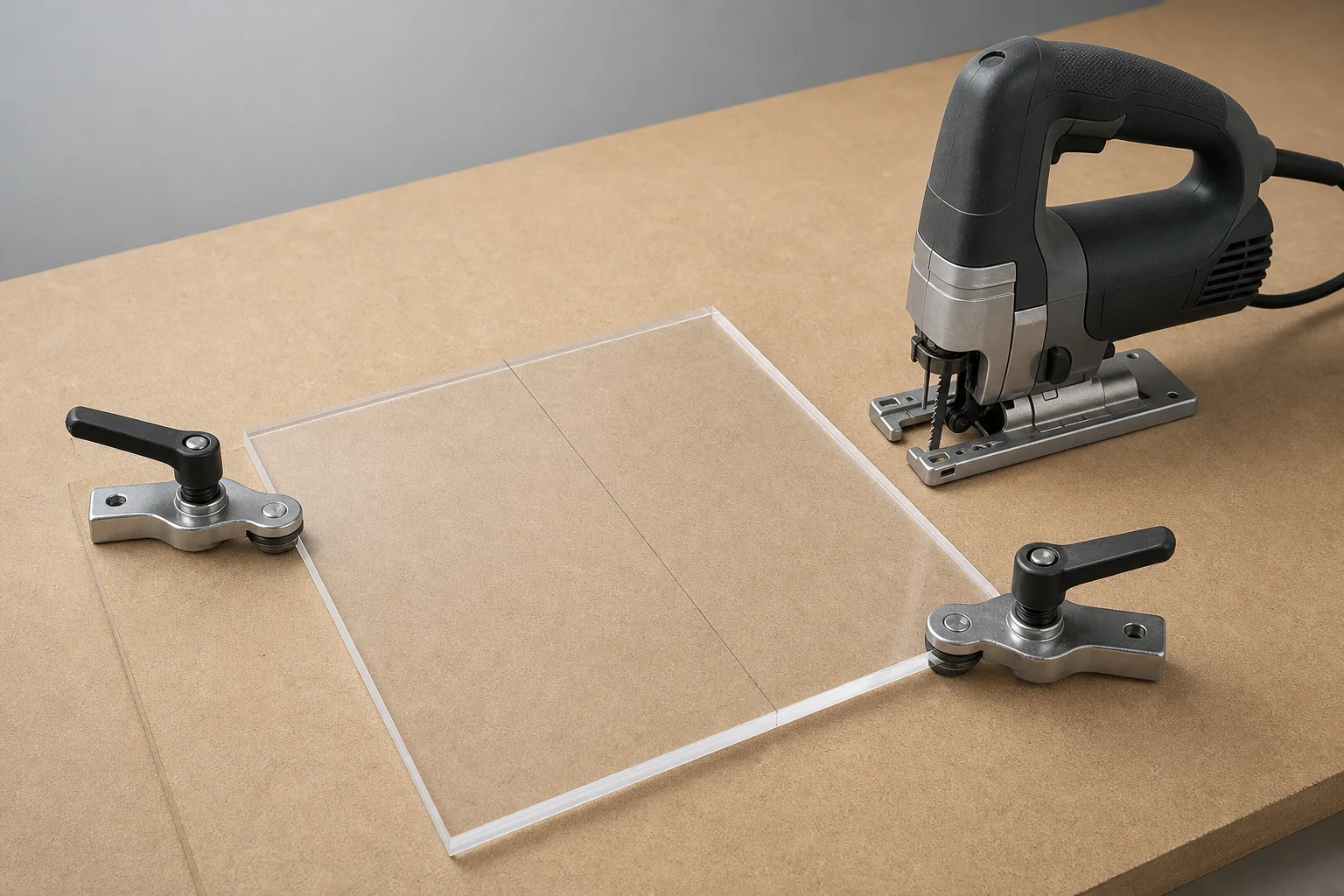
The machine manual controls speed, orbital action, blade installation, and protective equipment. No single speed value fits every polymer, thickness, saw, and blade. Bosch advises using a blade suited to the task and making a test cut in scrap material. That first cut should use the same polymer grade and thickness as the intended part whenever possible.
| Observed result | Likely area to review | Record before the next trial |
|---|---|---|
| Glossy smear or fused edge | Heat, chip clearance, speed, or feed | Blade code, tooth data, machine setting, feed method, and section thickness |
| Chipped or cracked edge | Pitch, support, tooth direction, or brittle material behavior | Polymer grade, protected face, support distance, and edge photos |
| Blade wander | Body geometry, side loading, support, or curve radius | Cut shape, blade width, working length, and line deviation |
| Rapid tooth loading | Material match, spacing, or heat | Cut length, visible buildup, sample count, and time of observation |
This table supports diagnosis; it does not assign one cause from appearance alone. A buyer should change one controlled input at a time and preserve the previous result for comparison.
Build a buyer-ready plastic blade specification
A purchase request needs more than “jigsaw blades for plastic.” Some catalogs also use “jig saw blade for plastic” as a wording variant. Either label remains incomplete until the buyer defines the workpiece and the acceptance method. The following fields keep the model decision tied to the application:
- polymer name and grade, such as PVC, PMMA, PP, or PE;
- sheet thickness, pipe wall, profile wall, or solid-section size;
- saw brand and model, required shank, and available working-length clearance;
- straight cut, curve radius, opening, trim, or profile cut;
- top-face and bottom-face edge requirements, including allowed chips, cracks, burrs, or fused material;
- candidate blade material, tooth design, spacing, TPI, width, and working length;
- sample quantity, inspection photos, and the rule for accepting or rejecting the trial.
The specification should preserve the manufacturer’s exact model wording. Similar codes from different product lines do not prove identical construction or material coverage. A distributor can use the record to compare candidate models, prepare catalog claims, and avoid extending one sample result to every plastic.
Approve samples under one test record
A defensible trial keeps the machine, polymer grade, thickness, support, cut shape, and inspection method constant. Each sample record should include the blade code, shank, construction, tooth spacing, working length, and machine settings. Photos should show both faces of the cut and any local heat damage.
The approval decision should separate cut quality from commercial approval. A sample may meet the edge requirement but still need packaging, labeling, quantity, or lot-control review. Those commercial points belong in the order file, not in an unsupported cutting claim.
EACHLEAD’s public category can help buyers shortlist a blade family. Final model approval still needs the target material, thickness, holder, edge requirement, and sample result. That record gives the supplier a concrete basis for review and gives the buyer a repeatable comparison.