


Is Zinc Magnetic? Pure Zinc, Galvanized Steel and Magnet Tests
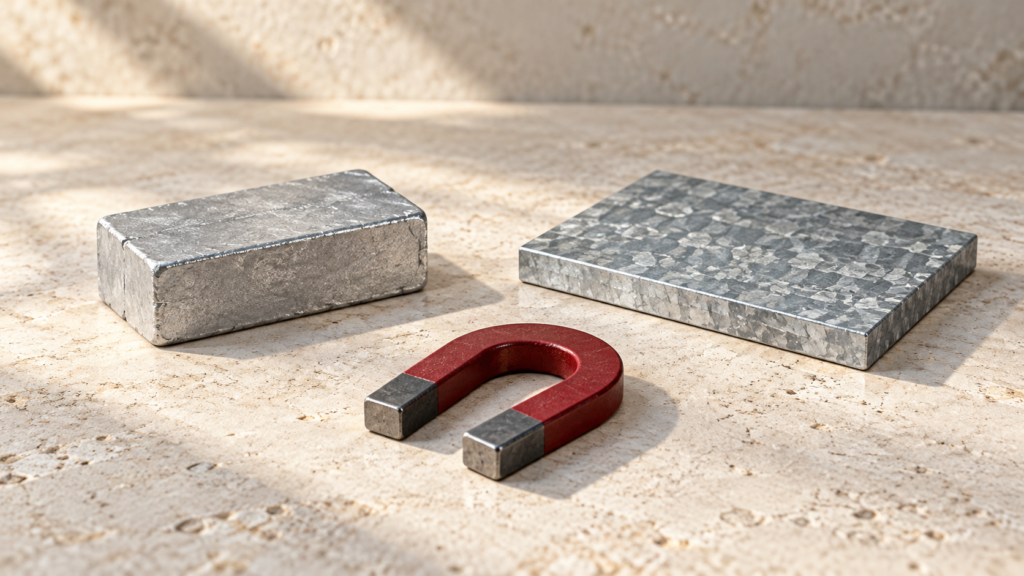
Pure zinc does not stick to an ordinary magnet the way iron does. More precisely, zinc is diamagnetic: its response to an applied magnetic field is weak and opposing. If you are asking “is zinc magnetic” because a magnet sticks to a zinc-colored bracket, check what lies beneath the surface. A zinc coating over steel and a solid zinc object are different things.
The useful distinction is between the material named on the surface and the complete object in your hand. A magnetic response can reveal something about that object, but cannot by itself certify the metal or its coating.
Is zinc magnetic in the everyday sense?
In everyday language, “magnetic” often means that a refrigerator magnet clings to the material. Pure zinc does not show that strong, iron-like attraction. MIT’s materials-science lecture notes classify zinc among diamagnetic materials.
That classification is more precise than saying zinc has absolutely no interaction with a magnetic field. OpenStax explains diamagnetism as an induced response that opposes the applied field. The effect is different from the much stronger response associated with ferromagnetic materials such as iron.
For an ordinary identification question, the practical answer remains no: do not expect a magnet to cling to a clean solid zinc sample. Nor should you expect to see obvious repulsion with a casual hand-held check. A weak physical response and a visible movement are different observations.
Why a magnet can stick to zinc-coated steel
A zinc-plated screw or galvanized steel bracket has more than one material. The outside can be zinc while the structural body underneath is steel. Where that steel is ferromagnetic, it can attract a magnet through the coating.
The American Galvanizers Association describes this distinction when explaining magnetic coating gauges: the magnetic part of the instrument is attracted to the steel substrate. The zinc layer is not what supplies the strong attraction. Calling the whole bracket “zinc” hides the distinction that explains the result.
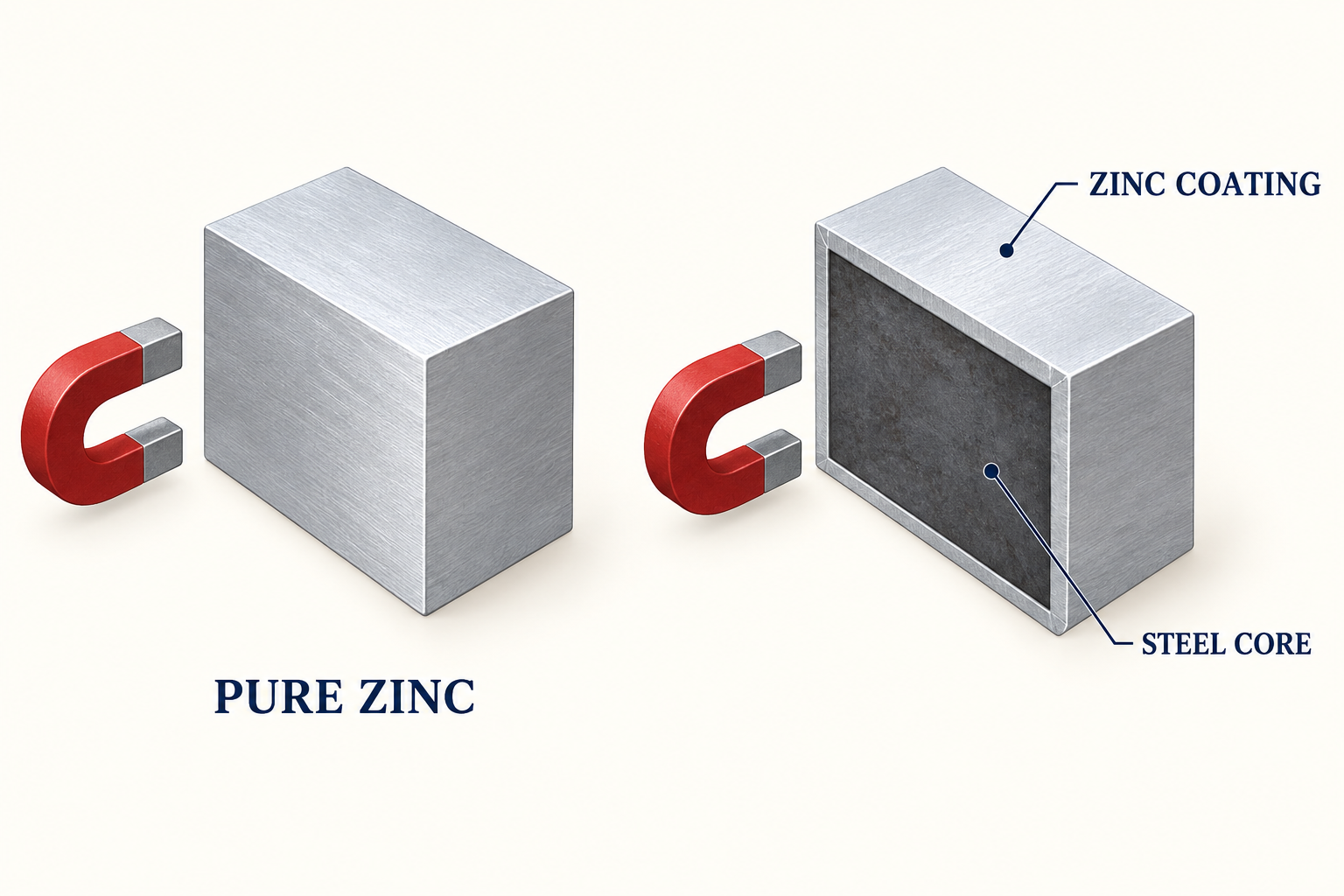
The same distinction matters when reading a description such as “zinc alloy.” That wording does not mean pure zinc, and it does not tell you the complete composition or construction. Find the actual material designation before deciding what a magnetic observation means. Avoid extending the pure-metal answer to every object or compound containing zinc.
What the magnet result does—and does not—tell you
| Observation | Useful interpretation | Unanswered question |
|---|---|---|
| A magnet clings to a zinc-colored bracket | A ferromagnetic component may be beneath the surface | What is the coating made of? |
| No obvious attraction to a loose sample | Consistent with pure zinc, among other materials | Is it actually zinc, and at what purity? |
| A coating gauge reports a layer over steel | The appropriate instrument can measure a non-ferrous layer | Which coating material and application process were used? |
These interpretations are clues, not identification certificates. A gray surface and magnetic attraction cannot establish that a part was hot-dip galvanized. The AGA notes that different coating systems can cover steel, including paint.
Its separate inspection discussion also explains why thickness and chemistry must stay separate. Suitable gauges can measure non-ferrous coatings over steel, but a thickness result alone cannot distinguish zinc from another such coating. An ordinary magnet provides even less information. It gives no coating-thickness value and no chemical analysis.
A clearer way to record an unknown metal part
Keep three fields separate when describing the part to a supplier or colleague. This simple record avoids turning a useful observation into an unsupported material name:
- Reported material: copy the drawing, packaging or supplier designation. Mark an uncertain description as uncertain.
- Construction: state whether the item is described as solid metal, an alloy or a coated substrate.
- Observation: record only what happened, such as “hand magnet clings to the bracket.”
For example, suppose a hypothetical bracket is advertised as zinc-coated steel and attracts a magnet. The observation is compatible with a steel substrate; it does not contradict the zinc coating. The remaining question might be the coating specification, which needs documentation rather than a new name for the bracket.
Now consider an unlabeled silver-colored casting that does not attract the same magnet. A useful note would say “material unknown; no obvious attraction,” rather than “confirmed pure zinc.” The second wording adds certainty that the observation has not earned. Keeping those records distinct makes the next enquiry more specific.
Magnetic response is separate from cutting-tool selection
If the next task is cutting the part, identify the substrate, section and workpiece dimensions. “The magnet sticks” is not a blade specification. For a hand-saw project, EACHLEAD’s hacksaw blade category is a starting point for browsing cutting accessories; suitability still needs the actual material and application.
The answer to the original question is therefore straightforward once the object is described accurately: pure zinc is not strongly attracted to an ordinary magnet. Zinc-coated steel can be, because the steel remains underneath. A magnet observation helps frame the next question; material records answer what the part is.
References
- MIT OpenCourseWare: magnetic material classifications and zinc in the diamagnetic table, Lecture 6, pages 2 and 5.
- OpenStax: Magnetism in Matter, diamagnetic and ferromagnetic explanations.
- American Galvanizers Association: substrate attraction and limits of identifying galvanizing.
- American Galvanizers Association: coating-thickness measurements and coating identification.