


INOX, Inoxidable and Stainless Steel: Are They the Same?
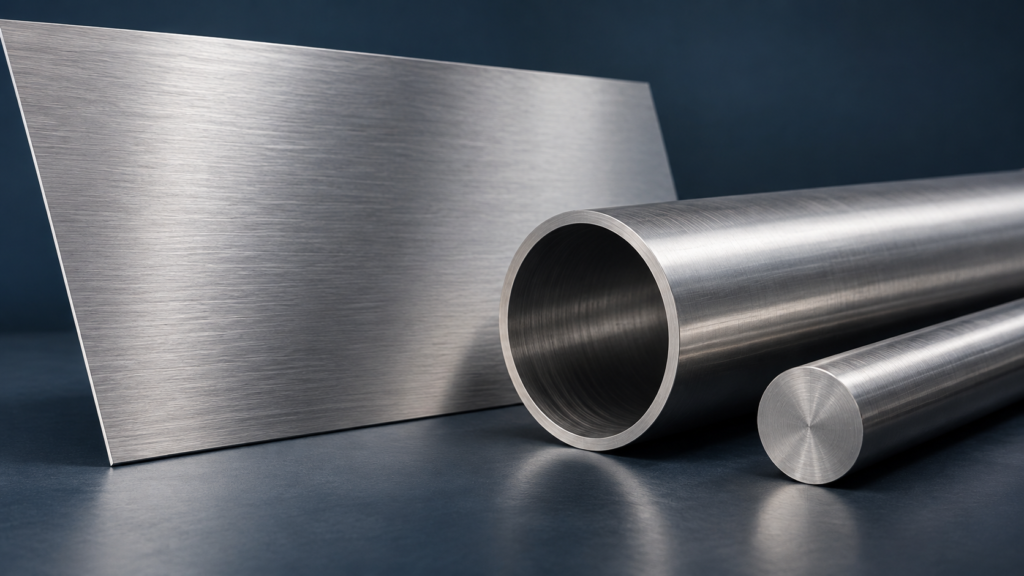
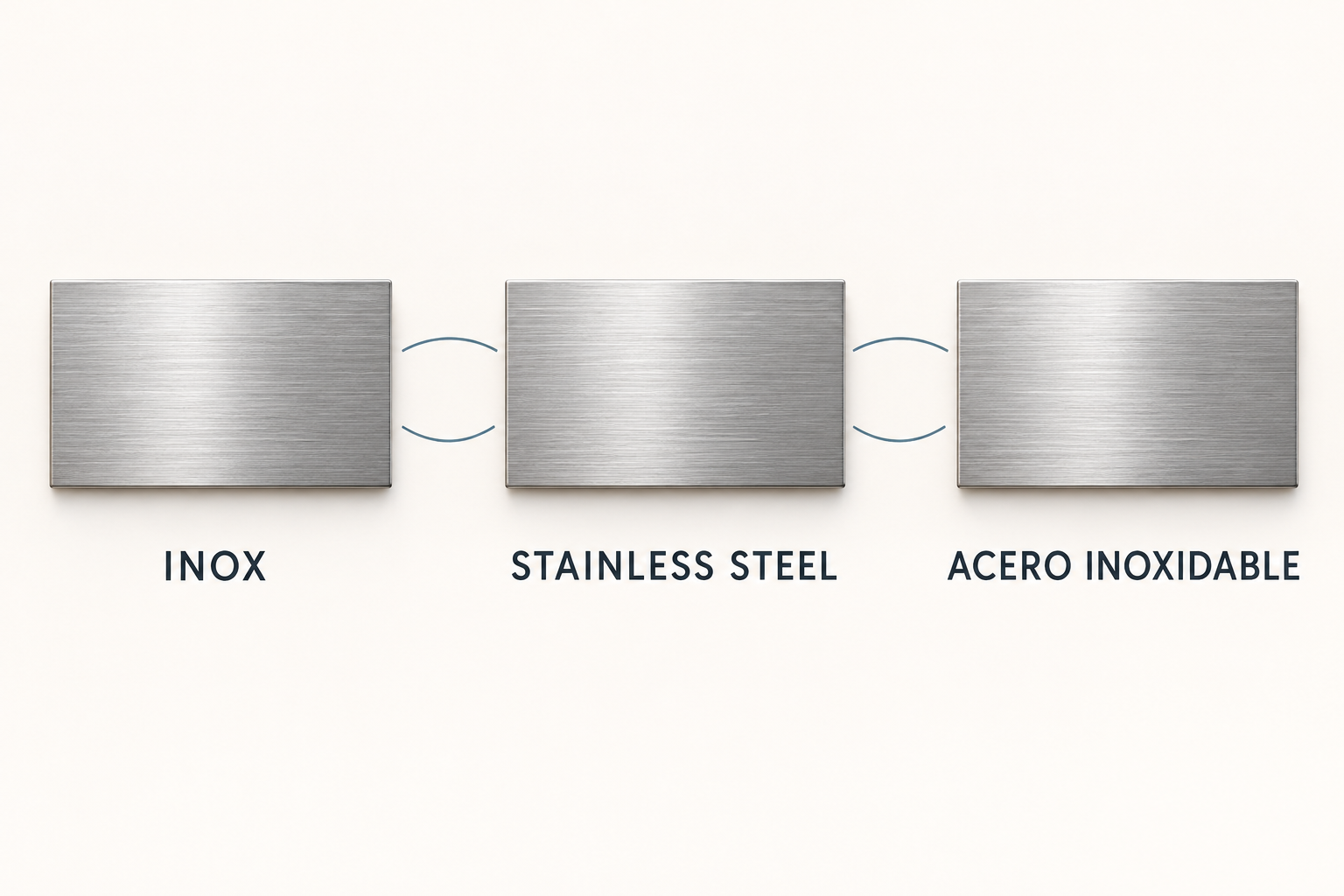
INOX and stainless steel refer to the same material family. In Spanish, acero inoxidable means stainless steel. The phrase “inoxidable stainless steel” combines Spanish and English wording; it does not identify a special alloy. A label saying INOX still leaves an important question unanswered: which stainless grade, in which condition, for which job?
The useful distinction is between a material name and a material specification. Translating the name can help you read a listing. It cannot establish whether two supplied parts are interchangeable.
What does “inoxidable stainless steel” mean?
INOX comes from the French word inoxydable. Material suppliers use it as a general name for stainless steel. Spanish uses inoxidable in the expression acero inoxidable; the Real Academia Española records both the adjective and that expression.
| Wording you see | What it identifies | What it leaves open |
|---|---|---|
| Stainless steel | English material-family name | Grade, condition and application suitability |
| INOX | Common stainless-steel designation | The same missing specification details |
| Acero inoxidable | Spanish name for stainless steel | The same missing specification details |
| 304 or 316 | Examples of stainless grade designations | Product form, delivery condition and application requirements |
Read the first three rows as different wording for the family, rather than three materials to rank. Read the last row as a move toward identifying an alloy. Even then, a bare grade number is only part of a purchasing or fabrication specification.
A material name is not a grade
Stainless steel is iron-based. The British Stainless Steel Association defines it by a minimum chromium content of 10.5% by mass. Chromium helps form the passive surface layer responsible for corrosion resistance. “Stainless” does not mean that the material contains no iron, and it does not make stainless steel a non-ferrous metal.
Within that family, composition and structure vary. worldstainless distinguishes austenitic, ferritic, duplex and martensitic types. Grades such as 304 and 316 sit within the austenitic group; they are not translations of INOX. Other stainless families have different property combinations and applications.
A practical reading order is family → grade → condition → intended use. This is a way to organize a material enquiry, not a substitute for a specification. If a seller answers a grade question with “it is INOX,” the answer has stayed at the family level.
Does an INOX label mean it cannot rust?
No. The name describes a corrosion-resistant material family, not immunity under every exposure. BSSA’s selection guidance considers the environment together with mechanical properties and fabrication needs. A material choice that works in one setting does not automatically resolve a different service condition.
For example, two listings may both say INOX while giving different alloy designations or omitting them altogether. Comparing the names alone cannot settle their suitability. The useful question is whether each material specification addresses the same exposure and manufacturing requirements.
Surface appearance also answers a different question from alloy identity. A brushed finish describes how a surface looks; it does not complete the material designation. A photograph can help establish the supplied shape or finish, but it cannot replace the missing grade information.
Can a magnet identify the stainless grade?
A magnet response alone is insufficient. Magnetic behavior differs across stainless families and can depend on material condition. BSSA describes fully softened austenitic stainless steels as having low magnetic permeability; that statement should not be expanded into a rule that every stainless item must be non-magnetic.
Treat a magnet observation as one observation, not a purchase specification. Neither “it sticks” nor “it does not stick” identifies a particular stainless grade. When a drawing or order calls for a grade, the supporting identification should resolve that grade directly.
A four-part check before ordering or cutting
The following check separates questions that an INOX label often bundles together. It is useful when comparing listings, preparing a supplier enquiry or handing material details to a fabricator.
1. Name the family. Translate INOX or acero inoxidable as stainless steel. Preserve the supplier’s original wording in your enquiry so that a language difference does not become an assumed material difference.
2. Identify the grade. Ask for the complete alloy designation and the specification used to identify it. If the listing has no grade, mark that information as missing instead of replacing it with a familiar example such as 304.
3. Describe the supplied condition. Separate product form and dimensions from grade, and record the specified material condition and finish. Do not use a photograph of a polished item as evidence for those other fields.
4. State the job. Describe the intended exposure, fabrication operation and acceptance requirements. This gives the material supplier or fabricator a concrete question to answer, rather than asking whether “INOX is good.” This is particularly useful when one supplier uses a local-language description and another uses English wording for a similar-looking part.
Consider a hypothetical enquiry for an INOX tube. The original description gives a family and a product form, but no grade or condition. A useful follow-up would request those missing details, the tube dimensions and the intended operation. The improvement comes from resolving separate inputs, not from changing the word INOX to stainless steel.
Carry the material details into blade selection
Once the workpiece is identified, blade choice becomes a separate decision. Keep the workpiece designation distinct from the cutting accessory’s own material description: a stainless workpiece does not imply that the blade itself must be stainless steel.
When reviewing EACHLEAD’s hacksaw blade range, carry forward the actual material and workpiece dimensions along with the tool requirements. The category identifies available cutting accessories; the word INOX alone cannot establish the correct blade or cutting setup.
A useful enquiry therefore ends with resolved material information and a defined task. That is more actionable than treating INOX, inoxidable and stainless steel as competing grades.
References
- Metal Supermarkets — INOX terminology
- RAE–ASALE, Diccionario de la lengua española — entry “inoxidable” and its “acero inoxidable” expression
- BSSA — stainless-steel definition and passive layer
- worldstainless — stainless families and grades
- BSSA — material selection, condition and fabrication