


How to Select a Reciprocating Blade for Insulation Materials
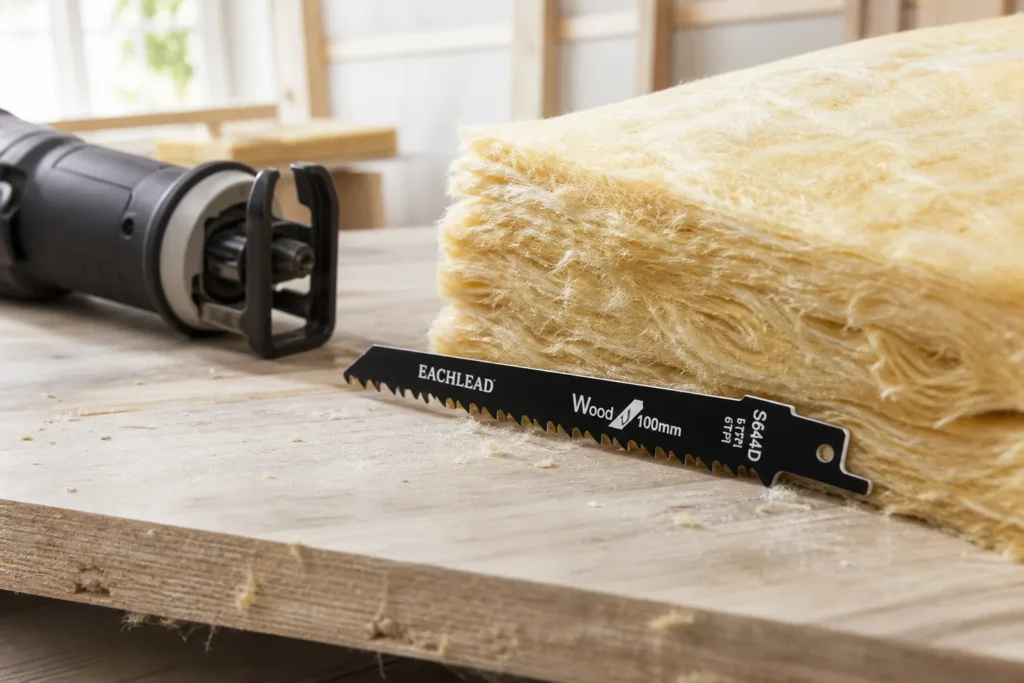
The right insulation blade for reciprocating saw work is a long soft-material blade—usually high carbon steel with a low-TPI serrated profile or a knife/wavy edge—matched to fibrous batts, foam board, or spray-foam trim. A wood or metal tooth pack is the wrong default for those jobs. This article maps material to edge class, explains HCS versus bi-metal, covers length and shoe contact, and points to EACHLEAD’s HCS reciprocating category pathway.
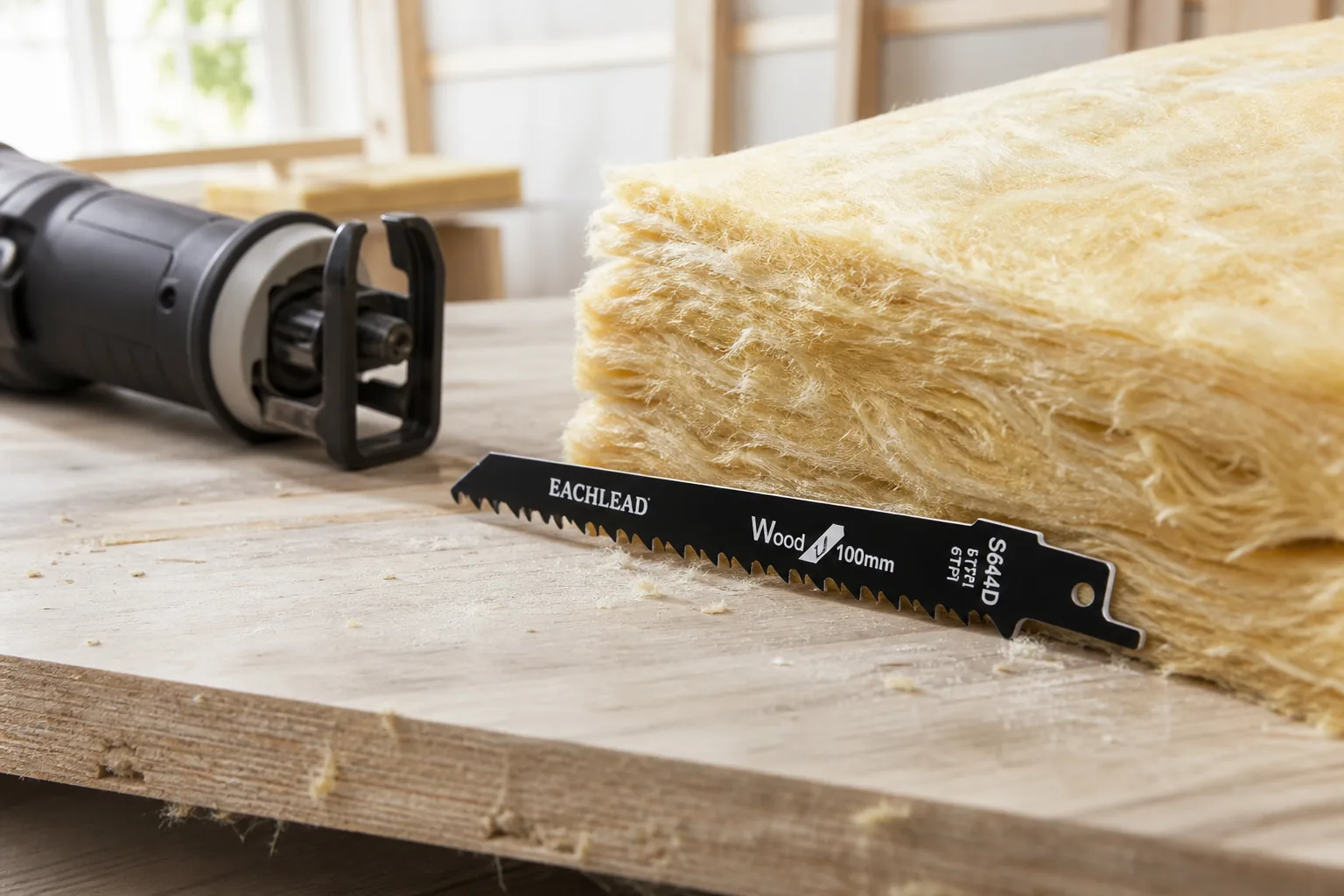
What Counts as an Insulation Blade for a Reciprocating Saw
Specialty insulation recip blades are long sabre or Sawzall-type blades built for soft, compressible building materials rather than framing lumber or pipe. Published specialty examples commonly use HCS bodies, roughly 300–400 mm overall length, and either low single-digit TPI serrations or continuous knife edges.
They sit in the same tool family as everyday recip saws, sabre saws, and Sawzall-style tools. Published specialty insulation examples often list a 1/2 in. tang, but confirm the clamp and shoe instructions for the specific saw before you treat any blade as interchangeable.
The difference that matters for insulation work is the cutting edge: soft-material geometry is meant to slice fibers or foam instead of ripping them.
Treat “insulation reciprocating saw blade” as a job class, not a single model number. Retail catalogs show serrated insulation blades, wavy knife edges for foam rubber, and straight polished knives for spray foam—different edges for different soft materials.
Match the Blade to the Insulation Material
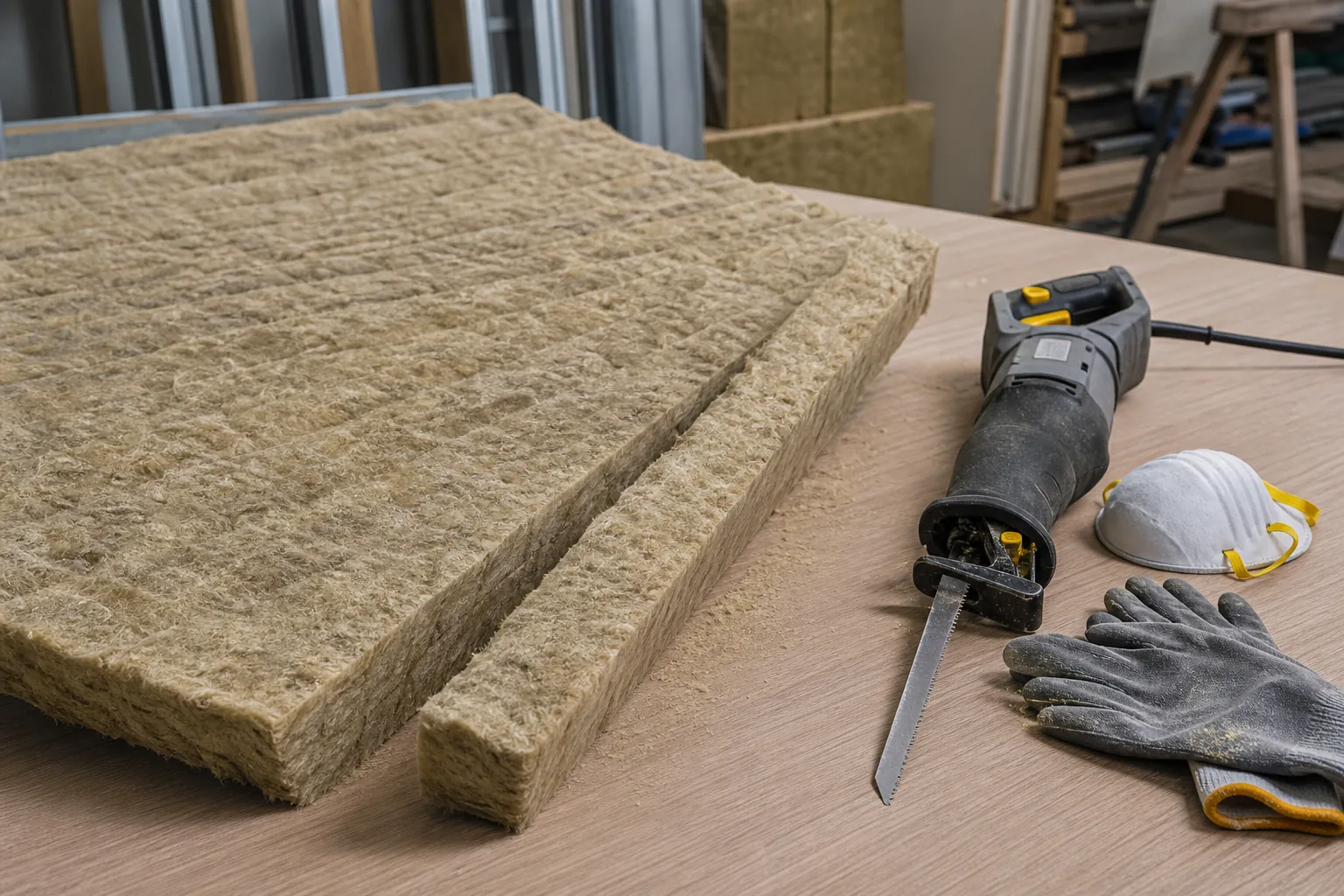
Pick the blade from the insulation in front of you, not from a generic demolition assortment. Fibrous batts, rigid foam, and cured spray foam fail in different ways when the edge is wrong.
| Insulation type | What goes wrong with the wrong blade | Edge / steel direction |
|---|---|---|
| Fiberglass or mineral wool batts | Coarse wood teeth shred and “crumb” the batt | Specialty low-TPI serrated or long knife-style soft-cut blade; HCS for clean soft work |
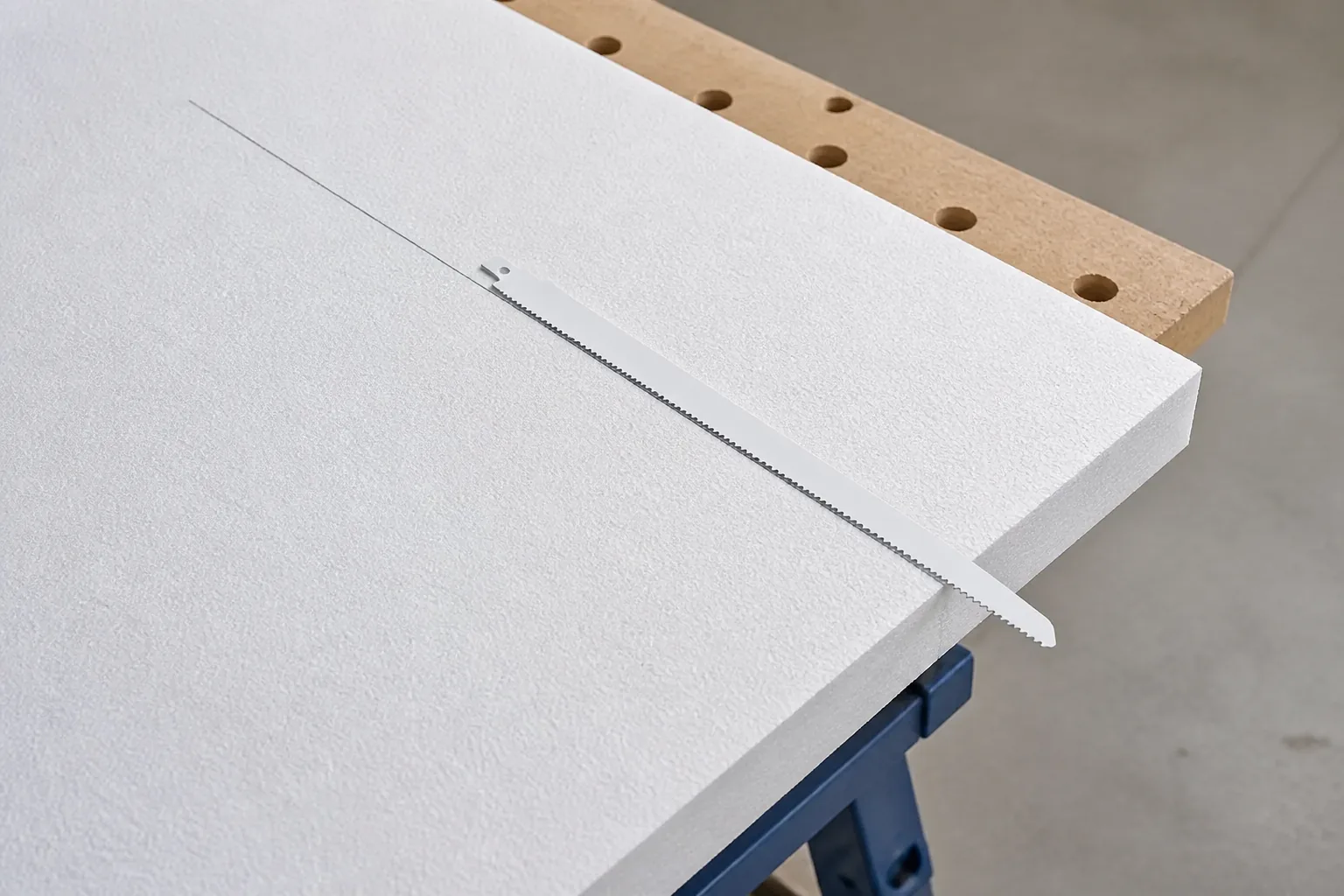
| Rigid foam (XPS / EPS / polyiso) | Aggressive teeth chew and leave ragged kerfs | Knife or wavy soft-material edge; keep length past board thickness |
| Cured spray foam trim | Ordinary teeth gum and stick | Straight polished knife-style recip blade marketed for foam; wipe residue |
| Cardboard / tube insulation / soft plastics | Over-toothed blades tear skins | Same soft-material class used on specialty insulation listings |
On staggered-stud or thick mineral wool splits, forum installers report that a standard toothy sawzall blade feels “too toothy” and damages the batt. That is a material match problem, not a saw power problem.
Procurement buyers should list the insulation family on the RFQ line before they list brand preference. Edge class travels with the material; the tool brand is secondary.
Serrated Low-TPI vs Knife and Wavy Edges
Serrated low-TPI blades use widely spaced, often knife-ground teeth to pull fibers apart with less chewing than a wood pack. Educational blade guides place building insulation in a specialty low-TPI lane for rockwool and fibreglass batts that would otherwise compress or shred.
A knife-edge Sawzall blade or wavy edge is a continuous cutting edge with little conventional tooth set. OEM wavy-blade copy notes that a wavy edge can cut insulation and foam rubber better than a straight blade that tends to compress the material during the stroke.
Tip: Soft foam and foam rubber often want a knife or wavy edge. A straight toothed wood profile can pack the kerf instead of opening it, which is why specialty wavy and polished straight blades exist for those soft cuts. (Source: Milwaukee Sawzall wavy-blade product guidance)
Non-serrated carbon knife blades that also fit Sawzall-type tools are marketed for foam board, rockwool, fiberglass, and spray foam when dust and fuzz are the complaint. Serrated low-TPI remains common on long HCS “building materials insulation” recip SKUs aimed at thick fibrous bundles and cardboard.
If the job mixes foam board and fibrous batts, expect two edges in the pouch rather than one compromise blade.
Why HCS Is the Usual Soft-Cut Choice
HCS (high carbon steel) is the usual body for soft-cut recip blades because a single-material blade stays flexible and bites clean soft stock well. Specialty insulation listings from major accessory brands repeatedly specify HCS for insulating materials and cardboard.
HCS is the wrong default when nails, screws, or metal appear in the cut. Educational selection guides warn that HCS teeth shear on metal contact; bi-metal is the workshop default for mixed wood-and-nail work.
EACHLEAD’s live catalog separates an HCS reciprocating saw blade family from a bi-metal recip family. Soft insulation work points toward the HCS pathway; fastener-heavy remodel strip-out points toward bi-metal.
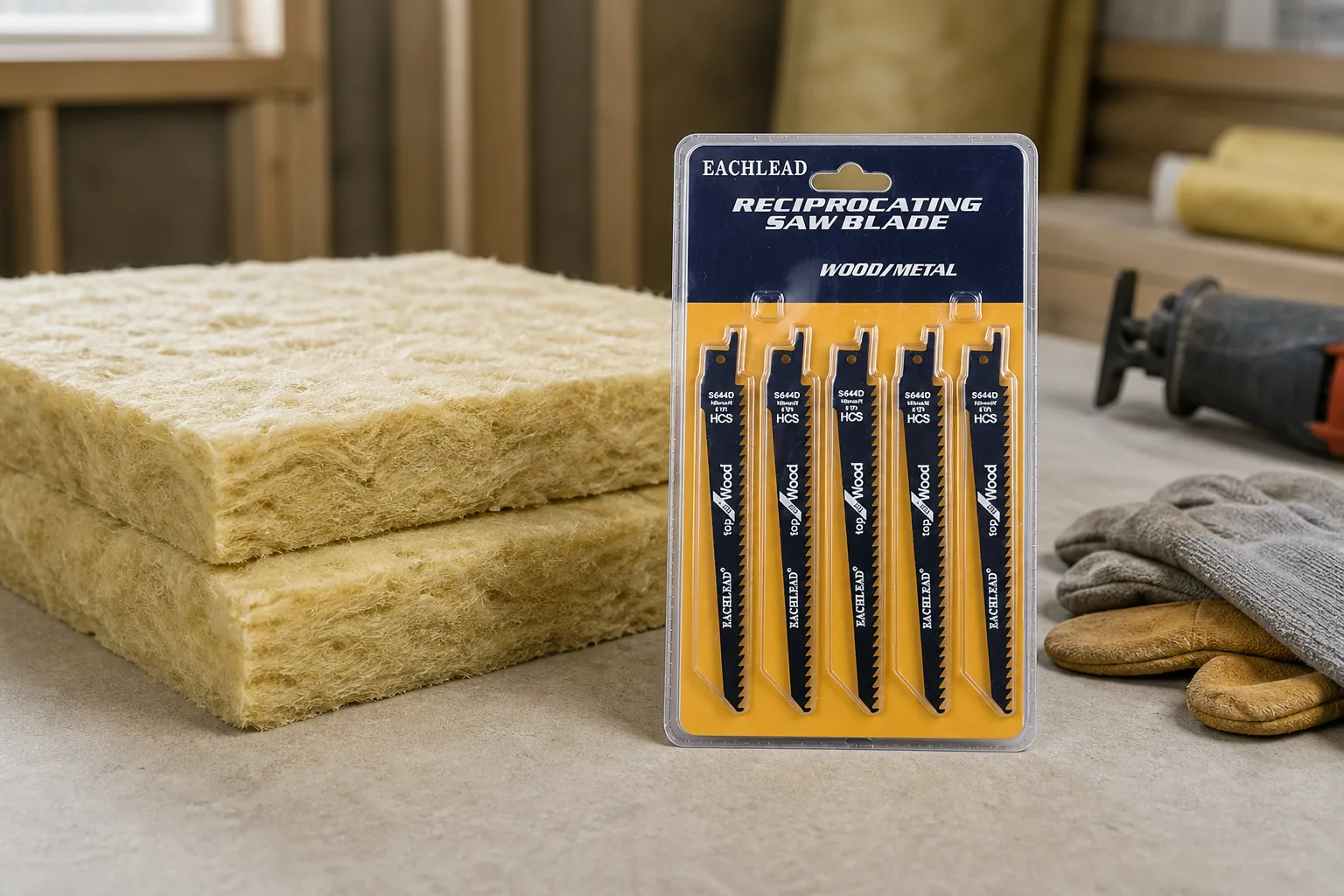
Do not treat a packaged wood-oriented HCS blade as a dedicated insulation knife. It illustrates the soft-cut steel class on the category path; specialty knife geometry is a separate edge decision.
Length, Width, Plunge, and Shoe Contact
Length must overrun the material thickness so the blade clears on every stroke. Specialty insulation recip examples commonly publish about 400 mm overall length with roughly 350 mm cutting length for thick bundles.
Width helps straightness: wide-backed insulation blades are sold specifically to keep long soft cuts from wandering. Thin knife blades trade some rigidity for access in tight foam notches.
Plunge-friendly knife tips appear on serrated insulation recip SKUs for starting inside a panel. Start at low speed, tip in, then settle the shoe flat before loading the cut.
Keep the shoe planted. Technique guidance for recip work treats shoe contact as mandatory so reaction force goes into the workpiece instead of bending the blade sideways.
| Published specialty example (non-EACHLEAD) | Length / cutting length | TPI / edge notes | Material callouts on the page |
|---|---|---|---|
| Festool SR 400/5 insulation recip | 400 mm / 350 mm | 5 TPI serrated; wide back; plunge tip | Insulating materials, cardboard, tube insulation, softer plastics |
| SabreCut SCRS2013AWP | 400 mm / 350 mm working | 5 TPI serrated knife edge; 45×1.5 mm | Mineral wool, rigid panels, rolls, cork, leather, cardboard |
| Specialty HCS insulation listings such as SabreCut SCRS2013AWP publish about 400 mm overall length with low single-digit TPI on HCS. Educational specialty rows often cite about 300 mm class blades near 3 TPI for batts. |
Use those figures as class illustrations when you read a competitor pack. Confirm the length printed on the blade you actually buy.
Control Fiber Dust When You Power-Cut Batts
Power cutting fiberglass or mineral wool disturbs synthetic vitreous fibers that can irritate skin, eyes, and airways. OSHA’s weatherization guidance flags those irritation routes and generally recommends long sleeves, long pants, gloves, and head coverings, with eye and respiratory protection when needed.
ATSDR’s synthetic vitreous fiber fact sheet adds that disturbing insulation can suspend fibers, that short-term irritation is typically reversible after exposure stops, and that DIY installers should wear protective clothing plus respiratory and eye protection. Workers who install or remove insulation see the highest exposures.
From the field: Dense mineral wool board crews have used a small handheld reciprocating saw for sized cuts while still wearing a dust mask—even when dust looked light on the bench.
Lower orbital aggressiveness, keep the shoe steady, and avoid flinging loose fibers into occupied rooms. Clean tools and change out of work clothes before leaving the site so fibers do not ride home.
Product Recommendation: Start with EACHLEAD HCS Reciprocating Blades
EACHLEAD does not list a verified dedicated insulation-knife reciprocating SKU in the live catalog as of 2026-08-20. The honest buyer path is the soft-cut HCS reciprocating saw blades category under the parent reciprocating saw blades hub.
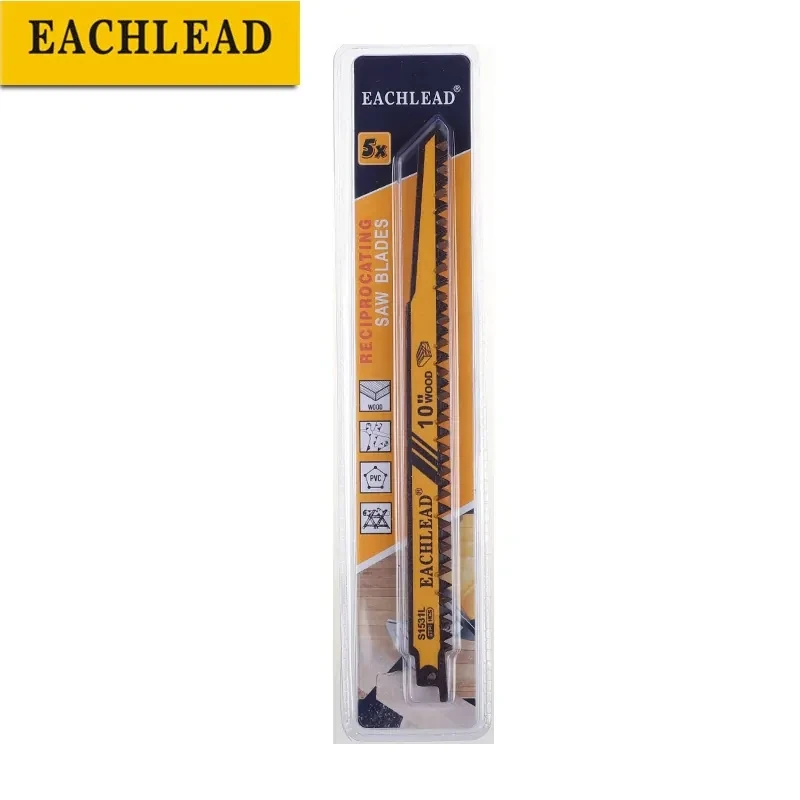
Browse HCS listings for length and tooth pitch that fit clean soft work, then compare against bi-metal only if the cut may hit fasteners. If you need a custom soft-material geometry beyond the published HCS assortment, use the contact page after you define the insulation type and edge class you need.
Skip the HCS path when the bill of materials is nail-embedded lumber or metal—those cuts belong on bi-metal or carbide families, not on soft-cut insulation logic.
FAQ
What blade type should I choose for fiberglass or mineral wool batts?
Choose a specialty soft-material recip blade with low-TPI serrations or a long knife-style edge, not a coarse wood demolition pack. Field users report ordinary toothy sawzall blades tearing mineral wool.
Knife-edge vs serrated low-TPI — which suits foam board?
Foam board and foam rubber often favor knife or wavy edges that slice without packing the kerf. Serrated low-TPI remains common for thick fibrous bundles; many foam-focused blades use straight or wavy knife geometry instead.
Can a standard wood recip blade cut insulation?
It can chew through soft stock, but it often shreds fibrous batts and compresses foam. Treat wood packs as a last resort, not the selection target for insulation work.
What TPI range do specialty insulation recip blades use?
Published specialty examples cluster in the low single-digit TPI range—about 3–6 TPI on serrated insulation SKUs—or use toothless knife/wavy edges. Match the printed TPI to material thickness and keep enough teeth in the cut without loading a fine metal pack into soft foam.
How do I reduce gumming when trimming spray foam?
Use a straight polished knife-style recip blade designed for foam, keep the cut in cured foam only, and wipe residue before it cooks onto the edge. Ordinary wood teeth gum quickly on poly foam.
What PPE is sensible when power-cutting fiberglass?
Follow fibrous-insulation handling practice: cover skin, protect eyes, and use respiratory protection when fibers are airborne. OSHA and ATSDR both treat irritation and fiber disturbance as real jobsite issues during install and removal.
Does EACHLEAD sell a dedicated insulation-knife recip blade?
No verified dedicated insulation-knife recip SKU is recorded for EACHLEAD as of 2026-08-20. Start from the HCS reciprocating category and the parent recip hub, and inquire only after you specify insulation type and edge class.