


How to Choose a Reciprocating Saw Blade for Plastic Sheet
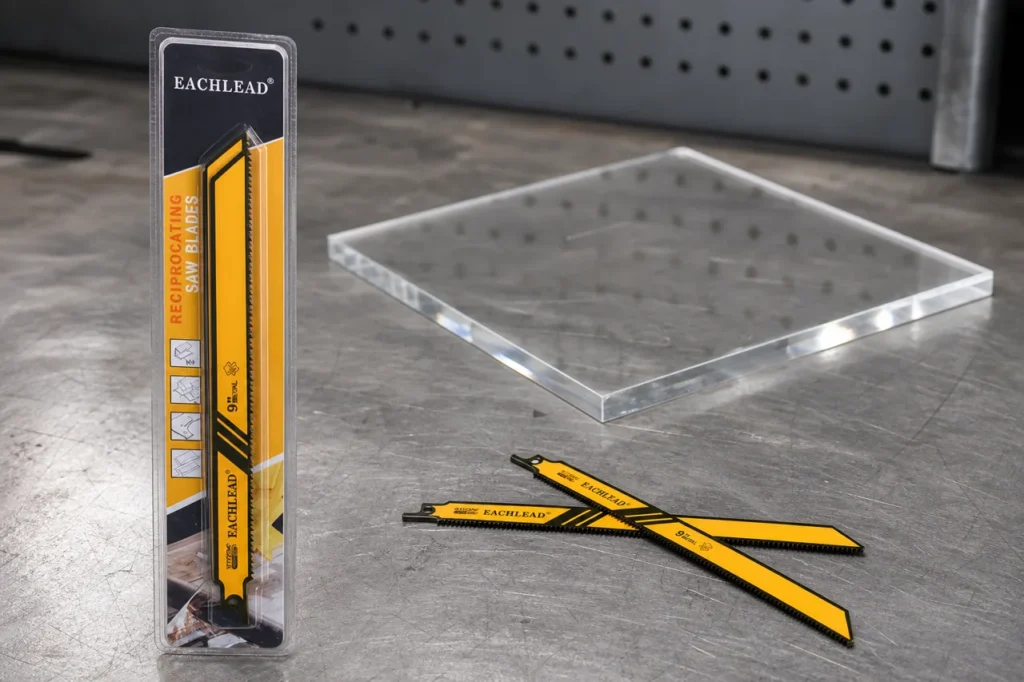
A reciprocating saw blade for plastic sheet work should match teeth-per-inch to thickness, favor a durable bi-metal body for mixed duty, and run with support plus moderated speed so friction heat does not melt the kerf. This page walks through TPI, bi-metal versus HCS, melt control, sheet support, and a concrete EACHLEAD starting blade.
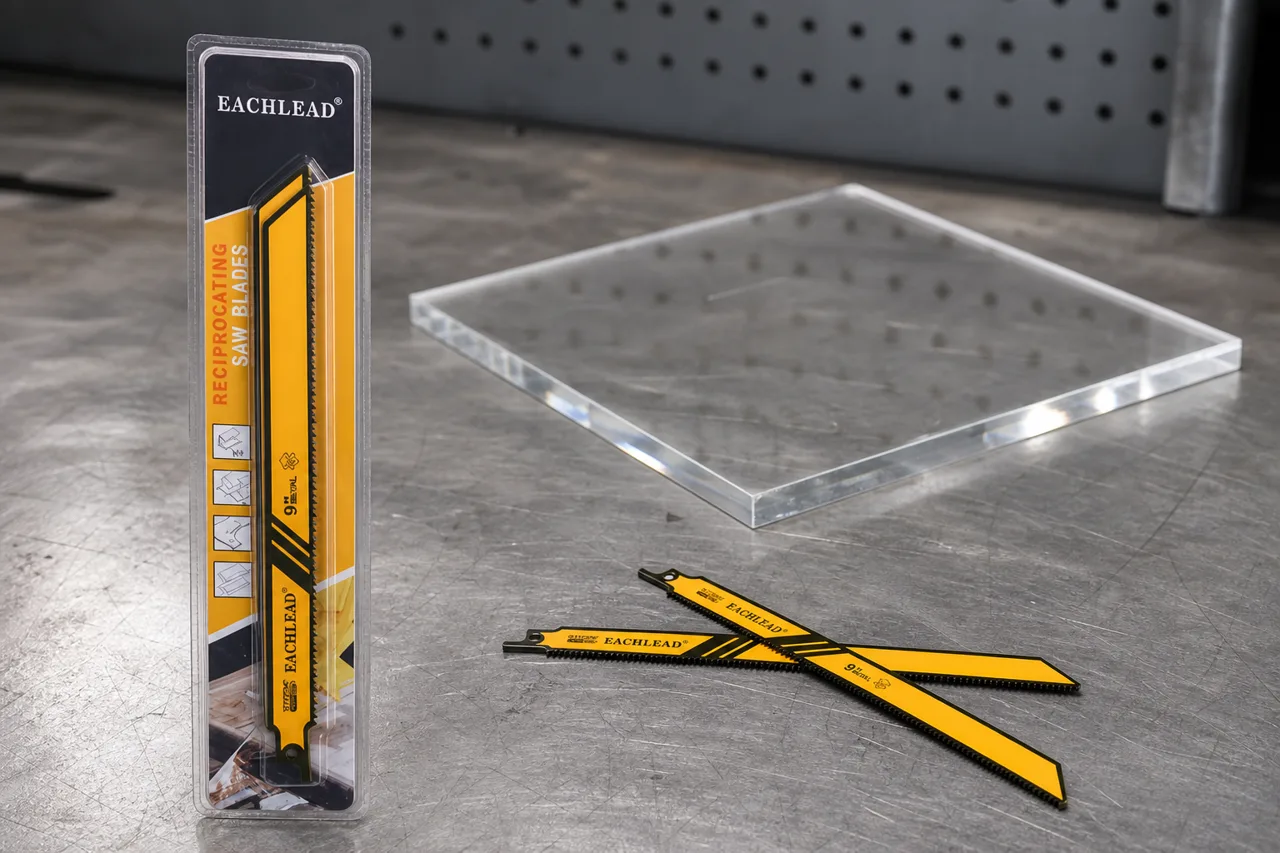
What a Reciprocating Blade Must Manage on Plastic Sheet
A reciprocating saw drives the blade in a push-pull stroke, so the tooth edge must shear plastic without turning heat into a welded mess.
Plastic sheet is softer than steel, yet it softens early under friction. That is why blade choice and feed rhythm matter as much as motor power.
On a display acrylic trim, the failure mode is usually a melted bead or a chip-out along the line, not a stalled motor. Treat heat, chip clearance, and vibration as the three controls you buy with TPI and blade body.
Related pathway: browse the reciprocating saw blades family before you lock a SKU.
Procurement readers should write thickness, plastic family, and finish expectation on the RFQ line before comparing packs. Those three facts narrow TPI faster than brand marketing copy.
If the cut must stay near a painted frame or a finished edge, plan a sacrificial backer and a test scrap of the same sheet grade. A two-minute scrap check confirms whether the chosen TPI melts, chips, or tracks straight before you commit the finished panel.
Match TPI to Plastic Sheet Thickness
Start with a mid-to-fine TPI for plastic sheet, then move finer when the sheet is thin or the edge chips.
TPI means teeth per inch. More teeth share the cut and usually leave a smoother edge; fewer teeth clear chips and heat faster on thicker stock.
Acrylic sheet guidance for saber-style cutting often starts in a 7–14 TPI band for all-purpose work, keeps at least two teeth in the thickness, and uses about 16 TPI as a starting point on 1/8 in (3 mm) sheet versus about 8 TPI on 1/4 in (6 mm) sheet.
| Sheet situation | Starting TPI idea | If the edge chips | If the kerf melts |
|---|---|---|---|
| ~1/8 in (3 mm) acrylic-like sheet | Finer start (~16 TPI class) | Move finer | Move coarser / slow the stroke |
| ~1/4 in (6 mm) sheet | Mid band (~8 TPI class) | Move finer | Move coarser / slow the stroke |
| General plastic sheet, unknown grade | 7–14 TPI all-purpose band | Add teeth | Drop teeth, cut cooler |
That same logic explains why education articles often cite roughly 10–14 TPI for PVC-class plastics when speed stays controlled. Use it as a starting band, not a universal rating.
When you compare catalog lines, read the published TPI for plastic sheet next to length and body material—those three fields decide most first buys.
Distributors stocking mixed acrylic, polycarbonate, and PVC sheet should keep at least one mid-band and one fine-tooth bi-metal option on the shelf. That pairing covers most thickness bands without forcing a metal-only demolition blade into soft sheet work.
Choose Bi-Metal or HCS for Plastic Sheet Work
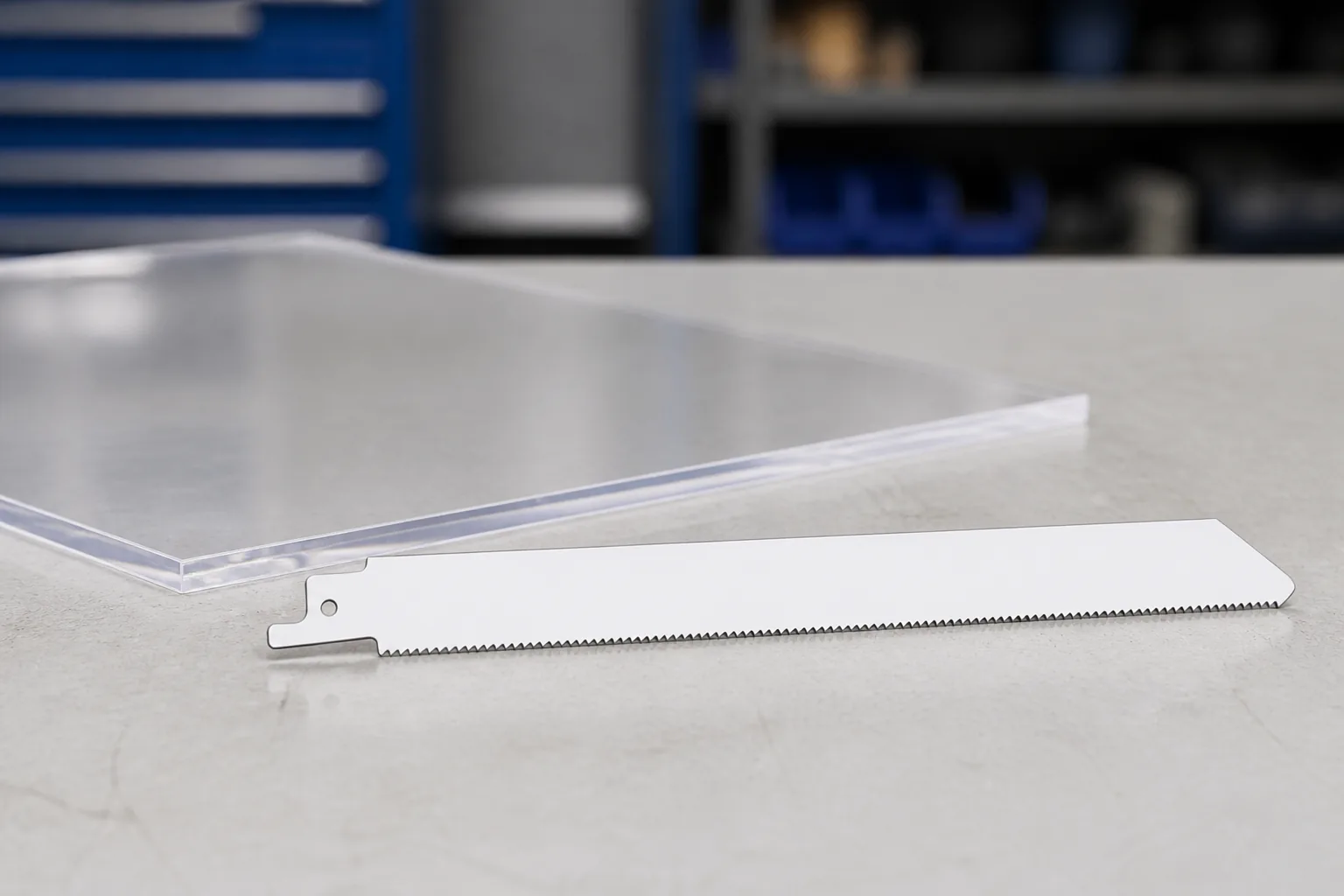
Prefer a bi-metal reciprocating saw blade when plastic sheet work sits near fasteners, mixed materials, or repeat cuts; reserve an HCS reciprocating saw blade for clean, soft plastic only.
Bi-metal blades pair hard tooth tips with a flexible back. That construction shows up repeatedly in plastics how-tos because it survives heat and occasional hard inclusions better than a soft all-steel tooth.
HCS blades can feel sharp and cost less on nail-free soft stock. They are a poor default when the sheet stack may meet metal clips, screws, or abrasive fillers.
| Decision | Lean bi-metal (BIM) | Lean HCS |
|---|---|---|
| Duty mix | Plastic near nails, brackets, or mixed demolition | Clean plastic only |
| Edge life priority | Longer tooth life under heat | Accept faster wear for soft cuts |
| Finish on thin sheet | Pair with finer TPI SKUs | Only if the plastic stays soft and supported |
| EACHLEAD pathway | BIM material hub | HCS material hub |
Soft plastics often tolerate a general-purpose bi-metal tooth set. Harder acrylic or polycarbonate sheet usually wants finer teeth and a cooler technique, not a coarse wood-demo blade.
Keep Plastic Sheet from Melting on the Cut
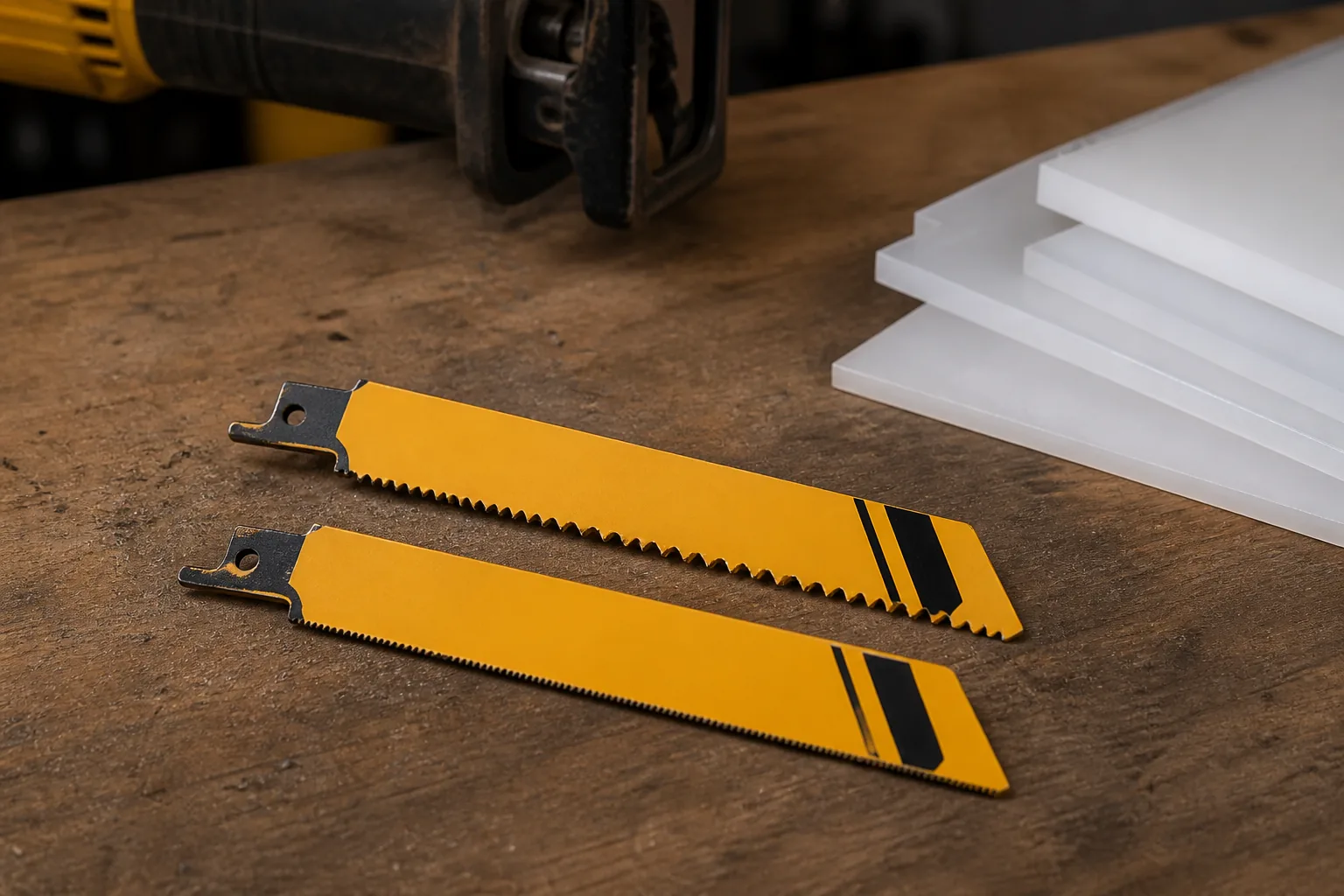
If plastic turns gooey in the kerf, reduce stroke speed, shorten dwell, and reconsider TPI before you blame the saw.
Melting means the teeth are rubbing more than they are cutting. Dull teeth, too many teeth for the thickness, or a paused tip in one spot all raise heat.
Acrylic sheet guidance is blunt: if you see melting, try fewer teeth per inch; if you see chipping, try more. Keep the blade sharp—dull edges melt plastic even when TPI looks “right.”
From the field: Field users cutting acrylic diffuser panels clamp the stack between boards and run a fine Sawzall blade slowly; cutting too fast can melt plastic into a goo that gums the saw. (Source: DIYChatroom acrylic panel thread)
Workshop discussions of plexiglass also circle the same heat story: slow a variable-speed tool so the plastic does not fuse in the gullets.
Clear chips as you go. A quick pause to cool the kerf beats forcing a glazed cut through a sticky slot.
Support and Guide the Sheet Before You Cut
Clamp the sheet and add a straight guide so the reciprocating stroke cannot chatter the panel into chips.
Saber-style cutting on acrylic sheet needs adequate support because the reciprocating blade can vibrate the sheet enough to crack the edge. A straight board clamped beside the cut line works as both guide and damper.
Sandwich thin panels between sacrificial boards when the plastic can flutter. Support the waste side so the offcut does not snap late and tear the finish edge.
Mark the line, confirm the foot of the saw stays planted, and let the teeth feed—do not lean your weight into a plastic sheet the way you would into framing lumber.
If the panel still chatters, add a second clamp closer to the cut and shorten the free overhang. A quieter sheet almost always leaves a cleaner edge than a heavier trigger pull. Sheet support is part of the blade decision, not an afterthought.
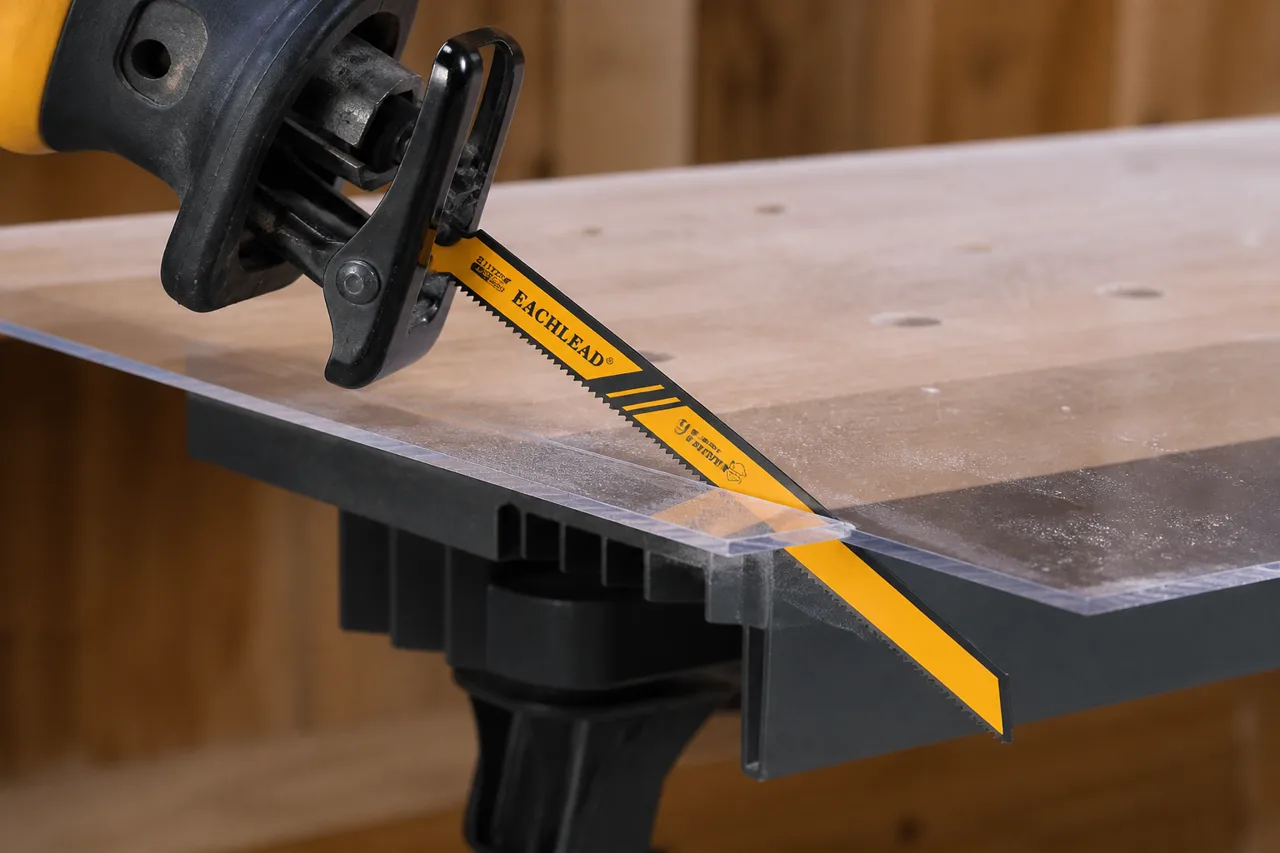
A fine-tooth bi-metal profile pairs well with that clamped setup when the sheet must stay flat through the stroke.
Product Recommendation: Bi-Metal Blades for Plastic Sheet Cuts
Start with EACHLEAD bi-metal mid-TPI blades for plastic sheet selection, then step to finer published TPI when the sheet is thin and finish-critical.
The S1122HF bi-metal reciprocating saw blade is listed as BI-METAL 6150+M2, 9 inch / 225 mm, and 10 TPI. That mid-band tooth count sits in the same neighborhood many plastics guides use for controlled cuts. The first-party product artwork for this model also marks wood/metal/aluminum/plastic cutting among its application labels.
When the sheet is thinner and you need more teeth in the thickness, compare nearby BIM listings such as the S1122EF 18 TPI blade (published for thin sheet metal 1.5–4 mm) or the S1122AF 24 TPI blade (published for thin sheet metal 0.7–3 mm). Read those published ranges as tooth-density options, not as plastic-lab certificates.
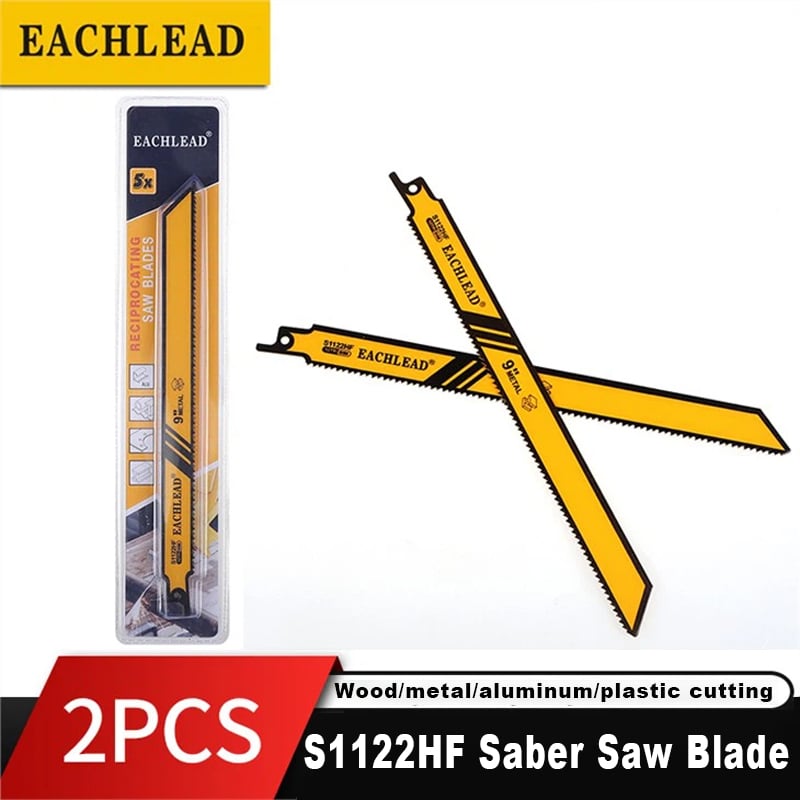
Browse the full bi-metal reciprocating saw blades hub to match length and TPI to your sheet stack. Use the HCS hub only when the plastic is clean and soft.
If you need a pack configuration clarified after you lock thickness and TPI, use contact us once with those two fields stated.
FAQ
What TPI should I use on plastic sheet?
Begin in a mid/fine band—often 7–14 TPI for all-purpose acrylic-style sheet cutting—and keep at least two teeth in the thickness. Move finer for thinner sheet or chippy edges; move coarser if the kerf melts.
Why is my plastic melting on the cut?
Heat from rubbing teeth softens thermoplastics. Slow the stroke rate, reduce dwell, clear chips, and try a lower TPI or a sharper blade before forcing the cut.
Should I choose bi-metal or HCS for plastic sheet?
Choose bi-metal when duty may include mixed materials or repeat heat cycles. Choose HCS only for clean, soft, nail-free plastic where you accept faster wear.
Can I use a fine metal-cutting recip blade on plastic?
A fine bi-metal metal-cutting blade can be a practical thin-sheet option when TPI is high enough to keep teeth engaged. Confirm the published TPI and support the sheet; do not assume a steel rating equals a plastic guarantee.
How do I reduce acrylic chip-out with a recip saw?
Raise TPI if chips dominate, clamp a guide board, and support both sides of the cut. Vibration from an unsupported sheet often causes edge fracture before tooth geometry fails.
Is a shorter or longer blade better on sheet work?
Shorter blades are easier to control on panel trims; longer blades help when you need reach through thick stacks. Match length to the cut depth you actually need, not to demolition habits.
Do I need a blade labeled only for plastic?
A plastic-labeled blade can help, but TPI, sharpness, support, and speed usually decide the edge. Many buyers succeed with a bi-metal mid/fine tooth blade plus cool technique.