


What Separates a Hand Hacksaw Blade From a Machine Blade?
Hand hacksaw blades and machine hacksaw blades must be specified from their own holding systems, not treated as interchangeable because they look similar. Start with the hand frame or the machine fixture, then record the end pattern, dimensions, and operating context.
Part 1. What is being compared?
The comparison is between two specification paths. A hand hacksaw blade belongs in a hand frame with its own tensioning and retention arrangement. A machine blade belongs in the machine’s documented fixture and operating system.
The hacksaw blade pillar provides a family overview. It should not be read as proof that one physical blade crosses from one system into the other.
| Question | Hand scope | Machine scope |
|---|---|---|
| Starting document | Frame and installed sample | Machine manual and fixture |
| Primary evidence | End features and frame setting | Fixture, clamp, and machine specification |
| Procurement decision | Replacement for that hand system | Candidate for that machine system |
Part 2. How do holders set the first boundary?
The holder is the first filter because it decides how the blade is retained and tensioned. Photograph the retention points and identify the frame or machine before comparing catalog names.
A hand-frame record cannot substitute for machine-fixture information. Conversely, a machine drawing does not establish that the blade belongs in a hand frame.
Part 3. Which physical measurements remain separate?
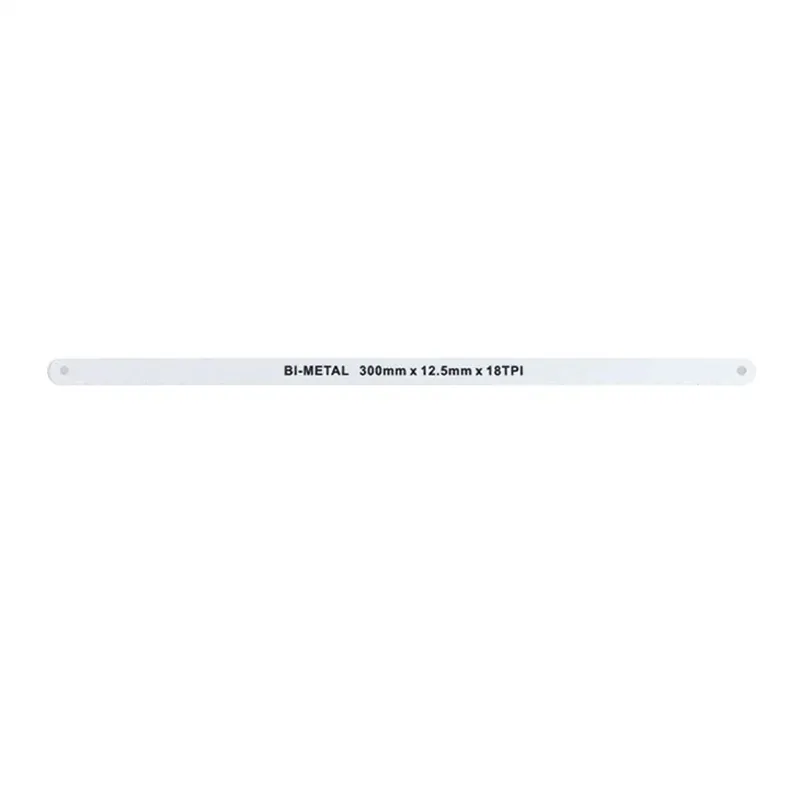
Measure overall length, end pattern, width, and thickness as separate fields. Record tooth pitch after the mounting dimensions, since the correct cutting specification still has to sit in the right holder.
| Field | Hand-frame RFQ | Machine RFQ |
|---|---|---|
| Length | Installed blade or frame setting | Manual/drawing value |
| End pattern | Frame pin or clamp detail | Fixture/clamp detail |
| Section | Width and thickness | Width and thickness |
| Context | Hand frame and workpiece | Machine model, fixture, workpiece |
The metal selection guide can help organize material questions once the correct scope is known.
Part 4. Why does machine documentation take priority?
Machine documentation governs the machine side because it describes the intended fixture and safeguarding context. Do not replace it with a visual guess from a hand blade.
Guarding is a separate operating responsibility, not an image or category attribute. Review the applicable setup and OSHA machine-guarding requirements with the machine documentation.
Part 5. How should cutting context be recorded?
State what is being cut, its section shape, and the observed blade issue without turning a symptom into a performance promise. This lets the supplier distinguish mounting confirmation from material and pitch discussion.
The complete hacksaw buying guide is a useful lateral read for general purchasing factors; this comparison keeps its focus on system boundaries.
Part 6. What belongs in a two-scope RFQ?
Separate the two paths into different line items. A clear RFQ makes it possible to say “hand frame” or “machine fixture” before a candidate family is discussed.
| RFQ field | Buyer supplies | Review purpose |
|---|---|---|
| System label | Hand frame or machine | Prevents scope mixing |
| Mounting evidence | End and holder photos | Checks retention geometry |
| Dimensions | Length, width, thickness | Narrows physical candidate |
| Validation | Sample-fit requirement | Keeps approval conditional |
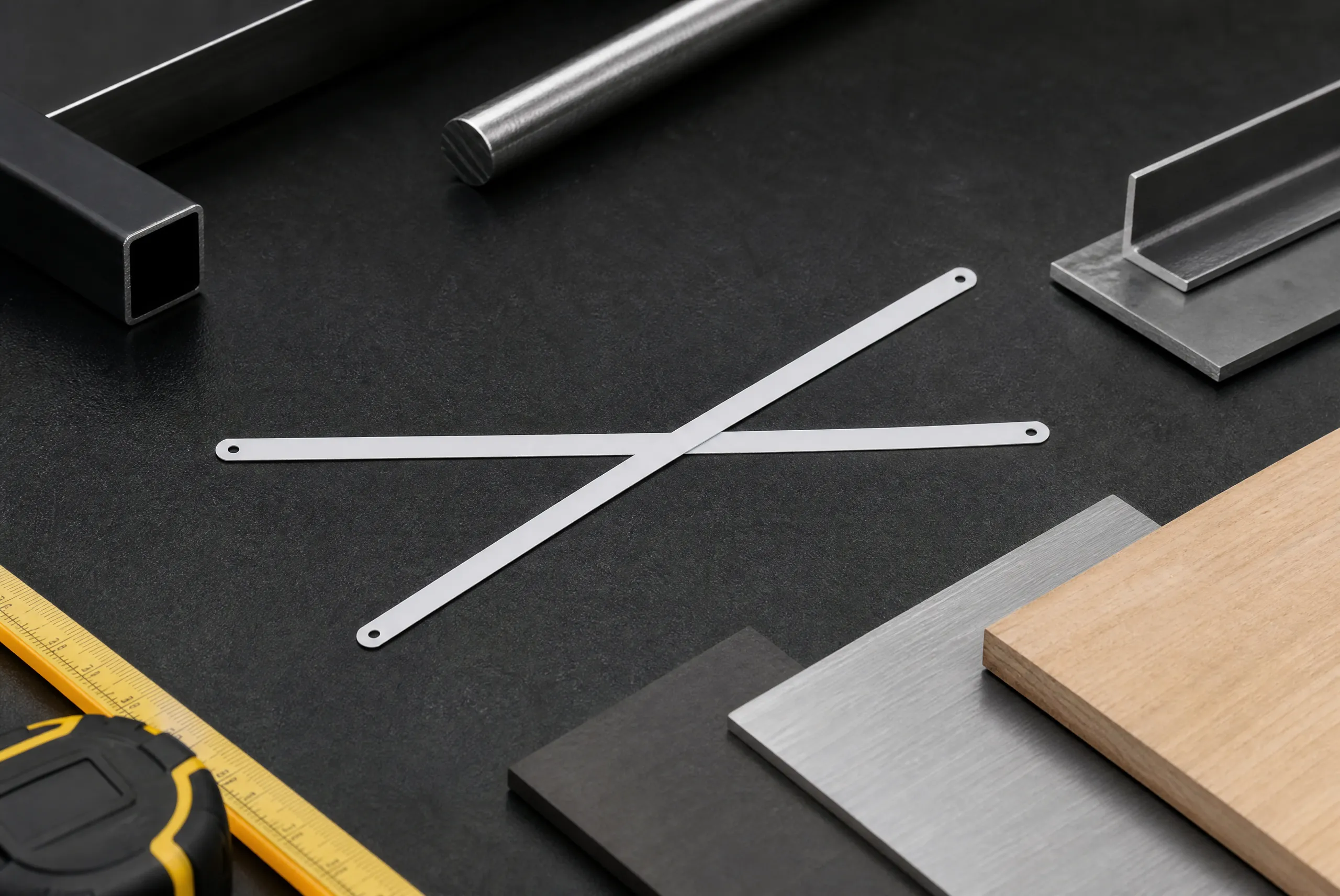
Product recommendation: use the bi-metal hacksaw blade category as a family starting point only after the system is identified. It is not a default recommendation for either scope. Send the recorded evidence through Contact EACHLEAD for an RFQ review.
Fit Boundary
This process fits procurement teams that can separate hand and machine records. It does not approve substitutions between the two systems or replace the machine manufacturer’s documentation.
Part 7. How should distributors label the ranges?
Label products by documented mounting and application information, not by an assumption that “hacksaw blade” means one universal format. Keep hand-frame and machine requests in separate review queues.
The carbide hacksaw explainer covers a material-related topic; it does not change the holder boundary described here.
FAQs
Are hand hacksaw blades and machine hacksaw blades the same?
They are separate specification paths. Confirm the holder, mounting, dimensions, and documentation for the system in use.
Can a hand hacksaw blade be used in a power hacksaw?
Do not assume that it can. Use the machine documentation and fixture details to evaluate a candidate.
What measurements differ between hand and machine blades?
Both need length, end pattern, width, and thickness, but the machine record must also identify its fixture and documented requirement.
Does the machine manual control blade choice?
It is the primary source for the machine fixture and operating scope. Use it before evaluating a replacement.
Why are blade mounting details important?
They show how the blade is retained. A nominal length alone does not confirm that geometry.
What should a buyer put in an RFQ?
State the system, tool or machine identification, dimensions, end features, workpiece, and sample-fit acceptance method.
Can a supplier confirm a replacement from a photo alone?
A photo helps, but it should be accompanied by dimensions and tool or machine documentation for a proper review.