


Cast Iron Cutting Reciprocating Saw Blade Guide
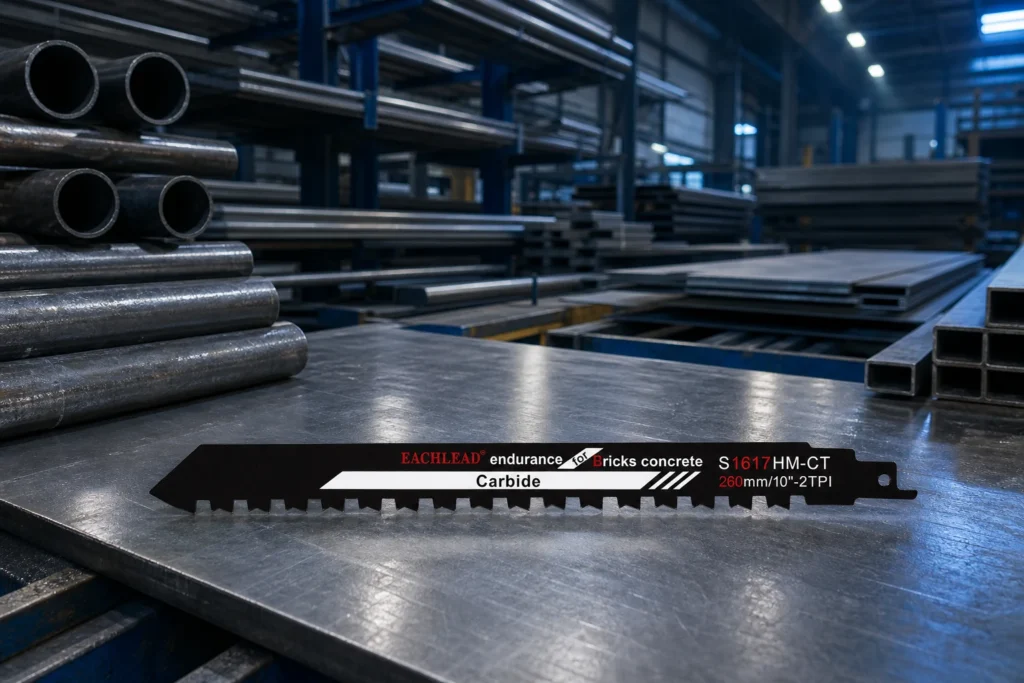
Cast iron reciprocating saw blade selection is not the same as wood or thin sheet metal—abrasive chips and hardness demand tougher tooth grades. This guide targets distributors, hardware buyers, and OEM sourcing teams—not generic consumer tips. Stock assortments should separate wood-only, pruning, and bi-metal remodel SKUs so field crews do not grab the wrong blister pack on a nail-embedded cut. Use the tables and FAQ below as an RFQ attachment when you request OEM specs or container assortments. Expect shorter tooth life than wood when chips are abrasive.
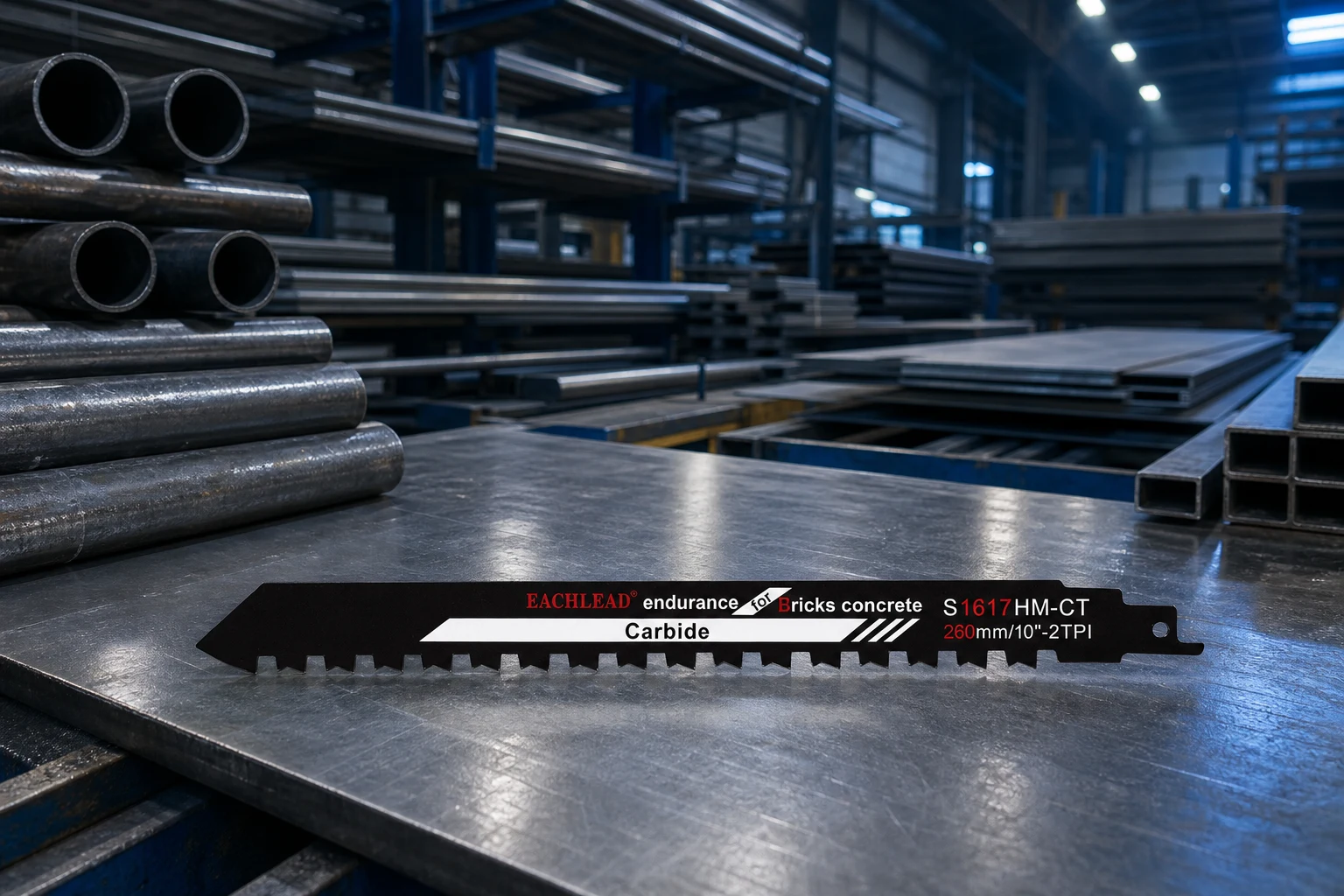
Part 1. Why Cast Iron Demands Specialty Reciprocating Blades
cast iron reciprocating saw blade selection starts with the material in the cut and whether nails or light metal are present.
Distributors should separate wood-only, pruning, and bi-metal remodel SKUs so end users pick the right blister pack.
Importers often mix wood, pruning, and bi-metal SKUs in one assortment—end users then grab the wrong pack for nail-embedded framing.
Separating SKUs by TPI and material on the planogram reduces warranty claims and repeat orders driven by confusion.
Field reps should log which SKUs return most often from contractors—those counts should drive the next OEM TPI matrix revision.
Cast iron, soil pipe, and abrasive profiles throw chips that work-harden teeth if feed stalls—use steady shoe pressure and expect shorter life than wood.
Wholesale assortments fail when only inch length is printed on the card; TPI, material, and shank type must be visible at arm’s length in a job-site van.
Sample cut tests on nail board, laminate offcut, or mild-steel tube beat catalog adjectives—log minutes-per-blade before scaling MOQ.
Part 2. Selection Basics
Buyers evaluating cast iron reciprocating saw blade should start from the material and nail content in the cut, not blade length alone.
Catalog TPI ranges are guides—field feed rate and shoe support still change effective tooth life.
Carbide-tipped reciprocating lines belong where bi-metal life is insufficient; price them as specialty, not as a drop-in for every remodel SKU.
Sample cut tests on nail board, laminate offcut, or mild-steel tube beat catalog adjectives—log minutes-per-blade before scaling MOQ.
Export cartons should separate SKU families so customs descriptions match HS codes; mixed demolition packs create clearance delays.
Variable-pitch blades span a TPI band; treat the catalog range as the usable window, not a single fixed pitch.
For nail-embedded lumber, a bi-metal remodel blade often outlasts a fine metal or pruning SKU because tooth geometry handles intermittent hard spots.
| Material / task | Typical TPI | Blade type | Notes |
|---|---|---|---|
| Green wood / pruning | 3–6 | HCS or pruning geometry | Fast cut, not for nails |
| Wood with nails / remodel | 6–10 | Bi-metal (BIM) | Handles intermittent hard spots |
| Thin metal sheet | 14–18 | Bi-metal | Finer finish, slower feed |
| Pipe / profile steel | 10–14 | Bi-metal M42 optional | Match thickness to catalog |
Part 3. Selection Basics
Buyers evaluating cast iron reciprocating saw blade should start from the material and nail content in the cut, not blade length alone.
Catalog TPI ranges are guides—field feed rate and shoe support still change effective tooth life.
Match catalog thickness notes before claiming universal metal cutting; stainless and hardened alloys may need dedicated grades.
OEM buyers should ask for tooth set photos, laser marking samples, and blister card proofs before approving a full container load.
Keep spare demo blades for trade-show cuts—contractors trust a 30-second nail-board test more than a spec sheet alone.
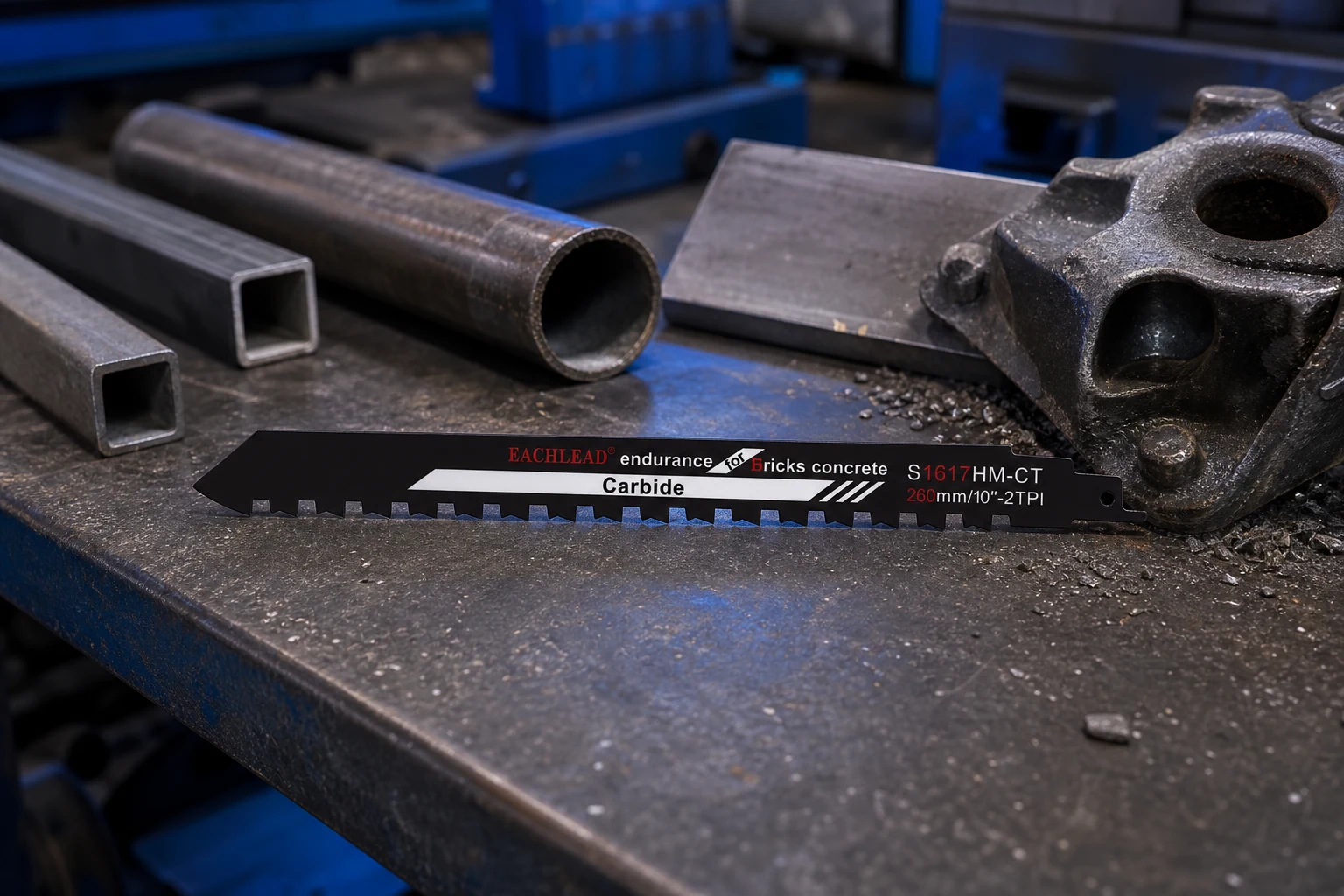
Carbide-tipped lines cost more and belong in assortments only when catalog data supports abrasive or masonry tasks—not as a default remodel replacement.
| Grade | Best for | Trade-off | Channel |
|---|---|---|---|
| HCS | Wood-only SKUs | Low cost, dulls on metal | Garden / seasonal |
| Bi-metal 6150+M2 | General remodel | Mid price / life | Hardware |
| Bi-metal 6150+M42 | Harder stock | Higher unit cost | Pro dealer |
| Carbide-tipped | Abrasive masonry | Premium price | Specialty |
Part 4. Matching Blades to Jobs and Common Mistakes
Using a pruning blade on nail-embedded lumber dulls teeth quickly and can snap the blade in a bind.
For remodel SKUs, cross-check EACHLEAD bi-metal lines against your nail and light-metal mix.
Train counter staff: sawzall and reciprocating refer to the same tool family—stock compatible shank types.
Link cast-iron or abrasive tasks to the correct tooth grade in the quote thread—do not rely on pruning geometry icons alone.
Export cartons should separate SKU families so customs descriptions match HS codes; mixed demolition packs create clearance delays.
Train counter staff to say sawzall and reciprocating share one shank family on most cordless tools—compatibility questions are support tickets, not returns.
Part 5. Safety, Sourcing, and OEM Checklist
Eye protection and stable workholding are baseline for demolition and metal cutting.
Wholesale buyers should request MOQ, lead time, and packaging format via Contact EACHLEAD.
Factory background and export packaging support are on About EACHLEAD.
Keep unverified MOQ or certification claims out of product pages—confirm in the quote thread.
Review blister artwork each season so TPI icons on the card match the steel variant actually inside the pack.
Export cartons should separate SKU families so customs descriptions match HS codes; mixed demolition packs create clearance delays.
Train counter staff to say sawzall and reciprocating share one shank family on most cordless tools—compatibility questions are support tickets, not returns.
OEM buyers should ask for tooth set photos, laser marking samples, and blister card proofs before approving a full container load.
Keep spare demo blades for trade-show cuts—contractors trust a 30-second nail-board test more than a spec sheet alone.
Recommended EACHLEAD Products
For project support, explore our related product line, solution options, and OEM/ODM capabilities on eachlead.com.
FAQ
Can reciprocating saws cut cast iron?
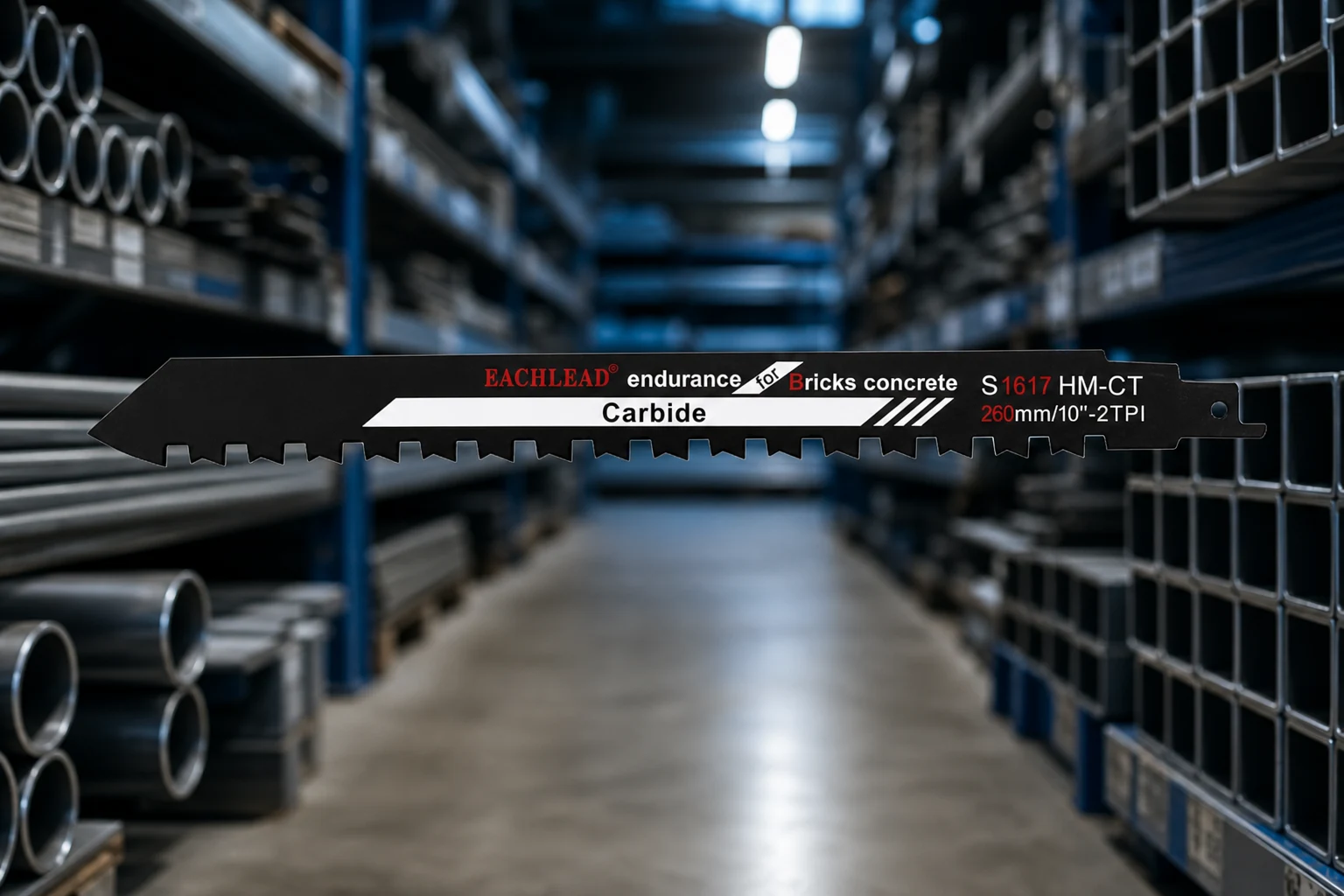
Yes, with blades rated for abrasive or hard materials—often carbide-tipped lines.
What blade for cast iron pipe?
Expect shorter life than wood; use appropriate grade and steady feed.
Carbide or bi-metal?
Bi-metal may work for short cuts; carbide or specialty grades last longer on cast iron.
Why do blades wear quickly?
Cast iron is abrasive; chips work-harden and heat the teeth.
What TPI for cast iron?
Follow catalog guidance for abrasive materials—coarser may be used for speed.
What should buyers spec?
Material rating, expected life, shank, and sample cuts on representative pipe.
References
Ready to discuss your project? Contact EACHLEAD engineering support with your project parameters and technical requirements.