


Can You Weld Cast Iron? Repair Options, Filler Choices and Limits
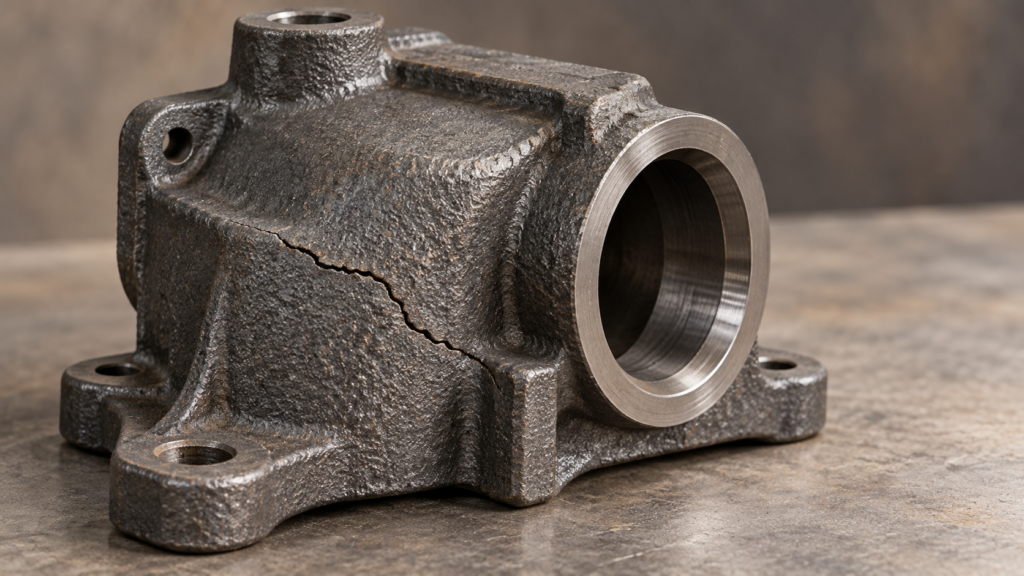
Yes, some cast irons can be welded, but not every casting is a suitable weld-repair candidate. The answer depends on the cast-iron type, its condition, the damage and the component’s intended service. White cast iron is normally considered unweldable; gray, ductile and malleable irons require different assessments rather than one shared repair recipe.
For a particular component, the question “can you weld cast iron?” is a repair-assessment question. A suitable filler is only part of the decision. A repair assessment also has to consider the surrounding metal and what the component must do afterward. This guide explains those choices and limits, rather than providing welding settings or an operating procedure.
Can you weld cast iron without knowing its type?
A general “cast iron” description is not enough to select a repair route. TWI recommends establishing the material type, preferably its composition and condition, together with the application for which the casting was designed. Those inputs come before deciding whether a weld or another repair is feasible.
The broad material families explain why the answer varies. Gray iron contains flake graphite and has limited ductility. Ductile or nodular iron has a different graphite form; malleable iron is another distinct family. White iron’s hard carbide-rich structure makes conventional weld repair particularly unsuitable.
These are material distinctions, not a positive identification method based on a photograph. If the casting’s identity is uncertain, the useful next step is to resolve that uncertainty with the repair specialist, rather than choose the most familiar electrode name.
The weld deposit is not the whole repair
Fusion welding affects both the deposited weld metal and the adjacent parent material. The neighboring region is called the heat-affected zone, or HAZ. TWI describes the formation of hard, brittle structures in this region and the risk of cracking during post-weld cooling.
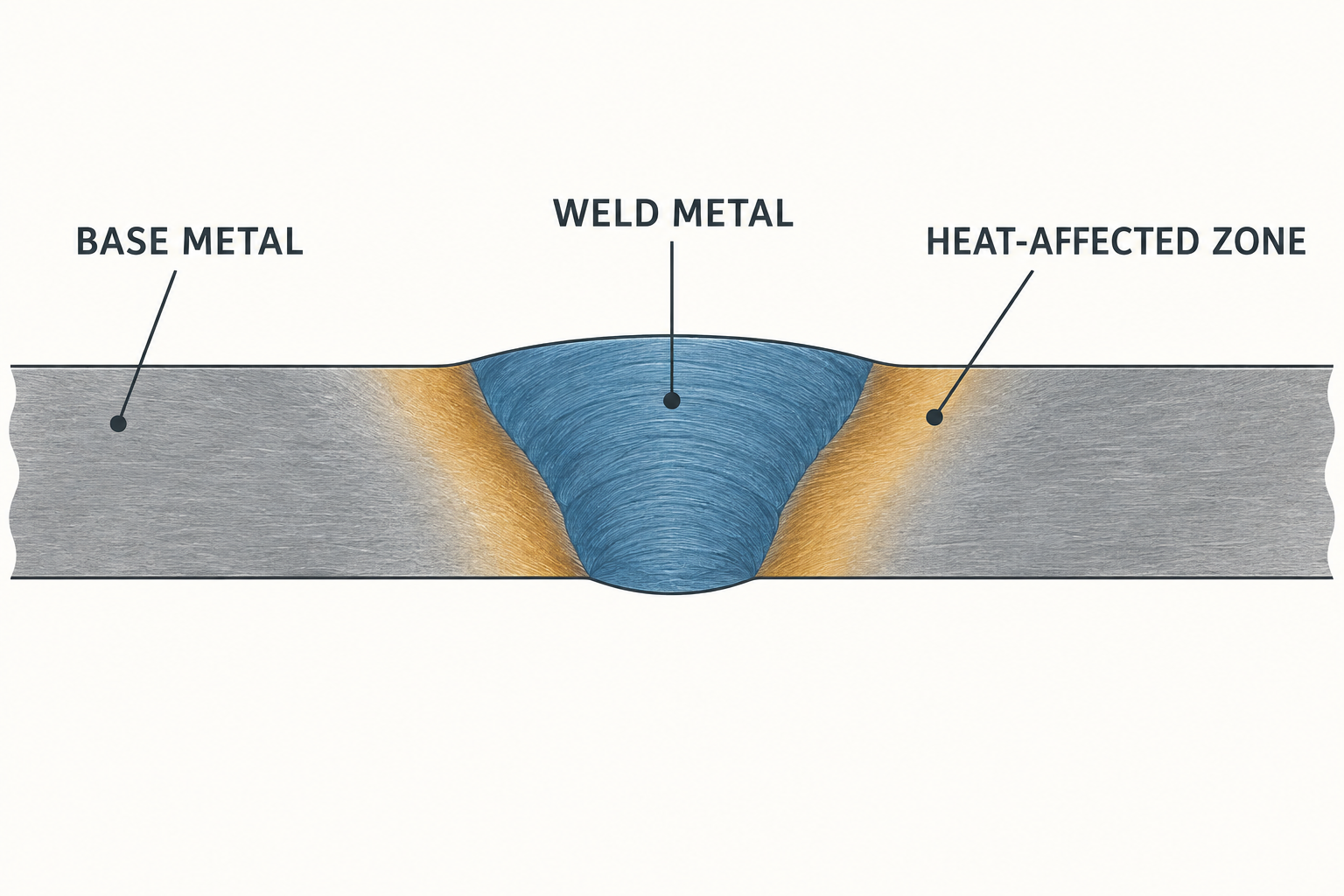
That distinction explains why a smooth-looking deposit does not by itself demonstrate a satisfactory repair. The surrounding casting matters too. The assessment question is not simply whether filler can be deposited, but whether the proposed route can meet the component’s repair requirements.
Castolin’s repair guidance distinguishes thermal approaches according to material and component constraints. That supports a case-specific decision; it does not support taking one heating or cooling instruction from a different casting and treating it as universal.
Nickel and nickel-iron fillers serve different priorities
TWI identifies nickel and nickel-iron alloys as common arc-welding consumable families for cast-iron repair. Its guidance separates their typical applications instead of naming one filler for every casting.
| Filler family | Typical selection context | Question still to resolve |
|---|---|---|
| Nickel, Ni | Gray-iron joining and repair; relatively soft deposit | Does the deposit and repair route suit the actual casting and machining need? |
| Nickel-iron, NiFe | Ductile, blackheart malleable and higher-strength gray-iron applications | Are the parent material, joint and required properties covered by the proposed consumable? |
The table describes application families, not an electrode purchase instruction. The full consumable description and repair procedure still matter. A nickel label alone does not certify a repaired component or establish its load capacity.
Machinability is also a practical input. If the repaired area must later be machined, say so during the assessment. Filler selection should address the required deposit properties rather than assume that a visually acceptable weld will also meet the finishing requirement.
Compare the repair route before choosing a process
Welding is one possible route, not the only question worth asking. Metal Supermarkets’ overview also raises the repair-versus-replacement decision. A useful assessment compares the proposed repair with the component’s function and the availability of a suitable replacement.
Fusion welding involves a weld deposit and a heat-affected region. The repair plan needs to account for the actual casting and its response to that thermal cycle. Merely having access to a welding process does not establish suitability.
Braze welding is a different joining route. TWI discusses it separately from fusion welding; the filler joins the casting without treating the parent metal as a fusion weld. That difference does not automatically approve brazing for the component’s intended duty.
Replacement changes the assessment question. Instead of accepting a repaired casting, the owner assesses a replacement against the required function and fit. A generic article cannot decide which route is preferable without those component details.
Prepare a repair enquiry that can be assessed
The following four-part enquiry is a way to organize information for a repair specialist. It is not a sequence for performing the repair.
Material identity: Record the known cast-iron type, designation and condition. Separate confirmed information from assumptions. If the part documentation only says “cast iron,” retain that limitation explicitly.
Damage and history: Describe the damaged location and supply clear images or relevant drawings. State known previous repairs and the available service history. A short description such as “cracked housing” leaves the specialist to request the context that distinguishes one enquiry from another.
Required function: Explain what the component does and which interfaces, dimensions or working surfaces matter. The same material family can appear in components with very different jobs, so the material name alone cannot set the repair objective.
Acceptance after repair: Identify who will assess the completed work and what evidence or finishing requirements they need. A load-bearing or pressure-service component needs a component-specific decision; this material overview does not approve its return to service.
Consider a hypothetical cracked machine housing. An enquiry that includes the material record, a marked damage location, its function and any subsequent machining requirement gives the specialist a defined problem. “Can I use nickel rod?” skips most of that information, even if a nickel-family consumable later becomes part of the proposed route.
Keep cutting and weld-repair decisions separate
If replacement or related fabrication work creates a cutting task, define that task on its own terms. EACHLEAD’s reciprocating saw blade range concerns cutting accessories. It does not establish a welding method, an electrode choice or approval of a repaired casting.
The useful answer is therefore conditional but actionable: identify the casting, define the required outcome and compare repair routes against that outcome. Only then can filler and process choices be evaluated for the particular component.