


14 TPI Hacksaw Blades: Where a Coarse Tooth Pitch Fits
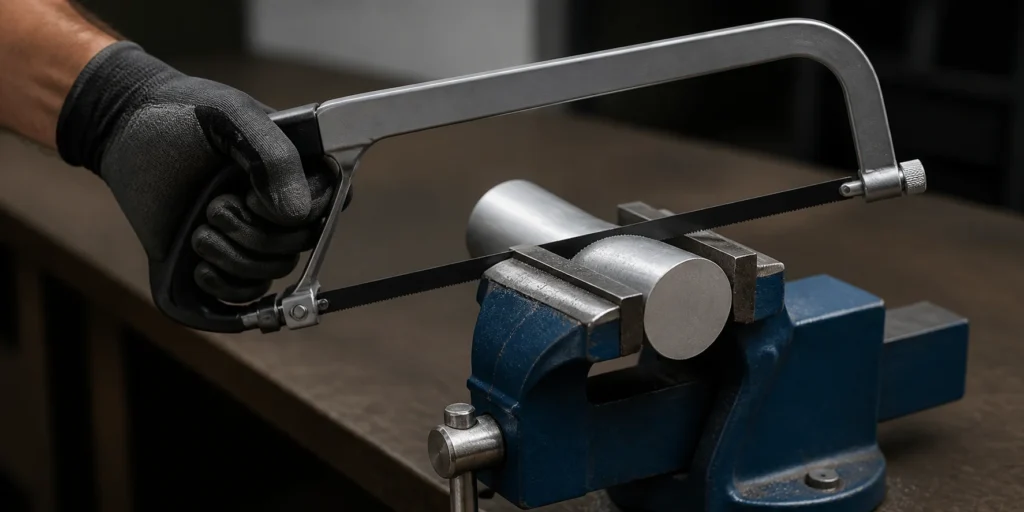
A 14 TPI hacksaw blade has a coarse tooth pitch. It can suit a thick or solid section, but TPI alone does not select the blade. The tool format, workpiece material, section size, blade construction, and tooth engagement all matter. A hand frame and a power hacksaw may use the same TPI label while requiring different blade dimensions and mounting details.
A buyer can treat 14 TPI as a starting point for a supplier or operator discussion, not as a universal cutting rule. The public examples and selection tables below show how to qualify the choice.
What 14 TPI means in a hacksaw blade
TPI means teeth per inch. A 14 TPI blade places fewer teeth in each inch than an 18, 24, or 32 TPI blade, so the tooth spacing is coarser. In relative terms, this is a coarse tooth hacksaw blade. Coarser spacing can leave more room for chips when the cut enters a large section. It can also catch or strip teeth when the workpiece is thin.
The hacksaw blade TPI label is only one field in the product record. It does not identify the steel, the bi-metal construction, the overall length, the width, the thickness, or the mounting holes. The phrase “14 teeth per inch hacksaw blade” describes pitch, not a complete product.
When a 14 TPI hacksaw blade can fit the job
A coarse tooth pitch is more plausible when the cut enters a thick solid bar or a large steel or aluminum section. These workpieces can give the blade enough material to engage several teeth. The section must still match the blade, tool, and material guidance for the job.
Milwaukee gives a model-specific example: its 12-inch 14 TPI bi-metal hack saw blade is positioned for heavy bars, large steel and aluminum sections, and large-diameter hard materials. The same product page gives its own material-thickness guidance. Those statements describe Milwaukee model 48-43-0600. They do not define every 14 TPI hacksaw blade.
Tooth engagement is a useful check. Bahco’s power-hacksaw guidance calls for at least three teeth to engage the workpiece. If the section is too thin for the selected pitch, the teeth can hit the edge one at a time. If the section is too large or the material is difficult, the pitch and tool setup may need a different starting point.
When 14 TPI is too coarse
A 14 TPI blade may be a poor starting point for sheet, thin-wall tube, small flat stock, or a narrow section. The coarse teeth have fewer points of contact across the material. The blade can snag at entry, damage teeth, or leave a rougher cut than the job allows.
Move toward a finer pitch only after checking the tool maker’s or supplier’s table. An 18, 24, or 32 TPI blade is often considered for smaller sections, but the correct choice changes with the material, blade format, and required finish. A higher TPI label is not automatically better; it can also load with chips or cut too slowly when the section is large.
14 TPI hand hacksaw versus power hacksaw
Do not order from the TPI number alone. A hand hacksaw blade must match the frame length and mounting holes. A 14 TPI power hacksaw blade must match the machine’s length, width, thickness, tension, and mounting arrangement. Packaging may use similar TPI language for both formats, but the parts are not interchangeable by default.
Bahco lists a 14 TPI HSS power hacksaw blade in a 350 x 25 x 1.25 mm format. This is a machine-oriented product record, not a hand-frame specification. Milwaukee’s cited example is a 12-inch hand-hacksaw product. The two pages show why a buyer should record the tool before comparing pitch.
The frame or machine should be confirmed first. The workpiece section and material should follow in the record. Only after those fields are clear should 14 TPI be compared with a finer or coarser option.
How 14, 18, 24, and 32 TPI compare
The table is a qualification aid, not a universal chart. TPS publishes a power-saw table that places 14 TPI against a 6–19 mm section-width row. The same source warns that exact speed and feed settings require testing. That range should remain attached to the table and tool context.
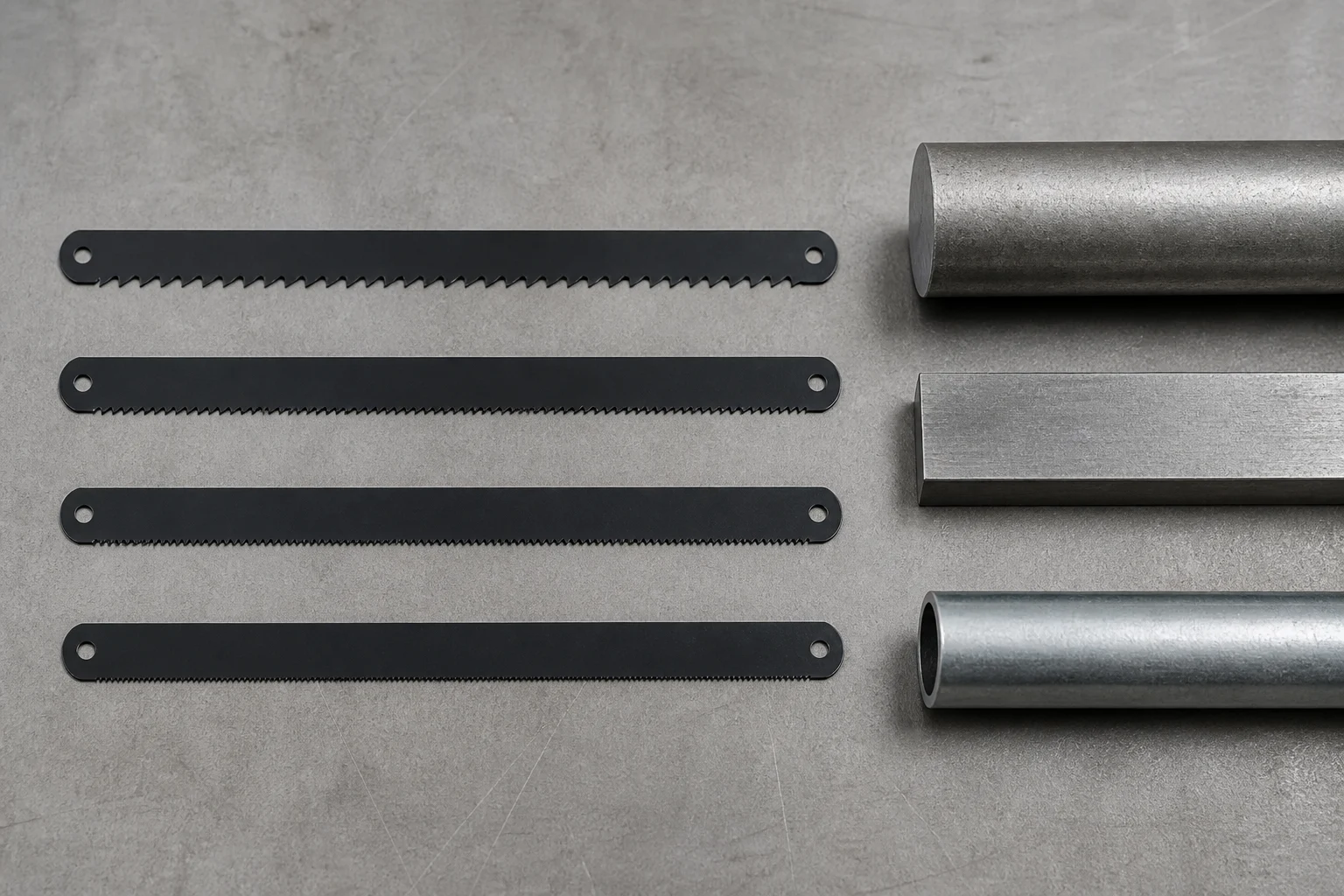
| Pitch | Relative spacing | Possible starting context | Check before ordering |
|---|---|---|---|
| 14 TPI | Coarser | Thicker solid or large sections, when the named blade and tool support it | Section size, material, frame or machine, and tooth engagement |
| 18 TPI | Medium-coarse | Medium sections where a supplier table places the pitch | Material and required finish; do not copy a 14 TPI range |
| 24 TPI | Medium-fine | Smaller sections or a finer starting point when the tool guidance supports it | Thin-wall entry, chip loading, and cut time |
| 32 TPI | Fine | Thin material only when the named blade and tool table support it | Tooth engagement, material, and whether the blade is for the intended frame |
This comparison helps organize the conversation. It does not replace the blade manufacturer’s table. The selected product should win because its format and documented range match the job, not because a pitch number sounds more aggressive.
Build a complete order record
Before asking a supplier to recommend or quote a 14 TPI hacksaw blade, send a complete record:
- Tool: hand frame or power hacksaw, including frame or machine model when available.
- Blade format: length, width, thickness, mounting-hole pattern, and required quantity.
- Construction: HCS, HSS, bi-metal, or another named construction from the supplier’s specification.
- Pitch: 14 TPI as the requested starting point, plus any alternative pitches to compare.
- Workpiece: material, solid or hollow section, outside size, wall thickness, and the cut direction.
- Result: acceptable cut finish, burr limit, sample requirement, inspection method, and packing needs.
The EACHLEAD hacksaw blade range is a product-family starting point. The EACHLEAD bi-metal hacksaw blade category also shows why construction, length, and TPI should remain separate fields. A product page can help identify a family; it cannot approve a blade for an unrecorded machine and section.
A practical decision path
- Identify the tool and mounting format.
- Measure the section that the teeth will cross, including tube wall thickness when the cut is hollow.
- Compare 14 TPI with the supplier’s table for that material and format. Keep the source and condition with the selected pitch.
- Approve a sample or controlled test when the section, material, or machine differs from the published example.
For a nearby pitch decision, the existing 18 TPI versus 24 TPI hacksaw blade guide covers a different comparison. It serves as supporting reading, not as evidence that either pitch replaces 14 TPI in a specific job.