


High Speed Steel Hacksaw Blade: Where HSS Fits the Selection
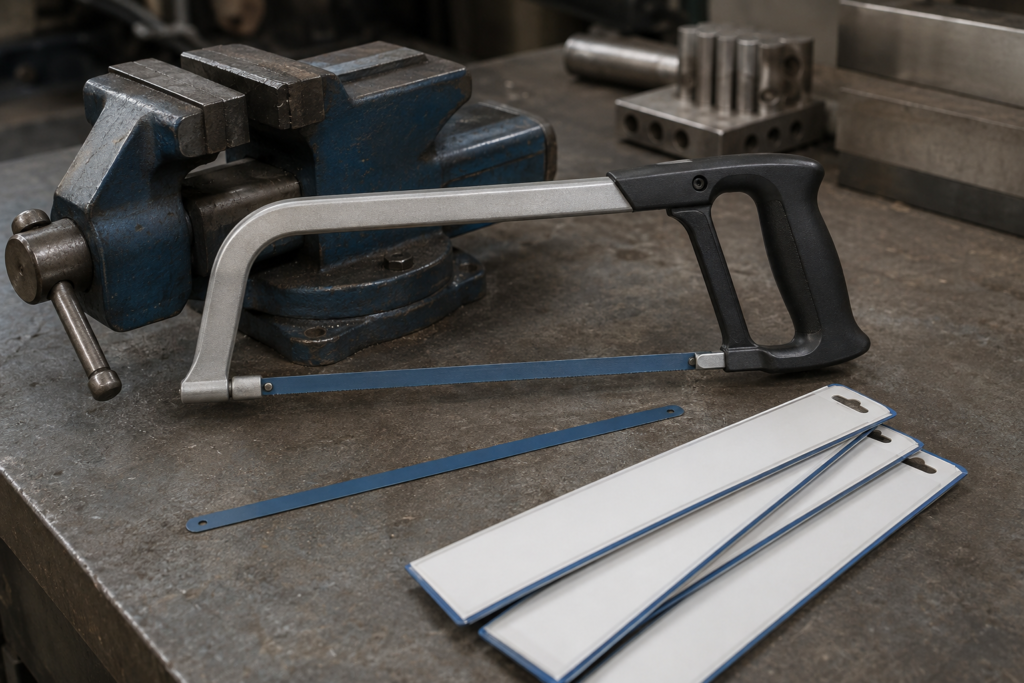
A high speed steel hacksaw blade is an all-hard cutting blade when the full blade is made and hardened as HSS. That construction gives a different handling profile from a bi-metal blade, which combines a hard HSS tooth strip with a more flexible backing. HSS does not state the tooth pitch, blade length, frame fit, or workpiece section; those remain separate selection fields.
An all-hard HSS blade can suit controlled, well-supported hand sawing where rigidity is useful. The same rigidity also means it should not be treated like a flexible-backed blade. Keep the workpiece secure, align the frame, and avoid twisting or side loading.
A high speed steel saw blade should therefore be recorded as a complete construction, not a shorthand performance claim. An all-hard hacksaw blade still needs a matching frame, tooth pitch, workpiece section, and model-supported application before a buyer releases the SKU.
What does high speed steel hacksaw blade construction mean?
HSS means high-speed steel, but the label must be read with the construction description. Starrett publishes solid HSS power-hacksaw models and separately lists bi-metal hand hacksaw blades with high-speed-steel cutting material. These are different constructions. In a bi-metal blade, HSS may describe the tooth line joined to a flexible steel back rather than the complete blade body.
This distinction is why two blades can both mention HSS and still behave differently. The bi-metal versus HSS guide covers the construction comparison in more detail.
| Construction record | What it describes | Selection consequence |
|---|---|---|
| All-hard HSS | The blade body is stated as fully hardened HSS. | Use in a controlled, aligned setup and avoid twisting. |
| Bi-metal | An HSS tooth strip is joined to a flexible backing. | Evaluate when flexibility and resistance to bending stress matter. |
| HSS without construction detail | The label is incomplete. | Request the full material/construction statement. |
Where does an all-hard HSS blade fit?
A product record must state whether the blade is for a hand frame or a power hacksaw. Starrett’s RS400-10, for example, is a solid HSS power hacksaw blade; it cannot be used as evidence that the same size or operating condition applies to a hand frame. For hand sawing, the workpiece still needs secure support and the frame must stay in a consistent line.
Rigidity can help a careful operator keep the blade straight in a stable setup. It also reduces tolerance for twisting, accidental bending, and poor alignment. A flexible or bi-metal blade may be more forgiving when the setup introduces bending stress, but the exact choice still depends on the model and task. EACHLEAD’s article on flexible and rigid hacksaw blades provides the next decision step.
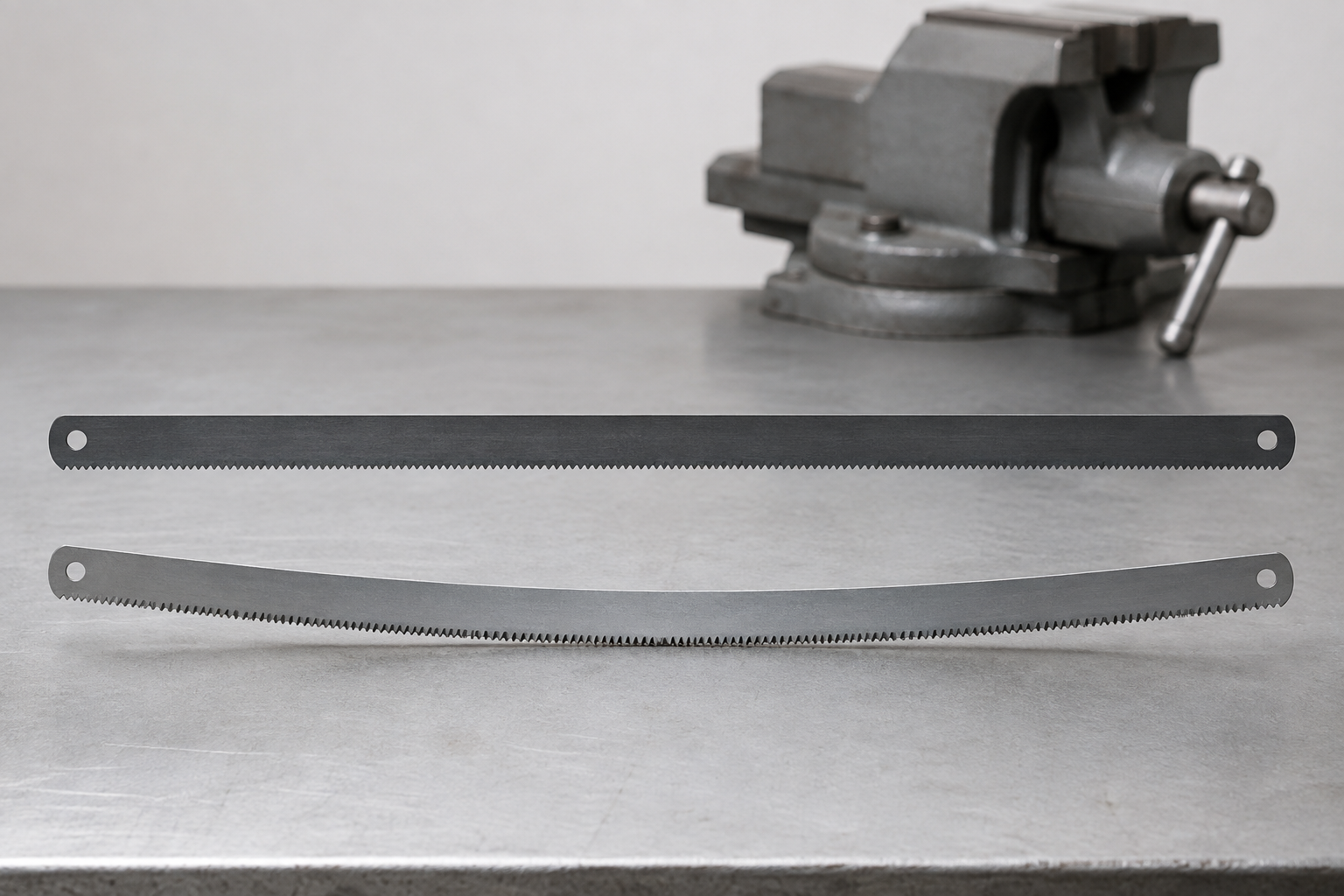
Install the blade according to the frame instructions and check tooth direction, tension, and alignment before cutting. Clamp the workpiece so the cut area is supported without obstructing the blade. Keep the stroke in line with the frame. If the blade chatters, binds, bows, or starts to twist, stop and correct the setup rather than increasing force.
TPI and blade length are separate from HSS
Tooth pitch states how many teeth fit within an inch. It does not indicate steel grade. The selected pitch should keep an appropriate number of teeth engaged in the workpiece section and provide space for chip removal. Thin wall, solid bar, and profile sections therefore may require different pitches even when the blade material is the same.
Starrett’s catalog illustrates this separation. Its Safe-Flex hand-hacksaw family includes different lengths and 18 or 24 TPI variants, while the RS400-10 solid HSS power-hacksaw example is listed at 400 mm and 10 TPI. These values belong to their named models. They show why HSS, length, pitch, and tool type must occupy separate fields; they are not specifications for an EACHLEAD model.
Use the 18 TPI versus 24 TPI guide for pitch selection. Use the hacksaw blade measurement guide to record the frame-compatible length. Keep the nominal length, width, thickness, pin-hole arrangement, and tensioning range with the model record.
Build an HSS hacksaw blade order record
- Construction: all-hard HSS, bi-metal, or another stated system.
- Blade dimensions: nominal length, width, thickness, and mounting-hole details.
- Tooth specification: TPI, tooth form, set, and cutting direction where published.
- Frame: frame model, accepted blade size, tensioning method, and condition.
- Workpiece: material, treatment if known, shape, wall or solid thickness, and cut location.
- Trial: sample identity, setup, tracking, tooth condition, and acceptance or stop result.
The EACHLEAD hacksaw blade category currently presents bi-metal examples, so it should be used as a broader product-family route. Do not interpret that page as proof of an all-hard HSS model. If a buyer needs HSS construction, request the current SKU record and confirm the material description before comparing dimensions or price.
This discipline prevents a common purchasing error: shortening every blade with an HSS cutting edge to “HSS blade.” Write the construction in full, then add pitch, dimensions, frame, workpiece, and trial status. The result is an order record that can be checked instead of a material label that invites assumptions.