


How to Choose Jigsaw Blades for Stainless Steel Sheet
Choosing a jigsaw blade for stainless steel sheet starts with the sheet—not with a broad “metal-cutting” label. Record the sheet thickness, the cut shape, the saw’s blade interface, and the edge condition you can accept. Then compare those inputs with the documentation for an individual blade. This matters because a pitch or thickness range on one named blade is not automatically valid for another.
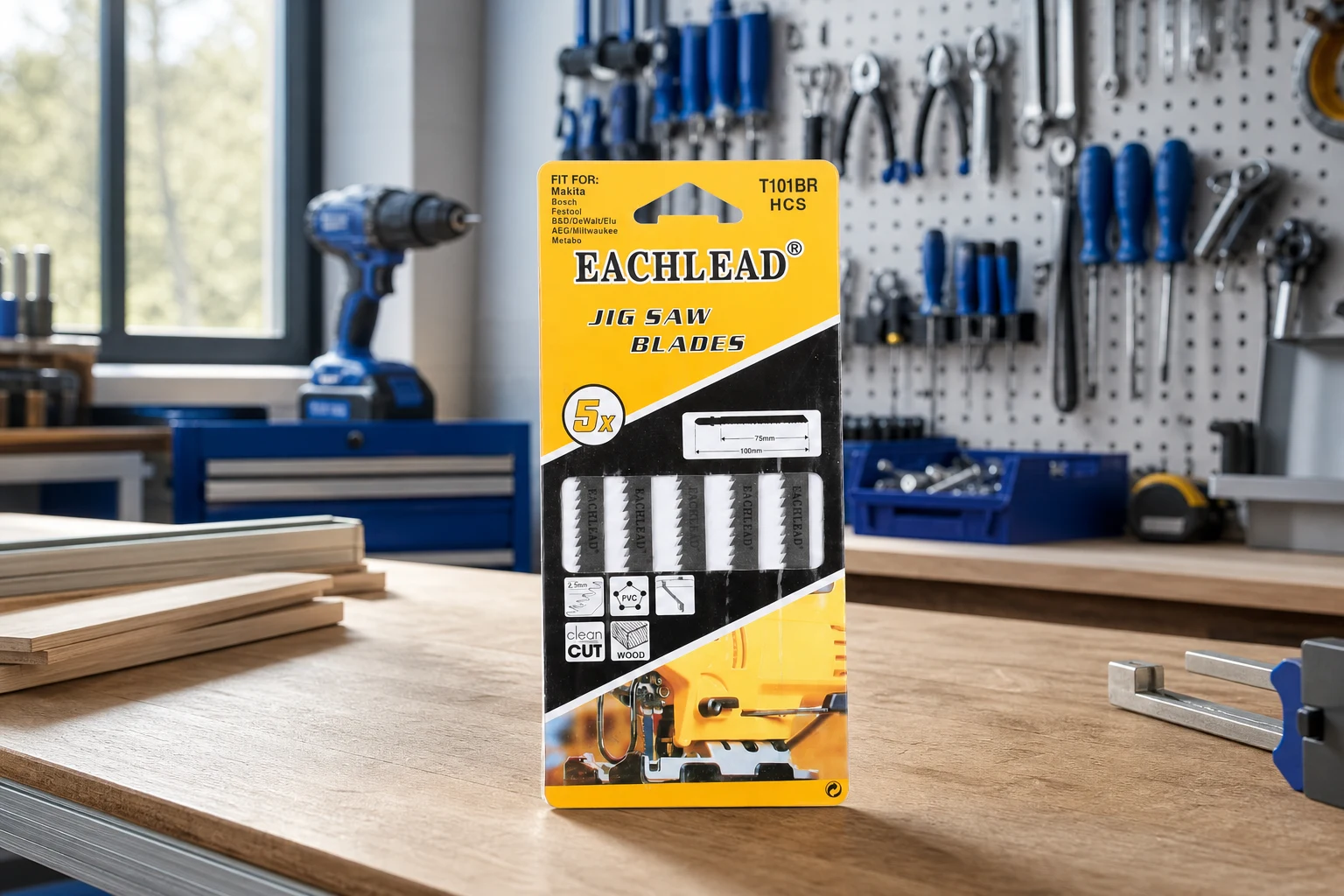
For a quick orientation to the product cluster, see the EACHLEAD Jigsaw Blade category. The category is a route to a specification discussion; it does not establish that a particular EACHLEAD blade is suitable for stainless steel sheet.
Start with the sheet and the cut
Before comparing blade labels, write down these five inputs:
- Sheet thickness: use the measured thickness, not only a material nickname or an assumed gauge conversion.
- Material description: identify stainless steel as accurately as your purchasing or production record allows, including any coating, laminate, or sandwich construction that affects the cut.
- Cut geometry: decide whether the priority is a straight line, an inside radius, or a shaped opening. Geometry is a separate decision from tooth pitch.
- Saw interface: confirm the blade shank your jigsaw accepts. Jigsaw blade catalogues may divide options by T-shank and U-shank, so the saw manual remains the final compatibility check.
- Edge and downstream work: note whether the edge will be visible, joined, folded, deburred, or merely trimmed. That makes the finish requirement clear without promising a finish from an unverified blade.
The key buying mistake is to let only one of those fields decide the order. A blade that is physically compatible with the saw can still be the wrong choice for the sheet or the required cut.
Read construction, pitch, and geometry together
Manufacturer guides commonly separate metal blades by construction and pitch, then relate those choices to a documented sheet-thickness range. The selection table below is a way to read a blade listing; it is not a universal specification table.
| What to compare | Why it matters | What to verify on the individual blade page or datasheet |
|---|---|---|
| Blade construction | Metal blade families may be described as HSS, bi-metal, carbide edge, or another construction. The name alone does not define every application. | The stated material-use scope, any stainless wording, and the exact model number. |
| Tooth pitch (TPI) | Pitch is meaningful only with the maker’s intended material and sheet-thickness scope. | The TPI and the stated thickness range for that exact blade. |
| Blade width | A manufacturer selection guide distinguishes wider blades for straight cuts and narrower blades for curves. | Whether the planned cut is straight, curved, or a mixed path. |
| Usable blade length | Working length is a specification to check against thickness; ERKO publishes working-length bands for its own system. | Usable length, not merely the catalogue’s overall length, for the exact documented blade. |
| Shank/interface | The saw and blade must use the same interface. | T-shank, U-shank, or the exact interface named by the saw maker. |
An ERKO selection guide illustrates the principle with several metal pitch bands—14, 18, 21, and 36 TPI—each paired with stated sheet-thickness ranges. Those figures belong to that guide’s blade system. Use them to ask a better question of the exact blade documentation, not to select an unrelated SKU by number alone.
Treat a “stainless” or “metal” label as scoped evidence
A useful product claim names the blade, its interface, its construction or tooth specification, and the material range or thickness conditions it covers. For example, a named Diablo thin-metal blade states a specific thin-metal range; a Starrett assortment lists separate metal pitches beside a multi-purpose blade. These are examples of why a buyer should identify the individual blade in a set or catalogue.
Use this check before accepting a proposed blade:
- Is the model number present?
- Does the source explicitly include the material you need to cut?
- Does it state a thickness range or another operating scope for that model?
- Does the shank match the jigsaw?
- Does the stated blade geometry fit the planned straight or curved cut?
- Is there any mismatch between the proposed blade’s documentation and the sheet, coating, or cut condition?
If the answer to one of these questions is missing, the safe outcome is not to infer a fit. Ask for the missing model documentation or test evidence.
Separate tooth pitch from the cut path
Pitch is often the first number buyers see, but it should not replace the geometry decision. A straight sheet cut and a curved cut may need different blade forms even when the material description is identical. Likewise, a mixed blade set can contain multiple pitches for different tasks. Specify the cut path and the edge requirement in the enquiry so the supplier is not forced to choose from material alone.
For the interface step, review how T-shank jigsaw blades are selected alongside the saw’s manual. For a focused explanation of the number on a label, see what TPI means on a jigsaw blade. Neither supporting article replaces a model-specific stainless-sheet application statement.
Send a stainless-sheet selection brief, not just a material name
For a supplier or purchasing team, the following request is more useful than “please quote stainless jigsaw blades”:
- stainless steel sheet description and measured thickness;
- drawing, cut length, and whether the cut is straight, curved, or an opening;
- jigsaw make/interface requirement and any shank constraint;
- required edge condition and downstream process;
- expected order format, such as single SKU or assortment;
- request for the recommended model’s material scope, pitch, usable length, and supporting documentation.
This keeps the final selection tied to a specific workpiece and a traceable blade record.
Specify the EACHLEAD Jigsaw Blade Category With Measured Inputs
EACHLEAD’s Jigsaw Blade category is the relevant starting point when you need to discuss a catalogue option, blade format, or an OEM/ODM enquiry. Send the selection brief above and ask EACHLEAD to identify a model with documented suitability for your stainless sheet, thickness, cut geometry, and saw interface.
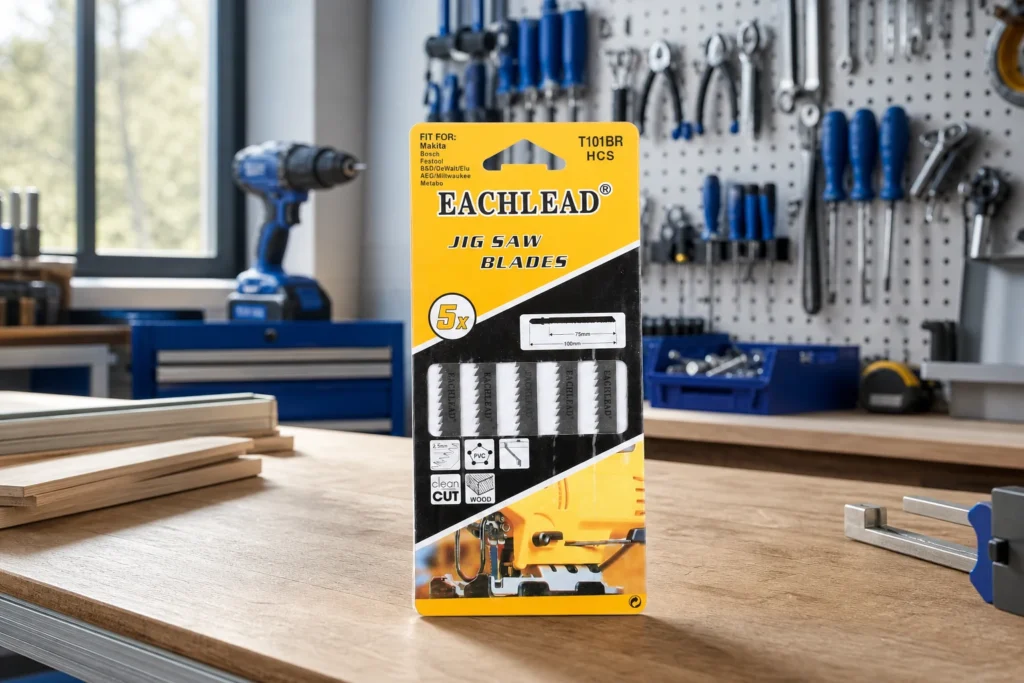
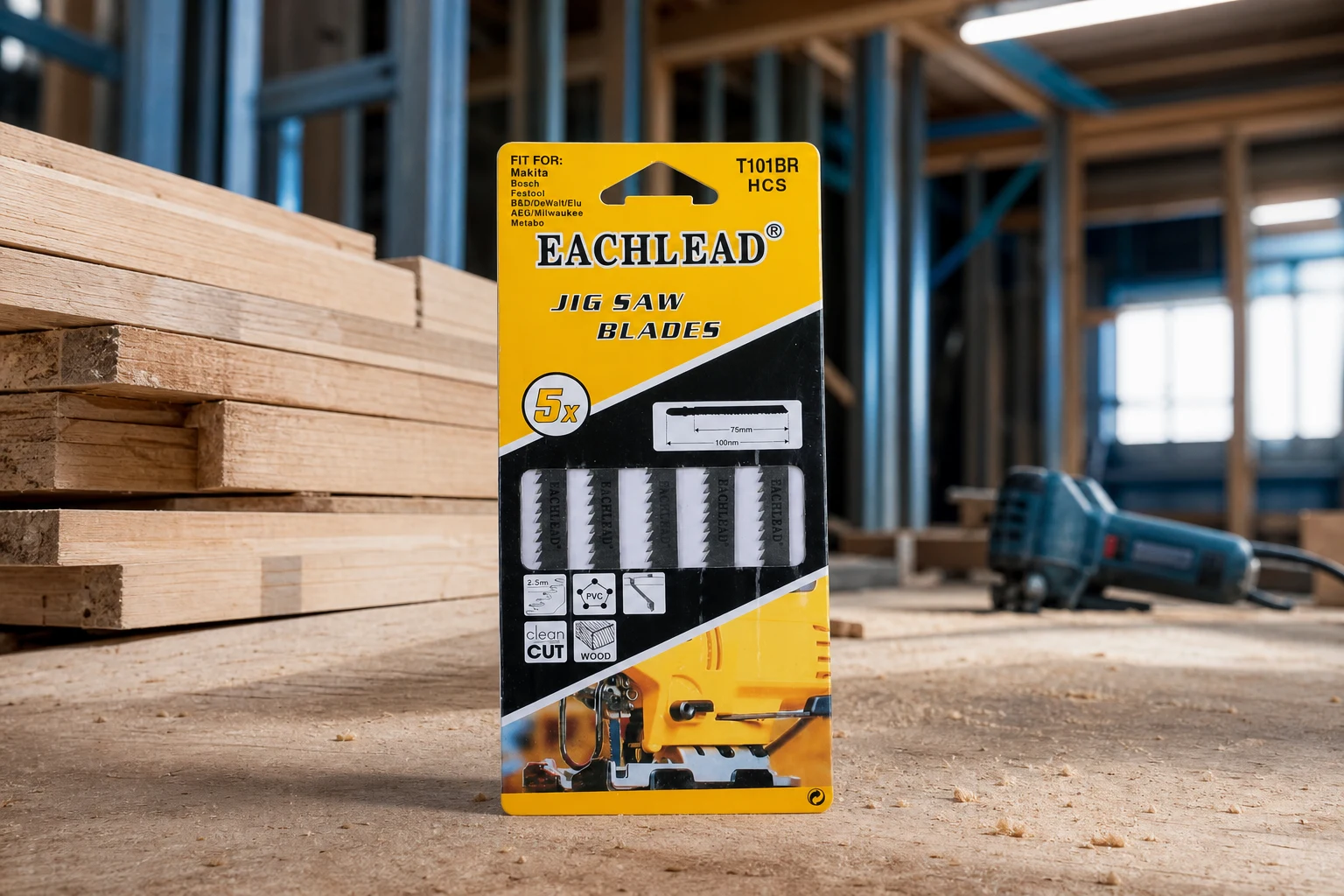
No EACHLEAD model is named here for stainless steel sheet because the currently available site evidence does not independently verify a model-specific stainless application. A category image can show the product family, but it is not a cutting test or a compatibility claim.

References
- ERKO: Jigsaw blades — How to choose — source-scoped metal pitch, thickness, blade-width, and operating-context examples.
- Bosch Jig Saw Blades category — example of material and T/U-shank interface filters.
- Diablo DJT118AHM thin-metal blade — example of a model-specific thin-metal range.
- Starrett BU2 jig saw blade assortment — example of separate metal and multi-purpose pitches within one assortment.