


Which Planer Blade Inputs Matter for Softwood and Hardwood?
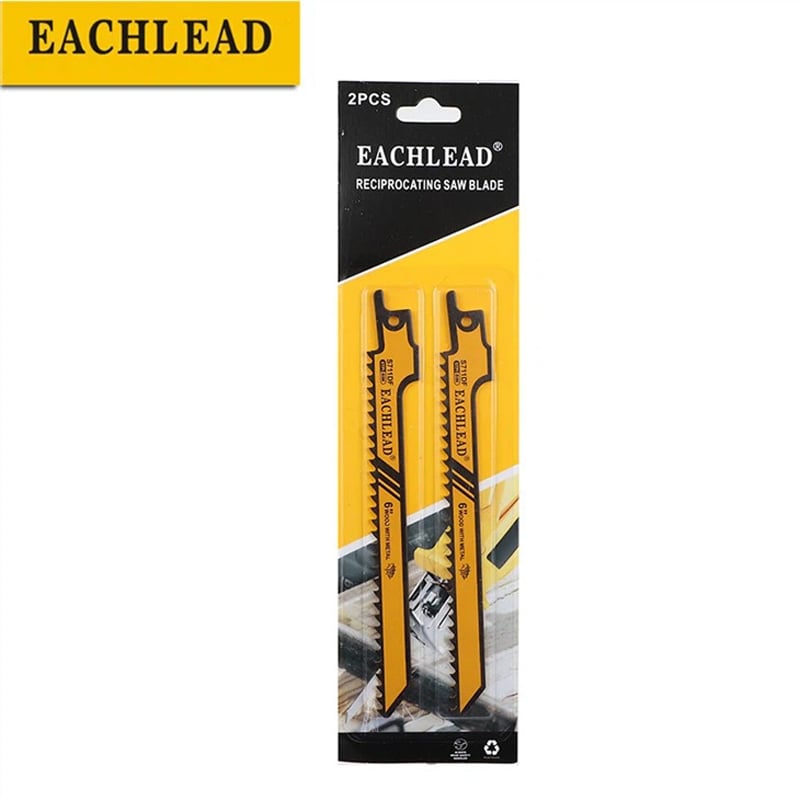
Planer-blade selection starts with the board and the machine, not with a softwood-versus-hardwood label alone. Record the wood condition, grain, cutter-head details, knife dimensions, and required surface before comparing replacements. The own-brand blade photo below is a non-planer visual contrast only; do not identify a planer replacement from a similar-looking cutting tool. For the verified commercial route, review the EACHLEAD planer-blades category.
Part 1. Start with the wood and the required surface
“Softwood” and “hardwood” do not describe every condition that affects a planing decision. Board moisture, grain direction, knots, resin, glue lines, and prior damage can change what the operator needs to inspect before a pass.
Write the required surface down first. A board being sized for a hidden component and a board intended for a visible face can have different acceptance checks, even when both come from the same wood family.
| Decision input | Why it matters | What to record |
|---|---|---|
| Wood and board condition | A species label does not capture knots, resin, grain, or damage | Wood name, moisture condition if known, knots, resin, coating, and defects |
| Grain and feed direction | Reversing grain can change the risk of lifting fibres | Board face, grain changes, and planned feed direction |
| Surface requirement | The needed result guides the inspection method | Hidden stock, intermediate sizing, or visible face |
| Machine context | The knife must match the actual cutter head | Planer or thicknesser make/model, cutter-head details, and instructions |
Important: Isolate the machine before inspecting or changing knives, and follow the machine instructions and applicable guarding requirements. See OSHA woodworking machinery requirements.
Part 2. Separate material inputs from machine-fit inputs
Material inputs help a buyer describe the workpiece; they do not confirm a replacement. Machine-fit inputs are separate: knife length, width, thickness, locating holes, profile, cutter-head arrangement, and the tool documentation all need checking.
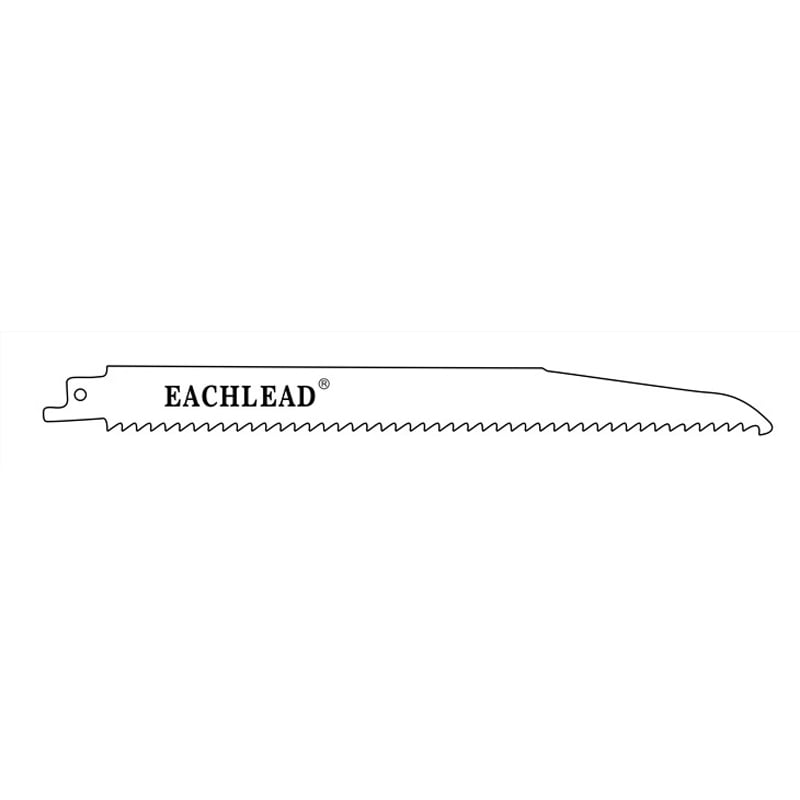
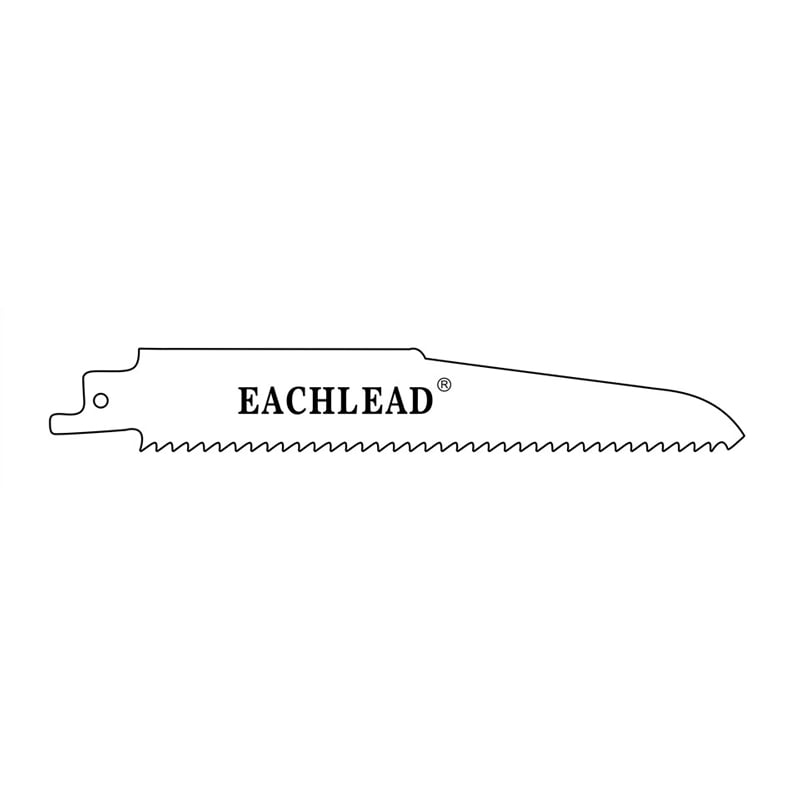
The silhouettes below are EACHLEAD saw-blade media used only to show that blade geometries differ across tool families. They are not planer blades and are not a replacement recommendation.
| Question | Material input | Machine-fit input | Decision consequence |
|---|---|---|---|
| What is being planed? | Wood condition and grain | N/A | Defines the review and trial conditions |
| What is being replaced? | N/A | Existing knife dimensions and features | Prevents a visual-only match |
| What does the cutter head accept? | N/A | Profile, locating arrangement, and clamp method | Must match the actual machine evidence |
| What does the public category prove? | Softwood/hardwood category scope | No exact machine fit | Use it as a route for review, not confirmation |
For a separate wood-tooth discussion in another tool family, see what jigsaw blade teeth control in a clean wood cut. That article does not establish a planer-blade specification.
Part 3. Build a softwood review card
For softwood stock, begin by documenting the actual board rather than assuming that every softwood behaves alike. Resinous areas, knots, and changing grain deserve a separate note because they can alter the inspection and setup conversation.
Keep the request conditional. The public EACHLEAD pillar names softwood, but no reviewed public SKU page connects a particular planer blade to a specific machine or softwood species.
| Softwood review field | Buyer observation | Send with quote |
|---|---|---|
| Board condition | Knots, resin, roughness, and visible defects | Photos of representative stock |
| Grain | Straight, changing, or mixed grain | Face and feed-direction notes |
| Required surface | Sizing or visible face | Acceptance description |
| Existing knife | Dimensions and locating features | Clear measurement sheet and photos |
Part 4. Build a hardwood review card
Hardwood should be treated as a material description, not an automatic knife recommendation. Review the stock, grain changes, surface requirement, and cutter-head evidence using the same disciplined process.
Where the buyer has mixed batches, identify the species and condition by batch. A replacement request that says only “hardwood” leaves too much unverified information for a responsible product recommendation.
| Hardwood review field | Buyer observation | Verification step |
|---|---|---|
| Stock identity | Species if known and batch variation | Keep unknown species marked as unknown |
| Grain and defects | Direction changes, knots, and damaged areas | Photograph representative faces |
| Machine evidence | Cutter head, clamps, and existing knife | Compare measurements with the machine documentation |
| Acceptance check | Surface condition to inspect after a controlled trial | Agree the review method before ordering |
For another surface-risk discussion, this laminate chip-control article is related reading only; it does not recommend a planer knife.
Part 5. Use grain and board condition to challenge the first choice
The first selection can be wrong when the board contains conditions absent from the initial description. A clear RFQ therefore keeps room for grain changes, knots, resin, coatings, glue lines, or an unknown prior repair.
Inspect the existing knife and cutter head for damage before treating the blade as the only variable. If the machine condition is unknown, stop the recommendation process and obtain machine evidence rather than inferring compatibility from a product image.
A controlled trial can compare candidate configurations without promising a particular result. Hold the machine, representative board, setup, and acceptance check constant, then record only the observed outcome.
Part 6. Turn the decision into a replacement RFQ
An RFQ should let a supplier review fit without guessing. Include dimensions from the existing knife and the cutter-head context alongside the wood and surface information.
| RFQ field | Buyer should provide | Supplier review should address |
|---|---|---|
| Machine | Make/model, instructions, and cutter-head photos | Whether enough evidence exists to assess fit |
| Existing knife | Length, width, thickness, profile, holes, and photos | Candidate geometry against documented dimensions |
| Workpiece | Softwood/hardwood description, board condition, grain, and defects | Whether the request stays within the listed application boundary |
| Validation | Representative stock and acceptance method | Whether a controlled sample review is needed |
Fit Boundary
This workflow fits buyers who can supply the machine and existing-knife evidence. It is not sufficient for an unidentified cutter head, missing measurements, damaged machine components, or an outcome that has not been validated on representative stock.
Part 7. Choose the verified EACHLEAD route without a default model claim
Product recommendation: review the EACHLEAD planer-blades category after the RFQ fields are complete. It fits because the live category publicly lists planer blades and names softwood and hardwood as its material scope.
Why not recommend as a default: the reviewed public material does not verify an exact blade-to-machine or blade-to-wood-species fit. Do not treat the category image, a material label, or a similar-looking knife as proof of a replacement.
To start a documented review, send the machine and workpiece details: cutter-head photos, existing-knife measurements, locating features, wood condition, grain notes, required surface, and the planned validation method.
FAQs
Are planer blades different for softwood and hardwood?
The public EACHLEAD category names both materials, but that does not identify a default blade. Start with the board condition and machine-fit evidence before requesting a candidate.
Can the same planer blade be used on pine and oak?
Do not assume that from the wood names alone. Confirm the blade geometry against the cutter head, then document the actual boards and acceptance check for a controlled review.
What should be measured before replacing planer blades?
Record length, width, thickness, profile, locating holes or features, and the cutter-head arrangement. Photos beside a scale and the machine documentation make the request more reviewable.
Do planer blades fit every electric planer?
No fit conclusion should be made without the actual machine and knife details. Compare the existing knife and cutter-head evidence rather than relying on appearance or a broad category label.
Why does a planer leave tear-out or marks?
Grain direction, board condition, setup, machine condition, and knife condition can all be relevant. Inspect the workpiece and machine as a system instead of assigning a cause from one symptom.
What should be included in a planer-blade RFQ?
Include the machine, cutter-head photos, existing-knife dimensions, locating features, wood condition, grain notes, required surface, and representative-stock validation method. Those inputs let the supplier respond without inventing fit details.
Does EACHLEAD list a planer-blade category?
Yes. The EACHLEAD Planer Blades category is live and names softwood and hardwood, but it should be used as a category route rather than proof of an exact replacement.