


When Does a Flexible Reciprocating Blade Make Sense?
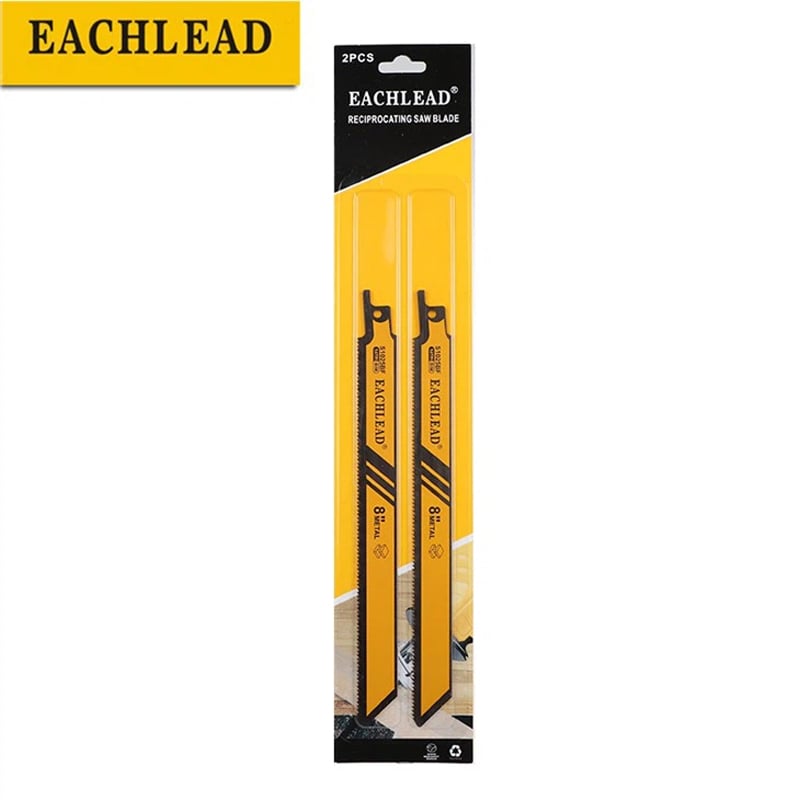
When to Use Flexible Reciprocating Saw Blades comes down to one question: does the cut need the blade to bend, or to refuse to bend? Flush cuts and blind access reward flex; deep straight cuts reward stiffness. For the commercial path, review the reciprocating saw blade product category.
Part 1. What does flexible actually mean on a blade listing?
On a listing, flexible describes the body’s willingness to bow and return without taking a set. EACHLEAD’s bi-metal material notes describe a flexible back joined to high-speed steel teeth, and the pruning page describes a flexible HCS body for curved branch cuts; both are printed listing language, not performance grades.
Body thickness is the physical lever behind the word. A thinner back bows farther at the same force, so two blades of equal length can sit at opposite ends of the flexibility scale.
| Scenario input | Flexible direction | Stiff direction |
|---|---|---|
| Cut type | Flush against a surface, blind access | Deep straight cuts, thick stock |
| Contact risk | Accidental bending expected | Controlled, supported cuts |
| Accuracy target | Rough separation acceptable | Square, tracked faces |
| Body preference | Thinner back | Thicker, wider back |
Important: Use the proper blade for the material and follow the tool instructions; see OSHA handheld saw guidance.
Part 2. Which scenarios genuinely reward a flexible blade?
Flush cutting rewards flex most obviously. Sawing a pipe stub or nail level with a floor plate means pressing the body flat against the surface, and only a blade that bows willingly can follow it without snapping or gouging.
Blind demolition access is the second case. Inside wall cavities and between joists, the blade will strike hidden framing eventually, and a flexible back that springs straight afterward survives sessions that would kink a rigid body.
Overgrown outdoor work rounds out the list. Branch and shrub cutting loads blades sideways in curved kerfs, which is exactly why the pruning listing on this site calls out a flexible body as a feature.
Part 3. Where does flexibility cost accuracy and control?
A flexible back wanders in deep, straight cuts. The same bow that hugs a floor plate lets the tip drift off line in thick timber or stacked sheet, leaving an angled face that stiff-bodied blades hold square.
Length amplifies the cost. A long flexible blade is the wobbliest combination available, which is why deep-cut work belongs to the stiffer end of the long blade buying guide rather than to whatever bends easiest.
Vibration follows the same physics. An unsupported flexible body slaps the kerf walls, chatters, and feeds those pulses back to the operator’s hands, so control work favors stiffness whenever the access allows it.
Part 4. How do construction families deliver flexibility?
Bi-metal is the family built around the trade-off: a spring-tempered alloy back carries hard high-speed-steel teeth, so the body flexes while the edge stays hard. The bi-metal selection guide maps that construction across this site’s listed models.
Carbon steel takes a different route. An HCS body can be tempered springy, as the pruning listing shows, but its teeth share the body’s steel, which is why the HCS vs bi-metal comparison frames the choice by workpiece rather than by flexibility alone.
Do not read either family as unbreakable. Any blade kinks when levered hard enough, and flexible backs survive accidents rather than inviting them.
Part 5. How should flush and access cuts be set up?
Set the shoe against the structure and let the blade bow gradually into the flush plane. Forcing the bend in one push concentrates stress at the shank, which is where levered blades kink first.
Keep the pressure light and the stroke full. The teeth should do the removal while the bow simply holds position, and a full stroke spreads wear along the edge instead of burning one spot.
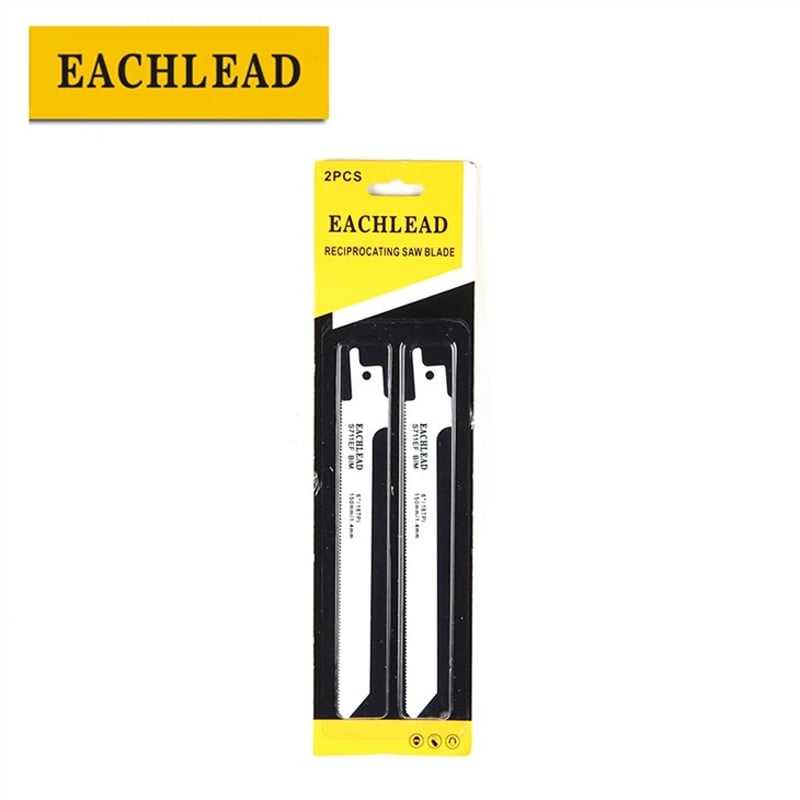
| Field symptom | Likely cause | First correction |
|---|---|---|
| Kink at the shank | Forced bend or levering | Bow gradually, never pry |
| Gouged surface on flush cut | Tooth set dragging | Lighter pressure, finer pitch test |
| Wandering deep cut | Flexible body in thick stock | Switch to stiffer, shorter body |
| Chatter in cavity work | Unsupported mid-body | Plant the shoe, slow the feed |
Part 6. What belongs in a flexibility-aware RFQ?
Name the scenario, not the adjective. An RFQ that says “flush-cutting copper stubs at floor level, occasional hidden nails” gives the supplier something to match, while the word flexible alone could mean any thin blade in the catalog.
State the counter-scenario too. If the same crews also cut thick timber square, the RFQ should ask for a two-SKU answer rather than one compromise blade.
| RFQ field | Buyer supplies | Supplier confirms |
|---|---|---|
| Scenario | Flush, access, or straight cuts with materials | Listed application match |
| Body question | Length and thickness preferences | Body dimensions per SKU |
| Construction | Family question (bi-metal, HCS) | Grade pairing on quotation |
| Validation | Sample cuts and acceptance criteria | Candidate SKU and pack label |
Product recommendation: review the bi-metal reciprocating saw blade category once the scenario is written down. Why it fits: this site’s bi-metal listings are where the flexible-back construction is described, matching flush and access work. Why not recommend as a default: flexibility trades away tracking in thick straight cuts, so no single SKU is named and a sample cut should settle each scenario.
Fit Boundary
Buyers who can name the cut scenario, access limits, and workpiece thickness will get a defensible flexible-or-stiff decision from this explainer. It does not support unbreakable claims, damaged tools, or performance guarantees without a sample test.
Part 7. How should distributors present flexible SKUs?
Sell the scenario, not the adjective. A card that reads “flush cuts and cavity access” positions the blade honestly, while a bare “flexible” invites buyers who actually need a stiff deep-cut blade and then return it.
Pair the SKUs on the shelf. Crews that flush-cut also cross-cut, so presenting a flexible access blade beside a stiff straight-cut blade converts the trade-off into a two-item sale instead of a complaint.
To request a configuration review, send the application details to EACHLEAD: tool, holder, cut scenarios, materials and thickness, current blade, observed failure, and target pack quantity.
FAQs
What makes a reciprocating blade flexible?
A thinner, spring-tempered back. Bi-metal listings on this site describe a flexible alloy back carrying high-speed steel teeth; body thickness sets how far it bows.
When does flexibility help a cut?
Flush cuts against a surface, blind access work where strikes happen, and curved outdoor cuts. The bow follows surfaces and survives accidents.
When does a flexible blade hurt accuracy?
In deep, straight, thick-stock cuts. The body drifts off line and chatters, where a stiffer, shorter blade holds square.
Are flexible blades weaker than stiff blades?
No; they trade rigidity for resilience. A flexible back resists taking a permanent set, but any blade kinks if levered hard enough.
Which EACHLEAD listings describe a flexible back?
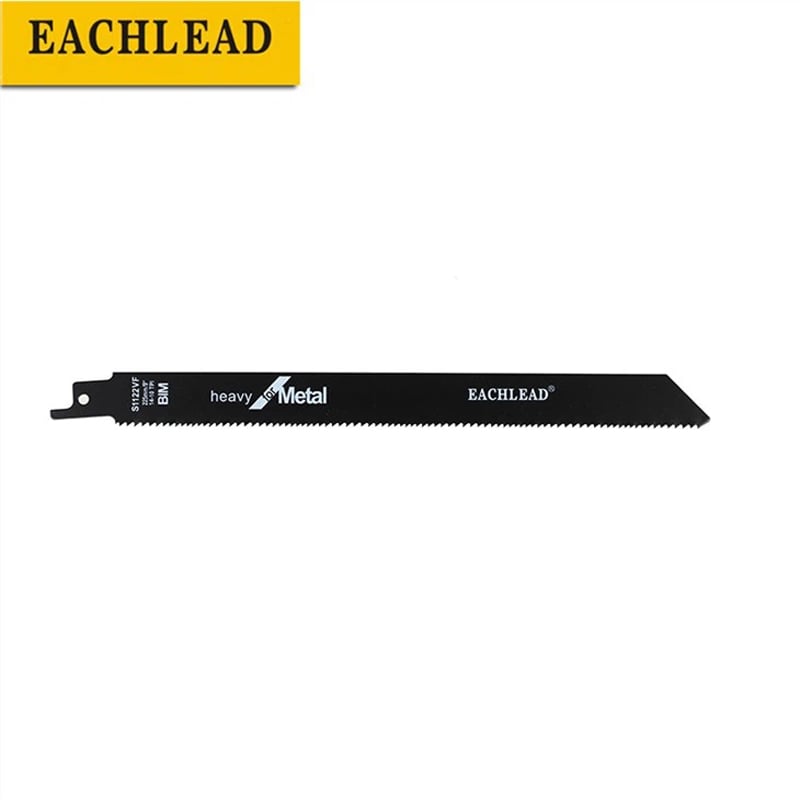
Bi-metal material notes, for example on the S1122VF page, describe a flexible back with high-speed steel teeth, and the S1542K pruning page describes a flexible HCS body.
Do flush cuts require a flexible blade?
They strongly favor one. A rigid body pressed flat concentrates stress and gouges; a willing bow with light pressure follows the surface.
What should an RFQ say about blade flexibility?
Describe the scenario and materials instead of the adjective, ask for body dimensions per SKU, and close with a sample-cut acceptance test.