


Does Reciprocating Blade Length Really Change the Cut?
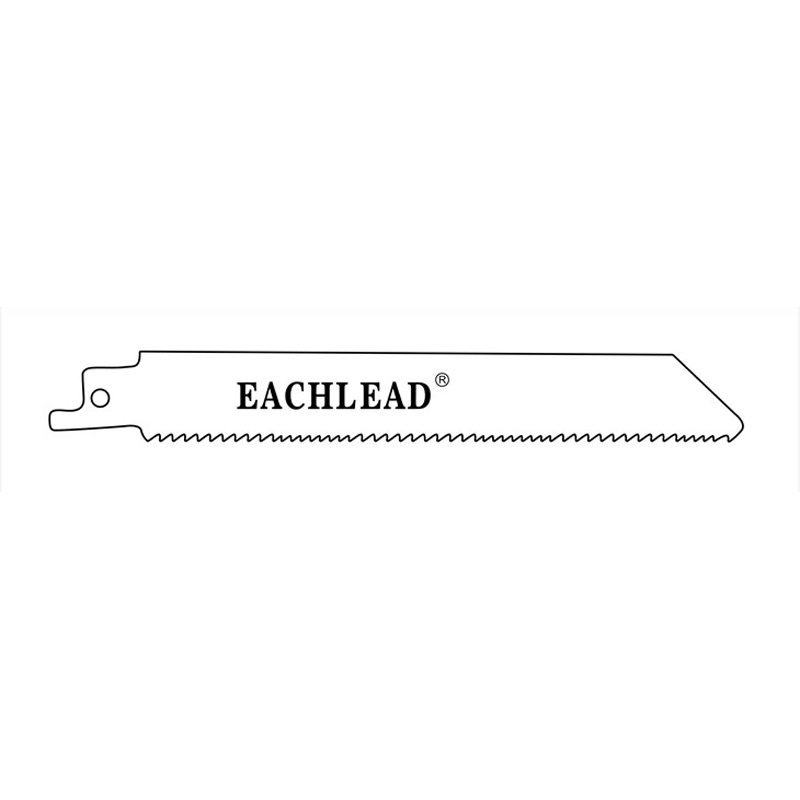
6-Inch vs 9-Inch vs 12-Inch Reciprocating Saw Blades is a reach-versus-control decision, and the workpiece measurement settles it before any brand preference does. Record the span to cut, the holder, the access, and the required edge first. For the commercial path, review the reciprocating saw blade product category.
Part 1. What does blade length actually control in a reciprocating cut?
Length buys reach, and it pays for that reach with flexibility. Every extra inch past the workpiece is unsupported steel that can whip, slap the kerf walls, and steer the cut off line.
Length also interacts with the tooth chart. A deep timber cut wants coarse teeth and a long body, while a thin metal section wants fine pitch and the stiffness of a short blade, so length and TPI should be chosen together rather than separately.
| Decision field | Shorter blade direction | Longer blade direction |
|---|---|---|
| Workpiece span | Thin sections, pipe, sheet | Deep timber, bundles, wide profiles |
| Control priority | Straighter tracking, less whip | Reach and flush access |
| Typical catalog examples | S922VF at 6 inch / 150 mm | S1617K at 12 inch / 300 mm |
| Main risk | Tip strikes the far wall | Wander and vibration |
Important: Use the proper blade for the material and follow the tool instructions; see OSHA handheld saw guidance.
Part 2. Where does a 6-inch blade earn its place?
Choose a 6-inch blade when control matters more than reach. With minimal overhang it resists bending in thin steel, conduit, and small-section demolition, and it behaves predictably in tight cavities where a longer blade would strike hidden framing.
On this site, the catalog example is the S922VF, listed at 6 inch / 150 mm for wood with nails and metal in an approximate 5-10 mm range. Treat that listing as the boundary for what the model is positioned to do, then confirm with a sample cut.
Part 3. When is a 9-inch blade the working default?
Nine inches is the compromise most crews standardize on: enough reach for dimensional lumber, pipe, and stacked sheet, while keeping whip manageable for repeated cuts. Distributors often anchor their assortment here and add lengths at the edges of demand.
For thicker steel sections, pair the length question with the engagement question in the thick metal blade selection guide, because a 9-inch body with the wrong pitch still fails.
| Field symptom | Likely length issue | First correction |
|---|---|---|
| Tip taps the far wall | Blade too short for span | Measure span plus stroke, size up |
| Cut face angles off square | Excess overhang flexing | Size down or stiffen support |
| Blade slaps and rings | Long blade in thin work | Shorter blade, firmer shoe contact |
| Cannot reach flush cut | Body too short for access | Longer blade, controlled feed |
Part 4. What jobs genuinely need a 12-inch blade?
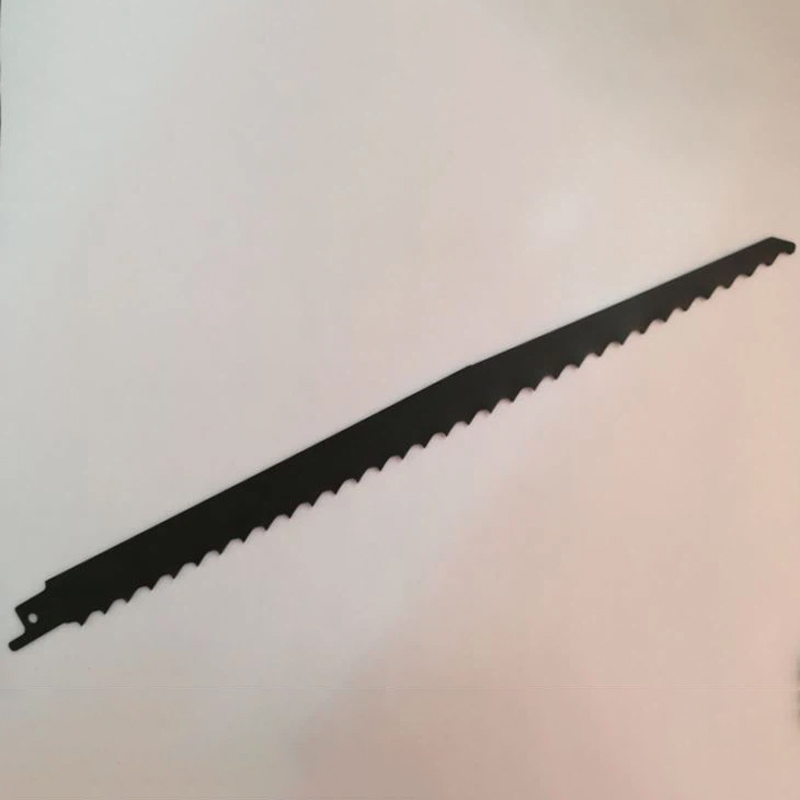
Twelve inches exists for spans that shorter blades cannot clear: landscape timbers, laminated posts, bundled conduit, and flush cuts across wide assemblies. The catalog example here is the S1617K, listed at 12 inch / 300 mm for wood and damp wood in an approximate 20-175 mm range.
Long blades demand a support plan. Keep the shoe planted, let the tip exit clean, and expect to feed more gently than with a short blade, because the same push force now bends a longer lever.
Buyers whose work lives at this end of the range should read the long Sawzall blade buying guide, which covers extended-length purchasing in depth; this article only settles the three-way length decision.
Part 5. How do stroke length and overhang change the choice?
The working length is not the printed length. The saw’s stroke consumes part of the blade on every cycle, so the tip must still clear the workpiece at the shortest point of the stroke, plus a small margin for shoe movement.
A practical field rule: measure the span, add the stroke, and add roughly an inch of margin. If the result lands between two catalog lengths, take the shorter one when control matters and the longer one only when reach is the binding constraint.
Holder compatibility rarely blocks the choice, since common lengths share the universal tang system, but it is still worth confirming against the reciprocating blade fit and compatibility overview before consolidating an order.
Part 6. What belongs in a blade-length RFQ?
State the measured span first, not the length you assume. Give the supplier the workpiece, the measured cross-section, the access limits, and the stroke of the tools in service, and let each candidate length be justified against those numbers.
Ask for the listed length, width, and thickness per model in writing. Width and thickness govern stiffness at a given length, so two 9-inch blades can track very differently.
| RFQ field | Buyer supplies | Supplier confirms |
|---|---|---|
| Workpiece | Material and measured span | Listed application range |
| Tool context | Holder type and stroke length | Length, width, thickness per SKU |
| Cut conditions | Access, flush needs, edge target | TPI and body recommendation |
| Validation | Sample stock and acceptance criteria | Candidate SKU and pack label |
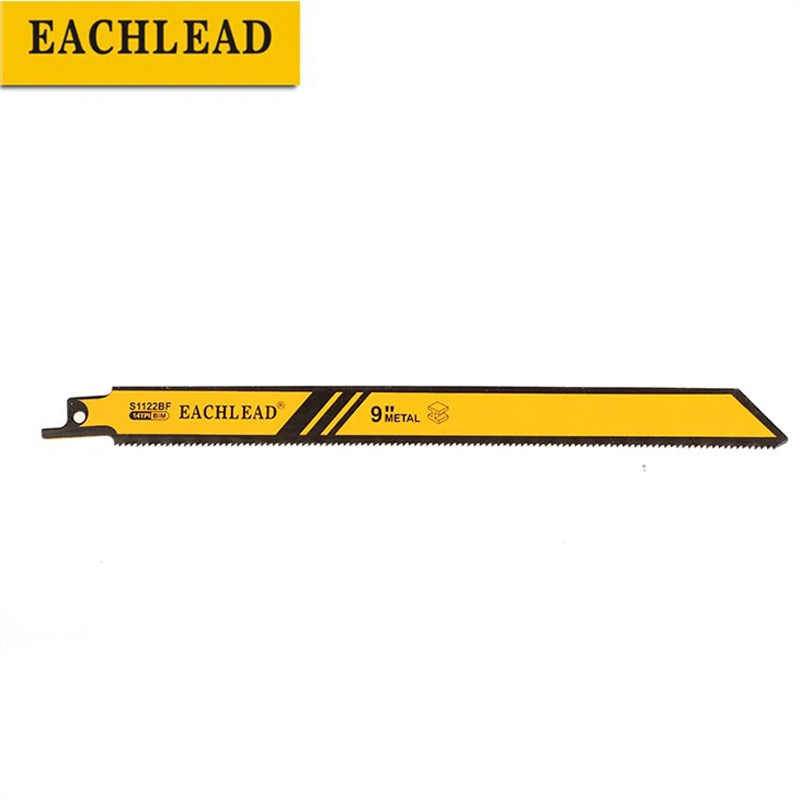
Product recommendation: review the S1122BF 9 Inch Reciprocating Saw Blades once the span math is done. Why it fits: it is a live 9-inch catalog example listed for thick sheet metal in an approximate 3-8 mm range, the balanced middle of this comparison. Why not recommend as a default: length must follow the measured workpiece, and confined cuts control better at 6 inches while deep timbers may genuinely need 12.
Fit Boundary
Buyers who measure spans, check stroke length, and run a sample cut before committing to an assortment get reliable results from this comparison. It does not replace testing where the tool is damaged, the holder is unknown, or a guaranteed outcome is demanded without evidence.
Part 7. Which length mistakes cause returns and rework?
Buying one long length “to cover everything” is the most common mistake. The long blade then wanders in thin work, users blame quality, and the return rate climbs even though every blade met its specification.
The second mistake is ignoring stroke consumption, which sends blades into far walls and snaps tips. The third is assuming equal stiffness across brands at the same printed length while width and thickness differ.
To request a configuration review, send the application details to EACHLEAD: tool, holder, workpiece, measured span, cut geometry, current blade, observed failure, and target pack quantity.
FAQs
Is a longer reciprocating blade always more capable?
No. Length adds reach and subtracts control. The shortest blade that clears the workpiece through the stroke usually cuts straighter and vibrates less.
Can a 6-inch blade cut a 4-inch pipe?
Often yes, because the tip only needs to clear the far wall through the stroke. Measure the true outside span and add the stroke before deciding.
Why does a 12-inch blade wander more than a shorter one?
More unsupported length flexes under the same side load. Firm shoe contact and gentler feed reduce, but do not remove, that behavior.
Do all lengths fit the same saw?
Common lengths share the universal tang system on mainstream saws. Confirm the holder type on older or specialty tools before ordering.
Which EACHLEAD pages list 6-inch, 9-inch, and 12-inch examples?
Live product pages list the S922VF at 6 inch, the S1122BF at 9 inch, and the S1617K at 12 inch. Each page states its own application range.
How much blade should extend past the workpiece?
The tip must clear the work at the shortest point of the stroke, with a small margin. Span plus stroke plus roughly an inch is a workable field rule.
What length mix should a distributor stock?
Anchor on the mid length that matches local demand, then add short blades for control work and long blades for deep cuts, each labeled with its listed range.