


Long Sawzall Blades: Buying Guide for Deep Cuts
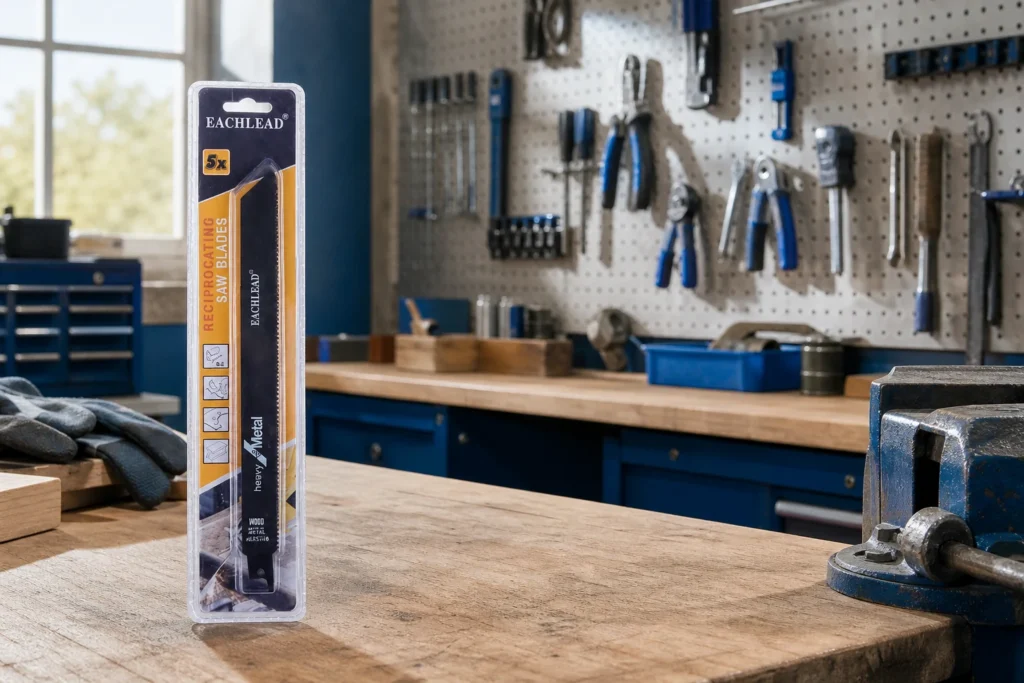
Long sawzall blades trade reach for control—twelve-inch and specialty longer lines help deep joists, roof strip-out, and pruning branches, but unsupported strokes whip and bind faster than a nine-inch remodel default. Distributors should stock length families with clear TPI and material labels so crews do not grab a long pruning SKU for tight electrical chases.
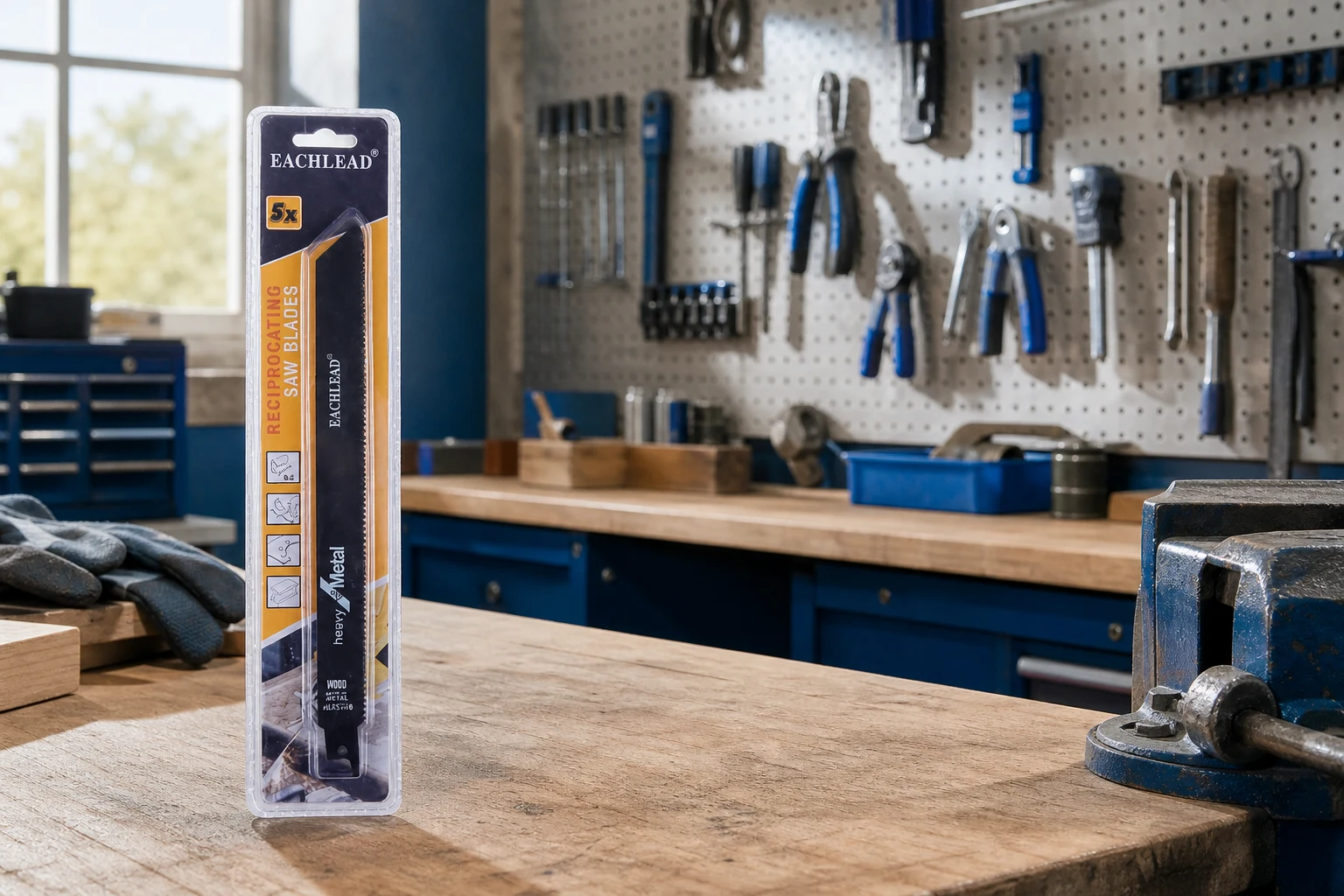
Part 1. Why Blade Length Matters for Sawzall Work
Reciprocating saw blade length sets how deep a cut can reach before the tool shoe or housing blocks progress. Industry buying guides list common inch lengths of 6, 9, and 12, with eighteen- and twenty-four-inch lines appearing in pruning and specialty demolition channels.
Longer steel increases side loading and oscillation—what field crews call whip—especially in plunge cuts or overhead work where the blade tip is unsupported.
Wholesale buyers should merchandise length on the blister card beside TPI and material—not only SKU color bands—so rental counters can refill the right bay after a weekend gut-rehab rush.
OEM assortments that default every slot to nine inches leave pruning and deep-framing crews buying competitor twelve-inch packs at the gas station—length is a margin lane, not a spec footnote.
> **From the field:** “A 12-inch blade gets into deep joists but whips bad if you freehand it.” — AIMS Industrial reciprocating blade guide
Export cartons should list length in both inches and millimeters so EU and US channels read the same blister artwork without relabeling.
Part 2. Common Length Bands (6, 9, 12, and Beyond)
Six-inch blades suit tight plumbing and HVAC chases where control beats reach. Nine inches remains the remodel and light metal default in North American hardware planograms.
Twelve-inch bi-metal bodies help deep joists, laminated beams, and pruning reach when the user can plant the shoe and support the workpiece.
Eighteen- and twenty-four-inch pruning SKUs such as S1542K pruning reciprocating lines target arborists and landscape fleets—not every hardware endcap needs them, but rental and pro dealers often stock at least one long pruning lane.
Match TPI to length: coarse 5–8 TPI on long demolition blades clears chips in thick timber; finer 10–14 TPI on long metal lines needs slower feed to avoid tooth strip.
When adding twelve-inch slots, pair them with a counter card note about shoe contact—unsupported long blades generate returns that look like quality defects but trace to technique.
| Length | Typical use | Control note | Channel |
|---|---|---|---|
| 6 in | Tight chases, conduit | High control | Plumbing, HVAC |
| 9 in | Remodel, light metal | Default balance | Hardware, rental |
| 12 in | Deep joists, strip-out | Watch whip | Pro, demolition |
| 18–24 in | Pruning, pole reach | Support workpiece | Landscape, arbor |
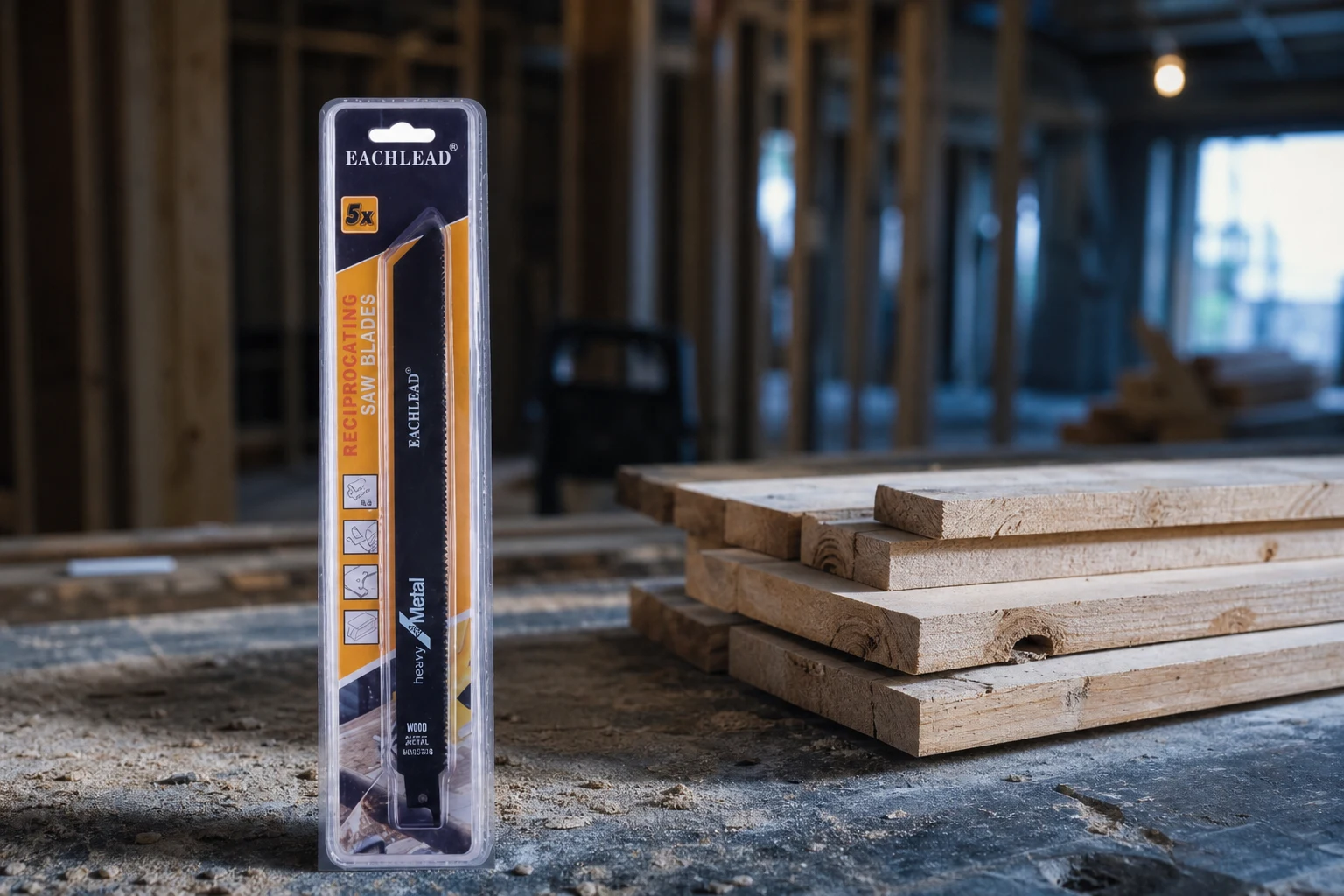
Part 3. Controlling Whip and Flex on Long Blades
Whip happens when the unsupported blade tip oscillates in the kerf—common in plunge entry, overhead cuts, and flexible pruning strokes on thin branches.
Field reviews note that keeping the shoe planted, bracing the workpiece, and reducing feed rate often fixes whip faster than switching brands.
Thicker bi-metal demolition bodies resist flex better than thin HCS wood lines—pair length with body grade when stocking long remodel SKUs beside demolition reciprocating blades.
Cordless users should watch for stall-induced heat at the teeth on long cuts—longer stroke time in the kerf builds heat if feed rate is too aggressive.
> **From the field:** “I keep 9-inch blades on the truck and 12-inch for roof strip-out when I can brace the cut.” — remodel trade context
| Symptom | Likely cause | Fix | Stocking note |
|---|---|---|---|
| Tip oscillates | Unsupported long blade | Brace workpiece, shorter blade | Label whip note on 12 in |
| Binding in kerf | Wrong TPI or twist | Reduce feed, check shoe | Match TPI to material |
| Early tooth loss | Nail strike on HCS | Switch to bi-metal | Separate pruning from demo |
| Snap at shank | Side load / pry | Thicker demolition body | Demolition bay apart from metal |
Part 4. Matching Long Blades to Pruning and Demolition
Pruning favors aggressive gullets and coarse TPI on longer bodies to clear wet chips—see the pruning reciprocating saw blade guide for tooth form and hook angle notes separate from remodel demolition.
Structural demolition may need twelve-inch bi-metal with nail-embedded ratings—cross-link demolition blade guide and wood-with-nails guide so buyers see length as a layer on top of material intent.
Metal cutting on long blades is niche—most metal work stays at nine inches for control. S922EF metal reciprocating line fits standard-depth pipe and profile cuts.
Bulk programs should not over-index twelve-inch demolition without local demand data—see bulk sawzall buying guide for assortment ratios.
Part 5. Safety, Sourcing, and OEM Checklist for Buyers
Long blades throw chips farther from the kerf—eye protection and stable workholding are baseline; overhead cuts need extra clearance for falling debris.
Wholesale buyers should request: length matrix, TPI bands, bi-metal grade, body thickness, shank compatibility, flex notes, and blister artwork. Contact EACHLEAD for OEM specs. About EACHLEAD covers export packaging.
Confirm MOQ, lead time, and labeling language in writing—do not publish unverified life multiples on long-blade SKUs without nail-board or pruning cut tests.
Request factory photos of length stamping on the blade body so retail cards match the steel inside the pack.
Recommended EACHLEAD Products
For project support, explore our related product line, solution options, and OEM/ODM capabilities on eachlead.com.
FAQ
What length sawzall blade do I need?
Nine inches covers most remodel and metal tasks; twelve inches helps deep joists, pruning reach, and roof strip-out when the shoe stays planted.
Are longer reciprocating saw blades better?
Longer blades increase reach but add whip and flex—match length to access and support, not maximum inches alone.
What is the longest sawzall blade available?
Twelve inches is common in hardware channels; eighteen- and twenty-four-inch pruning or demolition SKUs exist as specialty lines.
Why does my long sawzall blade whip?
Unsupported long blades in plunge or overhead cuts oscillate—brace the workpiece, keep the shoe planted, or step down to a shorter blade.
12 inch vs 9 inch sawzall blade?
Nine inches offers better control in tight bays; twelve inches reaches deeper stock but needs more support to avoid binding and whip.
How do OEM buyers spec long sawzall blades?
Confirm length, TPI, bi-metal grade, shank type, flex notes on packaging, and blister labeling before MOQ orders.
References
- Discount Saw Blade — Reciprocating Buying Guide
- AIMS Industrial — Reciprocating Saw Blade Guide
- EACHLEAD S1542K pruning blade
- Fine Homebuilding — Demo Demon review
Ready to discuss your project? Contact EACHLEAD engineering support with your project parameters and technical requirements.