


Reciprocating Saw Blades for Metal: Types and Selection Guide
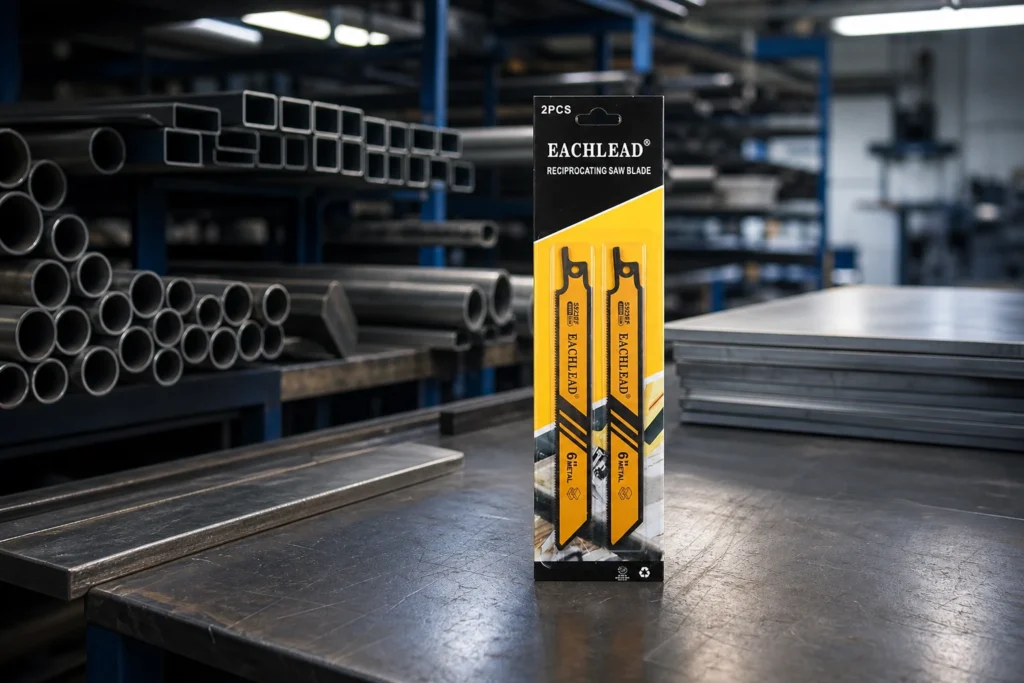
Reciprocating saw blades for metal need the correct tooth pitch, blade material, and length for the metal thickness and shape you cut. Importers and contractors often stock wood or pruning blades and see fast tooth wear, rough edges, or broken teeth on sheet metal, pipe, and profiles. This guide explains how to match bi-metal and specialty grades to common metal jobs and what wholesale buyers should verify before OEM orders.
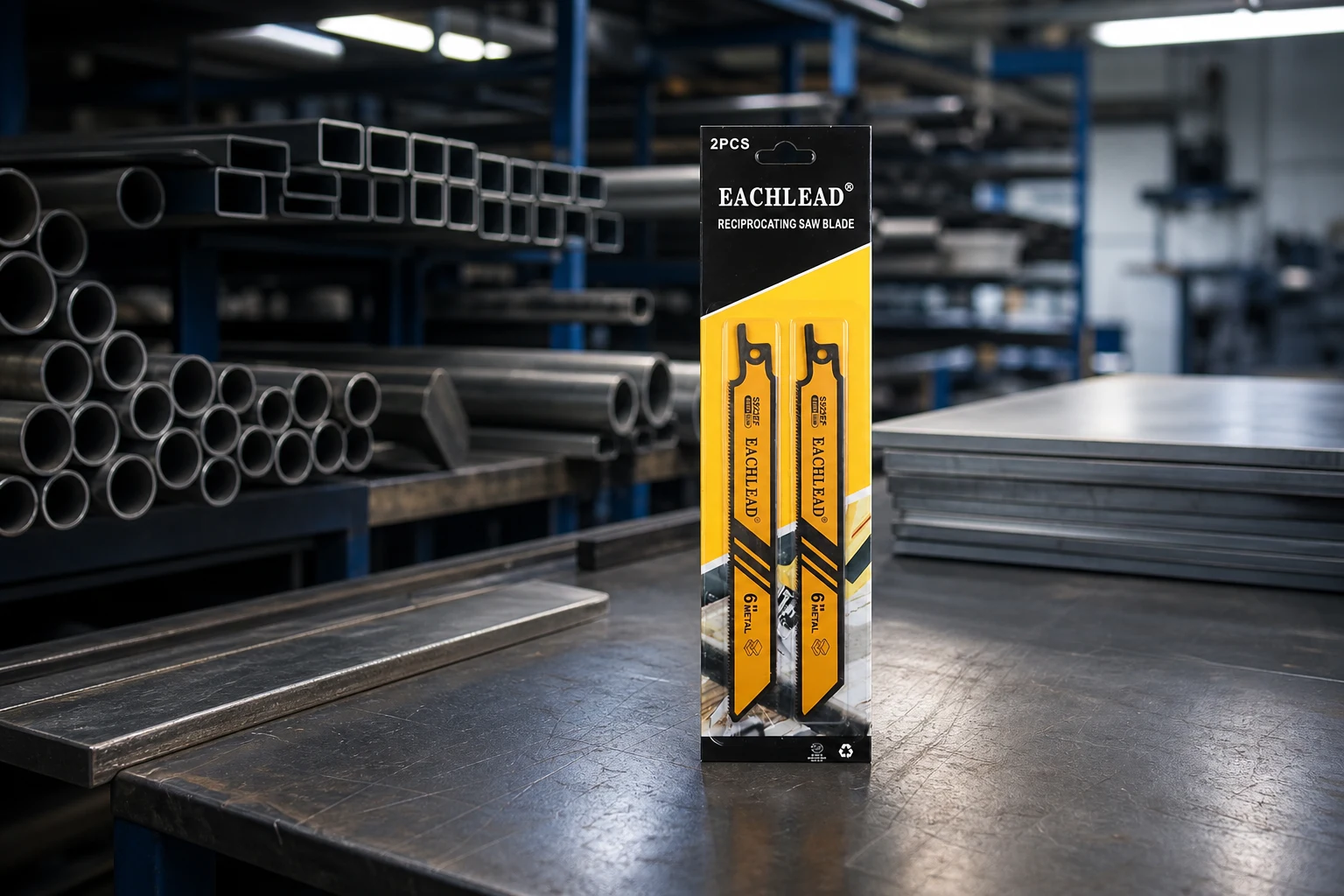
Part 1. Why Metal Jobs Need Different Reciprocating Saw Blades
Metal cutting creates heat and work-hardened chips. High-carbon steel (HCS) blades flex well in wood but typically dull quickly on ferrous and non-ferrous stock unless the catalog explicitly rates them for light metal.
Industry buying guides place most routine metal work in **bi-metal** blades with higher tooth counts than pruning blades—often roughly **10–14 TPI** for mid-thickness stock, with coarser pitches only when speed matters more than finish.
Using a demolition wood blade on thin sheet can leave burrs and overheat the kerf. Using an overly fine blade on thick pipe wastes time and can strip teeth if feed pressure is too high.
Wholesale buyers should treat metal reciprocating blades as a separate merchandising lane from pruning and demolition wood lines. End-cap copy that only mentions inch length without TPI or bi-metal grade drives returns when contractors try the same SKU on galvanized duct or threaded rod.
Part 2. How TPI and Blade Length Affect Metal Cuts
Teeth per inch (TPI) controls chip size and finish. Thin sheet metal and tubing often need **more teeth** to reduce chatter and tearing; thicker sections may use **coarser TPI** for faster material removal when finish is secondary.
Blade length affects reach and rigidity. Shorter blades can feel more controlled in tight spaces; longer blades help deep cuts but may whip if unsupported. A practical approach is to keep at least one tooth in the cut while maintaining firm shoe contact.
When stocking mixed assortments, label each slot with both TPI and recommended thickness band. A 14 TPI blade that excels on 1 mm sheet may feel sluggish on 6 mm plate; conversely, 8 TPI on thin stock often tears the edge unless feed rate stays low.
| Metal task | Typical TPI range (guide) | Blade length note | Common material |
|---|---|---|---|
| Thin sheet / duct | 14–18 | 6–9 in for control | Bi-metal |
| Pipe / profile 3–10 mm | 10–14 | 9 in common | Bi-metal |
| Mixed remodel (wood + nails + light metal) | 10–14 variable | 9 in | Bi-metal BIM grades |
| Stainless / hardened (specialty) | 8–14 | Match OEM spec | Bi-metal or carbide-tipped |
Part 3. Bi-Metal and Specialty Grades Compared
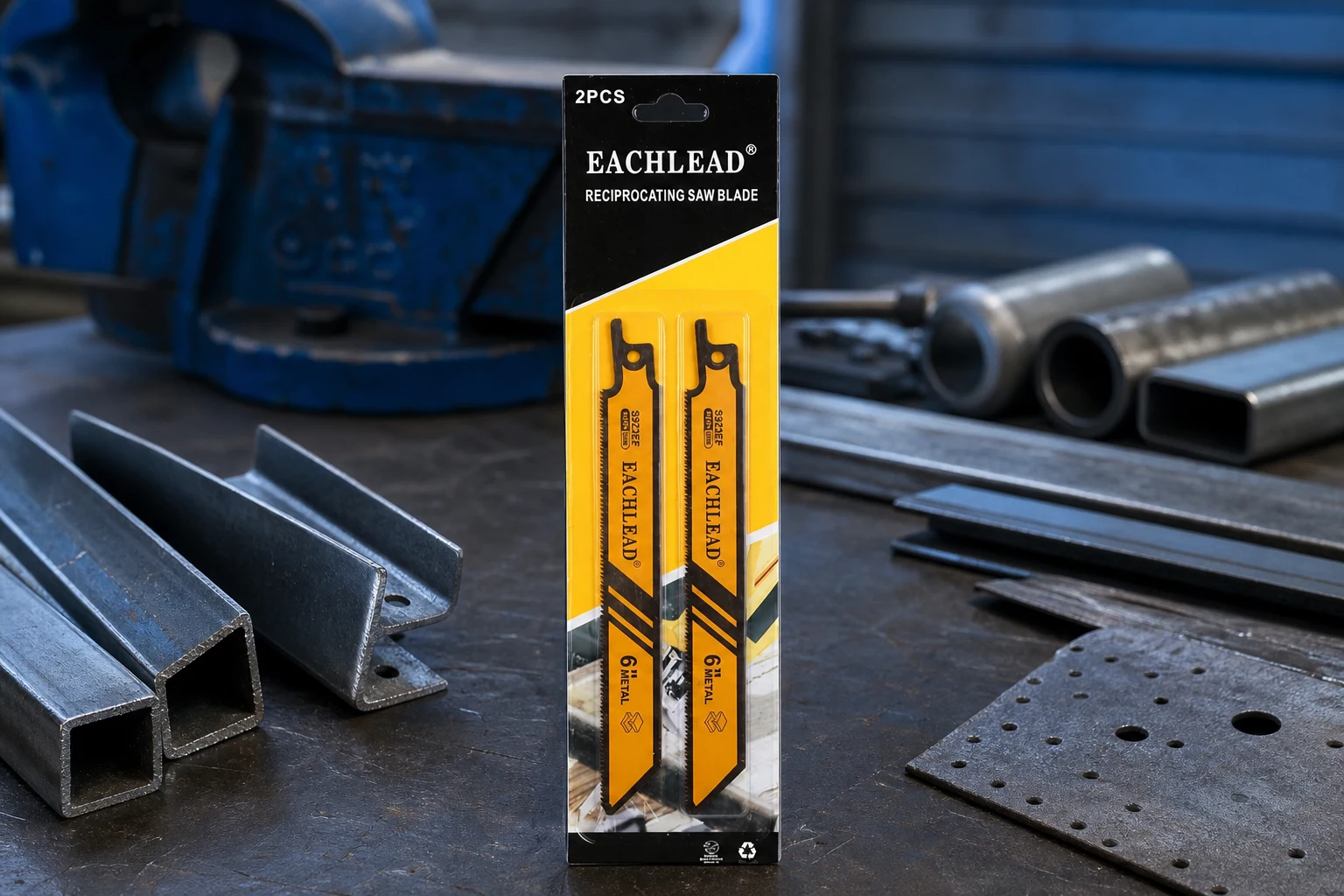
**Bi-metal** blades combine a flexible back with high-speed steel teeth—the default choice for metal and wood-with-nails demolition. EACHLEAD lists several grade pairings (6150+M2, 6150+M42, D6A+M2, D6A+M42) on metal-capable SKUs such as S1122VF for wood with nails and light metal.
**Carbide-tipped** reciprocating blades appear in premium lines for abrasive or extremely hard materials. They cost more and are usually reserved for applications where bi-metal life is insufficient—confirm target material before stocking.
Plain **HCS** remains valid for wood-only SKUs; do not reposition them as primary metal blades without cut-test data.
For export programs, align tooth geometry and shank type with the target market’s dominant reciprocating saw brands. Universal shank designs reduce compatibility questions, but blade width and set still affect plunge cuts in tight electrical chases.
| Grade / type | Best for | Trade-off | Typical channel |
|---|---|---|---|
| Bi-metal 6150+M2 | General metal, remodel | Mid price / life | Hardware, rental |
| Bi-metal 6150+M42 | Longer life hard metal | Higher unit cost | Pro dealer |
| Carbide-tipped | Abrasive / hard stock | Highest price | Specialty industrial |
| HCS wood/pruning | Green wood, not primary metal | Low cost | Garden / seasonal |
Part 4. Matching Blades to Jobs and Avoiding Common Mistakes
Sheet metal and aluminium profiles often need steady feed and supported workpieces; binding still occurs if the kerf closes. For remodel work with embedded nails, a bi-metal **wood-with-nails** blade may outperform a fine metal blade because tooth geometry handles intermittent hard spots.
Link metal selection to broader education: reciprocating saw blade buying guide, pruning blade guide (different intent), and compatibility basics.
In field trials, note whether users oscillate the shoe to clear chips on non-ferrous tube; that habit can flex the blade and change effective TPI contact. Document observed life in minutes per blade for each material so OEM quotes can recommend grade upgrades before a distributor loses a key account.
Part 5. Safety, Sourcing, and OEM Checklist for Buyers
Metal cutting throws sparks and chips on ferrous work. Eye protection, gloves, and stable workholding are baseline. Cordless users should watch battery load—stalling increases heat at the teeth.
Wholesale buyers should request: TPI and length matrix, bi-metal grade, catalog thickness range, packaging format, and sample cut tests on representative sheet or pipe. Contact EACHLEAD for OEM specs and lead time. Factory background supports export packaging.
Keep MOQ, freight, and sample policy in the quote thread—not as unverified promises on the product page.
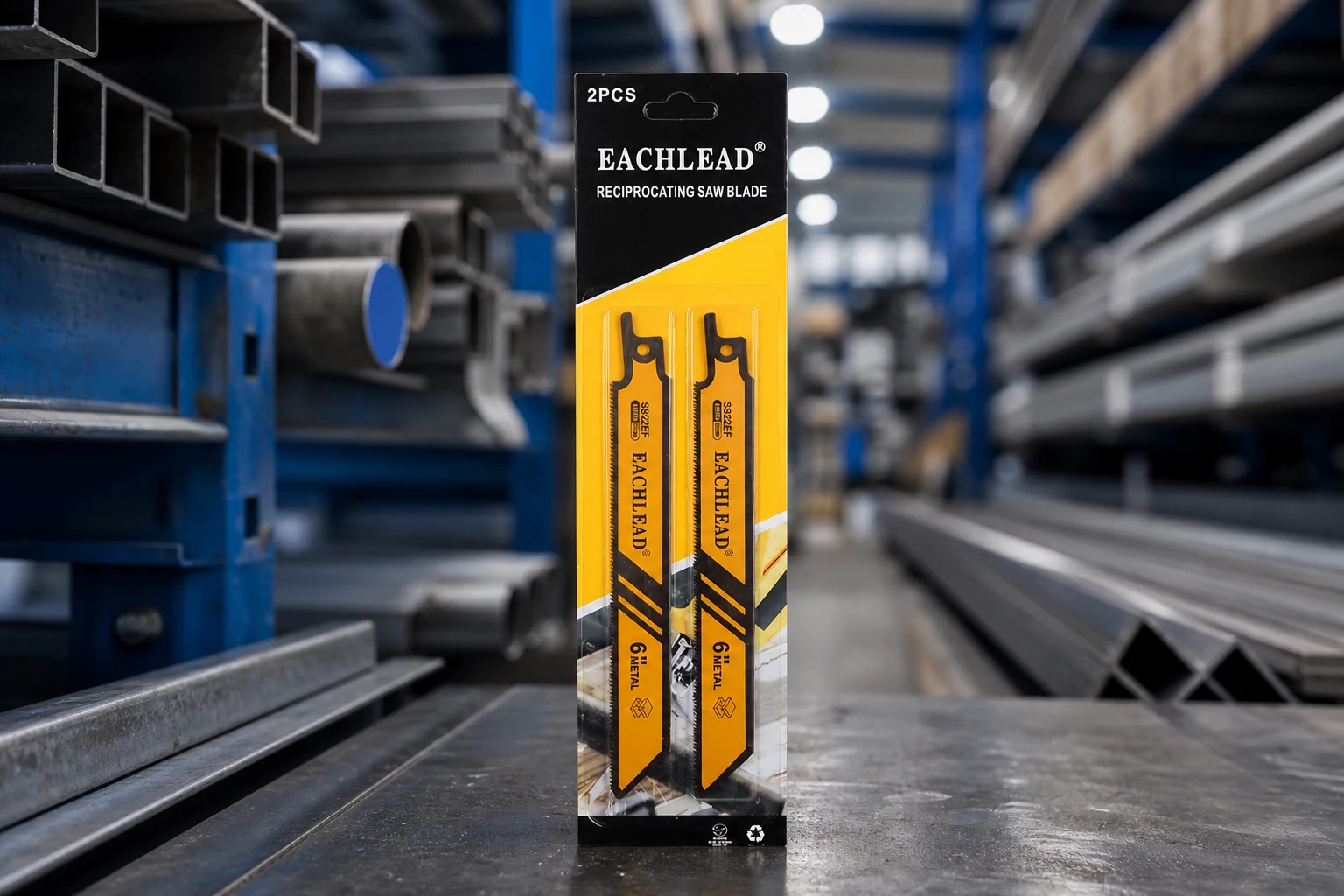
Request factory photos of tooth set and laser marking for customs and retail compliance. Consistent color banding by TPI on blister cards reduces mis-picks in busy job-site vans and helps aftermarket reordering without opening every pack.
Recommended EACHLEAD Products
For project support, explore our related product line, solution options, and OEM/ODM capabilities on eachlead.com.
FAQ
Can a reciprocating saw cut metal?
Yes, with appropriate bi-metal or carbide blades.
What TPI for metal?
Finer TPI for thin sheet; coarser for fast rough cuts in thicker stock.
Are bi-metal blades good for metal?
Bi-metal is standard for metal and mixed demolition.
What length for pipe?
Balance reach and rigidity for your pipe diameter.
Can I use a wood blade on metal?
Not recommended—use metal-rated blades.
How do OEM buyers spec blades?
Confirm TPI, length, grade, and run cut tests.
References
Ready to discuss your project? Contact EACHLEAD engineering support with your project parameters and technical requirements.