


Pruning Reciprocating Saw Blades: How to Choose the Right Type
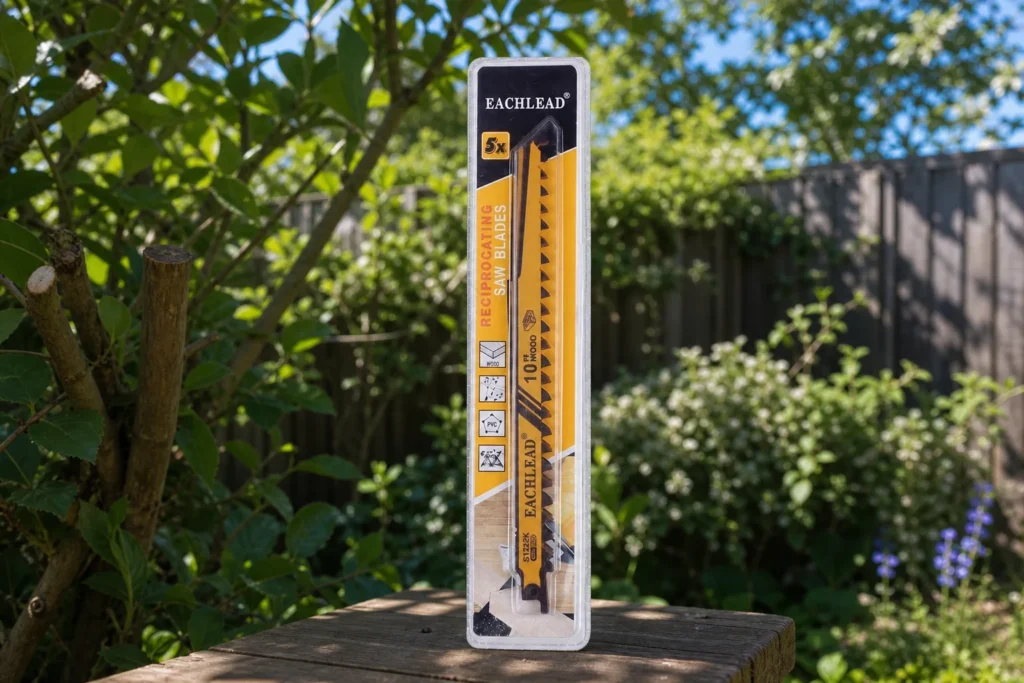
Pruning reciprocating saw blade selection comes down to tooth count, blade length, and chip clearance in green wood—not just whether your saw is cordless or corded. Landscapers, facility teams, and importers often stock general wood blades and wonder why cuts are slow, rough, or full of sap buildup. This guide explains how dedicated pruning blades differ, how to match TPI and length to branch size, and what wholesale buyers should verify before OEM orders.
Part 1. What Is a Pruning Reciprocating Saw Blade?
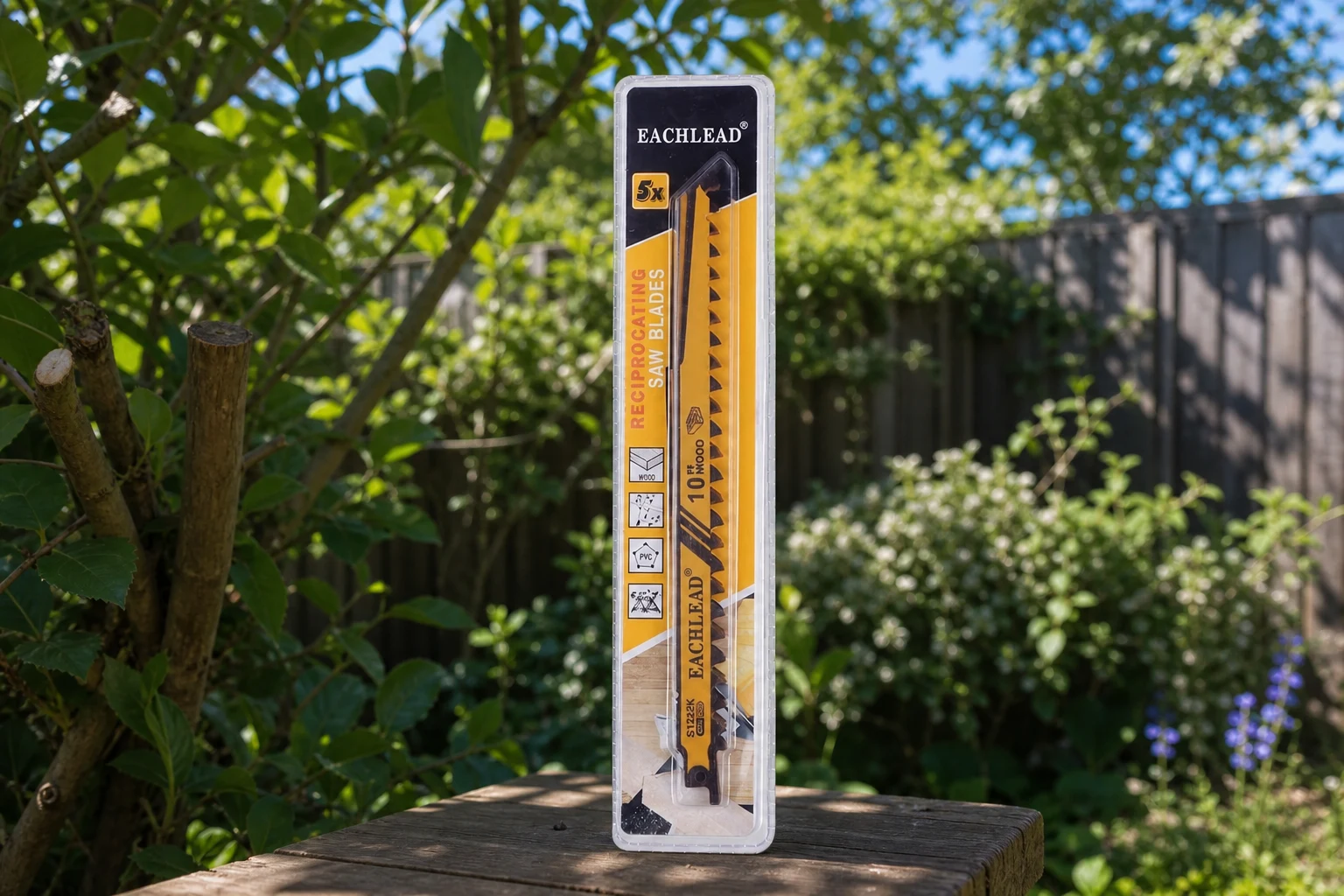
A pruning reciprocating saw blade is a sabre/reciprocating blade ground for fast cutting in live or green wood—not for nail-embedded demolition or thin metal sheet. Compared with a general-purpose wood blade, pruning designs usually combine fewer teeth per inch (TPI), deeper gullets, and tooth geometry that clears wet chips instead of packing them in the kerf.
Retailers may label them pruning blades, arborist blades, or wood pruning reciprocating blades, but the intent is the same: aggressive, efficient cuts in branches and shrubs where users would otherwise reach for a manual pruning saw or pole saw.
For distributors, the category matters because end users blame the power tool when the wrong blade is installed. Stocking a clearly labeled pruning SKU (for example EACHLEAD S1542K pruning reciprocating blade) reduces returns and support calls.
Part 2. Which TPI and Length Work Best for Green Wood?
Industry buying guides commonly map green wood and pruning work to about **3-6 TPI**. Fewer teeth remove material quickly in soft, wet wood; slightly higher TPI within that band can leave a cleaner face on smaller branches at the cost of speed.
Blade length strongly affects reach and binding risk. Many yard and light arborist guides recommend **9-12 inch** blades because extra length lets the tip clear chips and reduces the chance of the kerf pinching on curved limbs.
Rule of thumb from field articles: pick a blade at least a few inches longer than the branch diameter when access allows, so the tip can move without the shoe forcing the kerf closed.
| Application | Typical TPI | Typical length | Notes |
|---|---|---|---|
| Soft green branches | 3-5 | 9 in | Fast cuts; rougher face acceptable |
| Mixed yard trimming | 4-6 | 9-12 in | Balance of speed and control |
| Harder green hardwood | 5-6 | 12 in | Slightly cleaner finish; may need bi-metal |
| Dry seasoned limb | 5-8 | 9-12 in | Not ideal pruning; consider chainsaw if thick |
Part 3. HCS, Bi-Metal, and Carbide-Tipped Options Compared
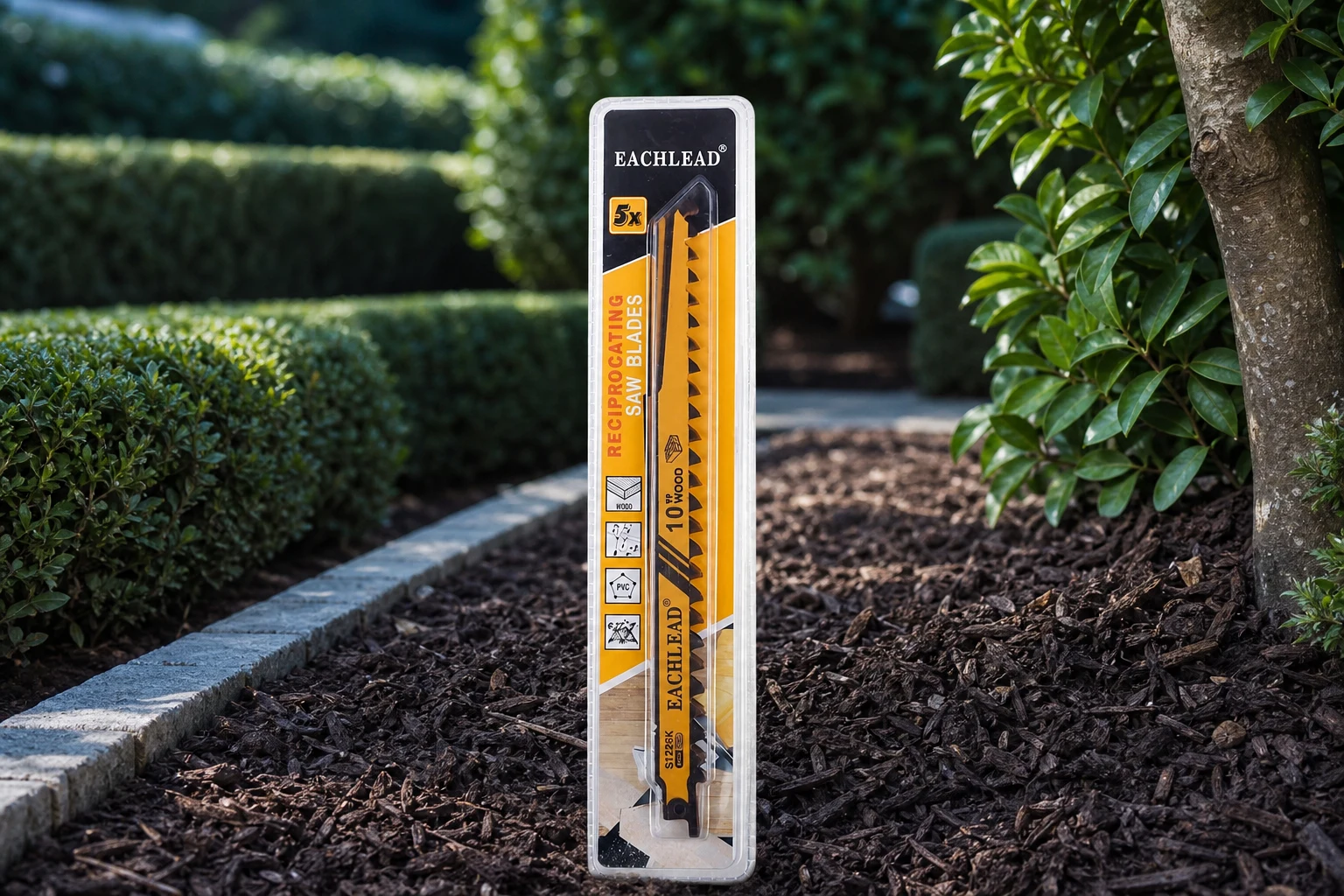
**High-carbon steel (HCS)** pruning blades are economical and flexible—often enough for seasonal homeowner or light commercial trimming in clean green wood.
**Bi-metal** blades combine a flexible back with harder tooth material, which can extend life when users occasionally hit harder wood, embedded grit, or longer run cycles.
**Carbide-tipped** pruning blades appear in premium lines for abrasive or extremely hard wood; they cost more and may be overkill for routine green-limb work unless your market demands maximum edge life.
| Material | Best for | Trade-off | Typical buyer |
|---|---|---|---|
| HCS | Green wood, price-sensitive retail | Wears faster in hard/dirty wood | DIY, light landscaper |
| Bi-metal | Mixed yard + longer jobs | Higher unit cost | Pro landscaper, rental |
| Carbide-tipped | Hard/abrasive wood | Highest price | Municipal, specialty arbor |
Part 4. How to Match Blades to Branch Size and Avoid Binding
Reciprocating saws excel where chainsaws are awkward: tight quarters, elevated limbs within reach, and roots near structures. Field guides often cite **roughly 2-6 inch** branch diameters as a practical reciprocating-saw zone; thicker trunk work may still require a chainsaw or qualified arborist.
Binding happens when the kerf closes on the blade—common on downward cuts without support. Techniques that help: start with a shallow notch on the tension side, support the limb so it does not pinch the blade, and keep the shoe firmly registered against the work.
When training customers, link pruning blades to related content such as general reciprocating saw blade selection and recip saw buying guides so users understand pruning is a subset, not a separate tool category.
Part 5. Safety, Tool Pairing, and Wholesale Sourcing Tips
Pruning with a reciprocating saw produces vibration and chip throw. Eye protection, gloves, hearing protection, and stable footing are baseline—especially when users compare cut speed to manual saws and stand too close to the kerf.
Cordless 18V-class tools are widely used for yard pruning because of weight and one-handed reach; blade quality still dominates performance. As one homeowner media demo notes, swapping from a standard blade to a pruning blade can dramatically reduce cycle time on the same branch.
Wholesale and OEM buyers should request: TPI and length matrix, steel grade, tooth grind description, packaging (card/blister/bulk), and sample cut tests on green wood. Contact EACHLEAD for OEM pruning blade specs, MOQ, and compatibility with major reciprocating saw brands. Learn about our factory for export experience.
Related stainless or specialty cuts (food processing, meat bone) use different tooth forms—do not substitute those SKUs for arbor pruning without engineering review.
Recommended EACHLEAD Products
For project support, explore our related product line, solution options, and OEM/ODM capabilities on eachlead.com.
FAQ
Can you use a reciprocating saw for pruning trees?
Yes, with a dedicated pruning blade using low TPI (about 3-6) and adequate length. General demolition blades can cut green wood but often clog and wear quickly.
What TPI is best for pruning reciprocating saw blades?
Most guides recommend about 3-6 TPI for green wood. Lower TPI cuts faster in soft wet wood; slightly higher TPI can improve finish on small branches.
What blade length should I use for pruning?
Nine to twelve inches is typical for yard work. Choose a blade a few inches longer than the branch diameter when possible.
Is a pruning blade different from a standard wood blade?
Yes. Pruning blades use fewer teeth, deeper gullets, and tooth forms that clear wet chips faster than general wood or nail-embedded blades.
What branch size is realistic for a reciprocating saw?
Many users target branches roughly 2-6 inches depending on species and blade quality. Larger cuts may need a chainsaw or professional help.
Will pruning blades fit any reciprocating saw?
Most use a universal shank compatible with major brands. Verify shank type in your tool manual before bulk purchasing.
Are bi-metal pruning blades worth the cost?
Bi-metal can last longer in harder wood or mixed jobs. HCS pruning blades may be enough for light seasonal trimming.
How do wholesale buyers spec OEM pruning blades?
Confirm TPI, length, steel grade, tooth grind, packaging, and run a green-wood cut test before container orders.
References
- Discount Saw Blade — Reciprocating Saw Blade Buying Guide
- AIMS Industrial — Reciprocating Saw Blade Guide
- Axe and Answered — Reciprocating Saw for Tree Branches
- EACHLEAD S1542K Pruning Blade
Ready to discuss your project? Contact EACHLEAD engineering support with your project parameters and technical requirements.