


Hacksaw Blade for Aluminium: Choose Pitch for Sheet, Tube and Bar
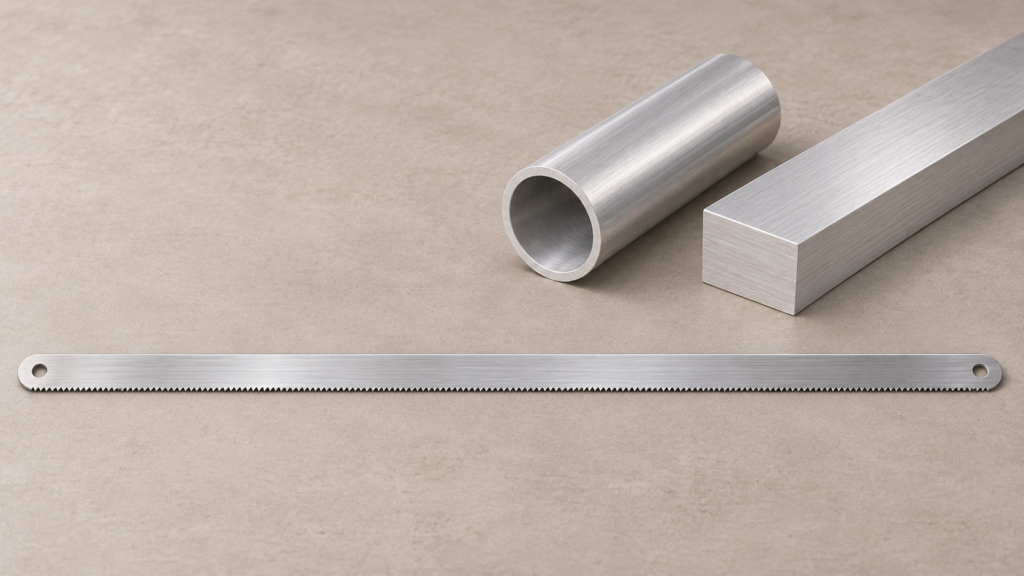
Choose a hacksaw blade for aluminium by the metal section contacting the teeth, the required edge and the frame it must fit. The material name alone does not choose between 18, 24 and 32 TPI. A thin tube wall and a solid bar need separate selection checks even when their outside sizes look similar.
Start with an aluminum-capable blade application, then match its pitch to the actual section. Confirm the supplied blade dimensions and frame details before approving a sample or placing a repeat order.
Start with the metal section touching the teeth
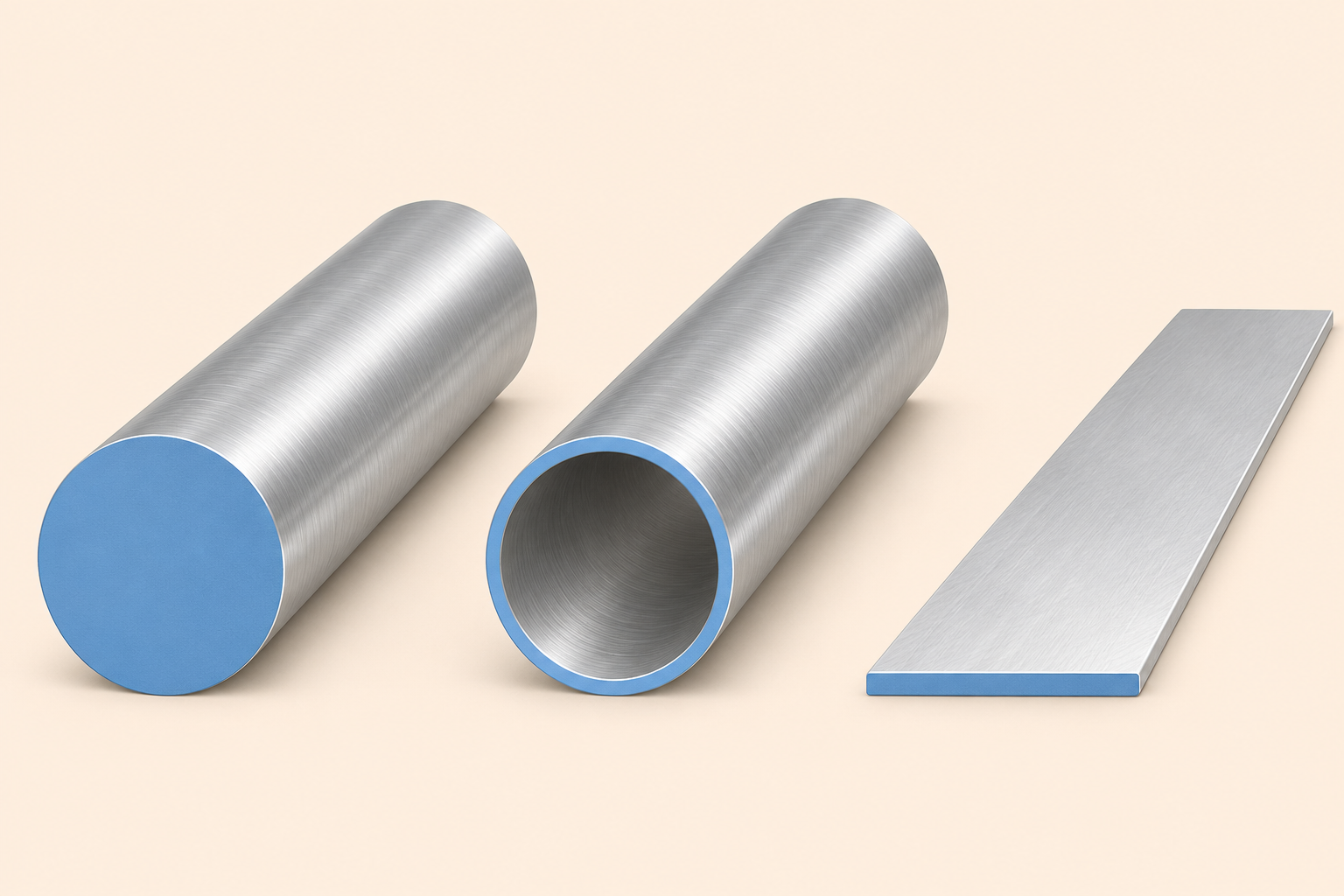
Assess the metal at the cut, rather than using the stock’s largest outside dimension. Sheet thickness, tube wall and solid-bar section describe different amounts and shapes of material. An outside diameter does not tell a supplier whether the stock is hollow.
Lasher’s selection guidance relates higher TPI to a finer cut and lower TPI to a coarser cut. It also gives a general selection rule: at least three teeth should cut simultaneously. Use that guidance to check the candidate against the section; it is not a promise that one pitch produces the accepted finish on every aluminum job.
| Workpiece | Information to supply | Selection question |
|---|---|---|
| Thin sheet | Actual thickness and intended cut | Does the pitch suit the small metal section? |
| Hollow tube | Wall thickness and outside diameter | Has the wall been assessed separately from the outside size? |
| Solid bar | Solid section, alloy if known, edge requirement | Which approved pitch should be sampled for this section? |
For a hollow or shaped section, include an end-view drawing. It makes the metal and the empty space visible without requiring the supplier to infer them from a product photograph.
Choose a hacksaw blade for aluminium from a named shortlist
Use 18, 24 and 32 TPI as product specifications, not aluminum quality grades. TPI means teeth per inch. A larger number identifies finer tooth spacing; it does not certify a better result for every workpiece.
Alspec’s hand-tool brochure includes aluminum among the applications for both its 18 and 24 TPI blades, while its 32 TPI entry includes thin sheets. Those catalog examples show that aluminum selection can involve more than one pitch. They remain that supplier’s applications, rather than automatic approvals for another blade.
The EACHLEAD hacksaw blade range lists three bi-metal choices: EC18T-12IN at 18 TPI, EC24T-12IN at 24 TPI and EC32T-12IN at 32 TPI. These give the buyer identifiable candidates to discuss after defining the section and edge requirement.
Ask which supplied model is appropriate for the aluminum stock in the request. Keep its material version, pitch and dimensions together in the quotation. Avoid approving an unspecified “12-inch metal blade” when the purchase depends on a particular tooth configuration.
Check frame fit as a separate decision
A suitable material application does not establish frame fit. Confirm the frame model, the required blade length and the mounting details against the actual replacement blade. Nominal length is one field, not the entire interface.
Armeg’s own hacksaw specification, for example, publishes blade section and pin-hole diameter alongside nominal length. That is a useful reminder to check these fields; it does not establish interchangeability with EACHLEAD models.
If the existing blade is the reference, supply a clear photograph and the relevant measured dimensions with the frame model. Request confirmation of the proposed replacement. Keep pitch selection separate so a blade that fits is not automatically treated as correct for the aluminum section.
Approve the sample in two stages
Confirm the supplied configuration and frame fit before judging the cut. Record the model, pitch and dimensions on the sample record. Resolve an unclear material or interface specification with the supplier rather than allowing it to remain implicit in an order.
Assess the candidate on representative aluminum stock using the applicable tool instructions. Define acceptance in observable terms: the cut follows the intended line, the edge condition is acceptable and any remaining finishing is within the agreed allowance. Record tooth loading or an unacceptable edge with the stock description when requesting another candidate.
For a hypothetical tube-cutting requirement, retain the wall and outside dimensions with the sample result. A later solid-bar order should not inherit that acceptance merely because the alloy or nominal size is similar. This is a proposed purchasing sequence, not an account of a completed test.
Request an EACHLEAD aluminum hacksaw-blade sample and quotation with the section drawing, frame model, quantity and accepted-edge reference. Ask for the specific supplied configuration so sample evaluation and the eventual order refer to the same blade.
References
Lasher: Hacksaw pitch and tooth-contact selection guidance
Alspec: Hand tools and hacksaw blade applications
Armeg: Hacksaw frame and replacement-blade specification