


Jigsaw Blade for Aluminum: Match Sheet, Tube and Cut Geometry
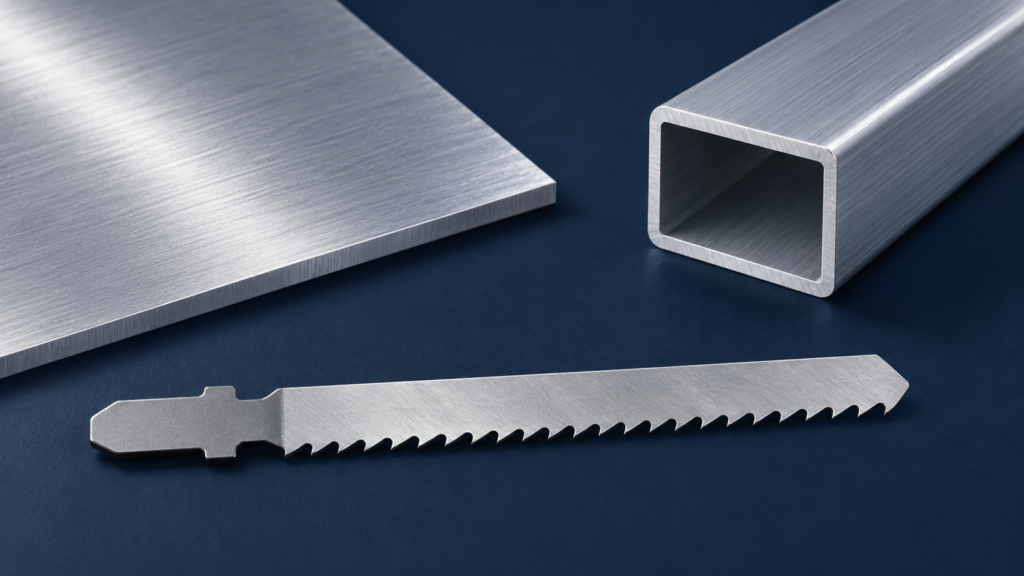
A jigsaw blade for aluminum should match the metal section, the shape of the cut and the saw’s blade holder. Start with a model explicitly listed for aluminum, then check its application range and geometry. An aluminum label alone does not establish suitability for every sheet, tube or extrusion.
The useful buying description is the workpiece drawing, not simply “metal cutting.” State the alloy if known, identify the material thickness and show the intended cut line. Keep the tool model in the same request so blade fit is checked before a sample is selected.
Describe sheet, tube and profile differently
Flat sheet: specify the metal thickness and cut line
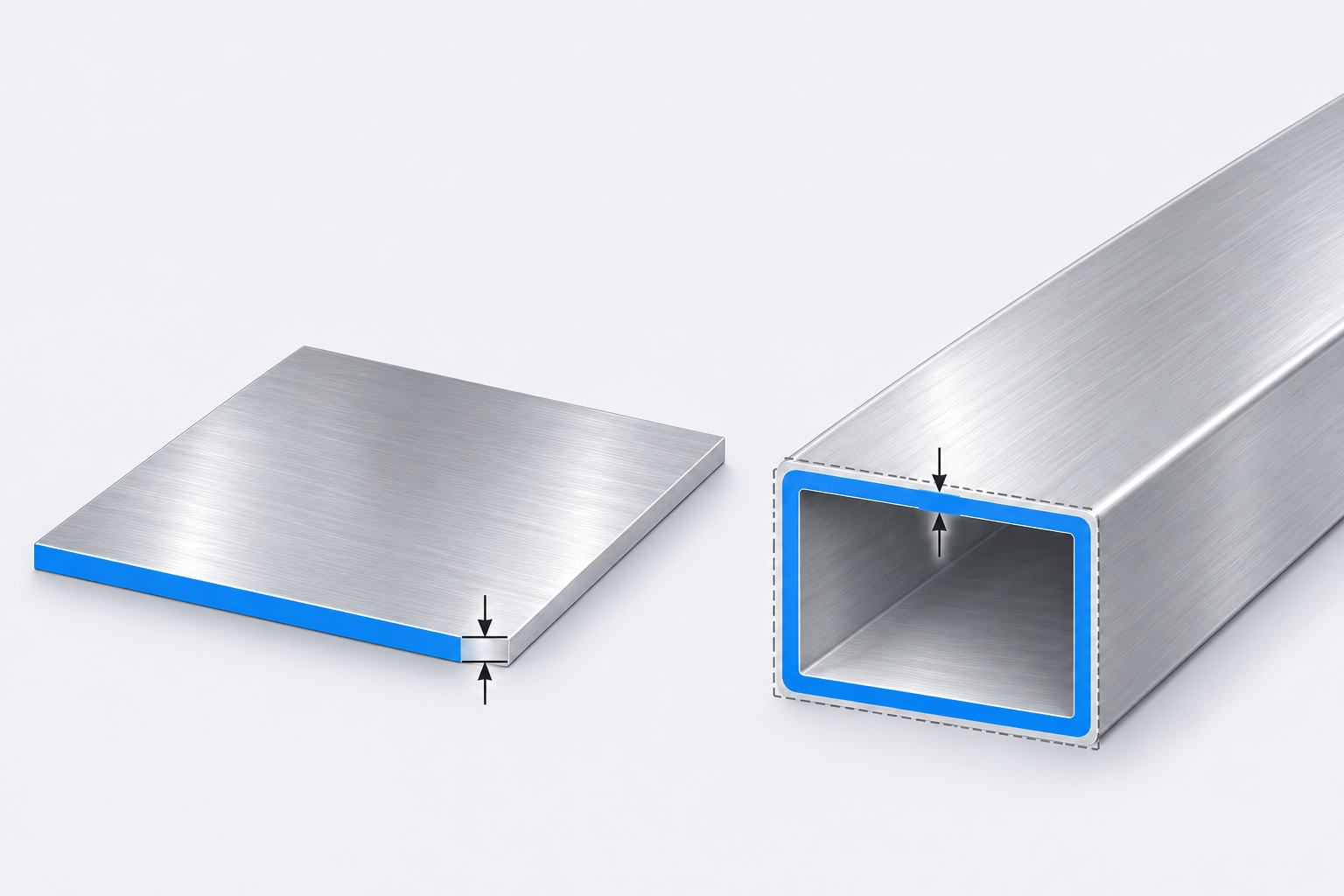
For sheet, give the actual metal thickness and whether the path is straight, gently curved or a tighter internal shape. Include the edge requirement: a visible edge, a concealed edge and an edge that will be finished afterward are different acceptance descriptions.
Do not use overall blade length as a sheet-capacity figure. Manufacturer specification sheets distinguish working length, overall length and cutting capacity because they describe different things.
Tube: give the wall and the outside dimensions
A hollow section’s outside size is not its wall thickness. Supply both dimensions, preferably on an end-view drawing. That lets the supplier assess the actual section instead of reading the outside width as a solid block of aluminum.
Show the intended cut orientation on the drawing. A photo of the tube alone does not explain which face or path the blade must follow.
Extrusion: show ribs, corners and the required shape
A profile can contain several walls and an open interior. Mark the cut line across the whole section, including any ribs. If the job needs a curved path, ask for a model approved for that geometry; do not assume that a straight-cut aluminum blade covers it.
When a T127D jigsaw blade for aluminum belongs on the shortlist
The EACHLEAD T127D product table identifies a T-shank blade with 100 mm overall length, 75 mm working length and an 8 TPI milled-tooth configuration. Its structured application field specifies straight cutting for aluminum. That makes it a relevant model to discuss for a straight-cut request, subject to the actual section and tool.
Confirm the supplied material version. The page lists HSS M2 alongside other material options; a purchase order should identify the aluminum-rated configuration rather than leave that choice unspecified. Ask EACHLEAD to confirm the current blade and its application range against your drawing.
Metabo’s aluminum-blade range illustrates why these checks matter: it lists HSS and selected bi-metal variants and identifies a separate curved-cut option. Material, tooth pattern and application belong to the named model. Those entries are useful selection evidence, not interchangeable specifications for another supplier’s blade.
Keep blade-holder fit separate from cutting suitability. “T-shank” identifies the interface type; confirm that interface against the actual saw model and its manual instead of treating it as approval for every jigsaw.
Make the sample answer the intended cut
Evaluate a candidate against the intended workpiece and edge, rather than a convenient piece of unrelated scrap. Eclipse lists different pitches and lengths for sheet metal, pipes and aluminum; the buyer still needs to identify which job the sample must answer.
For example, a hypothetical order for a curved opening in a thin-walled extrusion needs two decisions: a blade suitable for that aluminum section and a geometry suitable for the path. A straight cut through flat plate would not answer both questions. Send the section drawing and the shape together before asking for the sample.
Record the observations that determine acceptance: following the marked line, the visible edge condition and any deburring still required. Retain the sample identity and workpiece description with the result. This is a proposed purchasing method; no cutting test or finish result is claimed for the T127D here.
Request the matching configuration
Ask EACHLEAD to review your aluminum-blade requirement with the alloy, section drawing, cut line, saw model, quantity and edge reference. Identify T127D as a candidate only where the straight-cut task fits.
Request confirmation of the supplied material, shank, dimensions and application range in the quotation. For a tube or extrusion, include wall thickness as well as outside dimensions. For a curve, ask for an appropriate model rather than approving a straight-cut option by name. The drawing and confirmed configuration should stay attached to the sample and repeat order.
References
Metabo: Aluminum jigsaw models, materials and cut geometry
Eclipse: Metal jigsaw blade specifications and applications