


Reciprocating Saw Blades for Wood: Match Clean Timber, Teeth and Cut Quality
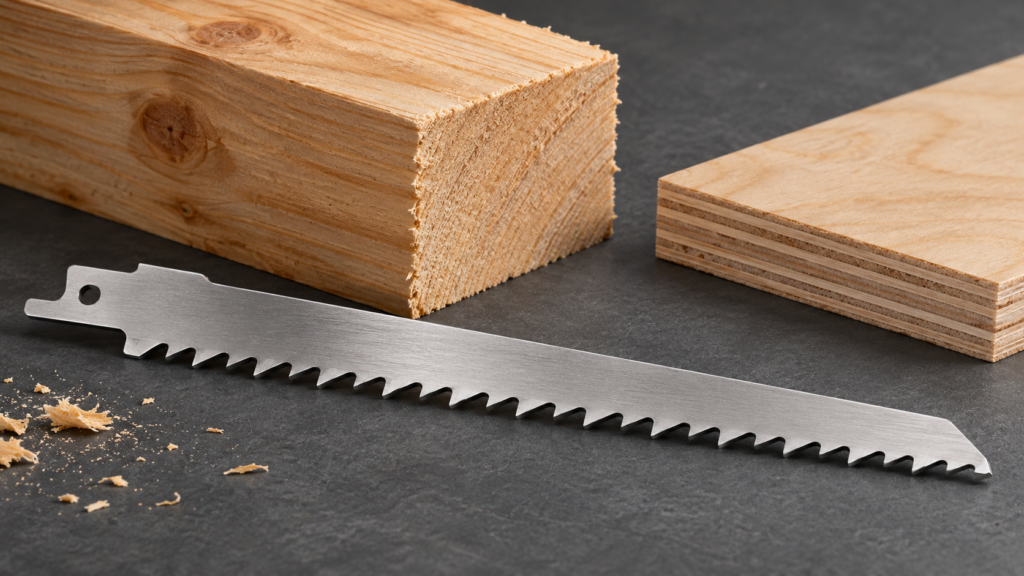
Choose reciprocating saw blades for wood by the stock condition, the section being cut and the edge you need. For clean construction timber or panels, a wood-rated HCS blade is a sensible starting point. Reclaimed wood containing fasteners needs a separate, explicitly approved blade selection.
A useful buying specification goes beyond “wood blade.” It identifies the timber or panel, its thickness, the saw model and whether the cut face will remain visible. Those details let a supplier shortlist a blade against the job rather than quote a familiar model code alone.
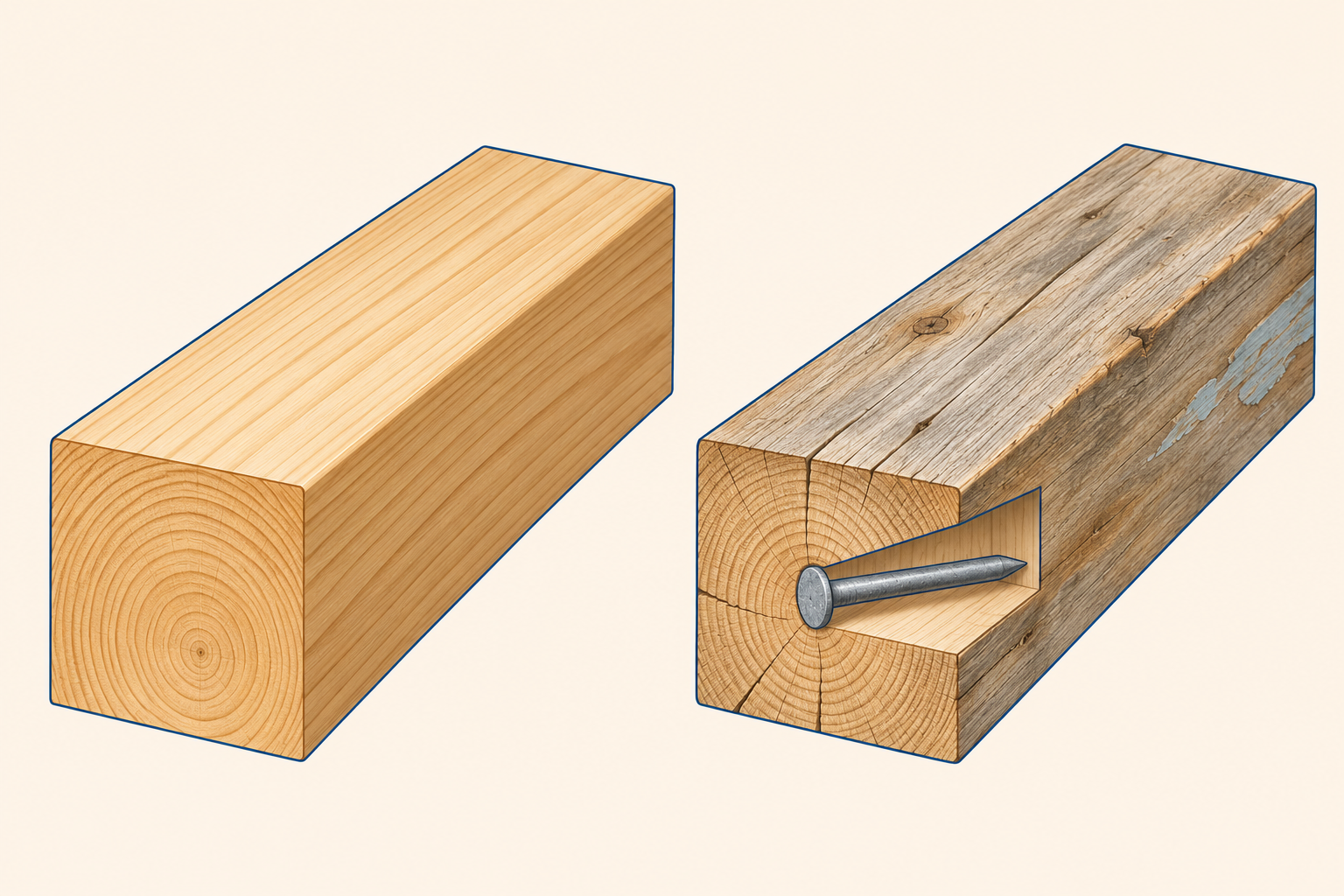
Separate clean timber from mixed material
Decide whether the stock is genuinely clean before comparing tooth patterns. A construction-wood listing does not establish suitability for embedded nails, screws or concealed hardware. Keep unknown reclaimed stock out of a clean-timber purchase specification until its condition is established.
Manufacturer catalogs make these distinctions at model level. Eclipse, for example, lists different HCS blades for construction timber, panels and green wood, and marks a coarse-wood application as free of nails. The practical lesson is to read the application beside the model—not to select every wooden workpiece from one wood-blade family.
For a distributor building an assortment, label these jobs separately. A clean-timber sample approval should not become approval for demolition stock merely because both customers describe their material as wood.
Shortlist reciprocating saw blades for wood using model fields
Use the published specification to narrow the choice, then confirm the supplied configuration. The EACHLEAD S644D product table provides the following reference fields for a clean-wood inquiry.
| Published S644D field | What it tells the buyer |
|---|---|
| HCS 65MN / HCS SK5 options | Ask which HCS configuration is being quoted. |
| 150 × 19 × 1.2 mm | Overall blade dimensions; not a cutting-depth promise. |
| 6 TPI; ground teeth | A specific tooth configuration to identify in the sample request. |
| Construction timber: 6–100 mm; wooden panels: up to 75 mm | Published application bands to check against the actual workpiece. |
These are the page’s structured table fields; have EACHLEAD confirm the current version before ordering. Do not turn the overall length into usable cutting capacity or assume a different maker’s similarly named blade is identical.
Tooth manufacture also belongs in the comparison. Bosch describes its own construction-wood S644D using HCS and ground teeth. That supports checking tooth design alongside pitch, while leaving each manufacturer’s dimensions and application limits attached to its own product.
Define cut quality before approving the sample
Specify what an acceptable edge looks like before deciding whether a sample passes. A timber cut concealed inside an assembly and a panel edge left visible need different acceptance descriptions. “Clean cut” alone gives neither the buyer nor the supplier a clear reference.
Use representative stock and agree on the observations that matter: breakout on the visible face, departure from the marked line, the appearance of the cut surface and any finishing still required. Record the wood or panel type and its condition with the sample result. This is a proposed comparison method, not a claim that a particular blade has passed it.
If two candidates use the same TPI, keep their identities separate. Record the full model, body dimensions and tooth description rather than treating tooth count as the whole specification. Retain a photo of the accepted edge with the sample record so a repeat order has a concrete quality reference.
Send an inquiry that identifies the wood-cutting job
A focused request should connect the model shortlist to the material and acceptance requirement. An example request for clean timber could read:
We need a reciprocating blade for clean construction timber, with no fasteners. Please review the attached section dimensions and saw model. We are considering the S644D table configuration and need confirmation of the supplied HCS version, blade dimensions and application range. The attached edge photo shows our acceptance reference. Please advise which sample to evaluate and quote the stated quantity.
This example is a request format, not an actual customer case. For plywood or another panel, replace “construction timber” with the exact panel description and identify the face that matters. Include the cut geometry instead of assuming a straight-cut sample answers every job.
Send EACHLEAD your wood-blade specification with the material, section, tool model, quantity and edge reference. Ask for the current configuration and commercial terms together so the quotation and sample refer to the same blade.
References
Bosch Professional: Wood clean S644D blade specification
Eclipse: HCS reciprocating blades for wood and model applications