


Lag Screw vs Lag Bolt: Names, Thread Engagement and Installation Basics
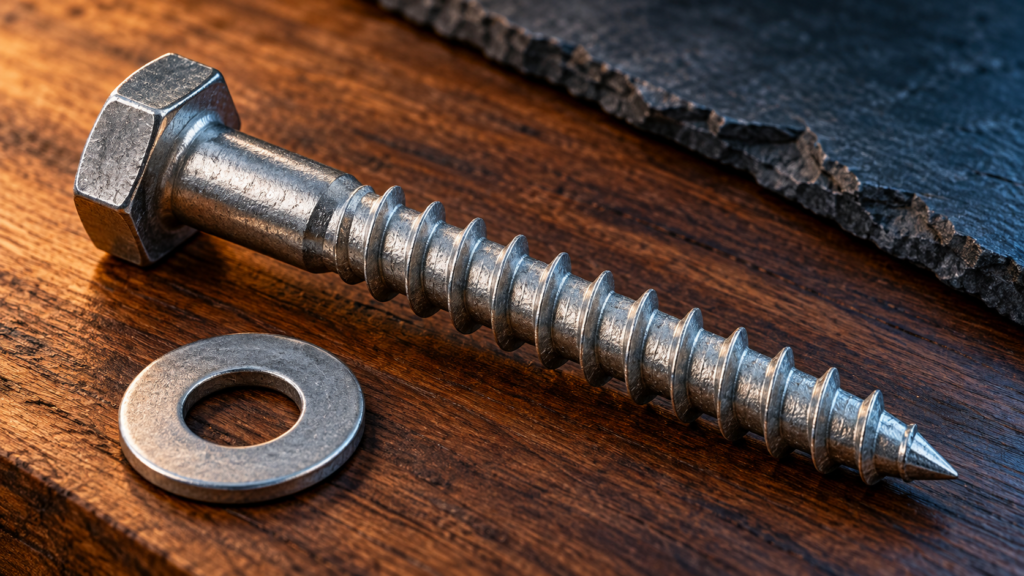
Lag screw and lag bolt commonly refer to the same fastener. In a lag screw vs lag bolt comparison, the main difference is usually terminology. Lag screw is the more precise name for a head-driven fastener that engages wood without a nut; lag bolt is a common trade name.
The meaningful connection comparison is between that wood-threaded lag fastener and a machine-threaded bolt used with a nut. Changing the word in a product listing does not change the fastener’s thread, dimensions or intended application.
Lag screw vs lag bolt: two names for one item
Fasteners Plus’ original terminology guide explicitly treats the two lag names as interchangeable in common use. It explains the screw designation through head-driven installation without a nut, and notes that lag screws can have hex or square heads.
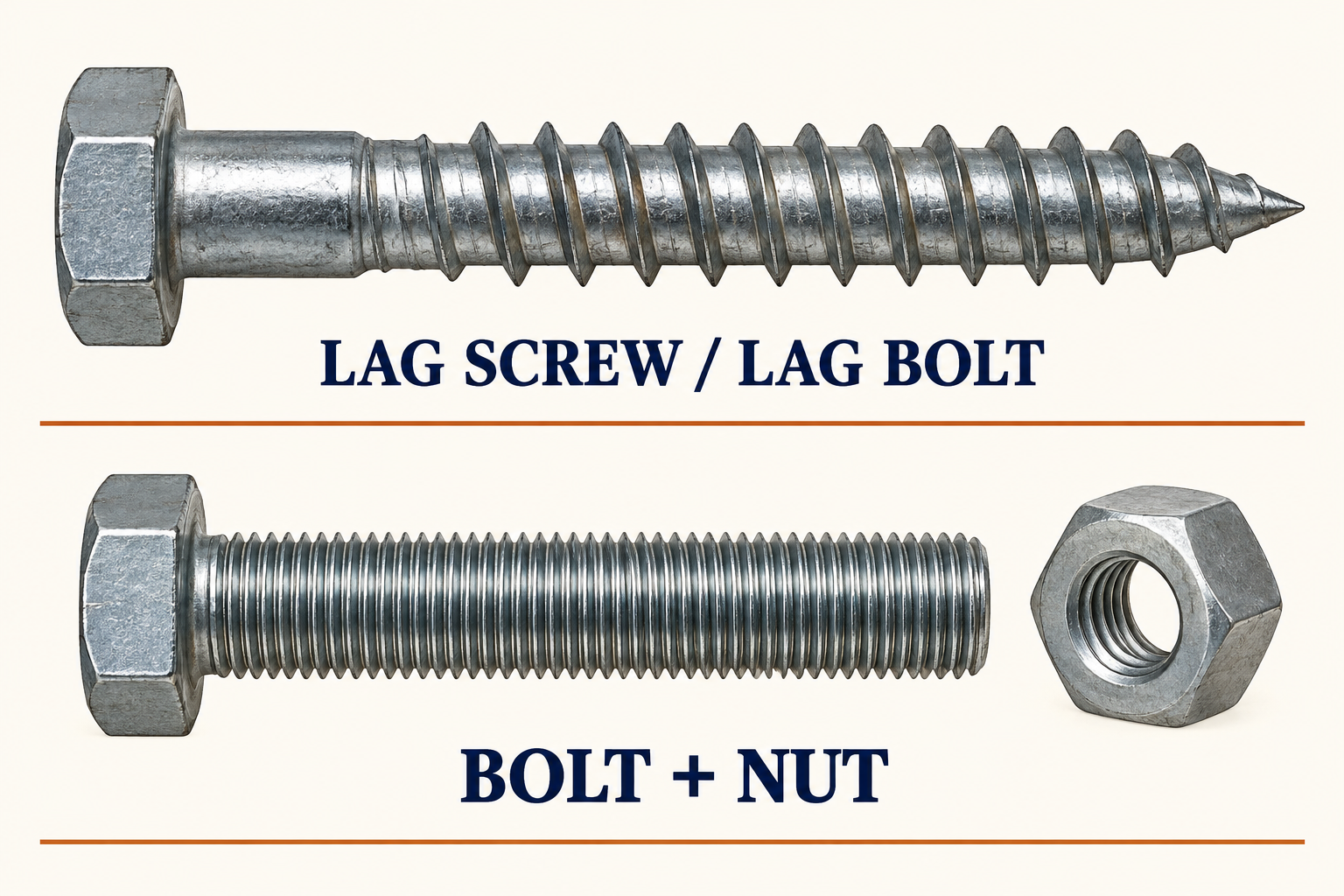
Do not create a distinction in which a lag screw has a point but a lag bolt is automatically a blunt machine bolt. In ordinary lag-fastener listings, those words alone do not establish two different products. Inspect the actual specification instead.
A hex head can also appear on other fasteners. The head shape identifies how a tool engages the fastener, but it does not identify everything about the thread or the receiving connection.
The receiving connection makes the practical difference
A conventional wood lag has a deep wood-thread form intended to engage the receiving wood. In a through-bolt-and-nut arrangement, the bolt passes through the connected members and its machine thread engages the separate nut. These descriptions identify different fastening arrangements.
The cited supplier product guide describes lag threads engaging wood without a nut. This is a more useful distinction than calling one product a bolt because its head accepts a wrench.
It also explains why adding a loose nut to a photograph of a wood lag would be misleading. A nut intended for a machine-threaded bolt is not established as compatible with a lag’s wood thread. The accessory and receiving connection need the proper matching specification.
Identify the product before discussing installation
A useful lag-fastener description includes diameter, overall length, head form, thread and point details, material grade and finish. Those fields let a supplier compare real items instead of comparing shortened names.
Installation preparation is then an application-specific question. A naming guide cannot determine a pilot hole, required engagement or final tightening condition without the actual fastener and receiving material. This article gives no drill-size or torque values and does not approve a deck, railing or structural connection.
Different wood-screw products also have their own intended uses. For example, Simpson Strong-Tie’s SDW page describes a particular engineered wood screw with defined applications and environmental conditions. Its product-specific instructions cannot be generalized to every item sold as a lag or structural screw.
A substitution therefore needs more than the same length or a familiar head. The specified product and connection requirements remain the basis for deciding whether another fastener is acceptable.
Compare two listings without inventing a difference
Consider a hypothetical purchasing request where one listing says “hex lag screw” and another says “lag bolt.” The first comparison should be their actual specifications. If the dimensions, thread, grade, finish and required application match, the wording alone has not established a technical difference.
If the second listing instead shows a machine-threaded bolt and a matching nut, the issue is different. That is a different connection arrangement, even if the two fasteners share a similar head or nominal length. Ask the supplier to identify the thread and intended receiving connection.
Keep the original part or drawing reference with that comparison. It makes a naming clarification distinguishable from a product substitution. The phrase “same as a lag bolt” is much less useful than a traceable match to the actual specification.
For ordinary usage, lag screw versus lag bolt is usually a naming question. For purchasing and installation planning, identify the wood-thread engagement or bolt-and-nut arrangement, then resolve the real product and application requirements.