


Rotary Hammer vs Hammer Drill: Mechanism, Chuck and Masonry Tasks
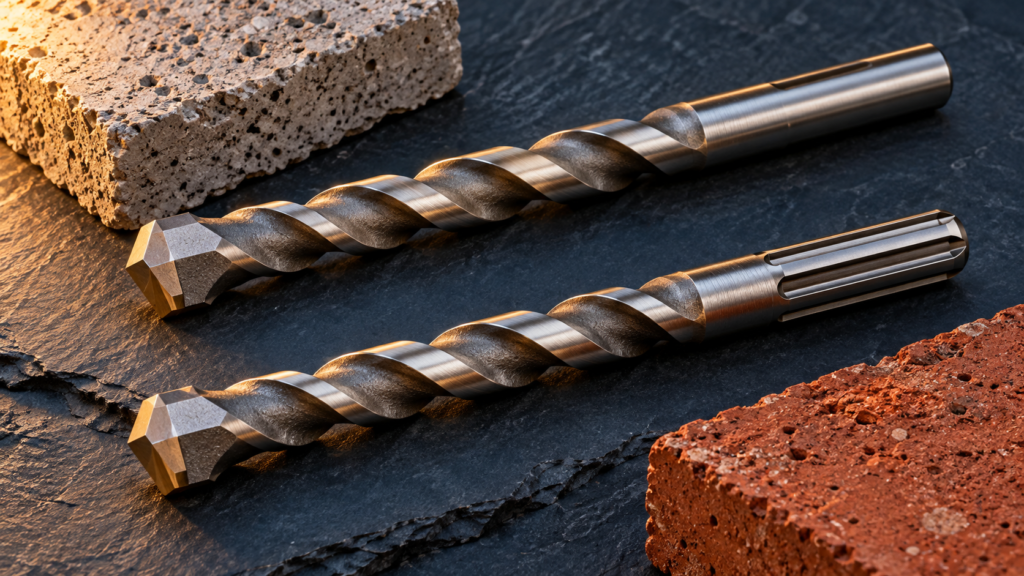
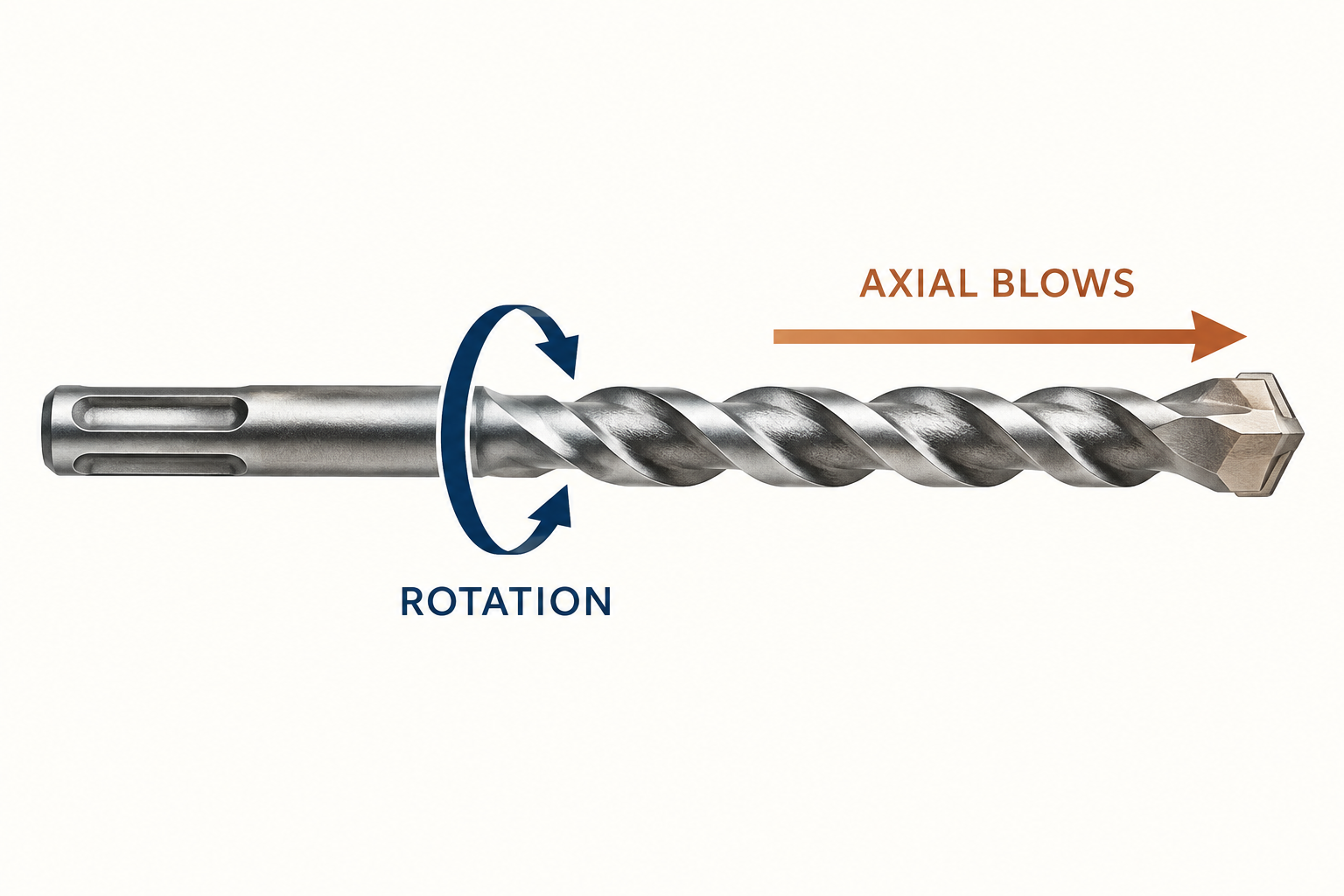
A conventional hammer drill commonly uses mechanical percussion; a rotary hammer commonly uses a piston-and-air hammer mechanism. Both combine rotation with blows along the bit axis in hammer-drilling mode. For a rotary hammer vs hammer drill decision, check the material, required hole, bit holder and available modes together.
The tools are not simply small and large versions of an identical mechanism. Their common drilling action can hide differences in the way blows are produced, how the accessory is held and which additional tasks the actual model supports.
Rotary hammer vs hammer drill: what creates the blows?
Bosch’s drill-type guide describes ribbed mechanical discs behind the percussion action in a conventional combi or hammer drill. Its rotary-hammer explanation describes a piston compressing air to deliver blows to the bit. These are category explanations, not a specification for every tool sold under similar names.
An impact driver answers a different question. Its impacts assist twisting a fastener, rather than providing the same axial hammer-drilling action. The presence of the word impact in a tool description is therefore not enough to identify a masonry-drilling tool.
When comparing listings, read the full tool category and model description. “Hammer drill” is sometimes used loosely in retail descriptions, including descriptions of rotary hammers. The mechanism, holder and operating modes are more informative than a shortened listing title.
The holder and the operating mode are separate checks
RYOBI’s support comparison distinguishes the conventional drill’s standard chuck from the specialized SDS-family holder used by rotary hammers. The rear connection on the bit must match the actual holder specified for the tool.
SDS is not a complete compatibility statement. Record the particular interface required by the model and the accessory. Do not assume that every grooved shank fits every rotary hammer, or that an ordinary smooth-shank bit is suitable because its cutting end looks similar.
Mode availability also matters. Makita’s HR2811F is a real example that lists rotation only, hammering with rotation and hammering only. That establishes the modes of that model; it does not establish that every rotary hammer offers all three.
A tool that can hammer while rotating is not automatically approved for a hammer-only chisel task. The model’s instructions and the intended accessory need to identify that use. Likewise, a holder or adapter’s physical fit is not proof that the proposed operating mode is suitable.
Describe the masonry task before choosing a model
The manufacturer support guide broadly associates conventional hammer drills with lighter masonry work and rotary hammers with more demanding concrete work. Treat that as a starting comparison. The material, intended hole and actual model capacity still decide the equipment question.
A request for “a drill for a wall” leaves important inputs open. Brick, masonry block and concrete are not interchangeable descriptions, and the required hole is part of the task. The tool and bit need to be evaluated against that actual combination.
For example, a hypothetical buyer may need a group of holes in brick, while another needs a different hole task in solid concrete. Owning a general-purpose hammer drill does not answer whether it suits the second request. Conversely, buying a rotary hammer does not remove the need to identify the required interface and operating mode.
This guide does not prescribe a drilling procedure, anchor installation or tool-pressure technique. It compares equipment categories. The actual job also needs its applicable worksite assessment and equipment instructions.
Use a material, hole, holder and mode record
A useful enquiry identifies four things: the actual material; the required hole or material-removal task; the exact tool and accessory holder; and the operating mode needed. Add the model reference so the supplier can check a real specification.
Those fields prevent several different errors from becoming one vague power question. A more powerful-looking tool does not resolve an incorrect shank. A matching bit does not establish a missing mode. A hammer-only mode does not establish every material-removal application.
Keep the decision tied to the task rather than ranking whole categories as universally better. The main distinction is how the tool produces the axial blows; the useful selection comes from matching that mechanism, holder and mode to the actual work.