


6-Point vs 12-Point Socket: Fastener Fit, Access and Damage Risk
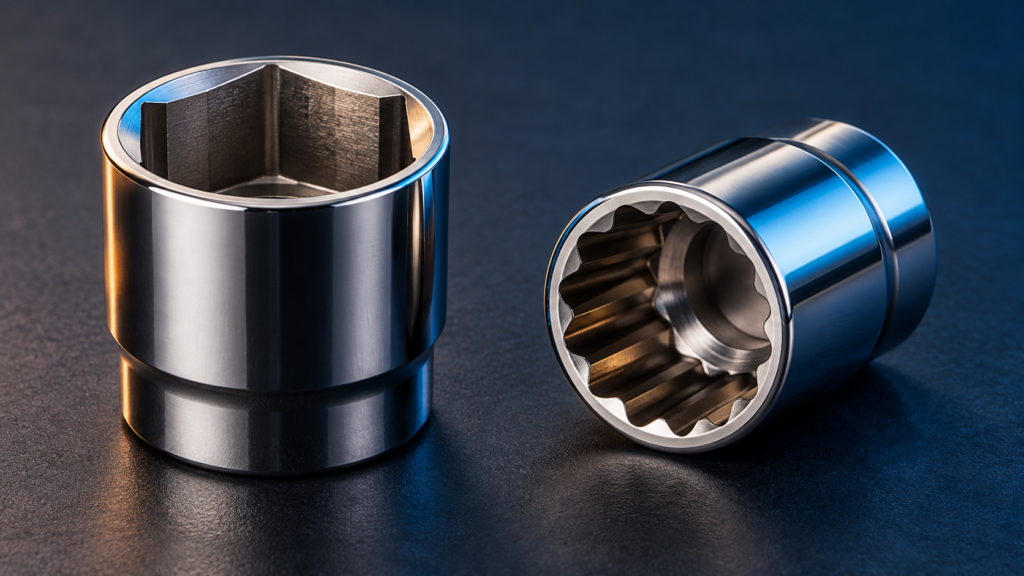
For a common hex fastener, a six-point socket is the normal starting choice. A twelve-point fastener needs a matching twelve-point socket. The 6 point vs 12 point socket decision concerns the opening that grips the fastener. It does not tell you the square-drive size or whether the socket is intended for impact use.
A twelve-point opening also fits common hex fasteners and provides more starting orientations. That can help with engagement in restricted access. The extra positions do not make it the better choice for every fastener, and they do not change the ratchet’s internal mechanism.
6 point vs 12 point socket: identify the opening
The six-point form is hexagonal. The twelve-point form is double-hexagonal. Count the points at the fastener-engaging mouth rather than inspecting the square opening at the opposite end.
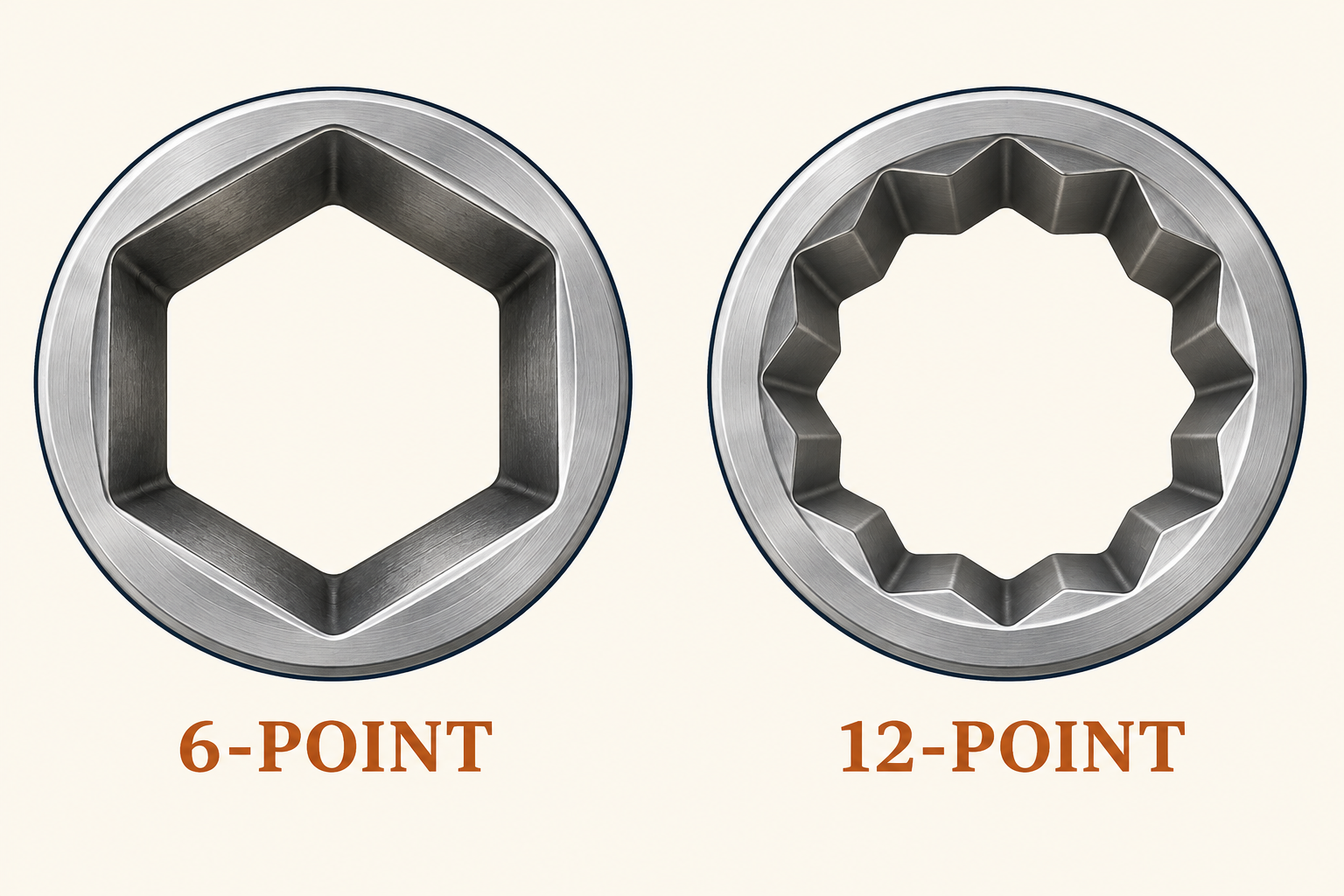
TEKTON’s manufacturer guide recommends matching the point profiles of socket and fastener. It also explains that tool designs commonly avoid bearing directly on fragile fastener corners. A matching six-point socket is therefore a useful starting choice for a hex head, especially where firm engagement matters.
This does not mean that selecting six points guarantees an undamaged fastener. The actual opening size, profile, fit and fastener condition still need attention. An incorrect size is not corrected merely by choosing the preferred point count.
Starting positions and ratchet swing are different
A twelve-point opening can approach a hex head in more angular positions. Tien-I’s comparison describes this indexing benefit. It concerns how the socket first aligns with the fastener, before turning begins.
A ratchet’s return movement concerns the handle mechanism. Those are separate features. Changing the socket opening does not change the ratchet’s tooth count, and a point-count comparison should not promise a particular handle swing.
Separate the access problem into two questions: can the socket engage the head, and can the assembled tool move in the space available? More engagement orientations may answer the first question while leaving the second unresolved. Socket depth and the surrounding obstruction also belong in the access review.
Specify the opening, drive and service separately
SK Tools’ FAQ defines drive size as the square connection between socket and tool. The fastener-opening size describes the other end. A socket request needs both, because identifying the fastener alone does not identify which ratchet or power tool the socket will attach to.
The same FAQ distinguishes impact sockets from sockets intended for hand tools. Intended impact service must be verified independently. Neither six points nor twelve points is an impact-use approval, and appearance alone should not replace the manufacturer’s specification.
For a practical selection record, keep four fields together: the fastener’s profile and size, the tool-side drive, the access envelope and the intended service. Add the exact product or tool reference where compatibility needs checking.
These fields answer different questions. The opening identifies what the socket engages. The square drive identifies what turns the socket. Access describes whether the assembly can reach and move. Intended service identifies whether the accessory is made for the proposed use.
Two requests that lead to different choices
Consider a hypothetical buyer replacing a socket for ordinary hex-head hardware on a hand ratchet. “Twelve-point because it has more positions” skips the first decision: matching the fastener profile. A useful request names the hex head, its actual size, the ratchet drive and the required access.
Now consider a different assembly with an actual twelve-point fastener. A general preference for six-point sockets cannot override that head geometry. The request must identify the twelve-point profile along with the remaining connection and service details.
If either request changes from hand-tool service to an impact tool, the accessory specification must be checked again. Keeping the same opening size and point count does not establish that the existing socket is intended for the new service.
A clear socket choice starts at the fastener and follows the connection back to the tool. Match the profile, identify both ends of the socket, and resolve the actual access problem. Treat point count as one part of that record rather than a complete performance rating.