


Chop Saw or Circular Saw? Crosscuts, Sheet Cuts and Tool Choice
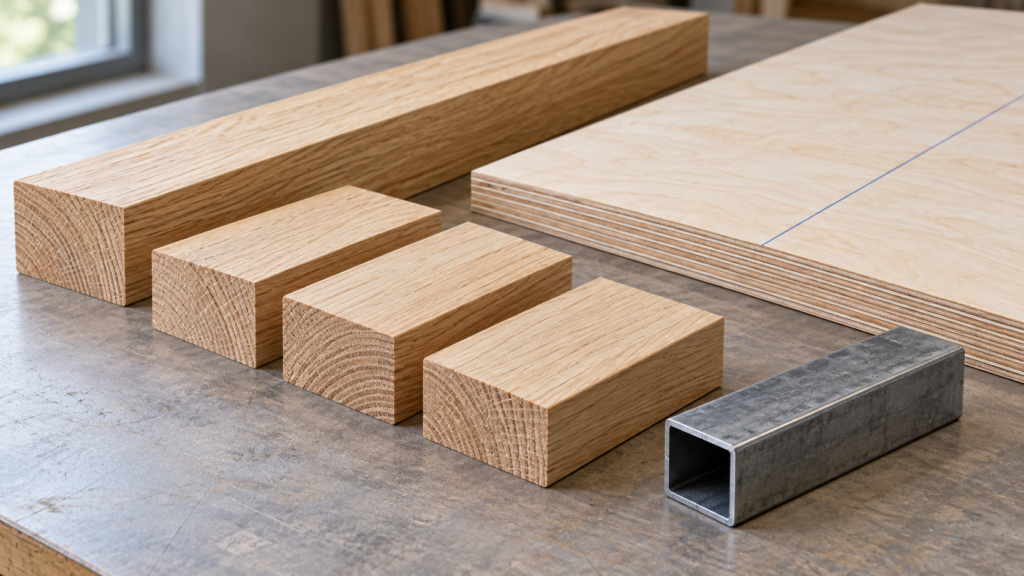
Choose a suitable fixed crosscut station for repeated cuts across stock; choose a suitable handheld circular saw when the cut needs to travel across a larger sheet or workpiece. Before deciding “chop saw or circular saw,” clarify the material and the machine meant by “chop saw.” A woodworking miter saw and an abrasive metal cut-off saw are different categories.
The useful comparison is therefore not simply a circular blade against another circular blade. It is a cutting task, a material and a machine arrangement. The nickname alone does not tell you which equipment or cutting accessory is appropriate.
Chop saw or circular saw: clarify the tool name first
In casual woodworking conversation, “chop saw” may refer to a miter saw whose head comes down toward stock on a base. In metalworking, it can refer to a dedicated cut-off saw using an abrasive wheel. These machines can share a downward cutting-head arrangement without sharing an intended material or accessory system.
Makita’s LW1401 is a concrete example of the latter: its product description identifies metal-cutting applications and an included abrasive wheel. Bosch’s GCM18V-08N, by contrast, is a miter-saw example with crosscut and against-fence angular-cut features. Their listed capacities belong to those models, not every tool given the same nickname.
Ask for the model and intended material before discussing a blade. A general recommendation to “change the blade” does not establish that a machine supports a different material or cutting system.
Compare a fixed cutting position with a travelling cut
A miter saw brings its cutting head to a workpiece positioned on its base. Its available cut is bounded by the actual machine’s geometry and rated envelope. A handheld circular saw instead moves its shoe and blade over the workpiece.
The component descriptions in FindBuyTool’s comparison illustrate this distinction. The useful point is the arrangement, rather than a universal ranking of power, accuracy or ease. A stationary cut and a travelling cut answer different layout problems.
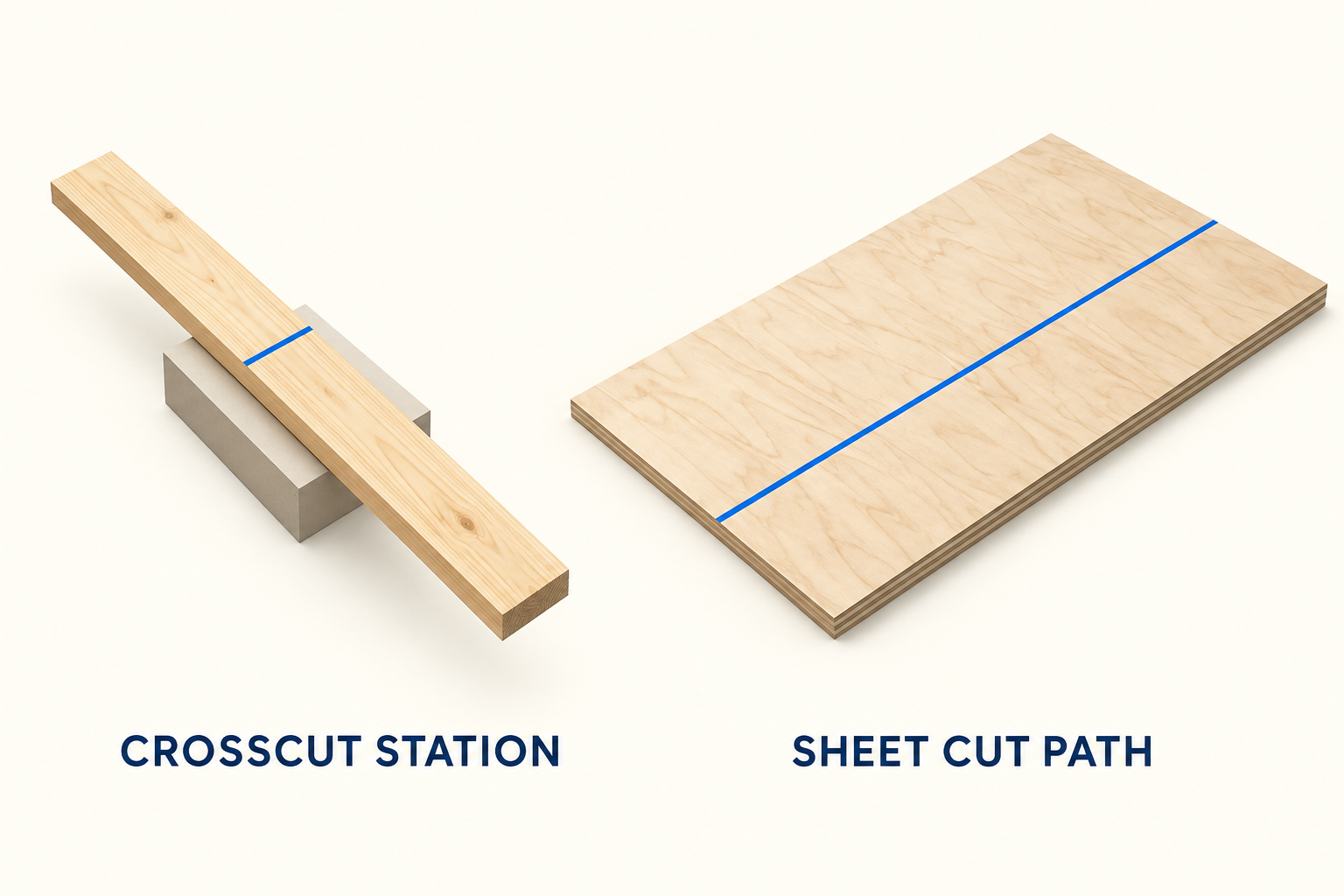
A long board and a wide sheet are not the same capacity question. A long board may need only a short cut across its width. A sheet may require a cut extending well beyond a particular miter saw’s crosscut reach.
Match the project to the arrangement
| Required job | Useful starting point | Decision still needed |
|---|---|---|
| Repeated wood crosscuts | Appropriate miter-saw station | Crosscut envelope and material approval |
| Long straight sheet cut | Appropriate handheld circular saw | Model, blade and guided-cut arrangement |
| Metal tube cut-off | Dedicated compatible metal-cutting equipment | Actual machine and wheel or blade system |
| Curved profile | Reconsider the tool family | Curve geometry and a suitable curve-cutting tool |
The SH02R1 circular-saw product page provides a manufacturer example of sheet-material applications, including plywood. That establishes the application for a particular product; it does not make all handheld circular saws suitable for every sheet or metal.
Material compatibility is a separate gate
Do not combine a machine’s name, a blade’s appearance and a material’s thickness into a compatibility claim. The actual machine and accessory instructions need to agree on the intended work. A metal abrasive cut-off wheel and a toothed woodworking blade are not alternative descriptions of the same accessory.
For a purchasing enquiry, record the machine model, material designation, workpiece section and desired cut. This is more useful than a request for “a chop-saw blade,” which may leave the supplier uncertain about the entire tool category.
Curves are another separate question. EACHLEAD’s jigsaw blade category is a pathway for a different cutting-accessory family when a curved profile is the real requirement. It is not a substitute blade recommendation for a circular or cut-off saw.
Turn the project into a short cutting list
Consider a hypothetical cabinet project needing several short rails and a large back panel. “Cut wood for a cabinet” combines two jobs. The rails require crosscuts across comparatively narrow stock; the panel requires a long straight path over a broad face.
A suitable miter-saw station may address the rail cuts within its rated envelope. A suitable circular-saw arrangement may address the panel cut. Choosing by that list avoids asking one machine to perform a task outside the reason it was selected.
If the list later adds metal tube, start a separate compatibility enquiry rather than carrying the woodworking recommendation across unchanged. Material approval can change even when the desired result still sounds like a simple crosscut.
The clearest choice follows three questions: what material, what cut extent, and which approved machine-accessory combination? Answer those before comparing convenience or buying one tool as a universal replacement for another.