


Does Aluminum Conduct Electricity? Conductivity, Oxide and Copper Compared
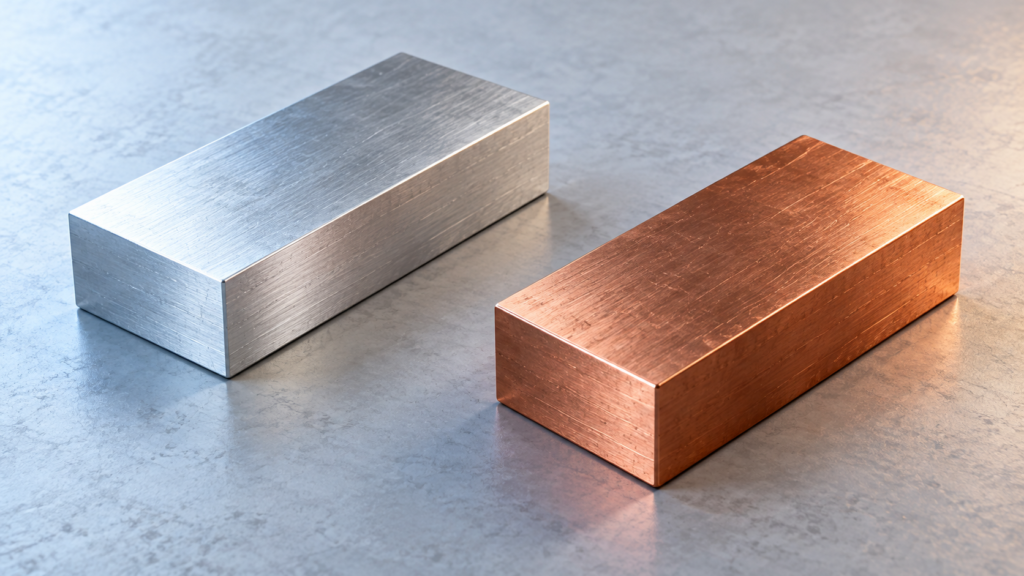
Aluminum metal conducts electricity. The question “does aluminum conduct electricity?” has a different scope from asking whether a coated surface makes a good contact or whether a finished component meets an electrical design requirement. The metal, the part geometry and the surface condition need separate answers.
Aluminum is used in conductor applications, but its alloys do not all share one conductivity value. A comparison with copper also needs a stated basis: equal dimensions and equal weight are different comparisons.
Does aluminum conduct electricity as well as copper?
Copper has higher electrical conductivity by volume than common aluminum conductor materials. Aluminum is much less dense, which creates a different weight-and-size tradeoff. Hydro’s conductor guidance explains that aluminum can require a larger cross-section while still offering a lighter component.
That does not make aluminum a direct replacement for copper in every design. Material choice also involves the actual alloy, condition, geometry and connection requirements. A single percentage attached to the word aluminum cannot describe every supplied product or finished assembly.
Gabrian’s material overview likewise distinguishes different aluminum alloys. Treat a general conductivity comparison as a starting point for reading the material data, rather than a complete specification for an electrical part.
Conductivity describes the material; resistance describes the path
Conductivity and resistivity describe material behavior. Resistance also depends on the dimensions of the conducting path. For a uniform conductor at a stated temperature and material condition, the familiar bulk relation is:
R = ρL / A
Here, R is resistance, ρ is resistivity, L is length and A is cross-sectional area. OpenStax explains this relationship and the influence of temperature. It is a simple material-and-geometry model, not a complete model of contacts or an installed circuit.
In a hypothetical comparison using the same uniform material and temperature, doubling the length doubles the modeled resistance. Doubling the cross-sectional area halves it. Those proportional examples do not specify a wire size or current rating; they show why part dimensions matter even when the material name stays the same.
| Question | Information it concerns | What the answer does not establish |
|---|---|---|
| Is aluminum conductive? | The underlying metal | Every alloy’s exact conductivity |
| What is this part’s resistance? | Material, condition, temperature and geometry | The behavior of every contact or assembly |
| What is on the surface? | Oxide or another specified finish | A certified insulation rating for the complete part |
Why the oxide layer does not make the metal core an insulator
Aluminum forms a surface oxide, and anodizing develops an oxide layer on the surface. Hydro describes anodic oxide as electrically insulating. That is a statement about the layer, not a claim that the underlying aluminum has stopped being a conductor.
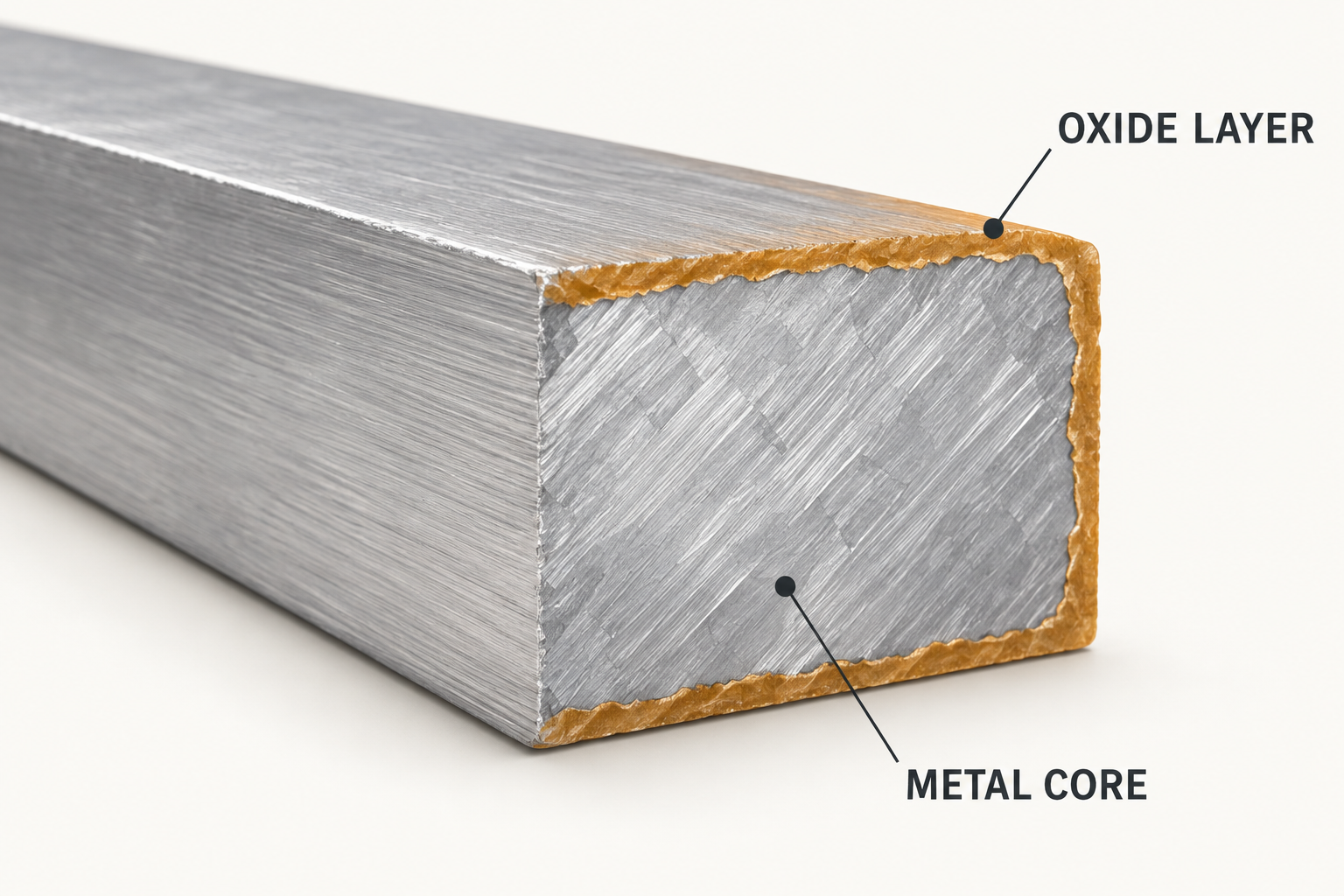
Gabrian’s discussion of finishes separates the oxide from the underlying metal. This distinction helps explain why a description of surface behavior should not be used as a description of the entire component. Contact through a surface and conduction along the metal are different questions.
For the same reason, “anodized” is not a complete electrical acceptance statement. The specified layer, exposed regions and intended component function need their own assessment. A generic illustration or finish name cannot certify protective insulation.
A useful reading habit is to locate the subject of each claim. “The oxide layer is insulating” refers to the layer. “Aluminum conducts electricity” refers to the metal. Both can be true without contradiction.
Read alloy, condition and finish together
Hydro’s conductor examples distinguish alloy and temper because electrical properties are balanced with mechanical and manufacturing needs. A material listing that identifies only “aluminum” leaves those details unresolved.
Keep the reported property with the conditions attached to it. If two data entries refer to different alloys, temperatures or material conditions, record the difference before deciding whether the values are comparable. Do not silently turn data for one identified product into a value for every aluminum component.
Surface finish belongs in the same enquiry, but in a separate field. It answers a different question from the bulk alloy designation. If the intended function depends on a contact surface, the relevant component documentation needs to address that surface directly; the bulk conductivity value alone cannot do so.
Three questions that make a material enquiry clearer
The following is an original way to organize the information, rather than an electrical installation checklist.
What metal is being described? Identify the alloy and supplied condition. Preserve the source of any conductivity or resistivity data, including its stated temperature and units. Record missing information instead of substituting a familiar value from another alloy.
What physical path is being described? Separate length and cross-section from the material property. State whether a comparison keeps dimensions or weight constant. That prevents a claim about material conductivity from becoming an unsupported claim about a differently shaped part.
What surface is being described? Identify the specified oxide or finish and the relevant regions of the part. Keep a surface-layer statement separate from a conclusion about the complete component.
For example, a hypothetical enquiry for an anodized aluminum profile may resolve the material family and appearance while leaving its electrical function undefined. Adding the alloy, condition, dimensions and intended surface function gives the responsible designer a concrete question to assess. Merely changing “aluminum” to “conductive aluminum” does not fill those gaps.
Keep fabrication and electrical suitability separate
A cutting enquiry is another distinct task. EACHLEAD’s hacksaw blade range concerns cutting accessories. A category listing does not establish electrical contact design, conductor sizing or the suitability of the finished part for an electrical application.
The material answer remains straightforward: aluminum conducts electricity. The useful next step is to identify which additional question concerns the actual part—its alloy data, geometry, surface or complete electrical function.