


What Is the Strongest Metal on Earth? Strength, Hardness and Toughness Compared
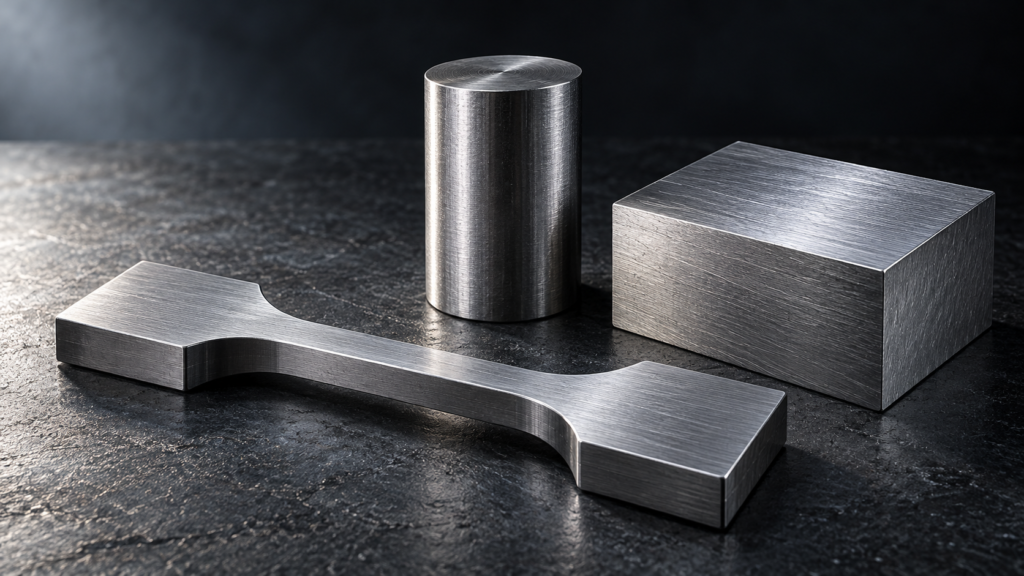
Tungsten is a familiar answer to “the strongest metal on earth,” but there is no single winner across tensile strength, hardness and toughness. A material can resist pulling yet perform differently under indentation or impact. A useful answer names the property, the alloy or pure metal, its condition and the test temperature.
The same caution applies to steel and titanium. Comparing an unspecified steel with an unspecified titanium alloy does not establish a general winner. The material description must be as precise as the property being compared.
Why the strongest metal on earth depends on the question
“Strong” can mean difficult to stretch, difficult to dent, resistant to permanent deformation or able to absorb an impact. Those questions require different evidence. Mead Metals’ overview recognizes that no metal ranks highest across every category; a practical comparison starts by deciding which category matters.
There is another distinction before any ranking begins. An elemental metal, an alloy and a compound are different material descriptions. Tungsten is an element. Steel is an alloy family. Tungsten carbide contains tungsten and carbon; it is not another name for pure tungsten. Mixing those categories can make a list sound decisive while leaving the actual comparison unclear.
Strength, hardness and toughness measure different things
Testing organizations distinguish the following properties. The table connects each question to the kind of result that would help answer it, rather than assigning every material one overall strength score.
| Property | Question it answers | Do not substitute |
|---|---|---|
| Tensile strength | What maximum engineering tensile stress does the specimen reach? | A hardness number or a component’s load capacity |
| Yield or specified proof strength | Where does elastic behavior end, or where is a defined permanent strain reached? | Ultimate tensile strength |
| Indentation hardness | How does the surface resist indentation under a stated method? | Impact toughness or compressive strength |
| Impact toughness | How does the specimen respond to a sudden impact in a stated test? | A tensile result or an interchangeable fracture-toughness value |
| Compression behavior | How does the material respond to a crushing load? | A scratch-hardness ranking |
ZwickRoell describes tensile strength as maximum mechanical tensile stress and distinguishes it from the end of elastic behavior. TWI separately lists tensile, indentation-hardness, compression and impact testing. A result from one method therefore cannot answer all the other questions in the table.
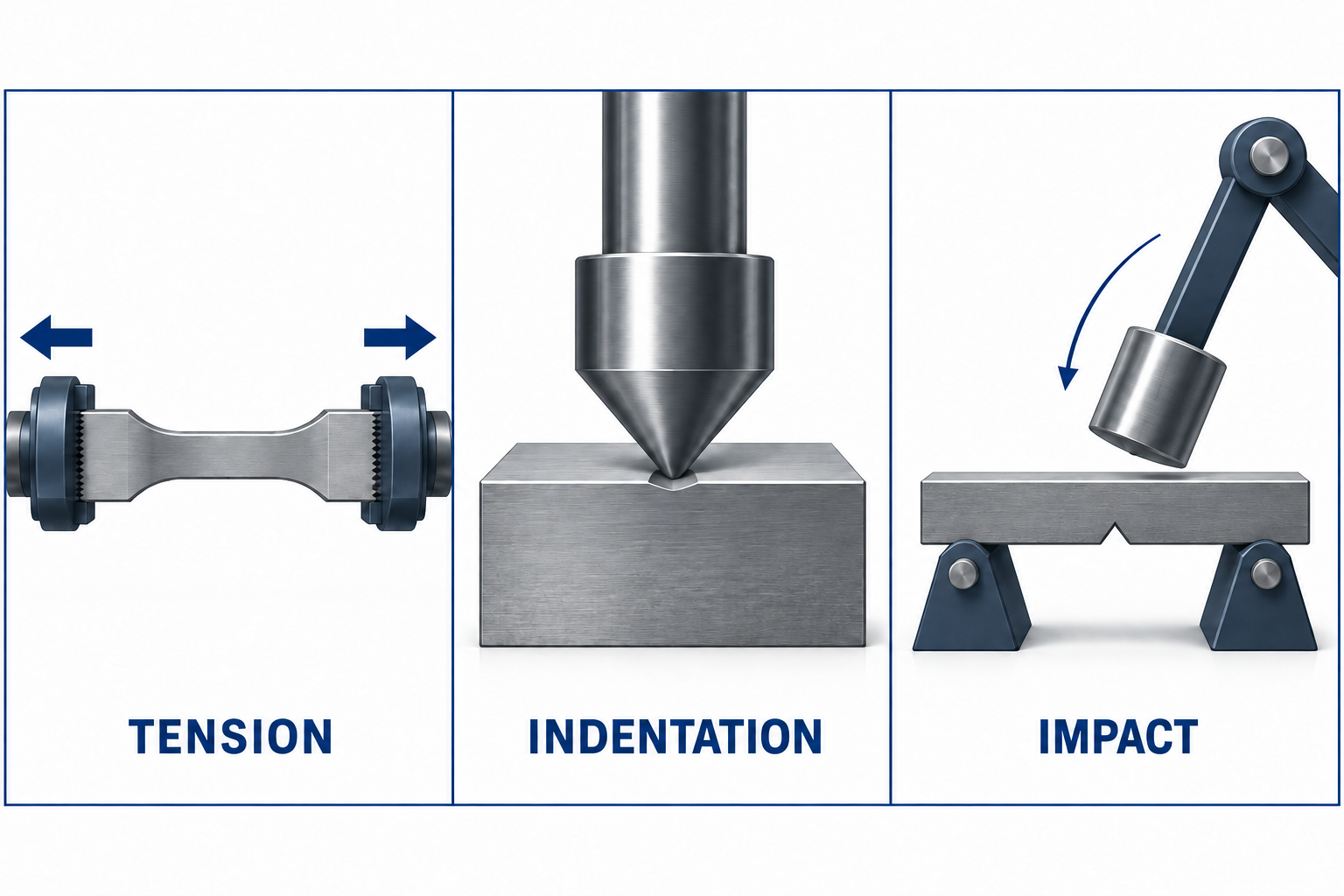
Consider a hypothetical metal bracket. If the concern is permanent bending, the first useful comparison is not simply the largest ultimate tensile figure. If the concern is a sudden strike, impact behavior introduces another question. Neither case is resolved by calling a material “the hardest.”
What tungsten’s reputation does tell you
The Royal Society of Chemistry identifies tungsten as the metal with the highest melting point and describes its use in high-temperature applications. That is an important property, but a melting-point record does not establish the highest mechanical strength under every load.
The same source describes tungsten carbide as a very hard material used in cutting and drilling tools. Keep the compound distinct from elemental tungsten when reading a tool description. A carbide tool’s suitability cannot be inferred from a fact about pure tungsten alone.
For a material enquiry, “tungsten” should therefore begin a more specific comparison. Identify the supplied material, product form and condition, then request data for the property and service temperature that matter. A generic material name is not a complete test report.
Where steel, titanium and hard cutting materials fit
Steel is a broad alloy category, so “steel strength” needs a grade and condition. Different entries in a material catalogue should be compared on the same stated basis. Do not treat one selected steel result as a value for every steel product.
Titanium raises an additional consideration: weight. Nippon Steel describes titanium’s combination of lightness and strength. A strength-per-unit-mass comparison asks a different question from an absolute-strength comparison. A weight-sensitive design still needs identified materials and relevant property data; it is not settled by a titanium-versus-steel slogan.
Hard cutting materials answer another need. OSG distinguishes hardness from toughness in its tool-material guidance. Diamond is a carbon material, not a metal, so adding it to a “strongest metal” list changes the category being discussed. Its hardness does not make the words hardness, toughness and tensile strength interchangeable.
A same-basis check for material comparisons
A comparison becomes useful when both candidates answer the same question. Before accepting a claim that one material is stronger, check these five fields together:
- Property: Identify tensile, yield/proof, hardness, impact or another specifically relevant result.
- Material: Record the full grade or composition rather than only an element or alloy-family name.
- Condition: Keep the supplied condition with the data, rather than transferring a result between differently described products.
- Test basis: Compare the method, units, specimen context and temperature before comparing the numbers.
- Decision: Explain which actual failure or manufacturing problem the comparison is intended to resolve.
For example, suppose one catalogue entry gives tensile strength and another gives indentation hardness. The entries do not yet establish a winner: they report different properties. The next step is to obtain comparable information, not convert the larger-looking number into an overall ranking.
A second example is a comparison made at different temperatures. ZwickRoell distinguishes tensile testing at ambient, elevated and low temperatures. Retaining the temperature beside the result prevents a room-temperature description from silently answering a high-temperature question.
Use the relevant properties when choosing a cutting route
Cutting a workpiece is a different task from ranking metals. A blade enquiry should identify the workpiece material, its condition and dimensions, along with the tool and intended cut. A generic tensile-strength claim does not supply all those inputs.
EACHLEAD’s reciprocating saw blade range is a cutting-accessory category, not a material-strength ranking. Use the actual workpiece description to frame the selection question, then verify the individual accessory requirements.
The useful answer to “strongest” is therefore a defined comparison: strongest against which loading or damage mechanism, in which material condition? That wording turns an interesting superlative into information a buyer or fabricator can use.
References
- Mead Metals — scope of the strongest-metal question
- ZwickRoell — tensile-test properties and conditions
- TWI — distinct material-testing methods
- Royal Society of Chemistry — tungsten and tungsten carbide
- Nippon Steel — characteristics of titanium
- OSG Diamond Tool — hardness and toughness in tool materials