


What Is HDPE? Material Properties and Machining Considerations
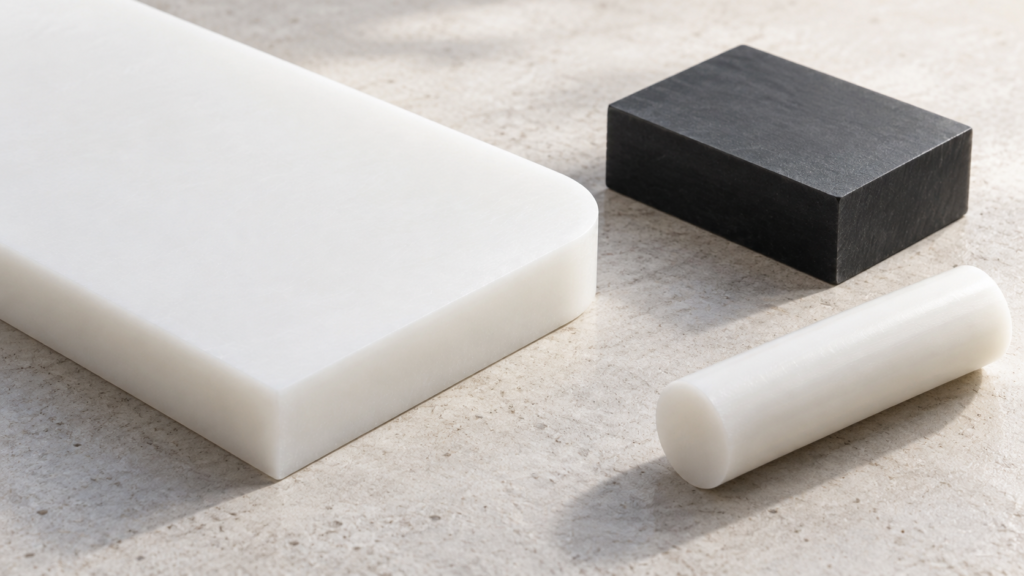
HDPE material is high-density polyethylene, also written PE-HD. It is a polyethylene family used in fabricated stock and finished products, not one universal grade. For a machining job, the useful description includes the exact product, stock form and intended service—not just the initials.
Its appeal includes toughness, low weight and low water absorption. Those properties do not answer every selection question. The right grade still has to meet the exposure, dimensional and surface requirements of the component being made.
What is HDPE useful for?
GEHR’s PE-HD material description identifies toughness, chemical resistance and very low water absorption, alongside a relatively soft surface. These characteristics help explain its use in components such as transport containers, tank-construction parts and sliding profiles. The application examples are possibilities for specified products, not automatic approval for any stock sold as HDPE.
For a buyer, the important distinction is between a useful property and a complete specification. Low water absorption does not define the fastening arrangement. Toughness does not establish an allowable structural load. Chemical resistance needs checking against the actual substance and service conditions.
A smooth new sample also cannot demonstrate long-term surface appearance. If scuffing or cosmetic marks would reject the finished part, include that requirement when approving the material and the fabrication trial. Do not leave a visible-surface decision until after the full batch has been cut.
The stock form and grade come before the cutting setup
HDPE is available as sheet and as other stock shapes, including rods and hollow sections. A flat-panel job, a machined rod component and a pipe-related application do not become equivalent because the material name is shared.
Manufacturer ranges also distinguish end-use grades. SIMONA’s sheet guide separates products intended for different applications, while GEHR explicitly notes that its natural-color PE-HD is not weather-resistant. Neither the initials nor a black or white appearance is enough to establish outdoor suitability.
The stock identification should therefore stay attached to the job. Record the manufacturer’s product designation, supplied dimensions, relevant data sheet and intended environment. Where a customer needs a particular approval, obtain the documentation for that exact product and use. A generic HDPE description is not a food-contact, drinking-water or pressure-service certificate.
This distinction also prevents a common purchasing shortcut: substituting a different sheet because it looks similar and has the same nominal thickness. The replacement needs its own specification check before the original cutting trial can be treated as representative.
HDPE material machining: heat and chips tell different stories
SIMONA’s fabrication guide notes that plastics conduct heat poorly and recommends sharp tools and regular swarf clearance. It lists several suitable saw types for its HDPE sheet, including jigsaws, and calls for pre-production trials under the actual material and tool conditions.
The Seaboard fabrication guide published by U.S. Plastic describes a related failure mechanism: dull tools or inappropriate feed can create rough edges and heat, allowing chips to melt and re-fuse. That product-specific guidance explains a useful observation without supplying one universal setting for every HDPE grade.
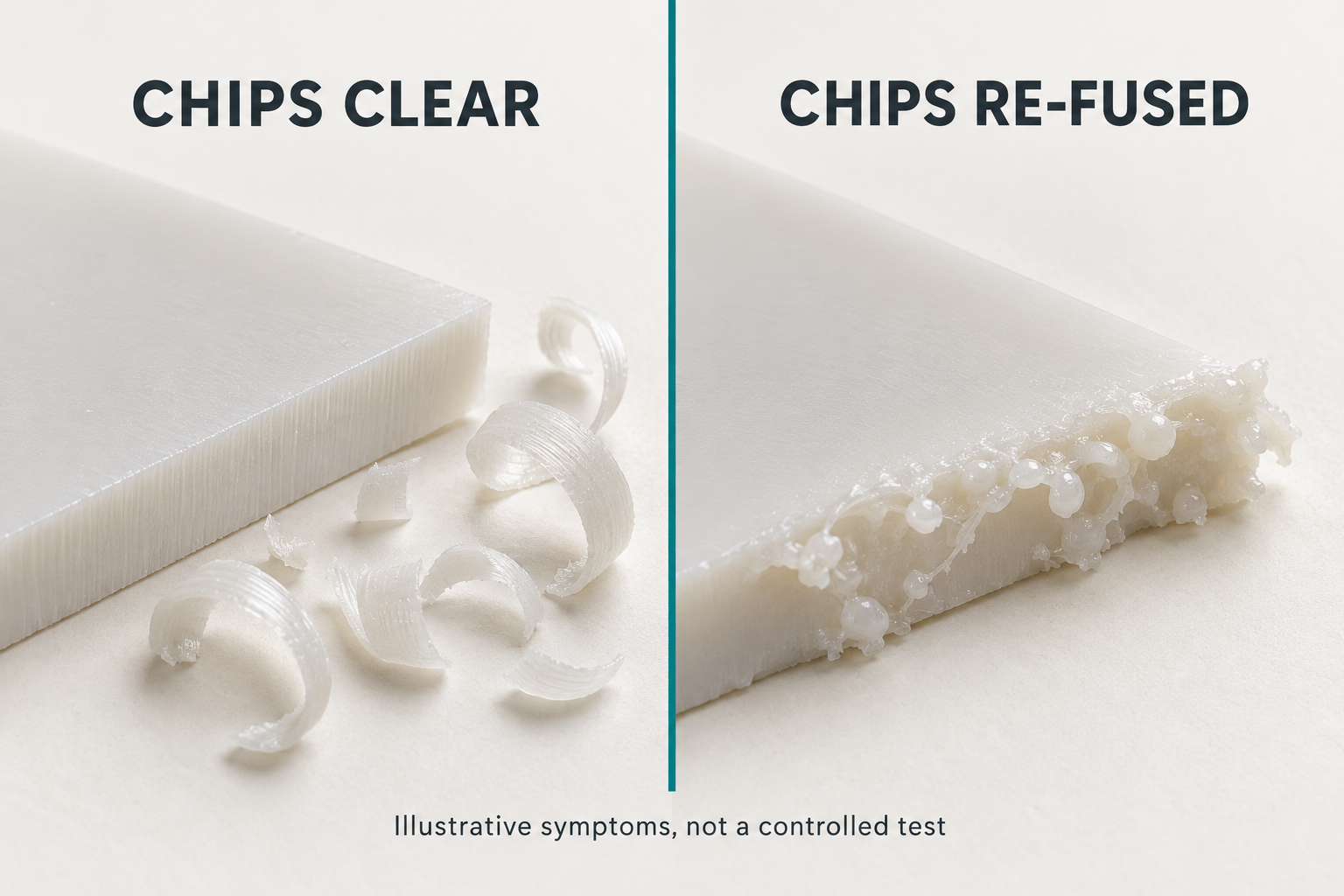
Keep the observation separate from the diagnosis. “Material adhered along the cut” is a useful record. “The blade was too slow” is a conclusion that needs more evidence. The distinction matters when the operator changes a tool, feed setting or support arrangement and then compares the next trial.
A successful trial should answer more than whether the saw completed the cut. Inspect the edge condition, identify where chips remained, and record the setup that produced the result. Otherwise, a later operator has a photograph of an edge but no reproducible starting point.
Build a supported cut trial around the actual job
The supplier’s Seaboard guidance emphasizes part rigidity and chip evacuation. For an HDPE sheet job, that makes support and restraint part of the trial, rather than details to improvise after blade selection. Use the tool manufacturer’s operating and workholding instructions; this material overview does not replace them.
For a contour cut made with a jigsaw, the EACHLEAD jigsaw-blade range is a category to investigate. Confirm the machine’s shank, working blade length and the blade’s stated material and thickness application. The category does not establish an HDPE-specific compatibility claim for a particular model.
A representative offcut should match the stock and the type of cut planned for production. A convenient test on an unidentified scrap cannot confirm the setup for the supplied grade. Record which surface and edge will remain visible in the finished component, so cosmetic acceptance is checked in the right place.
Before comparing trials, keep the description of each change clear. If the blade, support, settings and material all change together, the result may be usable, but the record will not show which change addressed the problem. No generic tooth count or machine speed can fill that information gap.
A clean cut still needs a service-fit check
HDPE dimensions change with temperature. SIMONA’s movement worksheet uses the actual material’s expansion coefficient, component dimension and temperature difference to estimate the change. The guide specifically directs the user back to the product data sheet for the applicable coefficient.
For assembly, this means the dimension accepted at fabrication and the fit required in service are separate decisions. The designer must establish the necessary movement accommodation and fastening details for the specified product. A generic clearance copied from another grade is not a substitute.
Keep service exposure in the same review. A panel that cuts neatly has demonstrated neither outdoor durability nor chemical suitability. Conversely, an approved service grade still needs a workable fabrication method. Material selection and cutting approval meet at the finished component, but neither can stand in for the other.
Use three records before releasing a batch
Stock record: identify the grade, supplier documentation, stock dimensions and intended exposure. For a fabricated cover, this establishes what material the trial actually represents.
Cut record: identify the tool and blade, support arrangement, recorded settings and observed edge condition. Note whether chips cleared or re-adhered without turning that observation into an unsupported diagnosis.
Fit record: identify the drawing’s dimensional requirements, measurement conditions and approved assembly or movement provisions. A trial cover that looks clean can still fail this part of the decision.
These records let a buyer and fabricator approve different questions explicitly. Production release then refers to an identified material, a documented cut result and an agreed final fit—not merely a sample labeled “HDPE.”