


Can a Jigsaw Cut a 2×4? Blade Length and Cut Control
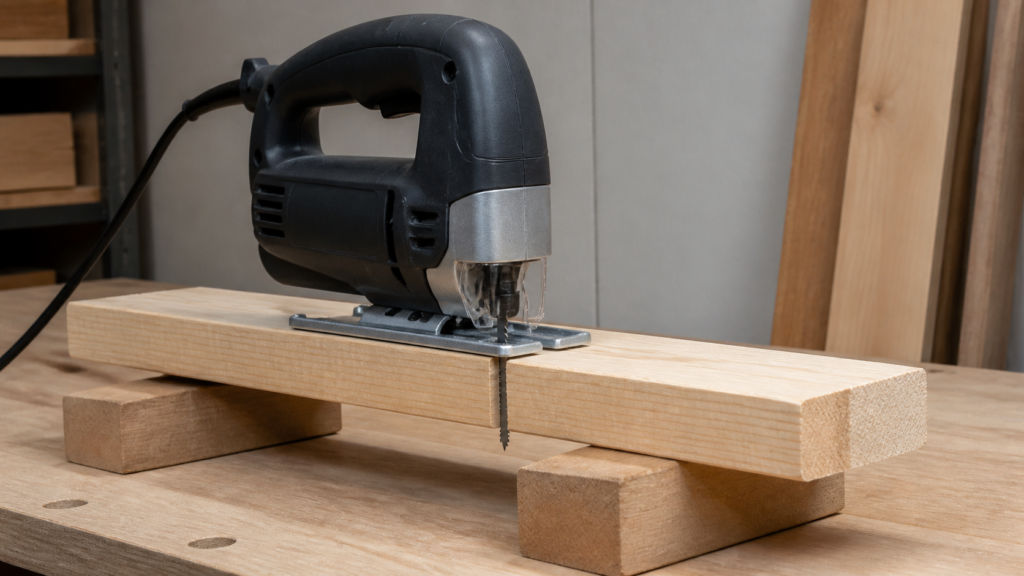
Short answer: a jigsaw can cut a nominal 2×4 when the exact saw is rated for the job, the installed blade has usable reach through the stock, and the setup can support the cut quality you need. That is a conditional answer, not a blanket capacity claim. Treat the saw, blade, workholding, and required result as one decision.
| Before you cut | What to check | What the check decides |
|---|---|---|
| Exact saw | Read the manual for its wood capacity, accepted blade interface, and any guidance instructions. | Whether the machine is an approved starting point for this stock. |
| Blade reach | Compare usable cutting length with the actual board thickness and the tool’s motion. | Whether the blade can remain appropriately engaged during the cut. |
| Work support | Plan secure support for the board and stable contact for the shoe. | Whether the setup can be controlled rather than forced. |
| Finished requirement | Define whether the result is a rough opening, curve, guided line, or visible straight edge. | Whether a jigsaw is the appropriate process after all. |
The word nominal matters. Confirm the material actually on the bench rather than working from a lumber label alone. Then record the intended cut and finished-edge requirement before selecting a blade. A candidate blade name cannot replace those inputs.
Can a Jigsaw Cut a 2×4? Start With the Saw Manual
For the question “can a jigsaw cut a 2×4?”, begin with the manual for the exact jigsaw. The manual identifies the machine’s stated wood capacity, blade-holder type, and model-specific operating instructions. A manufacturer may show a guide or fence arrangement for one saw; that does not make the same arrangement available or suitable on another model.
Use the manual to establish the boundary of the task, then define the required result. A cut that only removes waste is different from an exposed edge that must be straight and repeatable. If the finished result requires more control than the verified saw, blade, guide arrangement, and workholding can provide, choose a process designed for that requirement instead of trying to make the jigsaw do a different job.
Confirm the holder before adding any blade specification. T-shank is a published EACHLEAD jigsaw-blade category, but shank type is still a tool-specific interface question. Check the exact holder and locking method in the tool documentation; a long blade that does not match the holder is not a valid selection.
Compare usable blade reach with the actual workpiece
Blade length is a functional check, not a catalog label. For a jigsaw blade for 2×4 work, compare the blade’s usable cutting portion with the board thickness and the tool’s stroke. Do not assume that overall blade length alone answers the question. The saw manual and the blade’s own specification should be read together before the blade is installed.
Next, select the blade for the material and the path you need to cut. Wood species, a rough-versus-finished edge, and a straight-versus-curved line are separate requirements. Rather than applying a universal tooth count, give the supplier the material and outcome you need, then confirm the proposed tooth form and blade geometry against the specific job.
Blade condition belongs in the same check. The referenced operating instructions advise against using a dull or damaged blade. Inspect for damage, make sure the blade is fully seated, and follow the exact tool’s setup procedure. A blade that is bent, damaged, or incorrectly installed should not be used as evidence that the cut is feasible.
| Specification field | Question to answer before ordering |
|---|---|
| Tool and shank | Which exact jigsaw will hold the blade, and which shank does its manual accept? |
| Actual stock | What material and actual thickness will be cut? |
| Usable blade reach | Does the specified working portion suit the stock and the saw’s documented motion? |
| Cut path and finish | Is the request for a curve, rough cut, guided line, or finished straight edge? |
| Blade state | Is the installed blade straight, undamaged, fully seated, and appropriate for the material? |
Make support and control part of the blade decision
Secure and support the workpiece before cutting. The referenced operating instructions call for the workpiece to be secured and supported; this is also a useful planning test. If the planned arrangement cannot keep the board stable and the jigsaw shoe in controlled contact, resolve that setup issue before treating blade choice as the next step.
Keep the expected cut quality visible during the setup review. The relevant tool documentation includes a model-specific guide-fence procedure, which illustrates why blade guidance must be checked per tool. That procedure is not a universal method. Follow the documentation for the saw in use, and reassess the setup if the blade no longer follows the intended line.
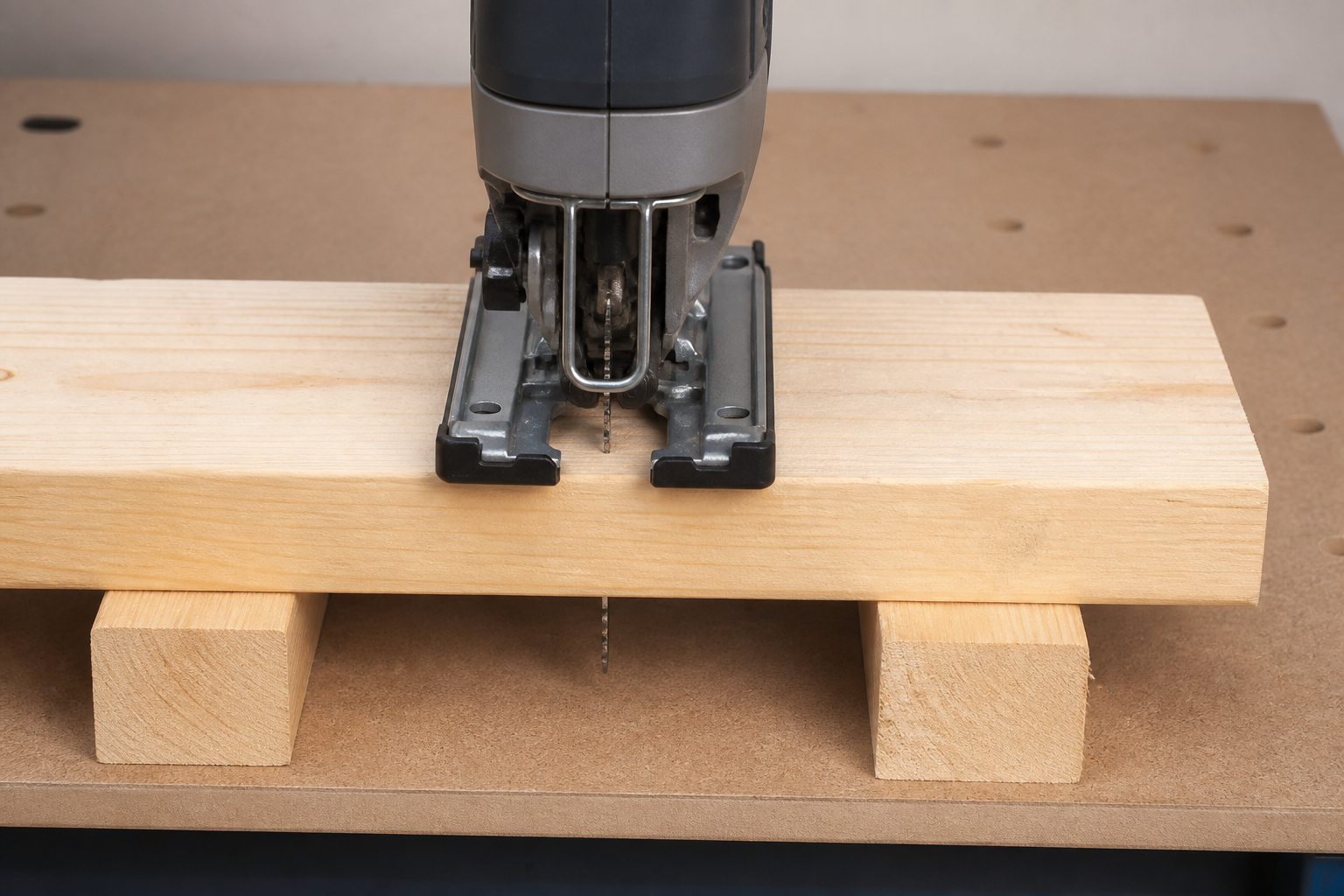
Do not force a cut to compensate for uncertainty. For anyone cutting 2×4 with a jigsaw, pause when the workholding, tool guidance, blade condition, or required finish no longer match the plan. The useful decision is not whether a jigsaw can move through the stock in isolation; it is whether the verified setup can complete the required cut in control.
Turn the application into a checkable blade request
A distributor, buyer, or workshop can make selection easier by sending a complete application record: the exact jigsaw and accepted shank, the actual material and thickness, usable blade reach needed, the cut path, the desired finish, and the support or guide arrangement. Add any expected inclusions in the material and the condition requirements for the installed blade. This gives a supplier enough context to review a candidate instead of guessing from “2×4” alone.
For a category-level starting point, see the EACHLEAD jigsaw blade category. Its public catalog includes wood-cutting T344D variants listed in 132 mm and 152 mm forms. Treat those listings as product data to compare with the real job, not as proof that either length fits every saw or produces a particular cut result.
When a different process is the better answer
Change process when the manual does not support the workpiece, the blade cannot be confirmed for the tool and material, support cannot be made secure, or the job requires a finished edge beyond what the verified jigsaw arrangement can control. This keeps a blade inquiry honest and prevents a possible cut from being mistaken for the right production choice.