


How to Choose a Pruning Blade Sawzall for Limbs and Green Wood
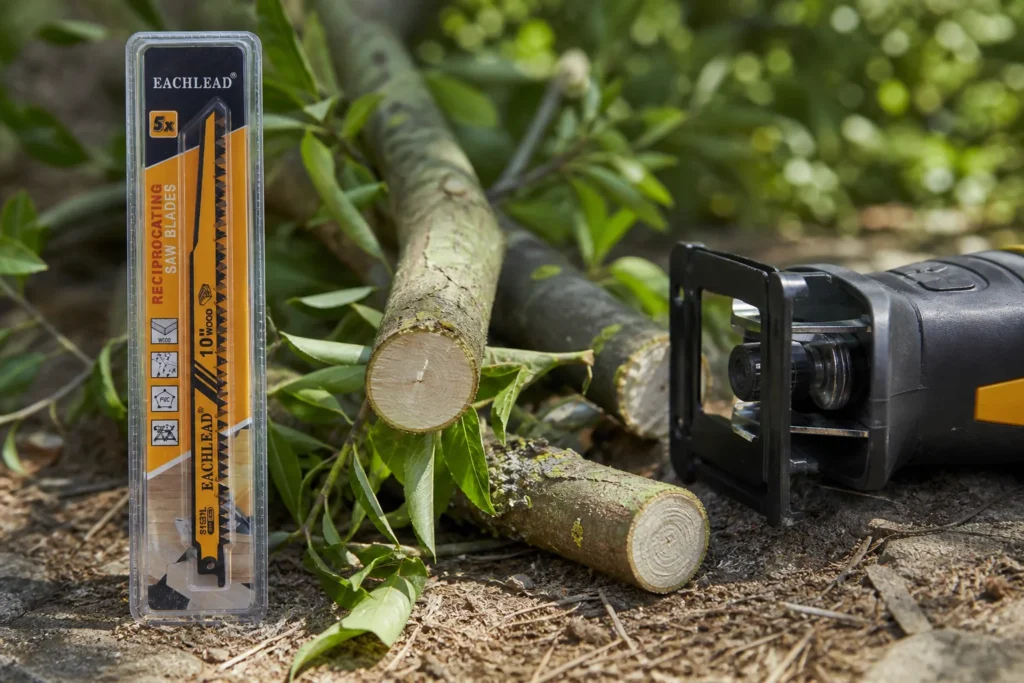
A pruning blade sawzall setup works when you fit a coarse wood or pruning reciprocating blade—not a fine metal or demo blade—to limbs, brush, and green wood. Buyers then lock TPI and gullets for chip clearance, choose length for diameter plus control, keep HCS for clean wood, and switch to bi-metal when nails or wire may be in the cut before shortlisting published EACHLEAD HCS wood/pruning SKUs.
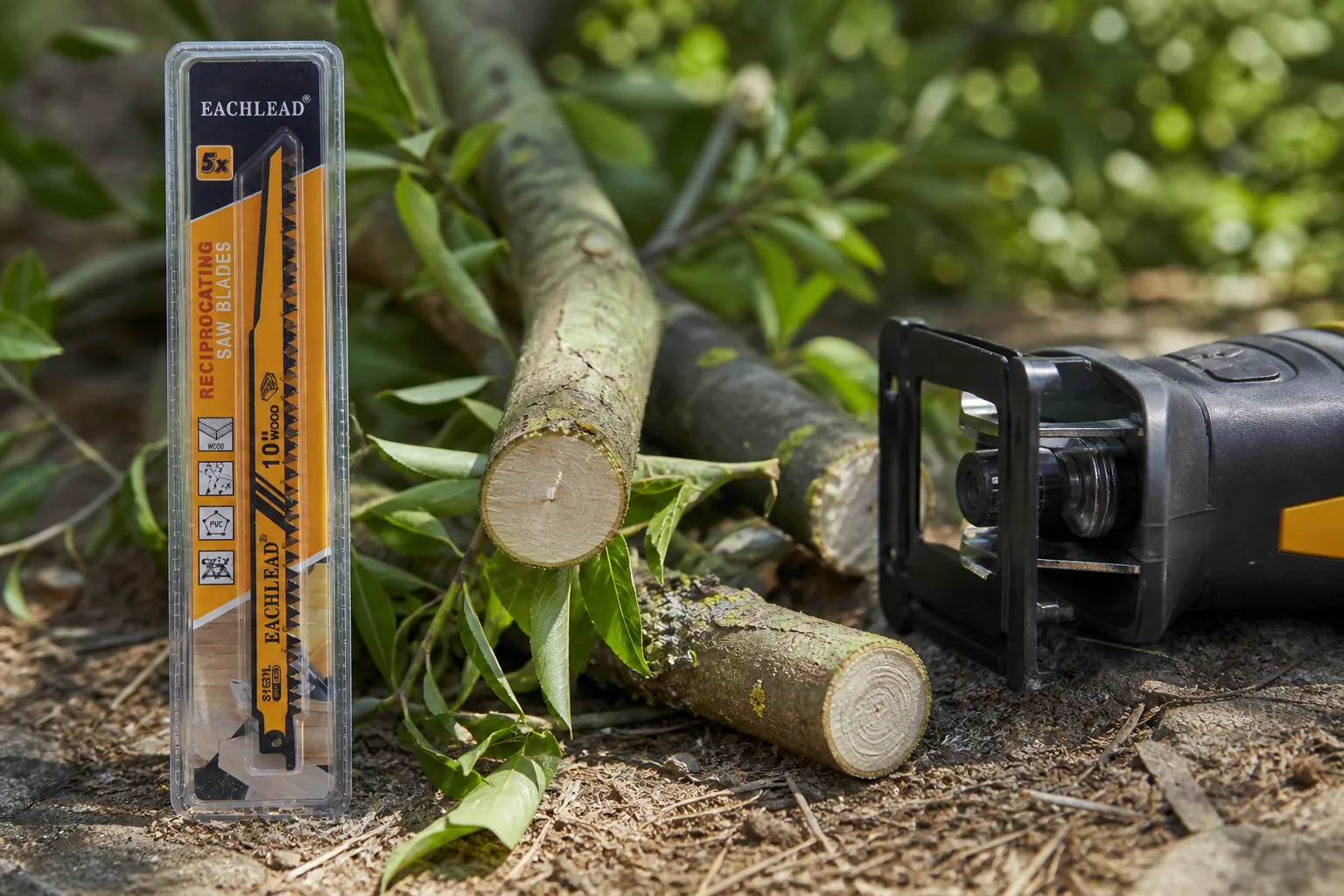
What a Pruning Sawzall Blade Actually Is
A pruning Sawzall blade is a coarse wood reciprocating saw blade built to clear green chips—not a metal-cutting or general demo tooth set.
A reciprocating saw pruning blade is a toothed recip accessory specified by TPI, gullet depth, length, and steel class for limbs, brush, and clean or damp wood. Shoppers searching “sawzall pruning blade” usually mean that wood/pruning class on a recip saw, not a chainsaw replacement for large timber.
“Sawzall” started as a trademark name and is now common search language for reciprocating saws and blades. Confirm the blade shank and clamp fit for your tool before you stock a pack.
Wrong blades tear, clog, or overheat in green wood. Fine metal blades pack sap in the gullets; demo teeth meant for nail-embedded lumber are a different duty than clean pruning.
Use a pruning-oriented wood blade when the job is limbs and brush and access favors a recip over a handsaw. When fruit trees need a cleaner bark finish, some crews still prefer a dedicated pruning handsaw for small cuts.
Browse the parent reciprocating saw blades hub to see how wood/pruning lines sit beside metal and mixed-duty families.
TPI and Gullets for Green Wood
For green wood pruning, coarse about 3–6 TPI with open gullets is the usual selection band.
TPI (teeth per inch) sets how fine or coarse the tooth row is and how chip load builds in each stroke. Lower TPI leaves larger gullets—the spaces between teeth that carry sap-heavy chips out of the kerf.
Green wood and live branches shed wet chips that pack a fine metal tooth row. Deep gullets keep a green wood reciprocating saw blade cutting instead of rubbing and heating.
Aggressive 3 TPI can feel grabby on small or delicate limbs. Some users prefer mid-band steel pruning teeth (around 5 TPI in market examples) for a more controlled start on thinner stock.
Keep at least three teeth in contact with the material so a single tip does not snag or overload. Match TPI to branch size and finish needs, not to a “pruning” label alone.
| Condition / job | Typical TPI band | Material class to start with | Why it fits |
|---|---|---|---|
| Green wood, fast limb pruning | About 3–6 TPI | HCS wood / pruning | Open gullets clear sap and chips |
| Small twigs needing control | Mid-band coarse (avoid ultra-aggressive starts) | HCS wood / pruning | Less grab than the coarsest 3 TPI on thin stock |
| Clean dry wood, nail-free | Coarse wood TPI per published band | HCS wood | Lower clogging risk than green wood, still not metal teeth |
| Wood that may hide nails or wire | Per BIM wood-with-nails listing | Bi-metal | HCS pruning teeth are for nail-free wood |
Treat the 3–6 band as industry selection language for green timber and fast pruning, then confirm the published label on the SKU you stock.
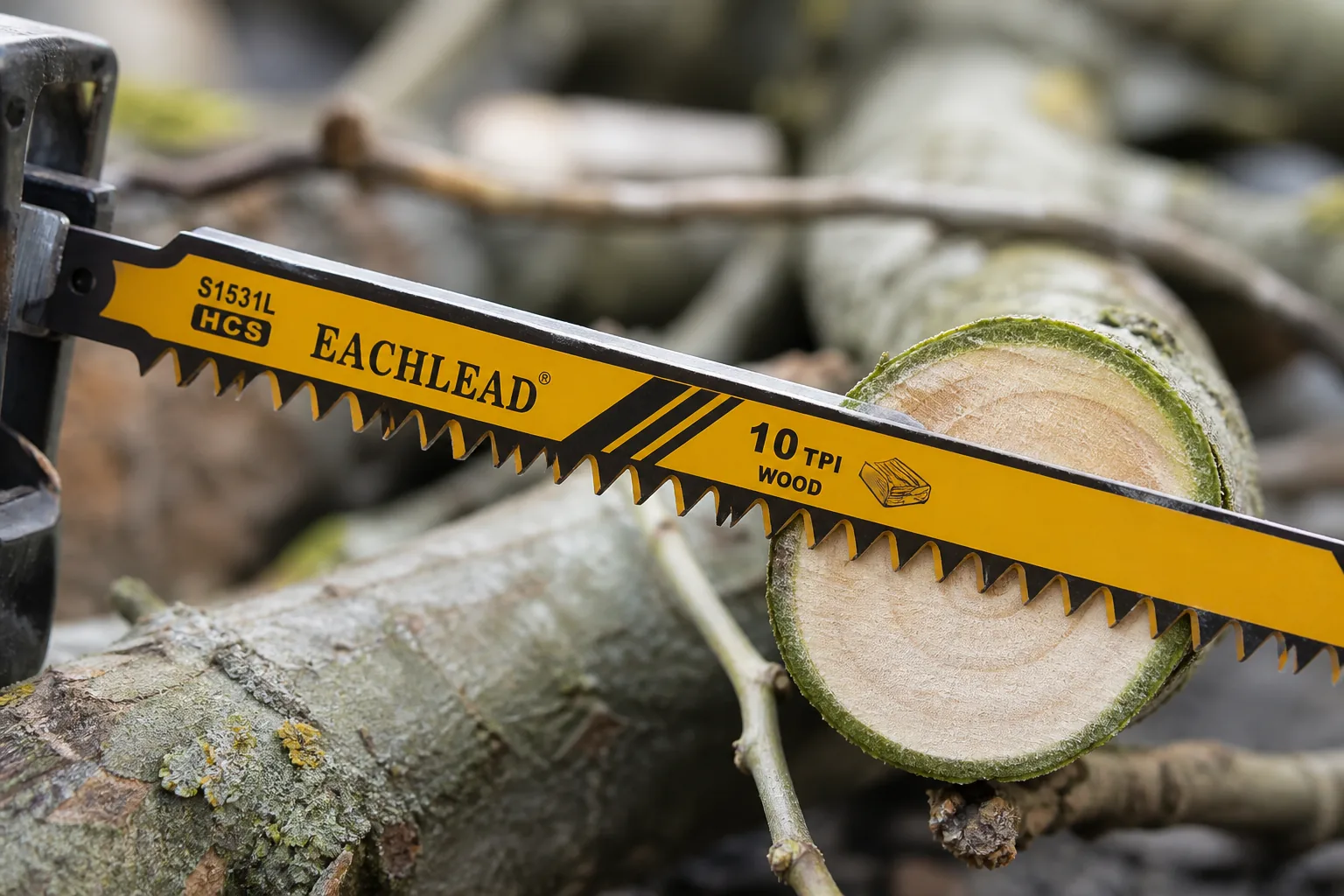
A landscaping crew cutting sappy brush with an 18 TPI metal blade will usually clog before the branch diameter becomes the problem. Coarse teeth and open gullets fix that mismatch.
Match Blade Length to Branch Size
Choose length so the blade overruns the branch diameter; longer is not always more controllable.
Blade length should exceed the cut depth with modest overrun so the tip is not whipping inside the kerf. Educational guidance often frames minimum length as material thickness plus overrun (about 50 mm / ~2 in in one common guide framing).
Very long blades add reach and also add whip, bind, and fatigue on small limbs. Orchard and landscape users often find 12 in awkward when a shorter blade would finish a 2 in cut with better shoe contact.
Match common sizes (about 6 in, 9–9.5 in, 12 in) to the diameter band you actually prune, not to the longest SKU on the shelf. Large trunks that exceed safe recip control usually belong on a chainsaw or other dedicated timber tool.
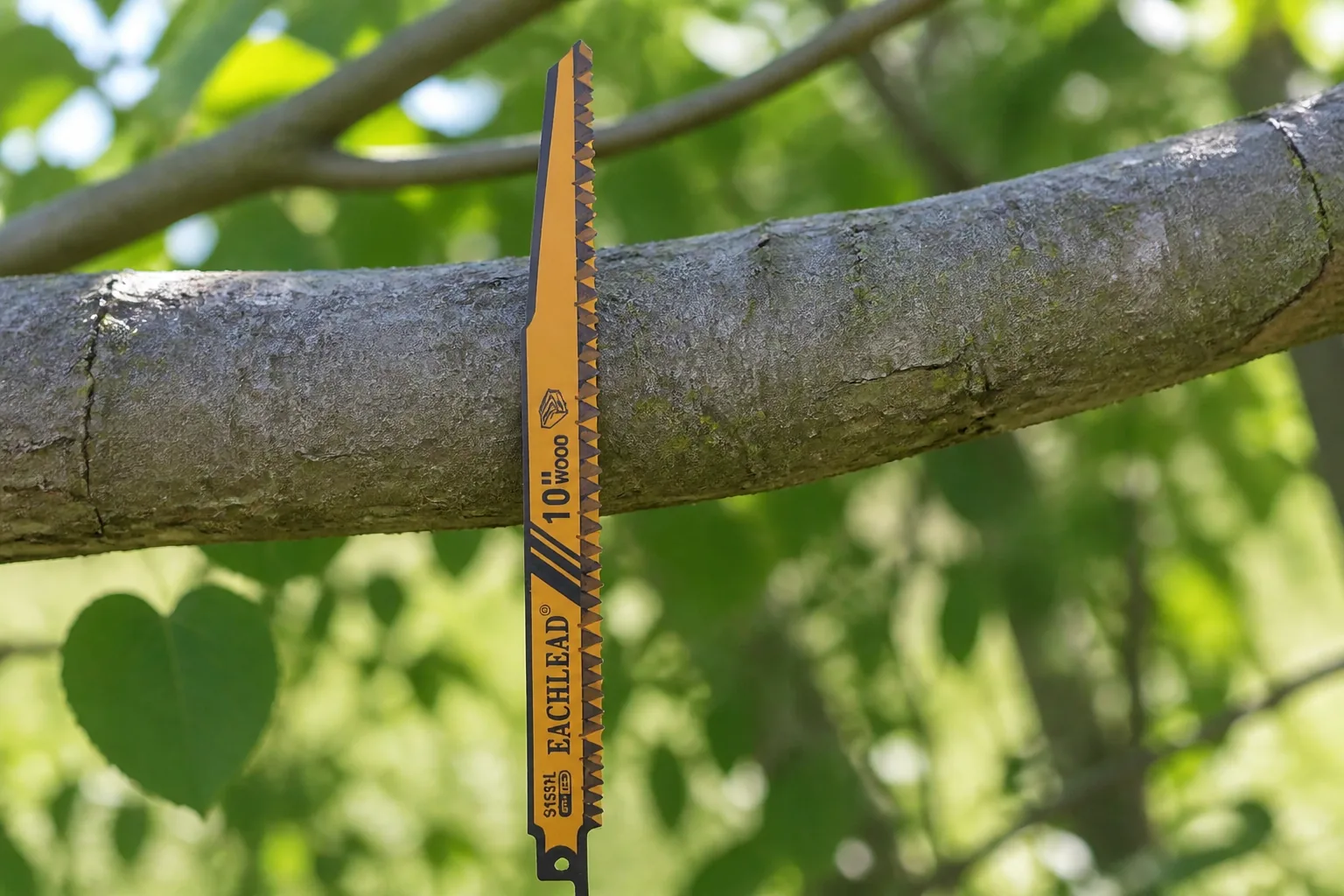
A facilities buyer stocking one “universal” 12 in pruning blade for every hedge and ornamental limb often trades control for reach. Split short and mid lengths when the diameter mix is wide.
Material Pathway: Clean Wood vs Nails vs Dirt
Clean wood and damp pruning duty start on HCS wood/pruning blades; nail risk moves to bi-metal; dirt and roots are a different durability problem—do not treat masonry carbide as pruning SKUs.
HCS (high-carbon steel) suits softer materials such as wood, laminated particle board, and plastics where flexibility helps. EACHLEAD publishes HCS wood and pruning pathways for clean and damp wood duty on the HCS reciprocating saw blades hub.
If the wood may contain nails, staples, or wire, use a bi-metal wood-with-nails pathway instead of HCS pruning teeth. The bi-metal reciprocating saw blades hub lists wood-with-nails SKUs for that risk.
Dirt, sand, and roots dull or destroy ordinary steel pruning teeth quickly. Retail markets often sell carbide pruning blades for that abuse; EACHLEAD’s carbide masonry recip family is not a wood-pruning recommendation path here.
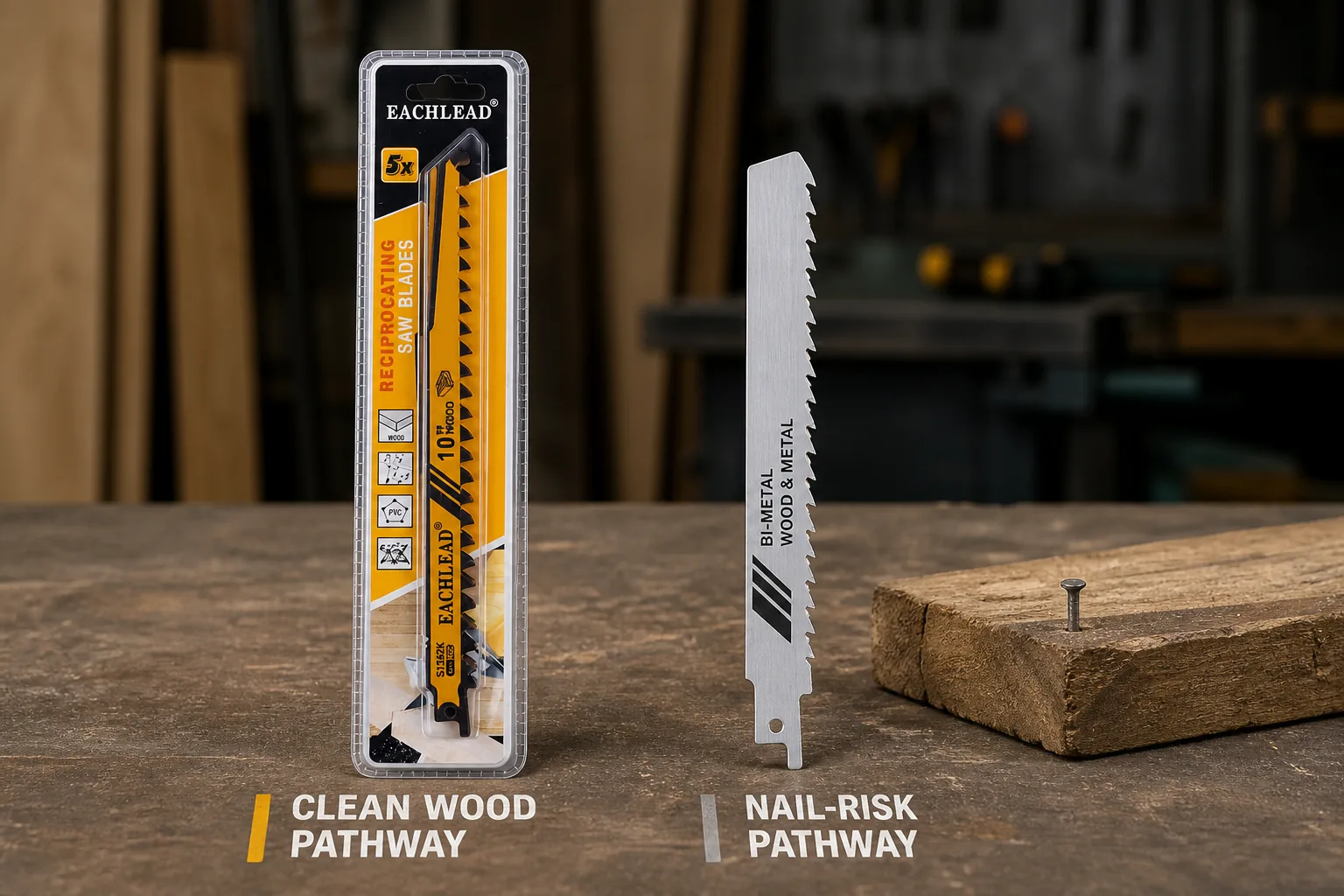
Fence-line limbs that grew around wire need BIM wood-with-nails teeth, not a fresh HCS pruning pack burned on the first hidden staple. Keep abrasive root-in-dirt jobs off the clean-wood HCS shortlist.
Technique and Safety That Matter Outdoors
Keep the shoe against the wood, use a sharp blade matched to the material, and respect overhead and control limits.
Always hold the shoe (base plate) flat against the workpiece to limit vibration and grabbing. Users who let the plate bounce off bark often feel the cut snatch and shake the saw.
Select the proper blade for the application and replace dull blades instead of forcing a glazed tooth row. Secure the workpiece when you can; free limbs still need a stable stance and a cut path clear of people.
Powered reciprocating saws with blade shanks greater than a nominal 1/4 inch require a constant-pressure switch or control under OSHA portable-tool rules. Wear eye and face protection and keep hair, clothing, and gloves clear of the moving blade.
Important: Use the proper blade for the material, keep blades sharp, and wear eye and face protection on handheld saw work. Source: OSHA eTool — Handheld Saws
Overhead pruning adds fatigue and drop risk; some arborists still prefer a handsaw for delicate fruit-tree finish cuts. Do not treat a recip as a substitute for fall protection or for timber work outside your safe control range.
Select EACHLEAD HCS Wood and Pruning Blades
Start on the HCS hub; shortlist S1531L for published tree cutting and pruning at 5 TPI, then compare titled S1542K using its table specs only.
The HCS reciprocating saw blades family is the clean-wood and pruning pathway for this topic. Primary shortlist model is S1531L reciprocating saw blades for wood, which publishes coarse, fast cuts in wood for tree cutting and pruning in a diameter 15–150 mm band.
S1531L is listed as HCS 65MN / HCS SK5 with ground teeth in two sizes: 9.5 in / 240×19×1.5 mm at 5 TPI and 12 in / 300×19×1.5 mm at 5 TPI. That 5 TPI coarse wood geometry sits inside the industry green-wood pruning band discussed above.
S1542K is titled as a reciprocating saw pruning blade. Use the published product table only: HCS 65MN / SK5, 9.5 in / 240×19×1.5 mm, 8.5 TPI, wood and damp wood diameter 15–190 mm, ground teeth—do not restock it from conflicting marketing lines that claim 3 TPI.
Supporting short HCS wood options such as S644D (6 in / 6 TPI construction timber bands) can fill smaller timber cuts when the diameter band fits. When nails may be present, leave the HCS pruning shortlist and open BIM wood-with-nails listings instead.
| Model | Material | Size / body | TPI | Published application band |
|---|---|---|---|---|
| S1531L (primary) | HCS 65MN / SK5 | 9.5 in or 12 in; 19×1.5 mm | 5 | Coarse, fast cuts in wood (tree cutting and pruning): diameter 15–150 mm |
| S1542K (secondary) | HCS 65MN / SK5 | 9.5 in; 240×19×1.5 mm | 8.5 | Wood, damp wood: diameter 15–190 mm |
| S644D (support) | HCS 65MN / SK5 | 6 in; 150×19×1.2 mm | 6 | Construction timber 6–100 mm (and related panel bands) |
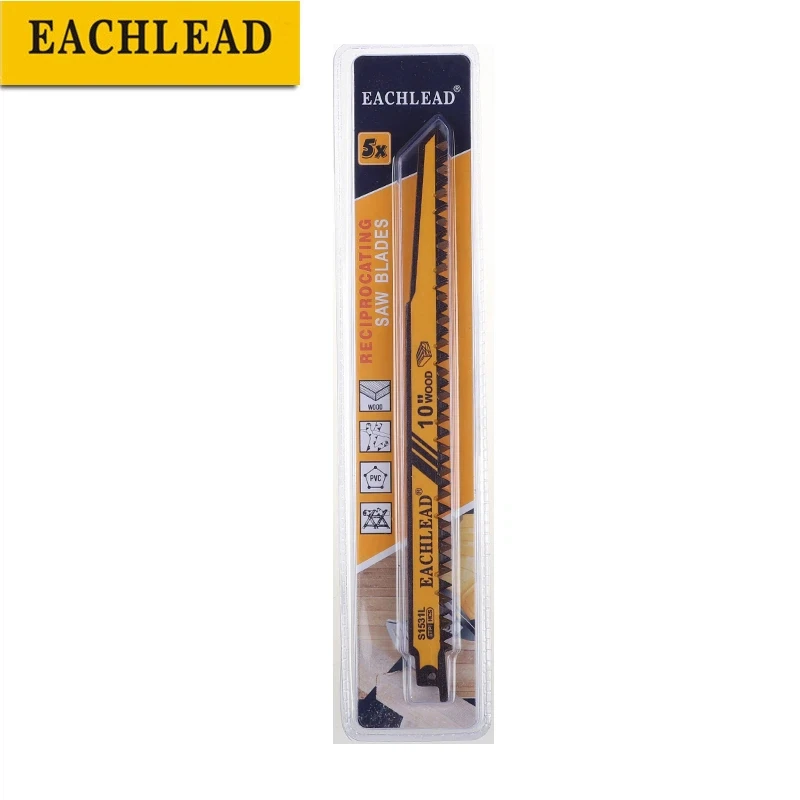
Never map EACHLEAD carbide masonry recip SKUs as wood-pruning blades. For packaging, fit, or adjacent damp-wood SKUs after you lock TPI and length, use the Contact page—without assuming MOQ or lead time from this article.
FAQ
Can I use a Sawzall for pruning trees?
Yes—with a wood or pruning reciprocating blade matched to the cut, not a fine metal or wrong demo tooth set. Large trunks and finish-sensitive fruit trees may still need a chainsaw or handsaw instead of a recip.
What TPI pruning blade should I buy?
For green wood and fast pruning, industry selection language commonly sits around 3–6 TPI with open gullets. Ultra-aggressive 3 TPI can be harder to control on small limbs, so match coarseness to diameter and finish needs.
Is green wood different from dry lumber for blade choice?
Yes. Green and sap-heavy wood needs chip clearance; fine metal TPI clogs and overheats. Dry clean wood still wants coarse wood teeth, but gullet packing risk is usually lower.
How long should the blade be?
Long enough to overrun the branch diameter with control left for shoe contact. Longer blades add reach and also add whip; pick length for the diameters you actually cut.
HCS or bi-metal for pruning?
Use HCS wood/pruning blades for clean and damp wood without nails. Switch to bi-metal wood-with-nails blades when nails, staples, or wire may be in the cut.
Do I need carbide for pruning?
Retail carbide pruning blades are often marketed for dirt and roots that destroy steel teeth. That market class is not a reason to buy EACHLEAD masonry carbide recip SKUs as pruning blades—keep abrasive root duty off the clean-wood HCS path.
Will a metal-cutting blade work for branches?
Usually poorly. Fine metal teeth clog in green wood and tear instead of clearing chips. Use a pruning or coarse wood blade for limbs.
Is “Sawzall blade” a brand requirement?
No. “Sawzall” is common search language for reciprocating saws and blades. Confirm shank fit to your tool; the pruning decision still starts with TPI, gullets, length, and material class.
What EACHLEAD blade matches tree pruning language?
S1531L publishes tree cutting and pruning at 5 TPI for diameter 15–150 mm. S1542K is titled pruning; stock it from the table (8.5 TPI, damp wood 15–190 mm), not from conflicting marketing TPI claims.
Any safety basics I should not skip?
Keep the shoe flat on the work, use a sharp proper blade, wear eye/face protection, and respect constant-pressure control rules for powered recip saws. Overhead cuts add fatigue—stop when control slips.
References
- OSHA 1910.243 — Guarding of portable powered tools — constant-pressure control for reciprocating saws
- OSHA eTool — Handheld Saws — proper blade for the material, sharp blades, eye and face protection
- Power Tool Institute — Reciprocating (Saber) Saws & Jig Saws safety sheet — three-teeth-in-contact metal-cutting guidance and recip safety context
- The Garage Journal — “Sawzall Pruning Blade?” — user language on 3 TPI aggression, green wood gumming, and dirt dulling steel