


How Do You Measure a Hacksaw Blade for an Order?
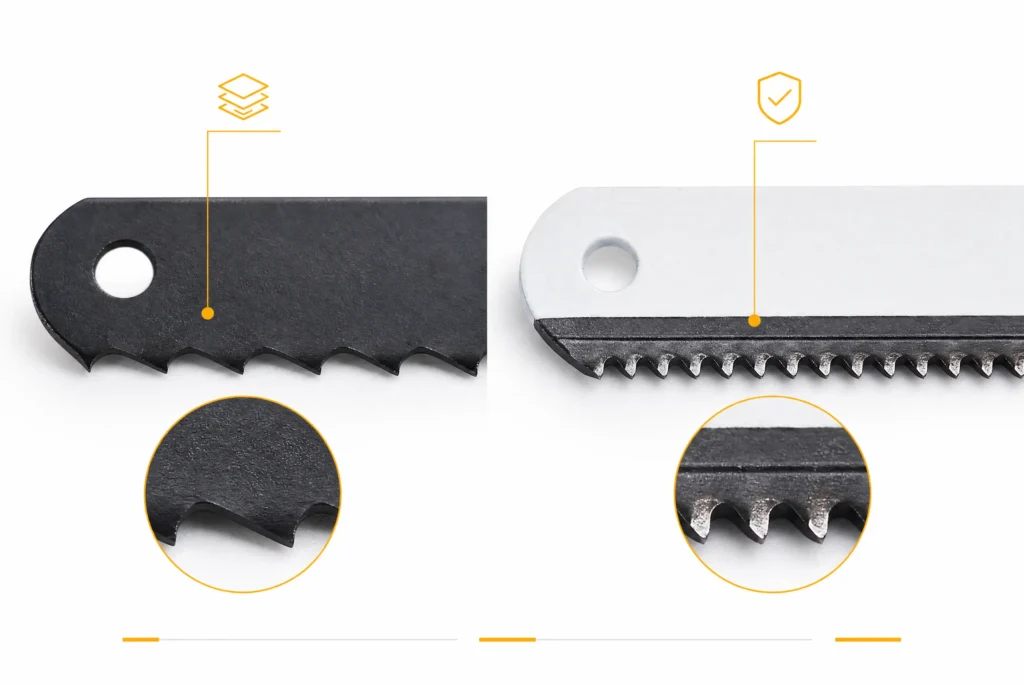
To measure a hacksaw blade for an order, record its physical end-to-end length first, then its end feature, width, thickness, pitch, and holder. A number such as 12 inches is only the start of a procurement record; it does not establish that a replacement will fit a particular frame or machine.
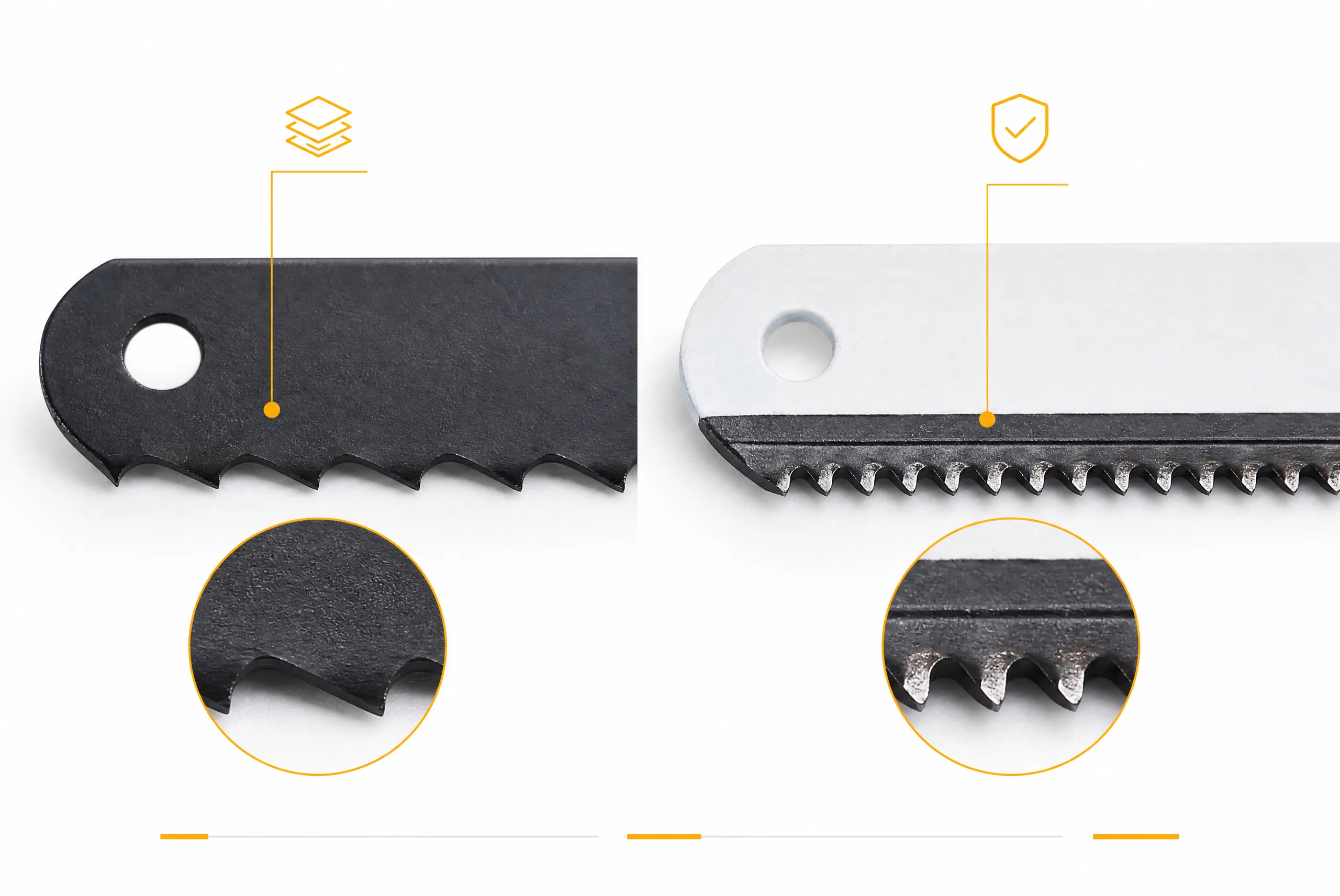
Part 1. What must be measured before a replacement is ordered?
Start with the old blade only after the tool is isolated and the blade can be handled safely. The hacksaw blade pillar is a useful family starting point, but ordering needs dimensions from the actual blade and its holder.
Capture a photograph beside a rule, then note which end contacts the frame pin, clamp, or machine fixture. The photo prevents a purchasing team from mistaking a toothed length for the overall blank length.
| Order field | What to measure or identify | Why it belongs in the file |
|---|---|---|
| Overall length | Physical end to physical end | Establishes the nominal size |
| End feature | Holes, pin locations, clamp edge, or tabs | Checks mounting geometry |
| Cross section | Width and thickness separately | Avoids a blade that fouls a guide |
| Cutting specification | TPI and workpiece material | Keeps length separate from cut selection |
Part 2. How do you capture overall length without guessing?
Lay an intact blade flat on a bench and place the zero mark at one true end. Read the dimension at the opposite true end, not at the first or last tooth. If the blade has holes, measure the full body length first and record hole-center spacing as a second dimension.
Use the same unit throughout the RFQ. A millimetre value can sit beside an inch nominal size, but label both rather than silently converting a rough tape reading.
The complete hacksaw buying guide helps with broader blade choices after the physical record is complete. It cannot replace a measurement of the installed blade.
Part 3. Which end features must be recorded?
An end feature decides how the blade is retained. Describe whether the blade has pin holes, a plain clamping end, or another visible mounting shape; include close photographs of both ends whenever possible.
For pin-mounted blades, measure from hole center to hole center as an additional check. That distance is not automatically the same as overall length, and both values should be visible to the reviewer.
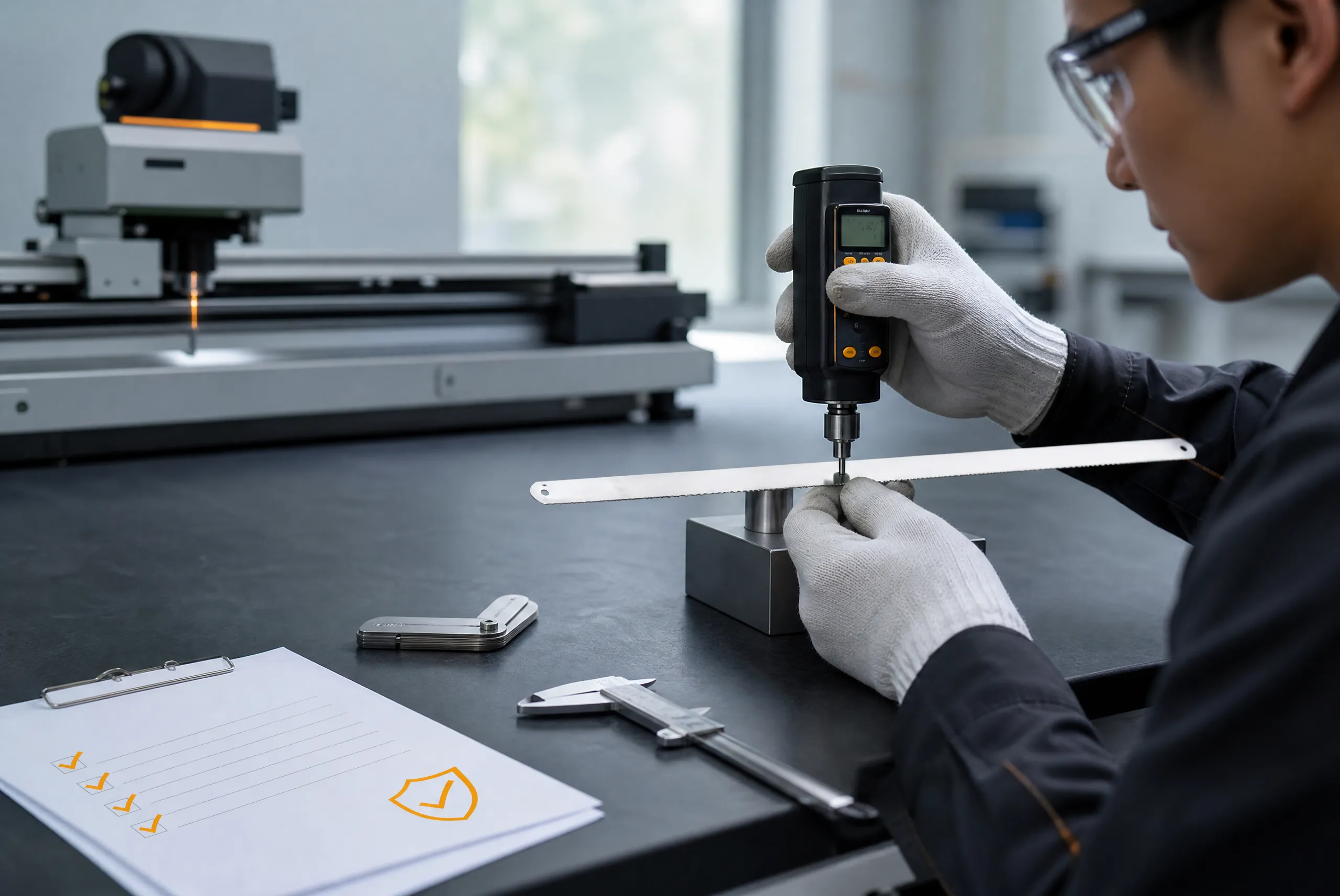
| End-feature observation | Record it this way | Do not assume |
|---|---|---|
| Circular hole | Diameter and center spacing | All holes use the same pin |
| Plain end | Edge shape and clamp contact area | Any clamp accepts the thickness |
| Bent or damaged end | Photograph and frame setting | Fragment length equals original length |
| Unknown holder | Tool photo and available marking | Category image proves fit |
Part 4. Why measure width and thickness separately?
Width affects clearance and guidance, while thickness affects how the blade sits in a clamp or guide. They are separate dimensions even if a supplier lists them together.
Use calipers when available; otherwise state that the figure is an approximate rule measurement. The metal selection guide can inform material and pitch discussions, but it does not turn an approximate cross-section into a guaranteed match.
| Dimension | Practical capture method | RFQ wording |
|---|---|---|
| Width | Across the blade body, away from damaged teeth | “Body width measured at ___” |
| Thickness | Across the blade edge/body | “Body thickness measured at ___” |
| TPI | Count one inch of teeth or read marking | “Observed/marked ___ TPI” |
| Condition | Note bends, missing teeth, or corrosion | “Reference sample condition: ___” |
Part 5. How do frame settings and a broken blade change the check?
A broken blade is evidence, not a complete drawing. Pair its remaining dimension with the frame adjustment setting, an intact mate from the same tool, or a manual specification before deciding what length to request.
Do not stretch a fragment to a likely nominal size. Instead, ask the buyer to provide a photo of the installed position and the holder interfaces; that is more useful than a confident estimate.
Machine-related wording needs its own boundary. A machine fixture may use a different mounting, body, tensioning, or operating arrangement than a hand frame, so a hand-blade measurement must not be used as a machine specification.
Part 6. What should a length-confirmation RFQ contain?
Put the measurement evidence into one controlled line item. Include the tool context and ask the supplier to confirm which documented dimension still needs checking before any sample fit.
| RFQ field | Buyer provides | Supplier review request |
|---|---|---|
| Blade sample | End-to-end length and photos | Confirm candidate nominal size |
| Mounting | Hole spacing or clamp/end details | Confirm mounting pattern needs |
| Holder context | Tool/frame photos and markings | Flag manual or machine boundary |
| Cut context | Workpiece and observed TPI | Suggest listed family to test |
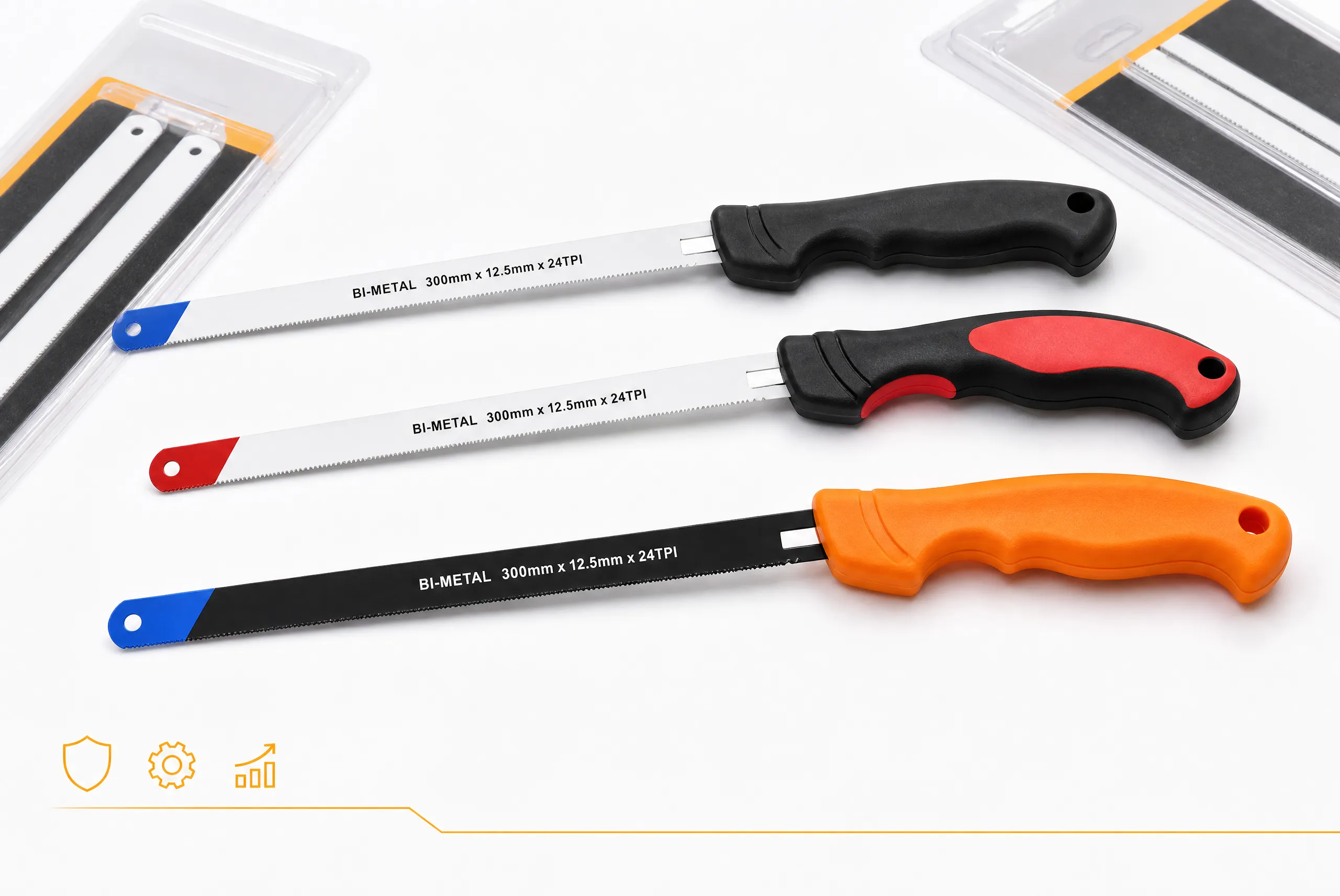
Product recommendation: after documenting those fields, review the bi-metal hacksaw blade category. It is a family starting point, not a promise that one listed blade fits every holder. Send the measurements and sample-fit requirement through Contact EACHLEAD for review.
Fit Boundary
This workflow is appropriate when the buyer can document the blade and holder. It is not a substitute for a manufacturer drawing, an undamaged reference sample, or confirmation of a powered-machine fixture.
Part 7. Where does manual versus machine scope begin?
Manual hacksaw work starts with a hand frame and its retention geometry. Machine hacksaw work starts with the machine’s documented fixture, stroke arrangement, guarding, and blade requirement; it is not merely a larger hand-frame order.
Keep the scope labels separate in purchasing records. If the application is a machine, use the machine documentation and a machine-specific review rather than adapting hand-hacksaw dimensions. General safeguarding expectations also remain relevant; see OSHA machine-guarding requirements.
FAQs
How do I measure a hacksaw blade?
Measure the intact blade from physical end to physical end, then record its end features, width, thickness, pitch, and holder information.
Is hacksaw blade length measured from hole to hole?
Not by itself. Record hole-center spacing when applicable, but also record the full physical blade length.
What information should I give a blade supplier?
Provide dimensions, clear photos of both ends, the holder or tool, the intended cut material, and a sample-fit requirement.
Can a 12-inch blade fit every hacksaw frame?
No universal fit follows from the nominal length. Confirm the holder and mounting pattern with the actual frame information.
Does blade thickness matter when ordering?
Yes. Thickness can affect clamp and guide clearance, so it should be recorded separately from width.
Should I measure a broken blade?
Use it as supporting evidence, then cross-check against the frame setting, an intact mate, or tool documentation.
What is the difference between hand and machine hacksaw blades?
The boundary is the mounting and operating system. A hand-frame record does not specify a machine blade or machine fixture.