


Why Does a Hacksaw Blade Break During a Cut?
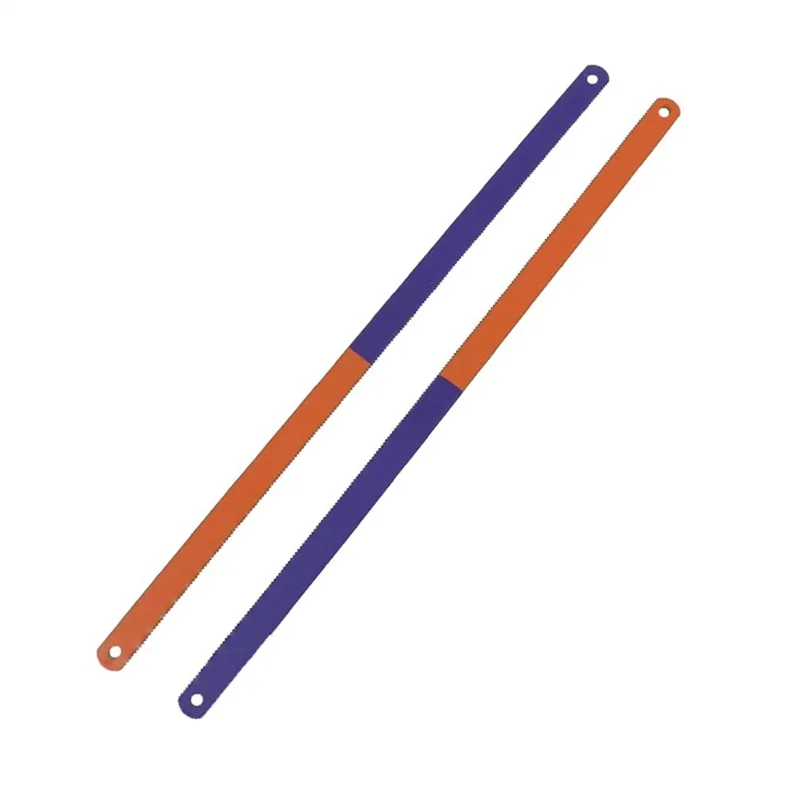
Most hacksaw-blade breakage starts with a mismatch between blade setup and cutting conditions, such as poor frame tension, a twisted cut, unsupported work, or tooth pitch that does not suit the section. Diagnose the fracture and setup before replacing the blade; no blade-life or cut-rate outcome can be assumed from a general guide.

Part 1. What does the break location reveal?
A fracture near a mounting hole points the review toward frame seating, pin engagement, or repeated bending at the end of the blade. A break in the cut calls for a separate check of blade alignment, work movement, and whether the kerf is closing on the blade.
| Break location | Likely check | First action |
|—|—|—|
| At mounting end | Pin seating or frame alignment | Inspect frame and refit blade |
| Inside kerf | Pinch or side loading | Stabilize work and cut straight |
| After repeated flexing | Tension or work movement | Review setup before retesting |
Part 2. How can frame tension contribute to breakage?
A blade that is not seated squarely can flex sideways with every stroke. Apply tension only as the frame instructions allow, then confirm that both ends are engaged before the work starts.
Use the Hacksaw Blade pillar to review the listed product family before making a commercial selection. For adjacent context, see Hacksaw Blades for Metal: Types and Selection Guide and Hacksaw Blade Buying Guide.
Part 3. Why do twist and side pressure matter?
A hacksaw blade is intended to work in a straight kerf rather than as a lever. Reposition the work or the operator when the frame is forced to turn through the cut.

Part 4. How does work support change the diagnosis?
A loose offcut can drop, pinch the kerf, and load the blade unexpectedly. Support the stock close enough to control movement while keeping hands clear of the cutting path.
| Observed symptom | Setup category | What to record |
|—|—|—|
| Blade wanders | Twist or loose work | Cut line and support method |
| Sudden snap | Kerf closes | Offcut position |
| Teeth chip before break | Pitch or material mismatch | Workpiece and pitch |
Part 5. What should buyers check about tooth pitch?
Tooth pitch should be evaluated against the wall thickness and section shape rather than selected from a broad label. A sample cut should note tooth engagement, wandering, heat, and the fracture location.
Part 6. Which replacement details belong in an RFQ?
Report the frame type, blade length, workpiece material, section thickness, tooth pitch, cut direction, support method, and a photograph of the failed blade. Those facts give a supplier a basis to suggest a listed family without converting the advice into a universal-fit claim.
| RFQ input | Buyer supplies | Why it matters |
|—|—|—|
| Frame | Mounting and length | Confirms listed fit boundary |
| Workpiece | Material and thickness | Guides pitch review |
| Failure | Photo and break position | Separates setup causes |
Product recommendation: review the Hacksaw Blade pillar after documenting the RFQ fields. It fits as the verified product-family route, but is not recommended as a default model because this article does not verify universal frame, material, or application fit.
Fit Boundary
This route fits buyers who can confirm the frame, workpiece, and acceptance criteria. It does not support a life, cut-rate, certification, universal-fit, MOQ, lead-time, or unverified-model claim.
Part 7. When is replacement not the first fix?
Do not replace blades repeatedly without correcting a bent frame, worn pins, unstable vise, or a cut path that closes. A controlled test after setup correction is more informative than comparing failures from changing conditions.
For a configuration review, contact EACHLEAD with the frame, material, dimensions, cut conditions, and any observed symptom.
FAQs
Why does my hacksaw blade break at the pin?
Check seating, pin condition, and frame alignment before fitting another blade.
Can too much tension break a hacksaw blade?
Excess or uneven tension can add stress; use the frame maker’s setup instructions and verify straight seating.
Why does a blade snap in the middle of a cut?
Kerf pinch, twisting, unsupported stock, or side pressure are common categories to investigate.
Does a dull blade cause breakage?
Wear can change cutting behavior, but the fracture should be evaluated together with pitch, support, and alignment.
Should the workpiece be clamped for hacksaw cutting?
Stable support helps prevent movement and side loading; choose a safe method suitable for the workpiece.
Which EACHLEAD blade should replace a broken blade?
Use the hacksaw-blade pillar and an RFQ with the failed-blade details; this page does not verify a universal replacement model.
Can this guide predict blade life?
No. Blade life depends on the actual material, setup, operator method, and verified product specification.