


Which Reciprocating Blade Handles Tree Root Cutting?
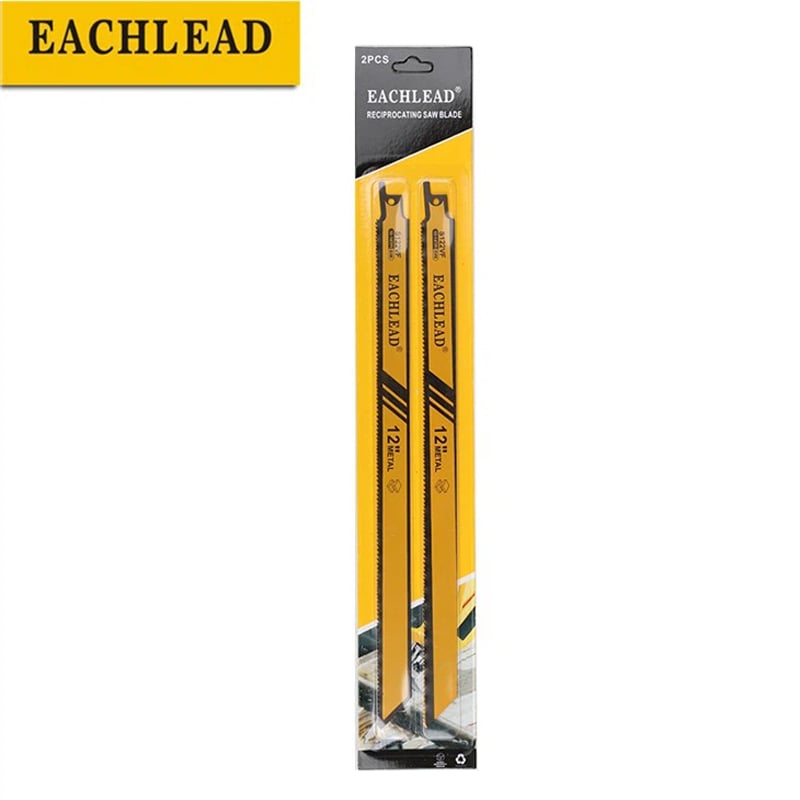
How to Choose a Reciprocating Saw Blade for Tree Roots depends less on the wood and more on the dirt around it. Record the root diameter, soil exposure, trench access, and how many cuts the job needs before picking a blade family. For the commercial path, review the HCS reciprocating saw blade category.
Part 1. What makes root cutting different from pruning branches?
Root cutting is not pruning moved underground. The wood is similar, but the conditions are hostile: soil packed with grit, stones hiding against the root face, water in the kerf, and a workpiece that cannot be turned or repositioned.
Branch work belongs to the pruning blade buying guide, where the blade stays clean and the cut is open. This article covers the buried case, where abrasion and access dominate the decision.
| Root decision input | Why it matters | What to record |
|---|---|---|
| Root diameter | Sets blade length and pitch | Largest diameter in the job |
| Soil exposure | Grit wear governs blade cost | Cleared, partial, or buried |
| Access | Trench width limits stroke angle | Working clearance measurements |
| Cut count | Roots consume blades fast | Cuts per job, blades per pack |
Important: Use the proper blade for the material and follow the tool instructions; see OSHA handheld saw guidance.
Part 2. Which tooth pitch handles wet, fibrous root wood?
Wet, fibrous wood favors coarse pitch. Large gullets carry away stringy, damp chips that would pack a fine-tooth blade, and fewer, deeper teeth keep cutting when the kerf turns muddy.
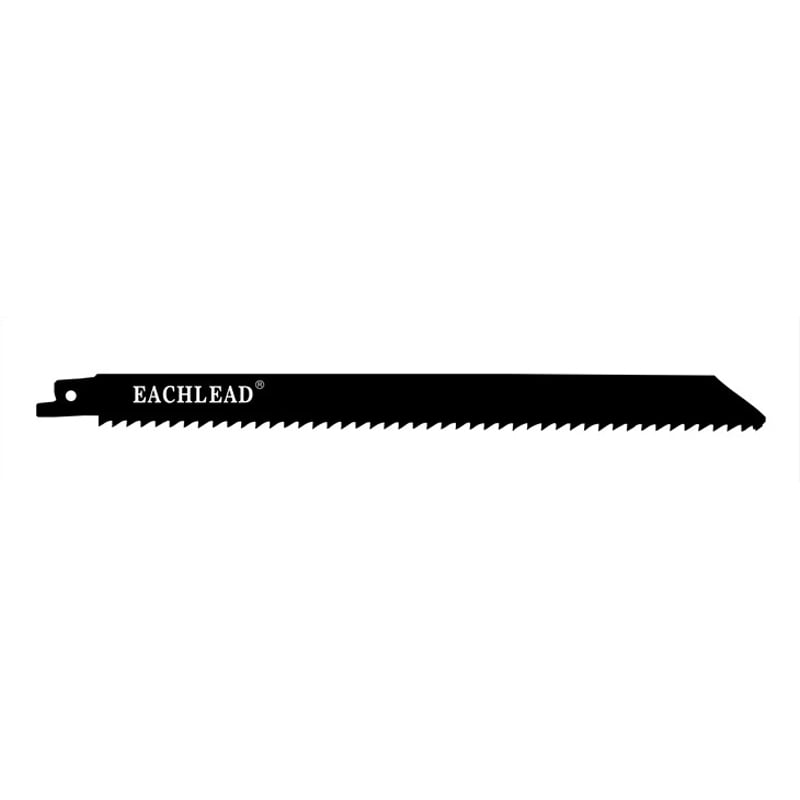
On this site, the adjacent verified family is HCS wood blades with coarse pitch; the HCS vs bi-metal comparison explains where each body type belongs. Treat published pitch bands as starting points and confirm on a sample root, not on clean lumber.
Part 3. How do soil and grit change blade selection?
Grit is an abrasive, and every pass through soil grinds the tooth edges regardless of brand or steel. The realistic plan is to treat root blades as consumables: budget several per job, and spend effort on exposing the root rather than on chasing a blade that shrugs off dirt.
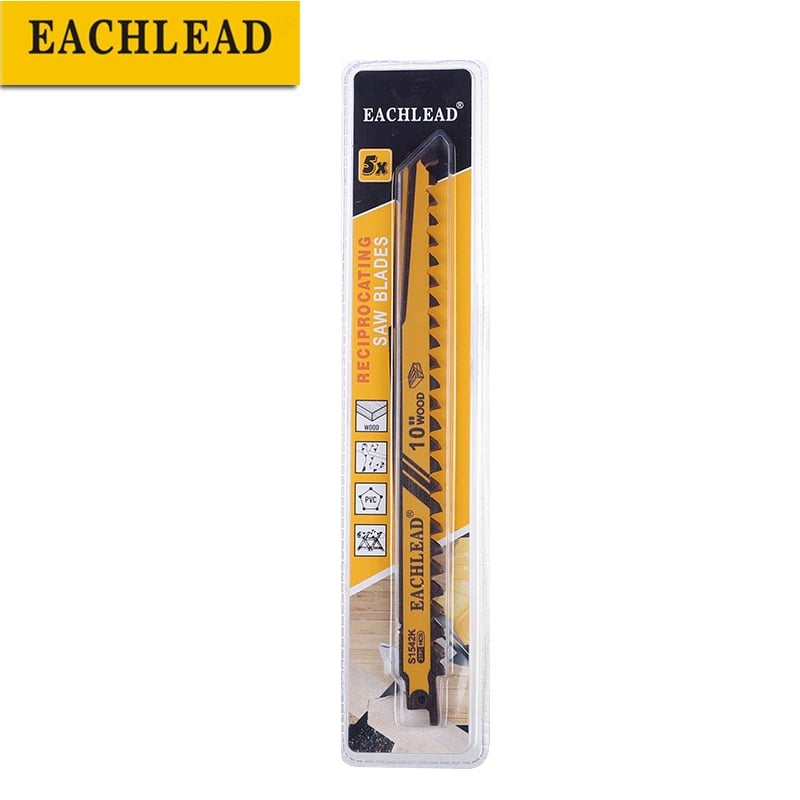
Honesty about listings matters here. The S1542K pruning page lists wood and damp wood in an approximate 15-190 mm diameter range, and it does not list soil contact or buried roots, so the pruning listing cannot be stretched into a root-cutting claim.
| Field symptom | Likely category | First correction |
|---|---|---|
| Teeth dull after one or two roots | Grit abrasion | Clear more soil; accept consumable rate |
| Blade stalls in the kerf | Mud packing fine teeth | Coarser pitch, rock the stroke |
| Blade bends in the trench | Prying against the side wall | Widen access, cut straighter path |
| Sudden tooth loss | Stone strike | Probe and scrape before cutting |
Part 4. What length and access plan works in a trench?
Pick the shortest blade that clears the root plus the stroke. In a narrow trench a long blade forces angled cuts and side-loads the body, which is how blades bend and operators lose control of the shoe.
Plan two cuts where space allows. Removing a section instead of a single slice gives the blade an escape path, reduces pinching, and keeps the saw’s shoe seated against the root face.
Part 5. What site preparation protects the blade and the operator?
Dig first, cut second. Expose the root’s full circumference, scrape the bark line where the cut lands, and probe for stones with a hand tool so the first tooth strike is wood rather than rock.
Footing and visibility count as much as the blade. A trench cut is an awkward-posture cut, so clear standing room, keep the cord or battery out of the kerf line, and follow the tool maker’s two-hand guidance.
Rinse and dry the blade after the job. Wet soil left on carbon steel invites corrosion on the very edge you paid for, and a quick wipe extends nothing but costs nothing.
Part 6. What belongs in a root-cutting blade RFQ?
Because no reviewed listing names buried roots, the RFQ has to carry the evidence. State the diameter range, the soil condition after preparation, the trench access, the expected number of cuts per job, and the pack format that matches crew habits.
Ask the supplier to map candidate SKUs to their listed wood ranges and to quote a sample plan on actual roots. Acceptance should be written before the test: cuts completed per blade, edge condition after the job, and any bending or tooth loss.
| RFQ field | Buyer supplies | Supplier confirms |
|---|---|---|
| Root profile | Diameter range and wood state | Listed wood application range |
| Site condition | Soil exposure after preparation | Pitch and body recommendation |
| Access | Trench clearance and stroke room | Blade length candidates |
| Validation | Sample roots and acceptance criteria | Candidate SKU and pack format |
Product recommendation: review the HCS reciprocating saw blade category once those fields are documented. Why it fits: HCS coarse-pitch wood blades are the verified family for green and damp wood here. Why not recommend as a default: no reviewed product page lists buried roots or soil contact, so selection must finish with an RFQ and a sample test rather than a model claim.
Fit Boundary
This workflow fits landscapers and suppliers who can expose roots, describe soil conditions honestly, and run sample cuts. It is not sufficient for stump removal beyond a reciprocating saw’s scope, damaged tools, or jobs that demand a guaranteed blade count without testing.
Part 7. How should landscaping suppliers position root SKUs?
Label the listed range, not the fantasy. A coarse HCS wood blade can be positioned for exposed roots after soil clearing, with the wood-diameter listing quoted, while the packaging avoids any promise about dirt tolerance.
Bundle for consumption. Root crews burn through blades, so multi-packs with clear pitch and length markings outsell single premium blades in this niche, and honest labeling keeps the return rate defensible.
To request a configuration review, send the application details to EACHLEAD: tool, holder, root diameter range, soil condition, trench access, current blade, observed failure, and target pack quantity.
FAQs
Can a reciprocating saw cut tree roots?
Yes, for roots the saw can reach once exposed. Expect the surrounding soil, not the wood, to be the limiting factor for blade condition.
Why does soil destroy blades so quickly?
Soil carries quartz grit that abrades tooth edges on every stroke. Clearing the cut line and treating blades as consumables is the practical response.
What TPI works for wet, fibrous roots?
Coarse pitches with large gullets clear damp, stringy chips best. Confirm on a sample root, since diameter and moisture shift the answer.
Should roots be dug out before cutting?
Yes. Exposing the circumference and scraping the cut line protects the blade, improves control, and lets you probe for stones first.
Does EACHLEAD list a dedicated root-cutting blade?
No reviewed product page lists buried roots or soil contact. The pruning listing covers wood and damp wood in an approximate 15-190 mm range, so use the category and an RFQ for root work.
How long should a root-cutting blade be?
Long enough to clear the root diameter plus the stroke, and no longer. Extra length side-loads in a trench and invites bending.
What should a landscaping supply RFQ include?
Diameter range, soil condition after preparation, trench access, cuts per job, pitch and length candidates, pack format, and a sample-cut acceptance test.