


What does blade breakage actually indicate?
Jigsaw blades break when the mounting, cut conditions, or blade specification exceed what the body can absorb. Breakage is rarely random: wrong shank fit, excess overhang, binding in the kerf, and forced feed are the usual causes. Confirm shank compatibility first via the Jigsaw Blade category overview.
Part 1. What does blade breakage actually indicate?
A break is a mechanical failure signal. It usually points to mounting stress, cut binding, or using the wrong blade class for the material.
Part 2. Which failure modes show up in the field?
Shank-area fractures, mid-body snaps, and tooth stripping have different root causes and different fixes.
| Failure mode | Typical location | Likely cause |
|---|---|---|
| Shank fracture | Clamp area | Wrong shank or loose mount |
| Mid-body snap | Middle of blade | Overhang or binding |
| Tooth stripping | Tooth line | Wrong material or forced feed |
Part 3. How do shank mismatch and loose mounting cause breaks?
If the blade cannot seat securely, the clamp area concentrates stress every stroke.
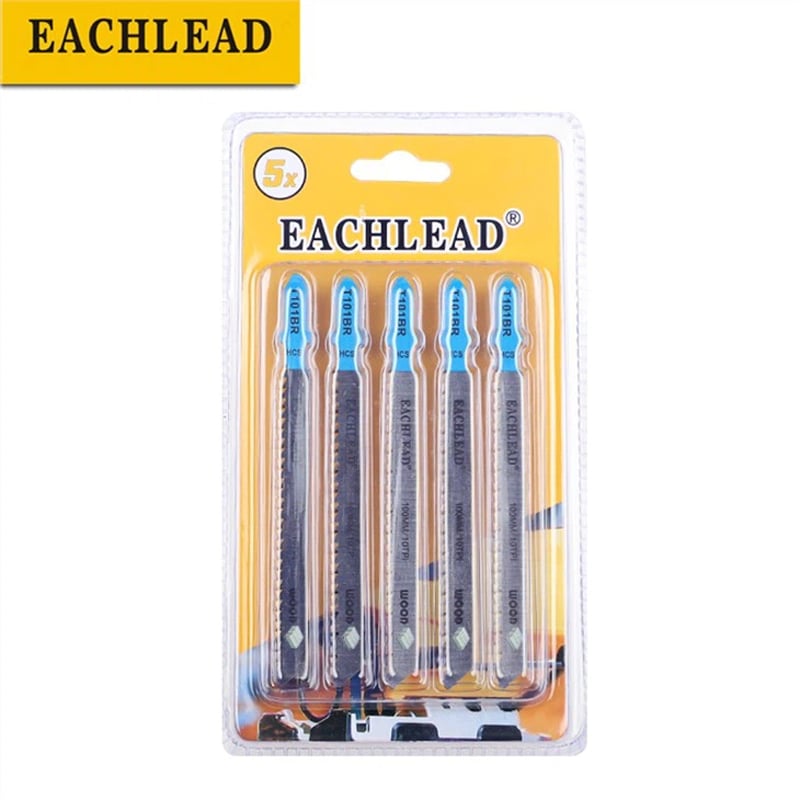
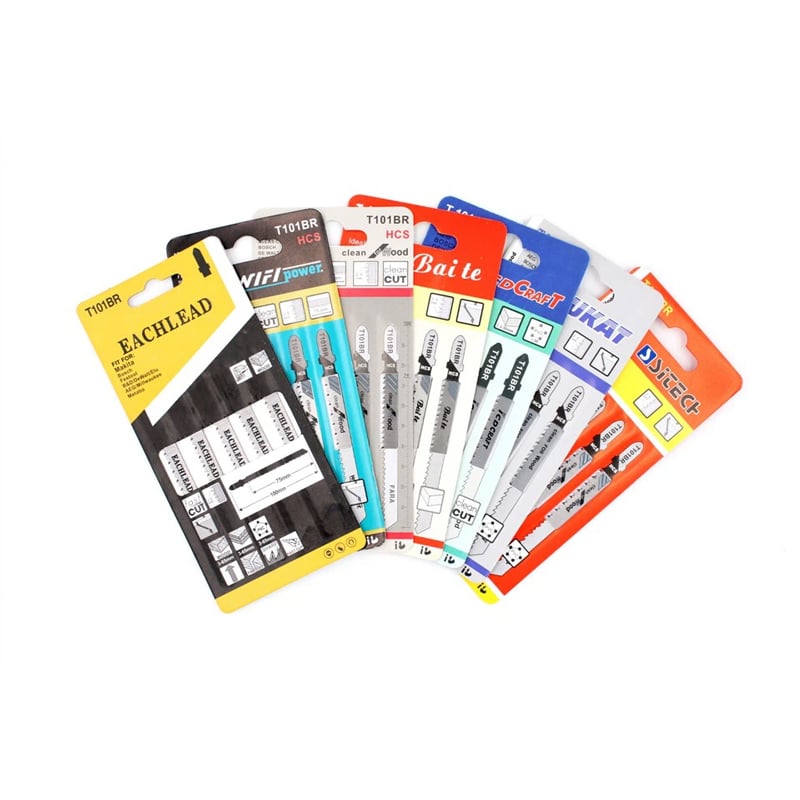
Before blaming blade quality, verify shank type using the T-shank vs U-shank jigsaw blade comparison.
| Mounting issue | Field signal | First fix |
|---|---|---|
| Wrong shank | Blade sits loose or skewed | Match shank to tool |
| Worn clamp | Visible play in holder | Service tool or replace holder parts |
| Tool lift while engaged | Shank neck fracture | Keep tool grounded until stroke completes |
Part 4. How do overhang, radius, and binding load the blade?
Too much exposed length and tight curves increase flex cycles and side loading.
| Condition | Stress mechanism | Prevention step |
|---|---|---|
| Long overhang | Flex fatigue | Minimize exposed length |
| Tight radius | Side loading | Use narrower blade and relief cuts |
| Kerf binding | Pinch load | Support both sides of cut line |
| Forced feed | Tooth overload | Reduce feed and verify TPI |
Part 5. When is the material or TPI choice the real problem?
Forcing a fine blade through thick stock or a wood blade through metal accelerates fatigue.
| Material mismatch | What operators see | Corrective action |
|---|---|---|
| Wood blade in metal | Fast tooth wear or snap | Switch to metal-rated blade |
| Fine TPI in thick stock | Slow cut and heat | Move to suitable TPI band |
| Coarse TPI on fragile panel | Splintering and snag | Use finer tooth or support |
Part 6. What prevention checklist belongs in shop SOPs?
Standardize shank verification, blade length, feed discipline, and replacement triggers.
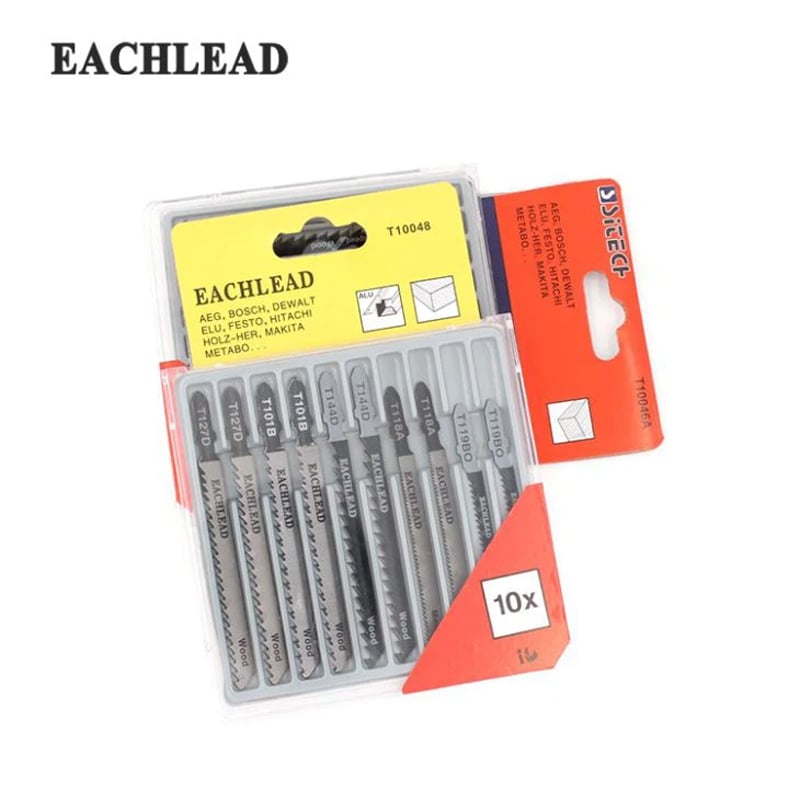
Product recommendation: review the 10 Piece Assorted T-Shank Jigsaw Blade Set T10048 only after the application fields in this article are documented. Target URL: /product/10-piece-assorted-t-shank-jigsaw-blade-set-t10048/; natural anchor: 10 Piece Assorted T-Shank Jigsaw Blade Set T10048.
Fit Boundary
This workflow fits teams that can verify shank type, material, and cut conditions before ordering. It is not sufficient when the buyer expects a guaranteed outcome without testing or when tool service issues have not been ruled out.
Why not recommend as a default: do not recommend this SKU as a breakage fix when the root cause is wrong shank type, severe binding, or a tool defect that has not been inspected.
Part 7. What should distributors capture in breakage returns?
Returns improve when the buyer records shank type, material, overhang, and the fracture location.
To compare EACHLEAD blades for a program or OEM pack, send the material list and finish requirement. You can also review jigsaw blade products once those inputs are documented.
FAQs
Why do jigsaw blades break at the shank?
Shank-area breaks often trace to wrong shank type, loose clamping, or lifting the tool while the blade is still engaged in the cut.
Does a longer blade break more easily?
More exposed length increases flex and wander, which raises fatigue. Use the shortest blade that safely clears the workpiece.
Can tight curves cause jigsaw blade breakage?
Yes. Small radii side-load the blade. Relief cuts and a narrower blade reduce stress in tight curves.
Why do blades break when cutting metal?
Metal cutting increases load and heat. Wrong TPI, poor lubrication, or a wood-rated blade can overload the body quickly.
Is breakage always a quality defect?
Not always. Many breaks are application errors—binding, overhang, wrong shank, or forced feed—rather than a single faulty blade.
How often should shops replace jigsaw blades?
Replace when tooth sharpness drops, wander increases, or finish quality changes. Do not wait for a full fracture if performance is already poor.
What data helps reduce breakage returns for distributors?
Capture tool model, shank type, material, thickness, overhang length, and whether the break occurred at the shank or mid-body.