


How to Choose the Right Jigsaw Blade for Aluminum Sheet
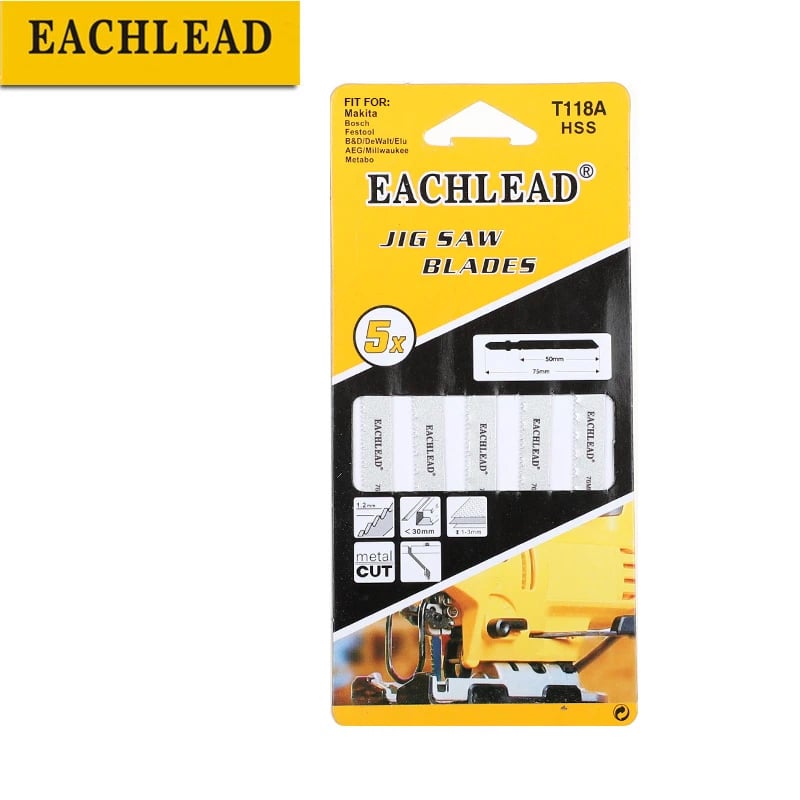
A jigsaw blade for aluminum must match sheet thickness, alloy type, and the finish you need—not just a generic metal label. Bi-metal blades with the right TPI and controlled feed usually outperform wood blades on thin aluminum, but the setup still controls burr, wander, and heat. See the Jigsaw Blade category overview for the wider product line.
Contents
- Part 1. What does aluminum jigsaw blade selection actually decide?
- Part 2. Which blade body and TPI bands suit aluminum sheet?
- Part 3. How do alloy, thickness, and profile change the blade choice?
- Part 4. What setup steps reduce burr, heat, and blade wander?
- Part 5. What should buyers compare in a metal-jigsaw RFQ?
- Part 6. Which EACHLEAD blade family belongs in an aluminum RFQ?
- Part 7. What field mistakes look like the wrong aluminum blade?
Part 1. What does aluminum jigsaw blade selection actually decide?
The blade choice sets chip clearance, heat buildup, edge quality, and whether the tool can maintain line on thin sheet.
Part 2. Which blade body and TPI bands suit aluminum sheet?
Aluminum is softer than steel but still needs a metal-rated tooth form and a TPI band matched to thickness.
| Thickness band | Typical TPI direction | Edge priority | Risk if ignored |
|---|---|---|---|
| Thin sheet | Higher TPI | Clean edge | Heavy burr and grab |
| Medium sheet | Mid TPI with steady feed | Balanced | Heat and galling |
| Profile or extrusion | Mid TPI, stiffer blade | Line control | Wander and breakout |
Part 3. How do alloy, thickness, and profile change the blade choice?
Sheet, extrusion, and thin plate place different demands on stiffness, length, and tooth count.
For broader metal context, review the best blades for metal jigsaw guide before narrowing to aluminum-only SKUs.
| Aluminum form | Selection focus | Setup note |
|---|---|---|
| Sheet panel | TPI and burr control | Support near cut line |
| Extrusion | Stiffness and length | Clamp profile securely |
| Thin plate | Heat and feed control | Reduce orbital action |
Part 4. What setup steps reduce burr, heat, and blade wander?
Support, lubrication, reduced orbital action, and steady feed are process controls—not optional extras.
| Setup control | Symptom if skipped | First correction |
|---|---|---|
| Sheet support | Vibration and burr | Add backer or clamp |
| Reduced orbital action | Edge galling | Lower orbit per manual |
| Steady feed | Tooth loading | Do not force the cut |
| Correct shank fit | Poor tracking | Verify clamp and shank |
Part 5. What should buyers compare in a metal-jigsaw RFQ?
Document alloy, thickness, cut type, shank type, and whether the edge remains visible after fabrication.
| RFQ field | Buyer should state | Supplier should confirm |
|---|---|---|
| Alloy / temper | 1xxx, 3xxx, 5xxx, etc. | Recommended TPI band |
| Thickness | Gauge or mm | Blade length class |
| Edge requirement | Burr limit or visible face | Tooth style |
| Shank type | Tool-verified shank | SKU label match |
Part 6. Which EACHLEAD blade family belongs in an aluminum RFQ?
Start with a verified metal-cutting SKU only after the application fields are complete.
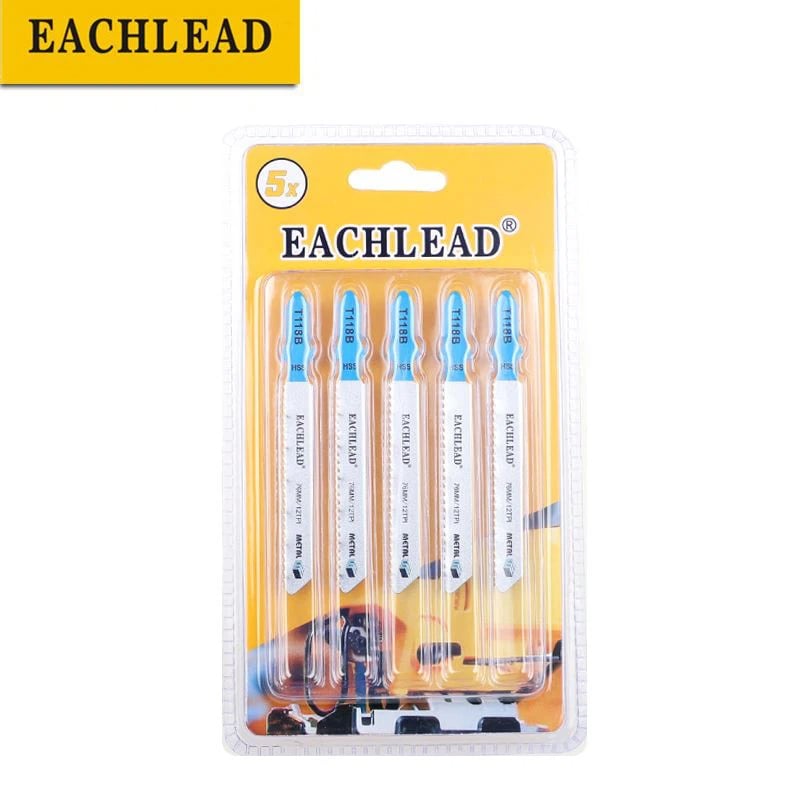
Product recommendation: review the T118A Metal Cutting Jigsaw Blades only after the application fields in this article are documented. Target URL: /product/t118a-metal-cutting-jigsaw-blades/; natural anchor: T118A Metal Cutting Jigsaw Blades.
Fit Boundary
This workflow fits teams that can verify shank type, material, and cut conditions before ordering. It is not sufficient when the buyer expects a guaranteed outcome without testing or when tool service issues have not been ruled out.
Why not recommend as a default: do not recommend this SKU for thick plate aluminum, hardened alloys, or projects that require a verified finish tolerance without sample testing.
Part 7. What field mistakes look like the wrong aluminum blade?
Galling, heavy burr, and early tooth wear often trace to TPI, feed, or using a wood blade on metal.
To compare EACHLEAD blades for a program or OEM pack, send the material list and finish requirement. You can also review jigsaw blade products once those inputs are documented.
FAQs
Can I cut aluminum with a wood jigsaw blade?
A wood blade may cut very thin soft aluminum in a pinch, but it usually leaves heavy burr, wears quickly, and increases grab risk. A metal-rated blade is the safer default.
What TPI is used for aluminum sheet with a jigsaw?
Higher TPI bands are common for thin sheet and cleaner edges, while slightly lower counts may be used for thicker stock with controlled feed. Test on scrap of the same thickness.
Do I need cutting fluid for aluminum with a jigsaw?
Lubrication or wax on the cut line can reduce galling and heat on some alloys. Follow the site safety rules for the workshop and the tool manual.
Is bi-metal required for aluminum?
Bi-metal or other metal-rated constructions are typical because they handle the abrasive nature of aluminum better than plain HCS wood blades.
Why does my jigsaw wander on aluminum sheet?
Thin sheet flexes, long blade overhang increases wander, and aggressive feed can pull the line off course. Shorten the blade and support the workpiece.
Can one blade cut aluminum and steel?
Some multi-material blades cover a range, but aluminum and steel place different demands on TPI and life. Document the primary material before standardizing a SKU.
What should distributors ask before stocking aluminum jigsaw blades?
Ask for alloy family, thickness range, shank mix, cut quality requirement, and whether buyers need sheet, extrusion, or profile cuts.