


What do jigsaw blade teeth control in a clean wood cut?
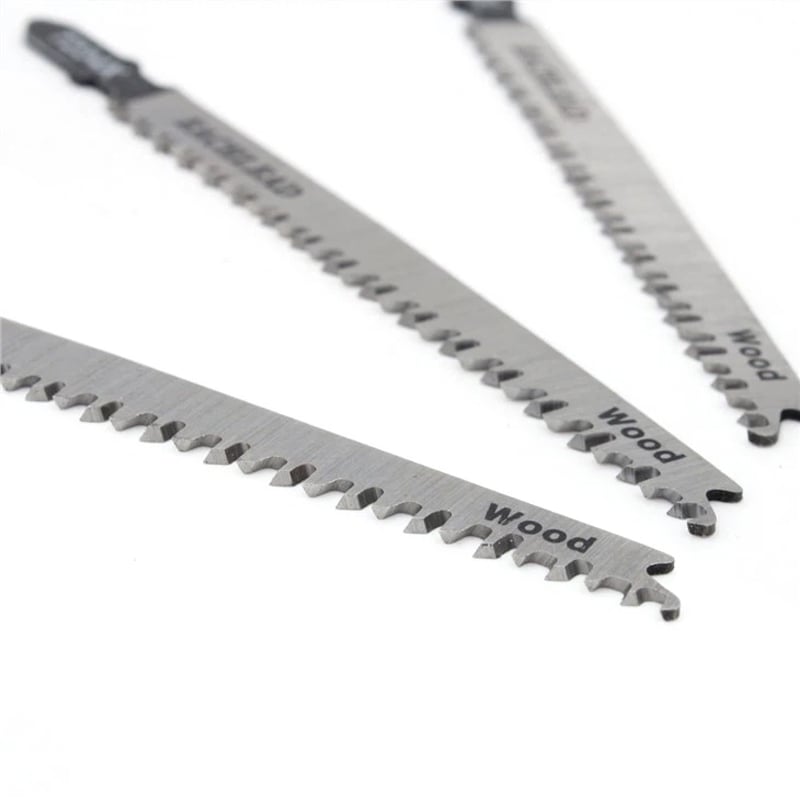
Clean wood cuts with a jigsaw depend on tooth count, tooth set, blade stiffness, and how the workpiece is supported—not on a single “fine finish” label. Use TPI and tooth style to match board thickness and the face that must stay chip-free. For the product line context, see the Jigsaw Blade category overview.
Part 1. What do jigsaw blade teeth control in a clean wood cut?
Jigsaw teeth set the balance between material removal, edge finish, and heat buildup in wood. More teeth per inch usually improve edge quality in thin and medium stock. Fewer teeth cut faster in thick or soft material but can leave a rougher face if the workpiece is unsupported.
Clean-cut buying is therefore a system decision. The tooth profile must match the wood species, thickness, and the face that remains visible after assembly. Buyers who skip that context often blame the machine when the blade was specified for speed rather than finish.
Important: Tooth choice does not replace safe setup. The CPSC power-tool safety guidance applies to workholding, PPE, and accessory selection together.
Part 2. How does TPI change splintering and cut speed in wood?
TPI is the first number buyers should align with thickness and finish needs. In general woodworking practice, higher TPI blades produce cleaner edges, while lower TPI blades clear stock faster. The correct value is conditional on the board and the cut direction relative to the show face.
| Wood task | Typical TPI direction | Finish priority | Speed priority |
|---|---|---|---|
| Thin plywood or veneer panel | Higher TPI | High | Low to moderate |
| General cabinetry hardwood | Medium to high TPI | High | Moderate |
| Framing lumber or demolition | Lower TPI | Low | High |
| Curved template work | Medium TPI with narrow blade | Moderate to high | Moderate |
Use the table as a planning range, not a universal chart. Confirm the actual EACHLEAD SKU labeling and intended material statement before standardizing procurement.
Part 3. Which tooth styles help plywood, hardwood, and framing lumber?
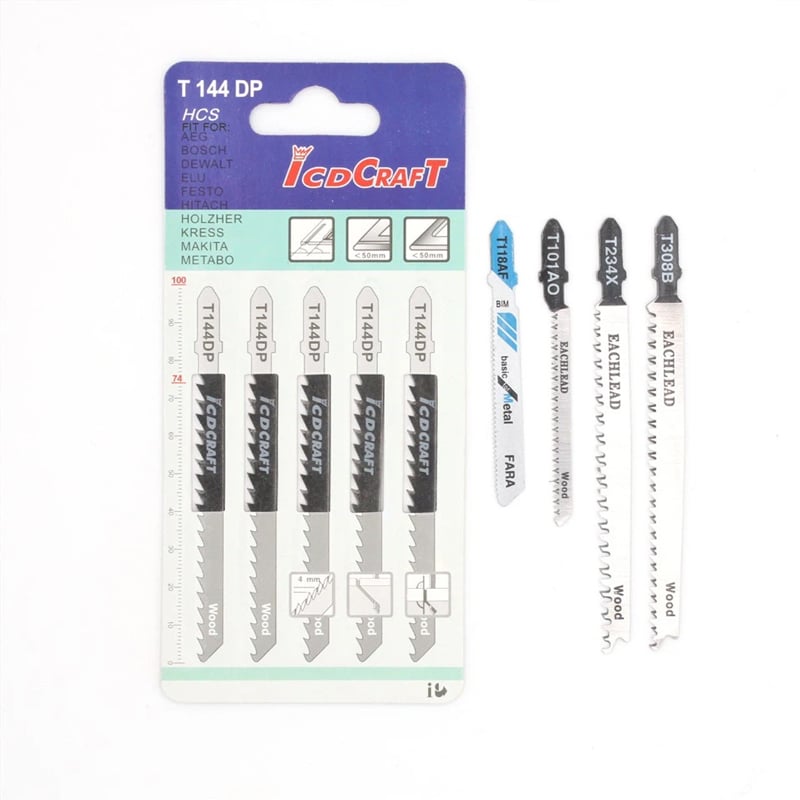
Standard upward-cutting teeth remain the default for many wood jobs. When the show face is on the bottom of the board or the material is chip-prone, buyers may move to reverse-tooth or specialty scribing blades. The best jigsaw blades for wood article covers broader wood SKU families; this section narrows the decision to finish quality.
Match tooth style to the show face
- Plywood and laminated panels: prioritize chip control on the visible face; consider masking and a backer board even with a higher-TPI blade.
- Solid hardwood: balance TPI with feed rate; a clean edge still requires support near the cut line.
- Framing lumber: prioritize removal rate; finish quality is usually secondary unless the cut remains exposed.
For curved work, tooth selection interacts with blade width. Review the best jigsaw blade for cutting curves before assuming a high-TPI straight-cut blade will track in tight radii.
| Material | Tooth style to evaluate | Setup note |
|---|---|---|
| Plywood show face | Higher TPI or reverse-tooth options | Backer board on the exit face |
| Thick hardwood | Medium/high TPI bi-metal or wood blade | Slower feed, supported cut line |
| Laminate or countertop | Reverse-tooth family | See laminate buying guide for chip control |
| Curved template cuts | Narrow blade, moderate TPI | Relief cuts on tight radii |
Part 4. How do blade length and body stiffness affect edge quality?
Length determines reach, but excess exposed blade can wander and leave waves or burn marks. Stiffer, shorter blades often track better in straight finish cuts. Narrower blades flex more in curves, which is desirable for radius work but counterproductive on long straight edges.
ISO 16084:2017 describes general requirements for power-tool saw blades at the standard level. Real-world finish still depends on how much blade is exposed, guide condition, and whether the operator is forcing the cut.
| Condition | Likely edge symptom | First adjustment |
|---|---|---|
| Too much blade exposed | Wander, rough wall | Use a shorter blade or reduce overhang |
| Low support near cut line | Splintering on exit face | Add backer board or clamp closer to line |
| Worn shoe or guide | Burn marks, drift | Inspect tool guides before changing TPI |
| Forced feed in hardwood | Burning, squareness loss | Reduce feed and verify TPI range |
Part 5. What setup mistakes look like a tooth-selection problem?
Many “wrong tooth” complaints in distribution are actually setup issues. Splintering on plywood often improves with backer support before the blade is changed. Burning in hardwood may disappear when feed rate drops or the guide is serviced.
Check these items before re-specifying TPI:
- Show face orientation relative to the tooth direction.
- Support within one inch of the cut line where possible.
- Blade exposure minimized for straight cuts.
- Guide bearings and shoe condition on the jigsaw.
- Shank compatibility confirmed so the mount is secure.
When the surface is chip-sensitive like laminate, cross-check the jigsaw blades for laminate and countertops before applying a general wood blade label to the job.
Part 6. Which blade specs belong in a clean-cut wood RFQ?
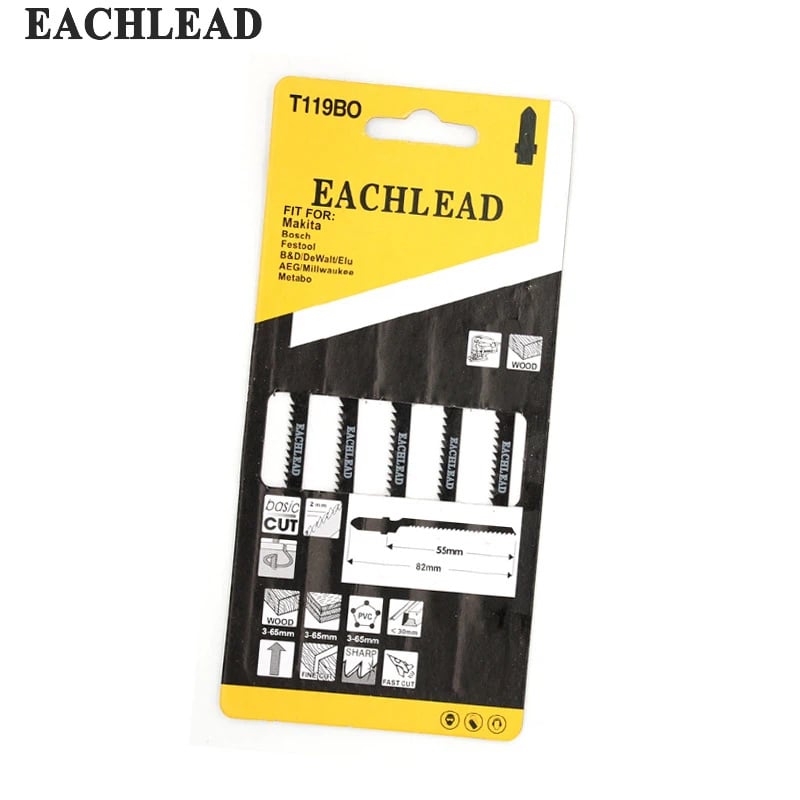
A clean-cut RFQ should force the supplier to answer the same fields for every SKU under review.
| RFQ field | Buyer should state | Supplier should confirm |
|---|---|---|
| Primary wood type | Plywood, hardwood species, or framing lumber | Recommended TPI range |
| Thickness | Panel or board thickness | Blade length and stiffness class |
| Show face | Top, bottom, or both | Standard vs reverse-tooth style |
| Cut type | Straight, curve, or scribe | Blade width and tooth geometry |
| Shank type | T-shank, U-shank, or special | Packaging label and holder fit |
Product recommendation: for thick-wood jobs that need a documented EACHLEAD wood blade after the RFQ fields are complete, review the T101AO Jigsaw Blade for Thick Wood only when the material, shank, and finish requirement match the product listing. It is less suitable for thin plywood finish faces, tight-radius curve work, or projects that require a verified chip-free guarantee without a site test.
Fit Boundary
This selection method fits workshops, fabricators, and distributors that can describe the wood type, thickness, and visible face before ordering. It is not sufficient when the buyer needs a guaranteed mirror finish on every species without sampling, or when the tool shank and guide condition have not been verified.
Part 7. How should buyers test and standardize a wood-cutting SKU?
Standardize a clean-cut SKU with a short bench test rather than a catalogue guess. Cut the same thickness of the target material, measure edge chip-out on the show face, and record feed effort and burn marks. Keep the shank, length, and TPI fixed while testing support methods.
For wholesale programs, capture the test photo, tool model, and pack label in the SKU master data. That record reduces returns when a customer orders a “wood blade” but actually needs laminate-grade chip control or curve capacity.
To compare EACHLEAD wood blades for a program or OEM pack, send the material list and finish requirement: species, thickness, show face, shank type, and target order quantity. You can also review jigsaw blade products once those inputs are documented.
FAQs
What TPI is best for clean cuts in wood?
Higher TPI generally produces a cleaner edge in wood, while lower TPI removes material faster. Match TPI to thickness and the finish requirement instead of using one blade for every board.
Why does my jigsaw tear out plywood faces?
Tear-out often comes from tooth geometry, unsupported fibers at the exit side, or feed rate—not only from dull teeth. Use support, mask the line, and choose a blade intended for clean wood or laminate-style cuts when finish matters.
Are reverse-tooth blades only for laminate?
Reverse-tooth blades are often specified for chip-sensitive surfaces, including laminate and veneer-backed panels. They can also be considered for finished wood faces when the tool and stroke are compatible.
Does a longer blade improve cut quality?
Length mainly affects reach and flexibility. Excess overhang can increase wander and rougher edges. Choose the shortest blade that safely clears the workpiece.
Can one wood blade cut hardwood and softwood?
Some blades cover a useful range, but thick hardwood, fast framing cuts, and thin plywood place different demands on TPI and body stiffness. Document the primary material before selecting a standard SKU.
How do I reduce burning on wood with a jigsaw?
Burning usually indicates feed rate, blade sharpness, or insufficient clearance rather than tooth count alone. Slow the feed, verify support, and move to a coarser TPI only when material removal—not surface finish—is the priority.
What should distributors label for clean-cut wood blades?
Label TPI range, recommended material, blade length, shank type, and whether the tooth style is standard, reverse, or scribing. Clear labels reduce returns from buyers who needed a finish cut but ordered a demolition-style TPI.