


What does the T-shank vs U-shank decision actually control?
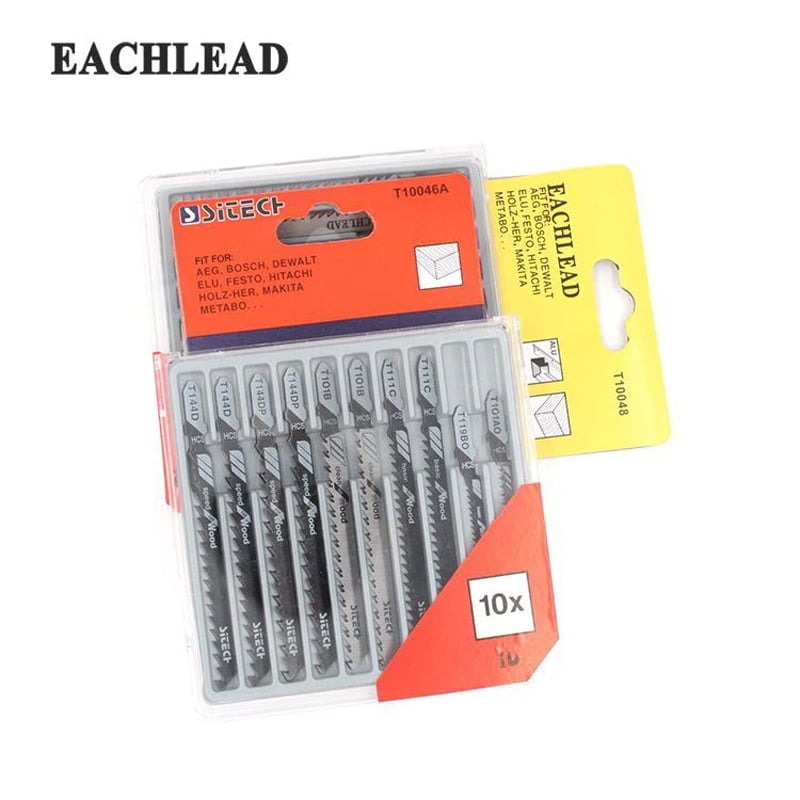
The T-shank vs U-shank jigsaw blade decision is primarily a tool-compatibility choice, not a performance ranking. Before comparing TPI, length, or material, confirm which shank your jigsaw clamp accepts. For the wider blade family, see the site’s Jigsaw Blade category overview.
Part 1. What does the T-shank vs U-shank decision actually control?
The shank decides whether a blade can be mounted securely in a specific jigsaw. It does not, by itself, define cut speed, tooth life, or finish quality. Trade buyers often receive returns because the blade specification was correct for the material but wrong for the tool clamp.
Most new professional and DIY jigsaws sold in global markets accept T-shank blades. U-shank blades remain relevant for older machines, some rental fleets, and replacement orders where the tool has not been upgraded. A procurement file should therefore record shank type before TPI, length, or material code.
Important: Do not assume that a blade photographed on a product page will fit every jigsaw in a mixed workshop. The CPSC power-tool safety guidance treats correct accessory selection as part of safe operation.
Part 2. How do T-shank and U-shank clamps differ on the tool?
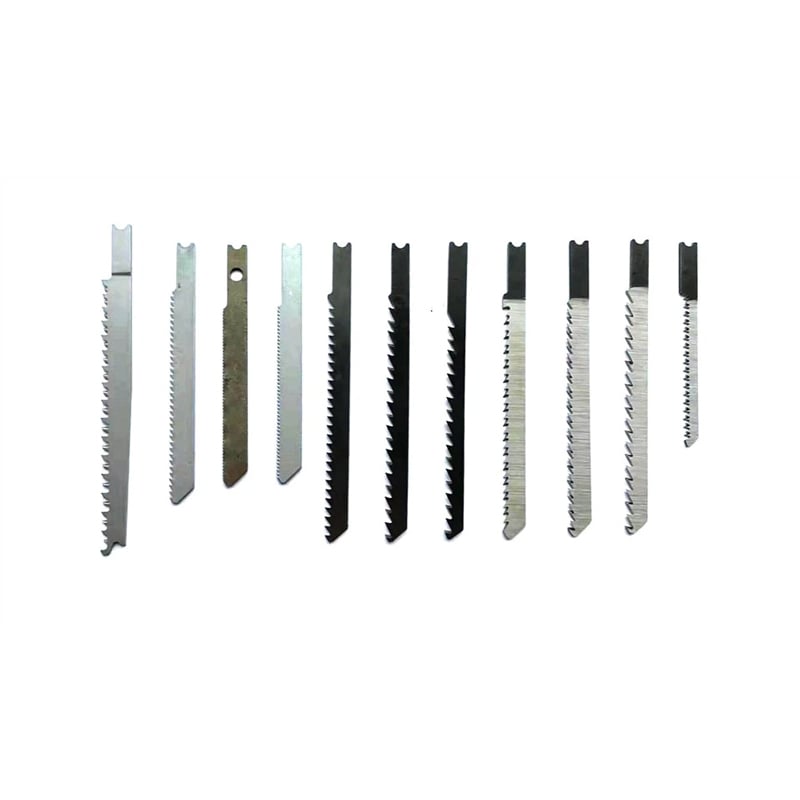
T-shank blades use a tang that locks into a tool-side mechanism, often without an external set screw. The design speeds blade changes on modern corded and cordless jigsaws. U-shank blades use a U-shaped end that is typically secured with a screw or external clamp on older or specialized machines.
Half-bore and hole-in-shank variants are a separate compatibility group. They may align with specific OEM tool families rather than every T-shank or U-shank holder. Treat them as a documented subset, not as a shortcut across shank families.
| Feature | T-shank | U-shank |
|---|---|---|
| Typical tool era | Current corded/cordless jigsaws | Older and some legacy industrial machines |
| Change method | Tool-side lock, often tool-free | Set screw or external clamp |
| SKU risk for distributors | Lower if the fleet is modern | Higher when legacy tools remain active |
| First verification step | Tool manual or nameplate | Installed blade profile and clamp photo |
Part 3. Which shank type fits your existing jigsaw?
Start with the machine, not the catalogue index. A practical verification sequence reduces wrong-shank orders in wholesale and project procurement.
Confirm shank type in the field
- Read the jigsaw manual or nameplate for the accessory shank designation.
- Remove the installed blade and compare the tang profile with a known T-shank or U-shank sample.
- Photograph the clamp area for supplier review when ordering mixed fleets or replacement stock.
- Record whether the tool uses a quick-change holder, set screw, or proprietary adapter.
If the workshop already runs modern machines, the T-shank jigsaw blade selection guide is the better next step for tooth and material choices. If the tool is clearly a legacy U-shank machine, review U-shank jigsaw key features before comparing SKUs.
| Verification input | Why it matters | Common mistake |
|---|---|---|
| Tool model and year | Determines default shank family | Ordering from a generic photo |
| Clamp photo | Shows screw vs quick-change holder | Assuming all cordless tools are identical |
| Current blade part number | Fast compatibility cross-check | Copying a TPI label only |
| Fleet mix | Distributor stocking logic | Shipping one shank type for all customers |
Part 4. How does shank choice affect blade availability and project range?
Shank type controls which blade families are even mountable on the tool. Once the shank is correct, buyers can choose wood, metal, laminate, curve, and specialty blades within that family.
For distributors, shank segmentation is a service-level issue.
A customer cutting countertops and plywood may need T-shank wood, laminate, and scribing blades on the same order. A maintenance shop with legacy equipment may still need U-shank metal and wood blades. The shank blade types in industrial applications article explains how buyers translate shank choice into application-specific SKUs.
| Project signal | After shank is confirmed | Example blade question |
|---|---|---|
| Plywood and framing lumber | Wood TPI and length | Clean vs fast cut |
| Laminate or countertop | Reverse tooth or down-cut style | Chip control |
| Light metal or aluminum | Bi-metal TPI | Thickness and feed rate |
| Curves and scroll work | Narrow blade and tooth style | Radius and splinter risk |
Part 5. What should buyers compare beyond the shank profile?
After shank verification, compare length, TPI, tooth set, body material, and coating as a system. ISO 16084:2017 defines the scope for saw blades used in hand and power tools at a general level; exact performance still depends on the workpiece, support, and machine stroke.
Use a simple comparison table in RFQs so suppliers answer the same fields:
| RFQ field | What a useful answer includes | Weak answer to reject |
|---|---|---|
| Shank type | T-shank, U-shank, or documented special shank | “Universal fit” with no tool reference |
| Length | Cutting depth required plus overhang guidance | Length omitted |
| TPI / tooth style | Material range and finish target | TPI only, no application |
| Body material | HCS, HSS, or bi-metal for the stated workpiece | Material marketing with no use case |
| Pack size and labeling | Shank printed on packaging and SKU master data | Mixed shanks in one bin label |
Do not treat third-party brand names as proof of compatibility. EACHLEAD lists Makita-type and half-bore products as compatibility references only; they do not imply OEM authorization.
Part 6. Which blade families belong in an RFQ for mixed jobs?
For buyers building a mixed woodworking and fabrication basket, start with the shank family, then add the application SKUs that match real jobs on site.
Product recommendation: for modern T-shank fleets that need a mixed starter assortment, review the 10 Piece Assorted T-Shank Jigsaw Blade Set T10046 only after the tool shank is confirmed and the required materials are listed. It is less suitable when the tool is U-shank-only, when a single specialized TPI is required, or when the buyer cannot document the application mix.
Fit Boundary
This comparison method fits procurement teams, distributors, and fabricators that can verify the tool shank before ordering. It is not sufficient when the tool model is unknown, when a buyer expects one blade to fit every jigsaw in a mixed fleet, or when a project requires a certified performance guarantee that has not been documented for the selected SKU.
Part 7. What mistakes cause wrong-shank orders and poor cut quality?
Wrong-shank orders are expensive in logistics and credibility. The most common failure is copying a blade specification from a website without checking the clamp on the actual machine. A second failure is treating half-bore or hole-in-shank products as interchangeable with standard T-shank blades.
Poor cut quality after the correct shank is installed usually points to tooth selection, unsupported workpieces, excessive feed rate, or worn guides—not to the shank label. Still, a loose mount from the wrong shank can look like a “dull blade” in the field.
To discuss a mixed order or OEM/ODM requirement, send the tool list and application brief: shank photos, material types, typical thickness, finish requirement, and target pack size. You can also browse jigsaw blade products after those inputs are defined.
FAQs
Can I use a T-shank blade in a U-shank jigsaw?
Usually no. The clamp geometry differs, so forcing the wrong shank can damage the holder, reduce grip, or create an unsafe cut. Match the blade to the tool’s documented shank type before ordering.
Is T-shank the same as Bosch-style?
Many current corded and cordless jigsaws accept T-shank blades, and Bosch is a common reference point in trade language. Still verify the exact tool manual because some brands use proprietary or hybrid holders.
Why do older jigsaws use U-shank blades?
U-shank blades were common on earlier machines that used a set-screw or external clamp. Those tools remain in workshops, so U-shank demand persists for replacement and legacy fleets.
Do U-shank and T-shank blades cut differently?
The shank mainly affects mounting, not tooth geometry. Cut quality depends on TPI, tooth set, blade length, material, feed rate, and support—not the shank label alone.
What is a half-bore or hole-in-shank blade?
Some blades use a modified shank with holes or reduced bore areas for specific tool families. Treat them as a compatibility subset, not as a universal substitute for standard T-shank or U-shank blades.
Should distributors stock both shank types?
Yes, if the customer base includes legacy U-shank tools and modern T-shank fleets. A SKU plan should separate shank families to prevent returns and field complaints.
How do I confirm shank type before a bulk order?
Read the tool nameplate or manual, inspect the installed blade, and record the OEM shank designation. For RFQs, ask for a photo of the clamp area and the current blade part number.